 Language
 简体中文
简体中文
- On the 2018 National Day holiday, Lifet completed six 100 ton large tonnage lifting belts as a gift
- The role of suspension net in the transportation of goods turnover
- Cargo soft lifting net, lifting net, lifting net, lifting net, bag, climbing net
- Precautions for using Lifutiden elevator
- How to make circular lifting straps
Contact: Wang Lili
E-mail:18066002268
Phone:702461526@qq.com
Address: Lifute Industrial Park, Taizhou City, Jiangsu Province
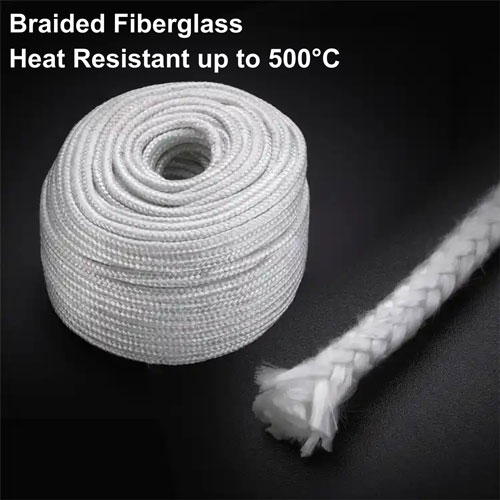
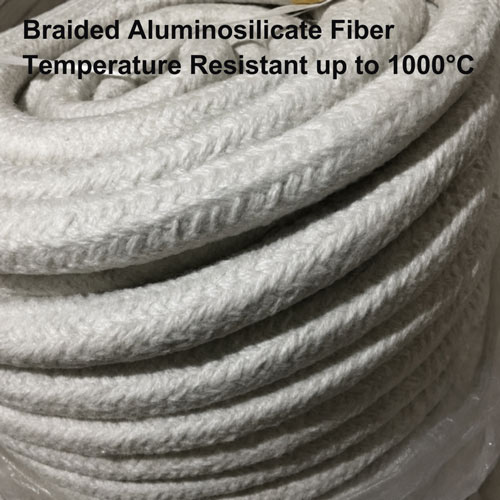
Lift Sling Rigging Co., Ltd manufacture Fire Resistant Rope,Fire Retardant Rope,High Heat Resistant Rope,flame retardant rope,Fireproof braided rope,Fire resistant rope built to the fibre, temperature and duration your order names - glass fibre, ceramic fibre or aramid. Custom diameter, length and ends.
Hits: ℃
Release time:2026-09-26 14:54
-
Fire Resistant Rope
-
This page — the words: what fire resistant, fire retardant, flame retardant, high heat resistant and fireproof can and cannot mean, which document decides each of them, the fibre-level data behind them, and the twelve parameters an order defines.
-
Flame retardant rope and flame retardant fibre rope — the flame-spread member of the glass fibre range, and the treatment it depends on.
-
Fire resistant filling rope — the packing duty, where the section and the density decide rather than the fibre.
-
600 °C glass fibre rope — the one article in this catalogue that carries a temperature in its name, and what that figure does and does not cover.
-
High temperature resistant rope and the heat resistant rope page — the same subject argued from the temperature end rather than from the word fire.
-
The glass fibre rope range — the round braided and heat resistant ropes, the square rope and the insulated sealing square rope.
-
The ceramic fibre articles — ceramic fibre rope, ceramic fibre square rope and ceramic fibre tape — for the hottest sealing duties in the catalogue.
-
Kevlar aramid rope — the material page: what para-aramid is, what the trade name does and does not name, and what the fibre figures do and do not cover.
-
The aramid slings and the fireproof lifting belt — fireproof lifting belt and fireproof circular sling, high temperature aramid webbing lifting sling, flame resistant aramid webbing sling belt and aramid round sling — where the article carries a working load limit as well as a temperature.
-
The duty pages — fire rescue rope, firefighting rope, emergency escape lifeline and fire escape rope, fire safety rope, static and dynamic safety rope, and Life Safety Rope — where the question is a person at the end of the line rather than a temperature.
-
Wire rope sling — the article that solves heat and load at once, and the honest answer on a duty where no fibre here will do.
-
The nylon rope range and the lifting sling range — the ordinary-temperature articles, and the right answer whenever heat is not in the duty.
Fire Resistant Rope — Five Words on One Label, and What Each One Can Carry
Lift Sling Rigging Co., Ltd manufactures the Fire Resistant Rope, and the line that came with this product carries five words in one sentence: Fire Resistant Rope,Fire Retardant Rope, High Heat Resistant Rope,Flame Retardant Rope and Fireproof Braided Rope. Five words, and not one of the five states a temperature, a duration, a material or a test. Each of them is a claim of a different kind, and each of them fails in a different way when a buyer tries to use it as a specification.
That is the difficulty this page takes on. It takes the five words apart and says what has to be added to each before it can be checked (Section 1). It separates the three questions the trade mixes under the word fire — whether a rope catches fire and keeps burning, what a flame does to it, and what a hot place does to it with no flame involved (Section 2). It maps every article in this catalogue that carries one of the five words, with a link to each, so that a buyer who arrives on the wrong page leaves with the right article rather than the wrong rope (Section 3). It names the documents that decide whether a rope may carry the word at all, and says what each of them does and does not cover (Section 4). It gives the published fibre-level data for the three fibres this factory works in on a heat duty, labelled as fibre data rather than as figures for any rope this factory has made (Section 5). And it gives the twelve parameters an order defines, in a table that states, for every figure, whether a buyer can check it on the coil that arrives or whether it can only be settled by a test (Section 6).
One thing is said at the start rather than at the end, because it shapes every section below:no textile rope is fireproof. Glass and ceramic fibre ropes do not burn and go hotter than any organic fibre, and they still have a temperature above which the fibre fails; para-aramid does not melt and does not support combustion, and it decomposes rather than resisting heat forever. The words are kept on this page because buyers search for them, and each one is argued rather than repeated.

1. Five Words on One Label, and What Each One Can Carry
A product name is not a specification. This fire resistant rope carries five claims of three different kinds: one is a statement about combustion, two are the same statement under two different words, one is a statement about a hot place with no flame in it, and one is a word no textile has a right to. The table below takes each word as it stands on the label and says what has to be added before a buyer can put it against a delivered coil.
| The word on the label | What kind of claim it is | What it actually fixes | What has to be added before it can be checked |
|---|---|---|---|
| Fire Resistant Rope | A claim about combustion | That the rope does not sustain combustion and does not melt and drip. On a glass or ceramic fibre rope this is a property of the fibre itself; on a treated synthetic it is a property of the finish and not of the polymer | The fibre, and the document the claim is made against. On a treated article, also what the finish does after washing, abrasion and heat |
| Fire Retardant Rope | A claim about a treatment as much as about a material | That the spread of flame has been slowed, whether by the fibre or by a finish applied to it. The two are not the same article and do not age the same way | Which of the two it is. A retardation that lives in a finish leaves the rope when the finish does |
| Flame Retardant Rope | The same claim under a different word | Nothing more than the line above. The trade uses fire and flameinterchangeably and a buyer reading a product name cannot tell which one the supplier meant | The same as the line above, plus the document, because this is the word most often used loosely in a catalogue |
| High Heat Resistant Rope | A claim about a hot place with no flame in it | That the fibre survives a temperature range without a flame being present. It says nothing about ignition, and nothing about what the rope holds afterwards | The temperature and the duration, and whether the article has to hold a load while it is there. A temperature without a duration is not a figure |
| Fireproof Braided Rope | A claim with no defensible form as it stands | Nothing. No textile is fireproof, and braided describes a construction rather than a property. The word is in the name because buyers search for it | A temperature, a duration and the share of strength retained — or the removal of the word from anything a buyer is expected to order against |
A buyer who arrives with the five words and leaves with three questions — which fibre, what temperature, and for how long — has gained something usable for a fire resistant rope. A buyer who orders on the five words alone has ordered a combustion claim, a treatment claim, a heat claim and a word that does not exist, and will have to settle all four after the rope is delivered.
2. Fire Resistant, Flame Retardant and Heat Resistant Are Three Different Questions
The trade treats the three words as variations on one idea, and they are three separate tests.Fire resistant is about ignition and sustained combustion. Flame retardant is about how fast a flame travels once there is one. Heat resistantis about a hot place with no flame in it at all: what the rope holds, what it moves to, and how it ages. An article can pass the first, fail the second and be excellent at the third, and a catalogue that merges the three cannot be used to choose between articles. It is also the first thing to settle before a fire resistant rope is quoted, because the answer decides which of the fibres in Section 5 is even eligible.
| The question | What it asks | How it is established | What it does not tell you |
|---|---|---|---|
| Does it ignite and keep burning? | Whether the material ignites, whether it keeps burning once the flame is removed, and whether it melts and drips | The burning-behaviour methods for vertically oriented textile specimens, ISO 6940 and ISO 6941, and the limited-flame-spread method for protective materials, EN ISO 15025, which is written around a surface ignition and a bottom-edge ignition | Anything about what the article holds afterwards. A rope that stops burning can still have lost a large share of its strength in doing so |
| What does a flame do to it? | How far the damage travels, and what the material does at the moment of exposure — char, afterglow, shrink, melt or drip | The vertical flame test method for textiles, ASTM D6413, whose output is the kind of figure a buyer can put on a requisition: afterflame time, afterglow time and char length. For films and textiles hung in a space rather than worn, NFPA 701 covers flame propagation | Nothing about a hot place with no flame, which is where a glass fibre rope earns its place and where a flame test says very little |
| What does heat do to it? | What the article still holds, moves to and becomes after time at a temperature | A sample held at a stated temperature for a stated time and tested afterwards: strength retained, change in length, change in mass. This is the only one of the three questions a buyer can express as a percentage | Nothing about flame. A rope can be excellent at this question and be a poor choice where a flame is present, and the reverse is also true |
There is one fibre-level figure that belongs to this section rather than to a rope specification, and it is worth knowing because buyers quote it: the limiting oxygen index, measured under ISO 4589-2 and ASTM D2863. Air is about 21 percent oxygen, and the index of a material is the lowest oxygen concentration at which a flame will still be supported. Polypropylene comes in at roughly 17.5 percent and cotton at roughly 18 percent, which is why both burn easily in ordinary air; the convention in the fibre trade is that an index above about 21 percent is what earns a fibre the name flame retardant. The index is a fibre figure, and it is not a rope specification: it says nothing about the construction, the cover, the splice, the diameter or the load, and a rope can be made from a fibre with a high index and still be the wrong article for a duty.
3. Which Article Each Word Belongs To in This Catalogue
The five words on the label of this fire resistant rope are entry words: buyers type them, and each one lands on a real article. The table below maps every article this factory makes that carries one of the five words, so that the word a buyer arrives with can be turned into the article he actually needs. The distinction that matters most is in the third column: whether the article is built to carry a load or only tosurvive a temperature. Those two are different purchases and they are not interchangeable.
| The word that arrives | The article it belongs to | What that article is actually for |
|---|---|---|
|
Fire retardant rope Flame retardant rope |
Flame retardant fibre rope and theglass fibre rope range | Sealing, lagging and insulation where the article survives a temperature and nothing is being lifted. Not a load-bearing element of a lifting system |
|
Fire resistant rope (filling and sealing duty) |
Fire resistant filling rope and glass fibre filling rope | Packing a gap: furnace doors, expansion joints, covers and cable entries. Bought by the metre or by the coil and cut on site |
| High heat resistant rope | 600 °C glass fibre rope,high temperature resistant rope andthe heat resistant rope page of this catalogue | The heat duty where a figure is named on the order. The 600 °C article is the one this factory names a number on; the others carry the range |
|
Glass fibre rope (all constructions) |
Round braided andheat resistant rope,square rope, andinsulated sealing square rope | Handled, cut and packed on site. Abrasive and brittle, so the construction matters as much as the fibre: square braid for a gap, round braid for a gland or a seal |
| Refractory and furnace sealing | Ceramic fibre rope,ceramic fibre square rope andceramic fibre tape | The hottest duties in the catalogue: kilns, furnaces, expansion joints. The most brittle of the materials here and the least suited to being handled repeatedly |
|
Fireproof rope (load-bearing) |
Kevlar aramid rope | A hot duty that also has to hold a load. Para-aramid does not melt, does not support combustion, and takes tension, which no glass or ceramic fibre rope in this catalogue does |
|
Fireproof sling Fireproof lifting belt |
Fireproof lifting belt and fireproof circular sling,high temperature aramid webbing lifting sling,flame resistant aramid webbing sling belt andaramid round sling | Lifting in a hot place, where the sling rather than the rope is the article. It comes with a working load limit and a colour code, which is a different kind of figure from a temperature |
|
Fire rescue rope Firefighting rope |
Fire rescue rope andfirefighting rope | The duty pages of this catalogue, where the question is a person at the end of the line rather than a temperature. Heat is a constraint on those articles and not the subject of them |
| Escape, safety and life lines | Emergency escape lifeline and fire escape rope, fire safety rope, static and dynamic safety rope, andLife Safety Rope | Life-safety duties argued on their own pages, with the documents and the parameter tables that belong to them |
| Where heat and load are both extreme | Wire rope sling | Unaffected by the temperatures these fibres work at, and the least forgiving article here. Where a job needs the highest strength per unit of diameter in the heat, this is the honest answer even on a page about fibre rope |
Three of those rows are worth separating out, because they are the ones a buyer confuses most often when a fire resistant rope is the article in the enquiry. A glass fibre rope and a ceramic fibre rope go hotter than anything else here and are not load-bearing articles. A para-aramid rope goes high enough for most industrial heat duties and is load-bearing, which is why it costs several times what the others cost. And a treated synthetic rope — anylon rope with a finish, or alifting sling webbing that has been treated — is a perfectly good answer to the flame-spread question at ordinary temperatures and is the wrong article in a hot place, because the polymer underneath the finish still softens long before any of the fibres above do.
4. What Decides Whether a Rope May Carry the Word: the Test Documents
A word like fire resistant is not a property of an object; it is a statement about how a sample behaved in a named test. That is why this page names the documents rather than issuing the claim: a buyer whose requirement falls under one of them can put the document number on the order, and the answer can be given against it instead of around it.
| The document | What it is for | What it puts on the paperwork | Why a rope is not automatically covered by it |
|---|---|---|---|
| ISO 6940 and ISO 6941 | The burning behaviour of vertically oriented textile specimens: ignitability and the spread of flame up a hanging specimen | Whether the specimen ignited, and how far and how fast the flame travelled | The methods are written for textile specimens. A rope is a construction with a core, a cover, a twist and a splice, and a specimen cut from it is not the same object as the rope in service |
| EN ISO 15025 | Limited flame spread, with two procedures: a surface ignition and a bottom-edge ignition | Whether the specimen stopped burning after the flame was removed, and whether it produced holes or debris that kept burning | It classifies materials. A supplier may sell a rope made from a material that passes, while the rope itself has never been put through the test |
| ASTM D6413 | The vertical flame test method for the flame resistance of textiles | The three figures a requisition can carry: afterflame time, afterglow time and char length | The figures belong to the specimen tested. Change the construction, the diameter or the finish and the figures are no longer established for the article being ordered |
| NFPA 701 | Flame propagation of textiles and films under specified fire test conditions | Whether flame propagated across the specimen in the conditions of the test | It is aimed at textiles and films in a space — drapes, hangings, membranes — rather than at a rope being used under tension |
| ISO 4589-2 and ASTM D2863 | The limiting oxygen index: the lowest oxygen concentration that will still support combustion of the material | A single number for the material, comparable between materials | It is a material figure and not an article figure. It ranks fibres, and it says nothing about a rope's construction, cover, splice or load |
This catalogue does not claim conformity to any of those documents for any article unless the order names the one it has to be made and tested against. What this page does instead is state, for every article in Section 3, which of the four questions in the table above is the one that decides it — so that a buyer can write a requirement for a fire resistant rope that can be answered, rather than a word that cannot.
5. The Fibre-Level Data: What Belongs to the Fibre and What Belongs to the Rope
The figures below are published properties of the fibres used in the fire resistant rope articles this page covers. Not one of them is a figure for a fire resistant rope this factory has made, and that distinction is the whole reason the table carries a column that says so. A rope is a construction, not a fibre, and every figure that belongs to the finished article is lower or narrower than the fibre's: the cover, the twist, the splice, the tension the rope is under and the time it has spent hot all sit between the fibre and the article.
| Material | What it is | Temperature the fibre is published to take | What it does in a flame | Can it carry a load? |
|---|---|---|---|---|
| E-glass fibre | A glass textile fibre; the material behind the glass fibre ropes inthis range | Continuous service in the region of 550 °C, with peak exposures up to about 600 °C to 700 °C quoted by fibre suppliers. The glass itself melts far above that, in the region of 1225 °C to 1360 °C. A coated or sized glass product is limited by the coating rather than by the glass, often to a few hundred degrees [确认] | Does not burn and does not support combustion. It softens and sinters rather than melting and dripping | No. It is brittle, abrasive to handle and not built to be the load-bearing element of a lifting system |
| Aluminosilicate (ceramic) fibre | A refractory fibre; the material behind theceramic fibre rope andceramic fibre square rope | Classification temperature of 1260 °C, which is a short-term rating used for sealing and packing, with continuous service recommended in the region of 950 °C to 1000 °C [确认] | Non-combustible. It is the most heat-stable material on this page and the most brittle | No, and least of all of the materials here. It is a sealing and insulation material |
| Para-aramid | The fibre family behind theKevlar aramid ropeand the aramid slings in Section 3 | No melting point: it does not melt. Published decomposition temperatures are in the region of 427 °C to 482 °C in air, and about 538 °C in nitrogen | Does not melt and does not support combustion. It chars and decomposes, and it loses strength as temperature and time increase | Yes. It takes tension, it flexes, and it can be spliced into a rope or a sling |
| Nylon and polyester | The polymers behind thenylon rope range and mostlifting slings | Published melting ranges differ between sources: nylon 6,6 in the region of 255 °C to 265 °C, and polyester in the region of 260 °C to 280 °C | They melt, they drip and they burn. A finish can slow the spread of flame at ordinary temperatures; it cannot stop the polymer softening | Yes, and they are the right answer on every duty that does not involve heat. They are the wrong article on a fire or heat duty at any of the temperatures above |
| Polypropylene | The polymer behind the polypropylene lifting belts and white flat slings of this catalogue | Melting point in the region of 160 °C to 170 °C, the lowest of any material on this page | Burns readily in air: the published limiting oxygen index is about 17.5 percent, against the 21 percent in the air we breathe | Yes, and it is a good lifting material on a cold duty. It is the first material to rule out where heat is involved |
Two consequences follow from reading the table that way round. The first is that the temperature column describes a material, so it can be used to rule materials out and cannot be used to write a specification. The second is that the load-bearing question is decided before the temperature question: of the five materials above, only two are built to hold a load, and of those two only one is a high-temperature fibre. That is why the choice on the heat duty of a fire resistant rope is usually between para-aramid andwire, and why the honest answer is sometimes wire.
6. Technical Parameters: the Figures an Order Defines, and Which Can Be Checked on Delivery
Twelve parameters for a fire resistant rope, and for each one the column that decides whether a quotation can be checked at all: whether the buyer can verify the figure on the coil that arrives, or whether it can only be settled by a test. On a fire resistant rope that split matters more than on most articles, because the two properties the buyer is paying for — what the rope does in a flame and what it still holds after heat — are both in the right-hand column.
| Parameter | Unit | How the figure is established | Checkable on a delivered coil, or only by test |
|---|---|---|---|
| Duty, and the temperature with the duration attached | none | Named in the words a fitter would use — sealing, lagging, packing, sling, handling line — together with the temperature the article has to survive and for how long | The duty is checked against the order. The retained-strength part of it is only by test, and it is the reason the duration has to be on the order at all |
| Fibre family, and the grade where it matters | none | Named by the maker: glass fibre, aluminosilicate fibre, para-aramid, or a treated synthetic [确认] | On a delivered coil, from the label and the documents. What is actually inside can only be confirmed by taking a sample apart |
| Construction, and the number of strands | none | Named: round braid or square braid; twisted; a core held in a sleeve; how many strands in the braid; whether the cover carries any load [确认] | On a delivered coil, by eye and by hand. It is the parameter no product name in this catalogue contains, and the one that decides how the rope behaves in a gland or a gap |
| Diameter, or the section of a square rope | mm | Measured at more than one point under a stated tension, because a rope that is not under tension is not round | On a delivered coil, but only against the same tension |
| Diameter or section tolerance | mm, or a percentage | Stated as a band, because a rope is built to a construction rather than turned to a size [确认] | On a delivered coil. Without a band, a rope that is right and one that is wrong cannot be told apart |
| Mass per metre | grams per metre | Weighed on a known length at a stated moisture content. It is not calculated from the diameter [确认] | On a delivered coil, with a scale and a tape, and it is the cheapest check there is |
| Length, and length tolerance | metres, percent | Measured under a stated tension and at a stated moisture content, and stated as a band [确认] | On a delivered coil, and it is the second cheapest check after the mass |
| Change in length at the stated temperature | percent | Measured on a sample held at the stated temperature for the stated time, not assumed from the fibre's coefficients | Only by test. It is the figure that puts a seal out of reach of its gland after a season in service |
| Strength retained after the stated exposure | percent of the original | Measured by holding a sample at a stated temperature for a stated time and testing it afterwards | Only by test, and it is the only honest form of the word fireproof. A temperature without a duration, or a duration without a temperature, is not the figure |
| Flame behaviour, where a document is named | the unit of that document | Reported against the document the order names — afterflame, afterglow and char length under ASTM D6413, a pass or fail under EN ISO 15025, an oxygen index under ISO 4589-2 | Only by test, and only on the specimen the document defines. This catalogue claims no conformity unless the order names the document |
| Ends and finishes | none | Named end by end: squared and sealed, whipped, spliced, sleeve fitted, ferrule, or the finish the order names | On a delivered coil, visibly. On a rope the ends are where the load and the heat both arrive |
| Marking, and what travels with the coil | none | Named: what is printed on the rope or on the tag, and which documents accompany the delivery | On a delivered coil, visibly. An article that cannot be traced to a batch cannot be retired on evidence |
Half of those figures can be checked by whoever opens the crate, and half cannot. The half that cannot is the half a fire resistant rope is bought for. That is not a reason to avoid the material; it is the reason the order has to name a temperature and a duration rather than a word.
7. The Fire and Heat Articles of This Catalogue, and the Parameters That Belong to Each
The same twelve parameters do not apply in the same order to every article. A filling rope is bought by its section and its density; a lifting sling is bought by its working load limit and its colour code; a ceramic rope is bought by a classification temperature that is a short-term rating. The table below gives the parameters that actually decide each article in Section 3, so that a buyer can see which figures to ask for before writing an enquiry.
| Article | Material | The temperature claim that belongs to it | The parameters that decide it |
|---|---|---|---|
| Flame retardant fibre rope | Glass fibre, treated | A flame-spread claim rather than a temperature claim. The fibre is non-combustible and the treatment is what the word retardant refers to | Construction (round or square), section or diameter with its tolerance, mass per metre, the treatment and how it behaves after abrasion, and the length of the coil |
| Fire resistant filling rope | Glass fibre | Heat resistance with no load and no flame duty stated [确认] | The section it has to fill rather than a diameter, the density of the packing, the length, and whether it is to be cut on site |
| 600 °C glass fibre rope | E-glass | 600 °C: the one temperature this catalogue names against a rope, and it belongs to a stated duty and a stated duration [确认] | Diameter and tolerance, construction, mass per metre, the duration behind the 600 °C figure, and what the article has to hold after the exposure |
| High temperature resistant rope and the heat resistant rope page | Glass or ceramic fibre, named on the order | A range rather than a point, and the range belongs to the fibre [确认] | Fibre, construction, section, mass per metre, the temperature with its duration, and the handling the article will get on site |
| Ceramic fibre rope andceramic fibre square rope | Aluminosilicate fibre | Classification temperature 1260 °C, which is a short-term rating for sealing and packing, with continuous service in the region of 950 °C to 1000 °C [确认] | Section, density, mass per metre, the difference between the classification figure and the continuous figure, and the fact that the article is not load-bearing |
| Kevlar aramid rope | Para-aramid | No melting point; decomposition in the region of 427 °C to 482 °C in air [确认] | Construction with the core and the cover named separately, diameter with its band, extension at a stated load, strength retained after heat, and the ultraviolet exposure the rope will see |
| Fireproof lifting belt and thearamid webbing slings | Para-aramid webbing, or treated webbing | The temperature the webbing survives, which belongs to the webbing and to its stitching rather than to the rope [确认] | Working load limit and colour code, width and thickness, the stitching and the cover, the temperature the cover is made of, and the inspection interval |
| Wire rope sling | Steel | Unaffected by the temperatures these fibres work at, up to the point where the wire itself changes | Construction, diameter, ends and terminations, working load limit, and the inspection regime that belongs to wire |
Read down the third column and the pattern is clear: glass and ceramic fibre ropes are bought on atemperature, aramid ropes and slings are bought on a temperature and a load, and treated synthetics are bought on a flame-spread claim at ordinary temperatures. An enquiry that states which of the three it is can be answered the same day. An enquiry that states only one of the five words has to be sent back with a question.
8. Heat Is a Process, Not an Event: Duration, Retained Strength and Ageing
The single most useful thing a buyer can add to any of the five words is time. A rope held for a long time below the temperature that would visibly damage it still ages, and the loss accumulates. This is why the honest form of every claim on this page names a temperature, a duration and the share of strength retained — and why a rope that has spent a season near a heat source should be judged against its history rather than its appearance.
The four materials a fire resistant rope is usually made from behave differently as the time goes up. Glass and ceramic fibres hold their shape at temperatures at which they have already lost a large share of their strength, so an article that looks untouched can be past its useful life; they also shed fibre and irritate the skin, which is a handling matter rather than a safety claim. Para-aramid chars and decomposes rather than melting, and it keeps useful strength at temperatures where nylon and polyester would already have failed — and it is affected by ultraviolet light, which is why a cover is not decoration on that fibre. Treated synthetics succeed or fail on whether the treatment survives the service, because the polymer underneath has a melting point in the region of 165 °C to 280 °C depending on which polymer it is (Section 5). And steel holds its strength in this range and is the article that makes heat and load both solvable at once, at a cost in weight and in handling.
| The claim as it is usually written | Why it cannot be checked | The version that holds |
|---|---|---|
| Heat resistant to 600 °C | A temperature with no duration, and no statement of what the article still does afterwards | Retains X percent of its original strength after Y minutes at 600 °C, measured on a sample of this construction [确认] |
| Fireproof | No textile is fireproof. Glass and ceramic fibres still fail above a stated temperature, and aramid still decomposes | Does not melt; does not support combustion; retains X percent of its strength after the stated exposure |
| Flame retardant | It names a property and no document, so two suppliers can make it about two different things | Reported against ASTM D6413, with an afterflame of X seconds, an afterglow of Y seconds and a char length of Z mm, on a specimen of this construction [确认] |
| Non-combustible | The word can be used without qualification, and it still belongs to a test rather than to a material | Non-combustible as tested under the document named on the order; the result belongs to the specimen that was tested and to the conditions of the test |
A buyer who needs the sentence in the right-hand column of this table for a fire resistant rope in a tender document can have it printed on the delivery paperwork, which satisfies a reviewer and can be checked. That is the practical use of this page: the five words on the label of a fire resistant rope do not have to be abandoned, they have to be completed.
9. What the Order Has to Say Before a Figure Can Be Quoted
The same list as Section 6, written the way a fire resistant rope order is actually written. Anything that is already decided can be sent as it stands; anything that is not can be sent as a question, and this catalogue will say which of the articles in Section 3 the answer belongs to.
| The item | What the order has to say |
|---|---|
| Duty | What the article is for, in words a fitter would use: sealing, lagging, packing, insulation, sling, handling line, escape, rescue |
| Fibre | Glass fibre, aluminosilicate ceramic fibre, para-aramid, or a treated synthetic — and a brand only where the order names one |
| Construction | Round braid, square braid, twisted, cored or sleeved, and the number of strands where it matters |
| Section or diameter, with its band | The figure and the tolerance, because a rope is built to a construction rather than turned to a size |
| Mass per metre | The figure, or the request that it be stated on the delivery documents |
| Length, and the tension it is measured under | Cut length with its tolerance, and whether it is measured under tension or laid out slack |
| Temperature and duration | The temperature the article has to survive and how long it has to survive it, so that the heat claim has a basis |
| What has to be retained | What the article has to hold or still do afterwards: a load, a section, a length, a seal |
| The document, where one is named | ISO 6940, ISO 6941, EN ISO 15025, ASTM D6413, NFPA 701 or ISO 4589-2, with the class or the performance level required |
| Ends | Named end by end: squared and sealed, whipped, spliced, sleeve fitted, ferrule |
| Marking and documents | What has to be printed on the article or the tag, and which documents have to travel with the coil |
10. Which Part of This Subject Is Argued Where
This factory argues fire, heat and life-safety articles across several pages, and each of them takes a different part of the question. The list below is the map, so that a buyer who arrives on the wrong page leaves with the right link.
The Chinese edition of this site carries the same articles under the words 阻燃绳, 防火绳, 耐高温绳, 防火编织绳 and 防火填充绳; the corresponding page for the same article can be linked across with the hreflang pair, which is a matter for the site rather than for this page.
11. What This Page Has Deliberately Not Said
Five omissions, each a decision rather than an oversight, and each stated so that a buyer does not have to infer it from the shape of the page.
It does not state a breaking strength for any article in this catalogue. The figures in Section 5 are the fibre makers' published properties. A rope figure belongs to a construction, and the construction is named on the order. A strength published without the construction would be a number no delivered coil could be checked against.
It does not claim conformity to any outside document. The documents in Section 4 are named so that a buyer of a fire resistant rope can see which one his requirement falls into and can say which one the article has to be made and tested against. Where a document is named on the order, the testing and the paperwork are named with it.
It does not claim a brand of fibre. Kevlar appears on this page as a trade name for a grade within a fibre family, because buyers of a fire resistant rope search for it. This factory buys fibre to the specification on the order and claims no brand unless the order names one.
It does not use the word fireproof as a property. The word is in the product name because buyers search for it, and it is argued rather than asserted for the reason set out in Section 1: no textile is fireproof, and a claim that cannot be checked is not a specification.
It does not give a temperature for a treated synthetic rope. On that article the temperature belongs to the finish and to the polymer underneath it, and it changes with the treatment and with the service. A figure would have to come from a test on the treated article being supplied, which is a matter for the order.
12. Frequently Asked Questions
Is a fire resistant rope the same thing as a fire retardant rope?
No, and the difference is worth a question on the order. Both words are about what a rope does when a flame is put to it, and they are not two degrees of the same property. A rope sold as fire resistant normally claims that it does not sustain combustion and does not melt and drip; a rope sold as fire retardant normally claims that a treatment or a fibre has slowed the spread of flame. Neither word states a temperature, a duration or a test, which is why Section 1 turns each of the five words on this product line into a sentence that can be checked.
Is this rope fireproof?
No textile rope is fireproof, and this catalogue does not use the word as a specification. Glass and ceramic fibre ropes do not burn and go hotter than any organic fibre, and they still have a temperature above which the fibre sinters or fails; para-aramid does not melt and does not support combustion, and it decomposes rather than resisting heat forever. The usable form of the claim names a temperature, a duration and the share of strength retained afterwards, which is the subject of Section 8.
What temperature can a fire resistant rope work at?
It depends on the fibre, and the figure belongs to the article rather than to the phrase. Published fibre data puts E-glass in the region of 550°C continuous with peaks up to about 700°C, aluminosilicate ceramic fibre at a classification temperature of 1260°C with continuous service in the region of 950 to 1000°C, and para-aramid with no melting point and a decomposition temperature of 427 to 482°C in air. Those are fibre figures; a rope is a construction, and the cover, the splice, the tension and the exposure time all shorten what the finished article will take. Section 5 sets the figures out and says what they do not cover.
What is the difference between fire resistant and heat resistant?
They answer two different questions. Fire resistant is about what happens when a flame is put to the rope: whether it ignites, whether it keeps burning after the flame is removed, and whether it melts and drips. Heat resistant is about what the rope is like in a hot place with no flame involved: what it holds, what it shrinks or grows to, and how it ages at a stated temperature for a stated time. A glass fibre rope answers the second question very well and is not built to carry a load; an aramid rope answers both and costs several times as much. Section 2 separates the three questions the trade mixes together.
Which of your products should I buy for a fire or heat duty?
Three things decide it: whether the article has to carry a load, what temperature it has to survive and for how long, and whether it has to be handled. Where nothing is being lifted and the duty is sealing, lagging or insulation, the glass and ceramic fibre ropes go hotter and cost less. Where a load has to be held in a hot place, the aramid ropes and slings are the articles built for it, and where heat and load are both extreme the honest answer is often wire. Section 3 maps every article in this catalogue that carries one of the five words, with a link to each.
Are your fire resistant ropes certified?
This catalogue claims no certification for any article unless the order names the document the rope has to be made and tested against. This page names the documents instead, so that a buyer can see which one his requirement falls into: ISO 6940 and ISO 6941 on the burning behaviour of vertically oriented textile specimens, EN ISO 15025 on limited flame spread, ASTM D6413 on the vertical flame test of textiles, NFPA 701 on the flame propagation of textiles and films, and ISO 4589-2 with ASTM D2863 on the limiting oxygen index. If you have a requirement under one of them, send us the document number and the answer will be given against it rather than around it.
Does a fire resistant rope keep its strength after it has been hot?
Only part of it, and that share is the figure worth asking for. Heat acts on a rope as a process rather than as an event: a rope held for a long time below the temperature that would visibly damage it still ages, and glass and ceramic fibres lose strength at temperatures at which they still hold their shape. The honest form of the claim is a percentage of the original strength retained by a sample held at a stated temperature for a stated time, which is the last row of the parameter table in Section 6 and the subject of Section 8.
What has to be on the order for a fire resistant rope?
The duty, the fibre, the construction, the diameter with its tolerance band, the mass per metre, the length with the tension it is measured under and its tolerance, the ends, the temperature the article has to survive with the duration attached, and the marking that has to travel with the coil. Section 6 lists these as the parameters an order defines and says which of them a buyer can check on the coil that arrives and which can only be settled by a test, and Section 9 lists the same items in the words an order uses.
Request a quotation for a fire resistant rope
Send us the eleven items in Section 9 for your fire resistant rope, or as many of them as you already know, and we will confirm the specification with you before the article is made. If what you have is a duty rather than a specification — a temperature, a duration, a gap to fill, a load to hold, a flame to survive — send that instead, and we will say which of the articles in Section 3 is the right one, including telling you plainly when the answer is glass fibre, ceramic fibre, wire or an untreated synthetic rather than the rope on this page.
Send an enquiry | Contact us | Contact information
Lift Sling Rigging Co., Ltd — Contact: Wang Lili | Tel / WhatsApp: +8618066002268 | E-mail: 702461526@qq.com | Address: Lifute Industrial Park, Taizhou City, Jiangsu Province, China

-
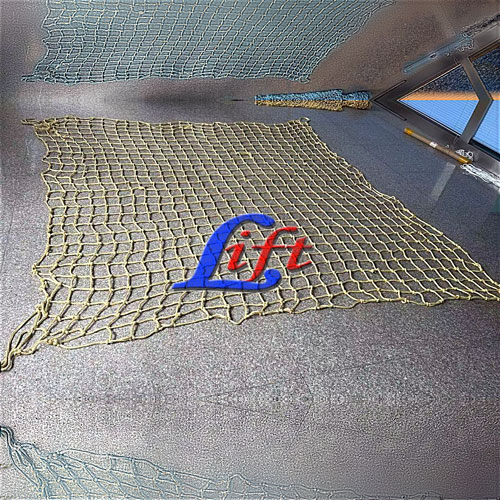
Drone Anti-collision Net
-
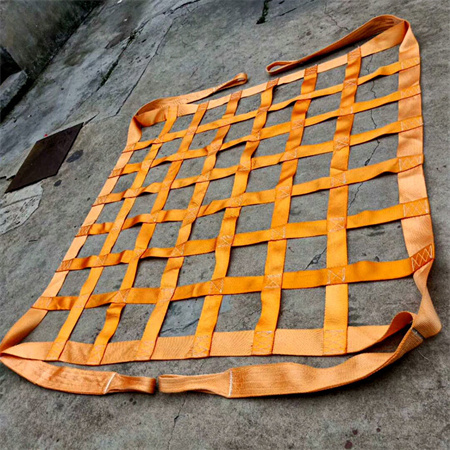
Extra Large Capacity Cargo Net
-
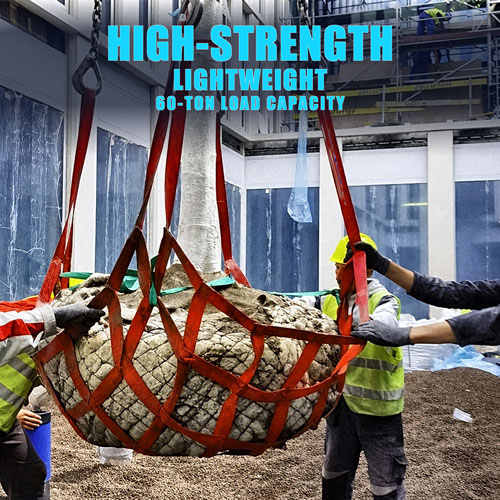
Cargo Webbing Net
-

Color changing nylon double buckle loop nylon braided rope
-

Two end buckle lifting rope, double buckle round lifting rope, double fork nylon lifting rope, non jointed nylon lifting rope
-

Emergency escape lifeline, fire escape rope, fire safety escape emergency rope, steel wire core fire rope

