 Language
 简体中文
简体中文
- On the 2018 National Day holiday, Lifet completed six 100 ton large tonnage lifting belts as a gift
- The role of suspension net in the transportation of goods turnover
- Cargo soft lifting net, lifting net, lifting net, lifting net, bag, climbing net
- Precautions for using Lifutiden elevator
- How to make circular lifting straps
Contact: Wang Lili
E-mail:18066002268
Phone:702461526@qq.com
Address: Lifute Industrial Park, Taizhou City, Jiangsu Province
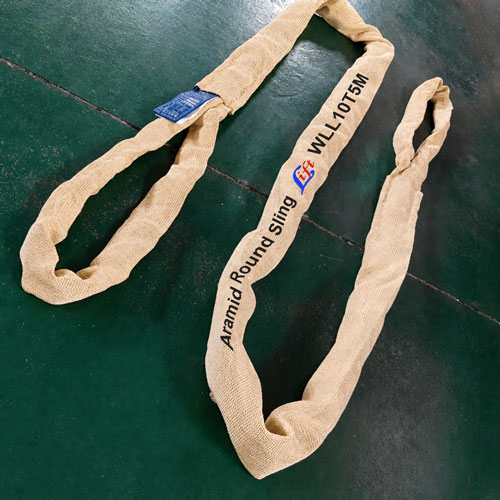
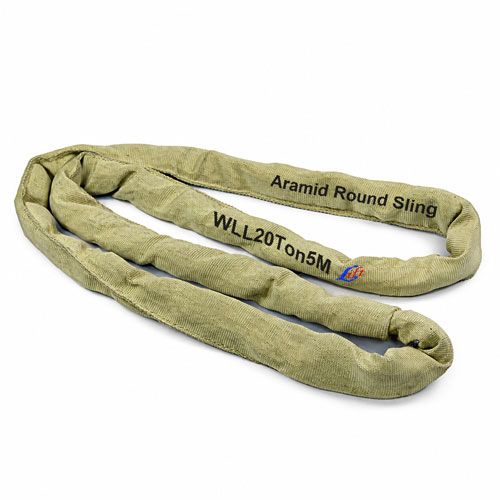
Lift Sling Rigging Co., Ltd manufactures high‑performance Aramid Round Sling, specially designed for high‑temperature hoisting environments where conventional round slings fail. Built from premium aramid fiber, this heat‑resistant round lifting sling retains outstanding tensile strength when handling hot workpieces in steel mills, foundries, forging plants and thermal processing workshops.The flexible round structure evenly distributes load pressure to prevent surface damage to valuable components. It features excellent heat resistance, cut resistance and anti‑abrasion performance, resisting melting and strength degradation under high‑temperature operating conditions. Various working load capacities and custom lengths are offered to fit different rigging demands. Every Aramid Round Sling is strictly load‑tested and complies with international lifting safety standards. Lightweight and easy to rig onsite, it serves as an ideal alternative to metal chains for hot‑load lifting. Source reliable factory‑direct aramid round slings from Lift Sling Rigging Co., Ltd for your high‑temperature lifting projects.
Hits: ℃
Release time:2026-09-23 15:15
Lift Sling Rigging Co., Ltd manufactures Aramid Round Sling, aramid cord sling.
Aramid Round Sling — A Substitution, Not an Upgrade
An aramid round sling is almost always bought as a substitution for a polyester one, and a substitution is not the same thing as an upgrade. The fibre changes the lift itself, not only the life of the article: the strength per unit of weight more than doubles, the stretch at working load falls to below one per cent, and the way two legs of a lift share the load changes with it. It also changes where the article can be used - acid, alkali, sunlight and heat each behave differently - and it moves the article out of the list of fibres that the published temperature rules name. HS code 630790; telephone 18066002268.
1. A Substitution, Not an Upgrade
Aramid is chosen for a reason, and the reason is usually one of three: the lift cannot take the stretch of polyester, the environment is too hot for polyester, or the article has to be light enough for somebody to carry it up to the load. What aramid is not is polyester with a better number. It is a different fibre with its own limits, and two of those limits are somewhere polyester has no trouble at all.
| What is being compared | Polyester | Aramid |
|---|---|---|
| Strength per unit of weight (the yarn figure) | roughly 6.5 to 9.0 grams per denier | roughly 23 grams per denier |
| Stretch at the working load | 3 to 4 per cent | below 1 per cent |
| Stretch at break | 10 to 12 per cent | 3.6 per cent |
| Working temperature | 90 degrees C (194 degrees F) | 150 degrees C (300 degrees F) |
| Behaviour near strong acids | good | better than nylon, but not as good as polyester |
| Behaviour near strong alkali at raised temperature | good at room temperature | degraded |
| Resistance to sunlight | good, and the reason polyester is the outdoor default | a known weakness |
| Abrasion resistance of the fibre itself | good | fair for the aramid yarns of this class |
2. What Changes in the Lift When the Fibre Changes
The stretch figure is not a comfort detail. It decides how the load behaves while it is being taken up, how the load is shared between the legs of a multi-leg lift, and how much stored energy is released if something moves. A sling that stretches three or four per cent at its working load is doing something on every lift that a sling stretching below one per cent does not do.
| The behaviour | Polyester at the working load | Aramid at the working load | What it means on the site |
|---|---|---|---|
| Take-up | The article lengthens as the load comes on, and the load settles gradually | The article barely lengthens, and the load comes on almost at once | A stiffer sling reaches its share of the load earlier in the lift |
| Sharing between two legs | A more forgiving article absorbs small differences in leg length and in rigging | The stiffer article takes its share sooner, so leg length and rigging matter more | Leg lengths have to be right, because the article will not quietly make up the difference |
| Stored energy | More of the lift is stored in the article and released as it relaxes | Less is stored in the article | Shock loading is prohibited in any case, and a stiffer article is no excuse for it |
| What you can see | A visible stretch is normal and is not damage | Very little visible change, so condition has to be judged on inspection rather than on appearance | Inspect the article, do not read the lift |
3. Two Legs That Stretch Differently
This is the consequence that catches people out, and it is the reason a lift should not be rigged from whatever happens to be in the store. When two legs of different stiffness carry one load, the stiffer leg takes its share first and the softer leg follows. That is not a defect in either article; it is what the two stiffnesses do to the share each one carries.
| The rigging | What happens as the load comes on | What to do about it |
|---|---|---|
| Two aramid legs of equal length | Both legs take up at the same time and share the load as the geometry provides | Nothing, provided both are marked and both are inspected |
| Two polyester legs of equal length | Both legs take up together and share as the geometry provides | Nothing, provided both are marked and both are inspected |
| One aramid leg and one polyester leg | The aramid leg reaches its share first and carries more than half until the polyester catches up | Do not mix them in one lift. Where they must be mixed, treat the stiffer leg as the one that sets the limit |
| Aramid legs of unequal length | The shorter leg carries more, and the stiffer article makes that difference bite sooner | Equalise the legs; the article will not do it for you |
A lift plan that names a total load and a number of legs is not yet a rigging plan. The share each leg carries depends on the angle between the legs, the length of each leg and the stiffness of the article in each leg, and the last of the three is what changes when the fibre changes. The class page, heavy duty round sling, sets out what the article is as a whole; the angle-of-loading rules that apply to any of these slings are set out on the WLL 150T polyester round sling page.

4. What Changes in the Environment Around the Lift
Four environments behave differently with this fibre, and two of them are the reverse of what most buyers expect after hearing that aramid is the high-performance choice.
| The environment | What the published fibre data says | What to do with it |
|---|---|---|
| Strong acids | Aramid is better than nylon but not as good as polyester | Where polyester is the acid-resistant default, aramid is not the answer; put the question in the enquiry |
| Strong alkali at raised temperature | Good at room temperature, degraded by strong alkali when hot | Steam cleaning, hot caustic wash and hot alkaline process areas are all questions, not assumptions |
| Sunlight | Poor resistance is a documented limitation of para-aramid yarns | The article is not an outdoor default; where it lives in daylight, the cover and the inspection regime carry the load of that decision |
| Heat, sparks and molten splash | Where the fibre is chosen: the yarn works at a higher temperature than polyester, and the aramid jacket of an aramid article is a repairable component | This is the case for which the fibre exists. The specification detail is on the high temperature resistant ring eye lifting belt page |
In moderate to strong acid or alkali service, the published guidance is that the suitability of an aramid sling should be evaluated before use rather than inferred from the fibre's reputation. That is a sentence worth putting in front of whoever signs the lift plan.
5. What Aramid Is Chosen For, and What It Is Not
| The reason a buyer gives | Whether aramid answers it | What to check |
|---|---|---|
| The lift cannot tolerate stretch | Yes, and this is the strongest case for the fibre | Whether the other legs are the same fibre, and whether the leg lengths are equal |
| The load, the sling or the workplace is too hot for polyester | Yes, within the fibre's own limit | The actual contact temperature rather than the air temperature, and the cover |
| The article has to be light enough for one person to handle | Yes: the strength per unit of weight is the point of the fibre | Whether the mass advantage survives the cover and the fittings |
| The environment is acidic | Not as a default. Aramid is not the acid-resistant fibre that polyester is | The concentration, the temperature and the exposure time, with the supplier asked directly |
| The article will live outdoors | Not as a default. Sunlight is a documented weakness of para-aramid yarns | Whether the cover shields the load-bearing yarn, and what the inspection interval should be |
| The article will be dragged over edges and grit | Partly. The fibre of this class is rated fair for abrasion, and the cut-resistant cover is a separate component | Whether the article has a cover, and whether that cover is aramid or something else |
| It is simply the best fibre available | This is the reason that produces the wrong article | The duty: heat, stretch, chemistry, mass and edges, in that order of asking |
6. Where the Aramid Sits, and Why That Is a Separate Question
Aramid can be the load-bearing yarn of the article, or the cover over a load-bearing core of something else, or both. Those are three different articles sharing one name, and the difference decides what wears, what can be repaired and what a price is being paid for. That question belongs to the construction of a round sling rather than to the fibre, and it is set out on the cylindrical sling page, which takes the woven tube, the seam and the cover over a core.
What matters here is the marking, because a cover can name a fibre that is not carrying the load. The rule that follows is in section 8.
7. One Name List, Several Different Articles
This page is listed under several names at once, and they do not all describe the same article. The names are worth separating before an order, because a quotation answers the name it was given.

| The name | What it describes | What it does not tell you |
|---|---|---|
| Aramid round sling | An endless round sling made with aramid yarn | Whether the aramid is the load-bearing core, the cover, or both |
| Aramid cord sling | An article built from cord rather than from woven webbing, in the same fibre | Whether the cord is the load path or an outer layer |
| Fire retardant round sling | An article supplied to retard flame rather than to carry heat away | That it is the same thing as a heat-resistant article; the two are specified differently |
| Fire resistant round sling | An article resistant to fire in the sense the supplier's test defines | The contact temperature it will take, which is the number a lift plan actually needs |
| Anti-cut aramid cover round sling | An article whose cut-resistant cover is aramid, over a core | What the core is made of, and therefore what the rating follows |
The honest reading of that table is that the last of the five names describes a cover, not a core. Where a name includes the word for a component, the article has to be specified component by component rather than by name.
8. Marking an Article Whose Name Is a Fibre
A sling is used on the strength of its marking, and the marking rule is specific: the article has to show the rated capacities for each type of hitch and the type of synthetic web material. Where a cover and a core are different materials, the material that the marking has to name is the one carrying the load.
| The situation | What the marking has to say | Why it matters here |
|---|---|---|
| An aramid article with an aramid load path | The rated capacities per hitch, and aramid as the material | A rigger can tell what the article will hold and what it is made of |
| An article with an aramid cover over a core of another fibre | The material of the load-bearing part | A cover is not a rating, and a marking that names the cover misstates the article |
| An article with a rating but an illegible marking | Nothing it can say is usable | Slings without affixed and legible identification are not to be used at all |
| A repaired article | The repair, and the proof test that followed it | A repaired sling goes back into service only after being proof tested to twice the rated capacity |

9. The Duties That Follow the Fibre
The rules do not change with the fibre, but one of them is worth reading carefully for this fibre in particular. The published rules on synthetic web slings fix environmental and temperature limits for polyester, nylon and polypropylene, and they name those three. Aramid is not among them.
| The rule | What it says | What it means for an aramid article |
|---|---|---|
| Marking | Rated capacities for each type of hitch, and the type of synthetic web material | Aramid is a named material on the marking, and the load-bearing part is what is named |
| Environmental limits named in the rules | Nylon is not to be used where acids or phenolics are present; polyester and polypropylene are not to be used where caustics are present | Aramid is outside both lists, so the limits come from the manufacturer's data rather than from the rule |
| Temperature ceiling named in the rules | Polyester and nylon not above 180 degrees F; polypropylene not above 200 degrees F | No ceiling is named for aramid, which places the number with the supplier and the certificate |
| Sharp edges | Slings are to be padded or protected from the sharp edges of their loads | A cut-resistant cover does not repeal this, and an edge still has to be protected |
| Shock loading | Prohibited | A low-stretch article is not a licence to take up a load with a jerk |
| Inspection | Each day before use, and additional inspections where service conditions warrant; damaged articles removed immediately | Sunlight and abrasion make the additional inspections the ones that matter |
| Repair | Only by a sling manufacturer or an equivalent entity, followed by a proof test to twice the rated capacity, with the certificate retained; temporary repairs are prohibited | A repairable aramid cover is a manufacturer's job, not a workshop repair |
| Removal from service | Acid or caustic burns; melting or charring; snags, punctures, tears or cuts; broken or worn stitching; distortion of fittings | The list is the same for this fibre, and acid burns are the entry to watch on it |
10. What to Put in an Enquiry for an Aramid Sling
| Line | What to state | What it fixes |
|---|---|---|
| 1 | The load, the number of legs and the angle between them | The rated capacity each leg needs, before any fibre is chosen |
| 2 | The reason the article is aramid | Whether the fibre is right at all, or whether the duty points somewhere else |
| 3 | The stretch the lift can tolerate | Whether the low stretch of the fibre is the reason, or an accident |
| 4 | The temperature the article will meet, contact and ambient | The fibre, the cover and the certificate data |
| 5 | The chemistry: what the article may touch, and how concentrated and how hot | Whether the environment is one polyester would have handled better |
| 6 | Whether the article will live in sunlight, and for how long | The cover, the colour and the inspection interval |
| 7 | Whether the aramid is to be the load path, the cover, or both | Which of the several articles under this name is being quoted |
| 8 | The mass the article has to be handled at | Whether the strength per unit of weight is being bought for a reason |
11. Frequently Asked Questions
Q1: Is an aramid round sling stronger than a polyester one?
Q2: Why does the stretch matter?
Q3: Can I use one aramid leg and one polyester leg?
Q4: Is aramid good against acid?
Q5: Can it be used outdoors?
Q6: What is it best at?
Q7: Does the temperature rule cover aramid?
Q8: What does aramid cord sling mean?
Q9: If the cover is aramid, is the sling aramid?
Q10: Can a damaged aramid cover be repaired?
Contact
Send the eight lines in section 10, and say plainly why the article is aramid: the reason decides whether the fibre is the answer or whether the duty was pointing somewhere else. Articles are batch tested, marked per hitch and supplied with a certificate that names the article.
Telephone and WeChat — 18066002268
E-mail — 702461526@qq.com
Address — Lifute Industrial Park, Taizhou City, Jiangsu Province, China
- Previous:Flame-resistant aramid webbing sling belt
- Next:High Temperature Aramid Webbing Lifting Sling
-
Drone Anti-collision Net
-
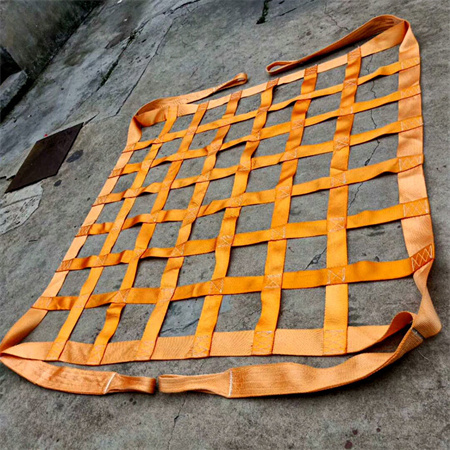
Extra Large Capacity Cargo Net
-
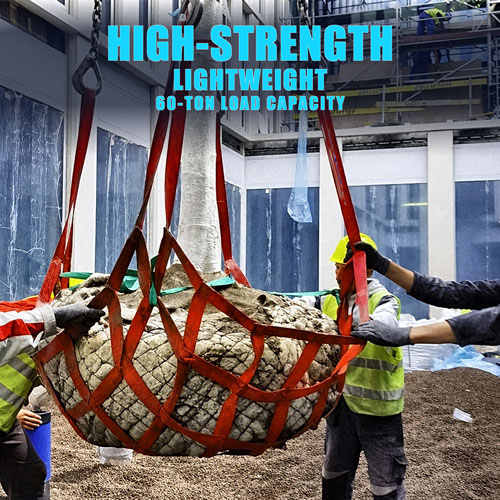
Cargo Webbing Net
-

Color changing nylon double buckle loop nylon braided rope
-

Two end buckle lifting rope, double buckle round lifting rope, double fork nylon lifting rope, non jointed nylon lifting rope
-

Emergency escape lifeline, fire escape rope, fire safety escape emergency rope, steel wire core fire rope

