 Language
 简体中文
简体中文
- On the 2018 National Day holiday, Lifet completed six 100 ton large tonnage lifting belts as a gift
- The role of suspension net in the transportation of goods turnover
- Cargo soft lifting net, lifting net, lifting net, lifting net, bag, climbing net
- Precautions for using Lifutiden elevator
- How to make circular lifting straps
Contact: Wang Lili
E-mail:18066002268
Phone:702461526@qq.com
Address: Lifute Industrial Park, Taizhou City, Jiangsu Province
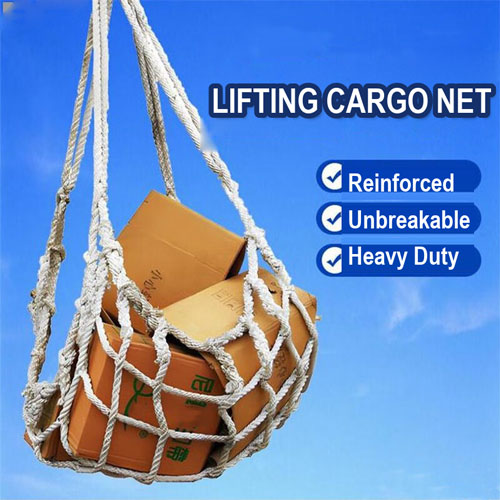
Lift Sling Rigging Co., Ltd manufacture Extra Large Capacity Cargo Net.Extra Large Capacity Cargo Net from Lift Sling Rigging Co., Ltd. The line that came with this product names seven articles - Extra Large Capacity Cargo Net, Extra Large Capacity Lifting Net, Extra Large Capacity Lifting Cargo Net, Heavy Duty Cargo Net, Lifting Nets for Transporting Cargo, Load carrying net and Heavy Duty Cargo Lifting Net - and the seven names are built from three words, of which only one decides anything. Heavy duty is used ninety-eight times across thirty pages of this catalogue as a description and never as a value. An extra large net needs the word capacity to be defined first: on a flat net it is an area, on a bag it is a volume, and on neither is it the load figure that the same word means on the eighty-one product pages that carry a single member. Section 4 is the technical-parameter section and is the reason this page exists: eleven parameters with the unit of each, then what each does on a small article and what it starts to do once the article is large. Four of them are invisible at small size and unavoidable at large. The rest of the page gives the arithmetic of held volume, the ratio of the article‘s own weight to what it carries, where a large article is supported and where it sags, the handling and transport costs that appear only at size, and the lines an enquiry has to carry. No load figure is given for the word capacity, and the page says why.
Hits: ℃
Release time:2026-10-01 17:05
Lift Sling Rigging Co., Ltd manufactures Extra Large Capacity Cargo Net — and the line that came with this product names seven articles: Extra Large Capacity Cargo Net, Extra Large Capacity Lifting Net, Extra Large Capacity Lifting Cargo Net, Heavy Duty Cargo Net, Lifting Nets for Transporting Cargo, Load carrying net, Heavy Duty Cargo Lifting Net. Seven names, and every one of them is built ou t of the same handful of words. Only one of those words decides anything, and it is not the one that sounds strongest.
Extra Large Capacity Cargo Net
1. Seven Names, and the One Word They All Lean On
Read the seven names together and the vocabulary collapses quickly. Extra large, heavy duty and cargo appear again and again; lifting appears four times; net appears in all seven. Strip the repetit ion and three words are doing the work: a size, a description, and a noun. Two of those three are worth almost nothing on their own, and the third is the whole page.
| The word | What this site's own pages measure | What it is worth on an order |
|---|---|---|
| heavy duty | Used ninety-eight times across thirty pages of the catalogue, and it is a description wherever it is used, never a value. | Almost nothing on its own. It tells a reader that the article sits at the stronger end of what the maker offers, which is a fa ir summary and not an order line. |
| extra large | The phrase does not occur anywhere else in the catalogue. The word large on its own does, on forty-five pages, and almost alwa ys in front of a load figure rather than in front of a size. | A size word being used where readers are used to seeing a strength word. That is worth explaining rather than repeating, and S ection 4 does it. |
| capacity | One of the most used words in the catalogue, on eighty-one pages, and on the pages that use it most it always means the same t hing: how much a single-member article will carry. | Everything. It is the one word in the seven names that has to be redefined before the page can go on, because on a net it does not mean what it means everywhere else on this site. |
The conclusion is short and it sets up everything below. The names promise a size and repeat a description; the word that actually needs a definition is capacity, and it is the one word of the thre e that sounds as though it needs none.
2. Capacity on a Net Is Not Capacity on a Sling
This site uses the word capacity on eighty-one of its hundred product pages, and it uses it consistently. On every one of those pages the article has a single member, so its capacity is a figure: h ow much that one member will carry. A net has no such figure at the article level, and the reason is structural rather than a matter of caution.
| The article | What capacity means on it | Why the word cannot be carried across |
|---|---|---|
| A sling, a belt, a rope with two ends | A single figure, and one that the maker can state and the buyer can check against a document. | Not applicable here: a net is not one member, so the figure would describe the strand rather than the article. |
| A flat net | An area, and the size of the smallest thing it will not let through. What it can hold is a function of how it is supported and how the load spreads over it. | The load is not carried by the article alone; it is carried by the article together with the rigging that holds it up. Two ins tallations of the same net are two different capacities. |
| A net in a bag form | A volume, and the shape of the space that volume occupies. This is the reading of capacity that the word extra large in the pr oduct name is really pointing at. | Volume and load are not the same quantity. A bag can be full and light or half full and heavy, and it is the distribution rath er than the fill that the members feel. |
| The honest position | On this article capacity is a description of what fits, not a promise about what will be carried. | A page that quietly turned it into a load figure would be answering a question the product name did not ask, and answering it with a number nobody measured. |
3. The Two Forms in This Product's Own Photographs
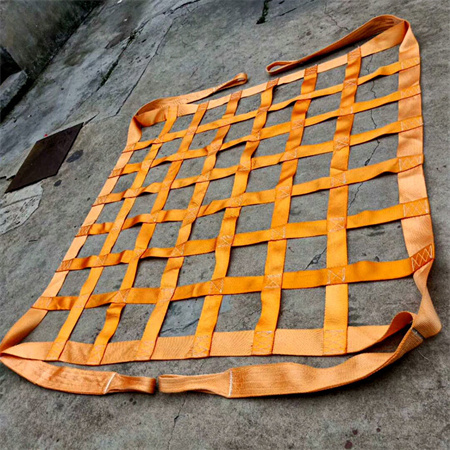
This product's own photographs settle the ambiguity in the name, and they do it by showing two different things. One is a flat sheet of woven tape with square openings, laid out and measured in two directions. The other is the same material in a bag, standing up and holding something. Both belong to this product line, and the word capacity means a different quantity in each of the two pictures.
| The form | What is measured on it | Which of the seven names points at it |
|---|---|---|
| Laid flat | Two lengths and an opening. There is no third dimension to measure, and the article's usefulness is decided by what it will no t let fall through. | Extra Large Capacity Cargo Net, Heavy Duty Cargo Net, Heavy Duty Cargo Lifting Net — the three names that say cargo or heavy a nd say nothing about carriage. |
| Standing as a bag | A footprint, a height, and the shape the material takes when it is filled. All three change with how full it is, which the fla t form never does. | Lifting Nets for Transporting Cargo, Load carrying net — the two names that describe carrying rather than covering. |
| Both at once | The remaining two names, Extra Large Capacity Lifting Net and Extra Large Capacity Lifting Cargo Net, do not say which form is meant, and the two are not interchangeable at the same size. | The buyer has to say which, and the cheapest way to say it is to give the third dimension or to say that there is none. |

4. Technical Parameters: the Figures That Change Their Meaning With Size
Most of a net's parameters are settled by the job and do not care how big the article is. Scale is the exception: there is a group of figures that are rounding errors on a small net and become orde r lines on a large one, and a page that lists parameters without saying which group each belongs to leaves the buyer to find out. The table below gives the unit, then what the figure does on a small a rticle, then what it starts to do on a large one. Read only the two right-hand columns and the difference is the whole argument of this page.
| Parameter | Unit | On a small article | Once the article is large |
|---|---|---|---|
| Outside size, length and width | mm | Two numbers that describe a panel. What matters is whether the load fits inside them. | The ratio of the two numbers starts to matter more than either of them. A long narrow article hangs in the middle with nothing under it, and that unsupported length becomes the figure that decides how it behaves. |
| Aspect ratio of the flat form | none | Nothing at all. On a metre of net the two directions behave alike whatever the ratio. | The first figure worth writing down, because it predicts where the article will sag and therefore which way round it should be rigged. The phrase itself appears nowhere else in this catalogue. |
| Held volume, in the bag form | cubic metre | Easily judged by eye, and easily over-stated, because the eye reads the rim rather than the standing height. | The figure the name is really selling, and the one that runs away fastest: volume grows with the cube of a dimension while the material that contains it grows only with the square. Section 5 sets that out. |
| The height the sides actually stand | mm | Close enough to the height of the material that the difference can be ignored. | Not the same as the cut height, and on a large bag the gap between the two is the difference between a quote and a dispute. It depends on how full the bag is and on what is holding it up. |
| Mesh and clear opening | mm | The decisive figure. It is chosen for the smallest thing the article must not let through, and nothing else competes with it.< /td> | Still the decisive figure, but now it is chosen against the area it has to cover. A small opening over a large area multiplies the member count, so opening and size have to be chosen together rather than one after the other. |
| Member count and crossings | pcs | A few dozen. Nobody counts them and nothing depends on the count. | Hundreds. Making time and inspection time scale with this number rather than with the size, so a large article is not simply a slow small one. It is also the figure that explains the price difference between two quotes for the same outside size. |
| The article's own weight | kg | A rounding error beside the load, and one person handles the article. | A line on the order. It has to be lifted into place before anything is in it, it has to be carried when empty, and at some siz e it needs its own handling plan. Section 6 gives the ratio to watch. |
| Unsupported span between supports | mm | Hardly exists, because a small article is carried all round its edge as a matter of course. | The figure that decides how the article behaves, and it is a property of the rigging rather than of the net. Two installations of the same net at the same load are two different situations, and no inspection afterwards can tell them apart without a record. |
| Sag under the article's own weight | mm | Not measurable by eye and not worth measuring. | Visible before anything is loaded into it, and it changes both the working footprint and where the load ends up sitting. A net that hangs in the middle is no longer the rectangle that was ordered. |
| Attachment loops: count and spread | pcs, mm | Four corners, because that is the habit and because four points hold a small panel flat. | The spread matters more than the count. Whatever the spread is, the load concentrates at the loops that are shortest in the ri gging, so a large article wants more points and a stated spread rather than four corners and an assumption. |
| Packed volume and packed weight | cubic metre, kg | The article folds into something that fits under a bench. | A transport and storage question, and occasionally a customs one. Since the article now has a weight of its own, the two figur es travel together on the order rather than being looked up later. |
Eleven parameters are listed above, and they are on one table because they are one table wherever this article is specified. But read the two right-hand columns again and the pattern is not a matte r of degree. Not one of the eleven behaves the same way at large size as it does at small, and four of them are effectively invisible at small size and unavoidable at large: the aspect ratio of the fl at form, the unsupported span between supports, the sag under the article's own weight, and the packed volume. That is what the word extra large is doing in the product name, and it is why this page i s not a longer version of a page about a small net.
5. The Arithmetic of Held Volume
The word capacity in the product name is a volume word on the bag form, so it is worth writing out how that volume is arrived at. The arithmetic is short, and every line of it is a line a quotation can be checked against.
| What is being worked out | Written out | Why it belongs on the order |
|---|---|---|
| The stated volume of a bag form | The footprint when standing, multiplied by the height the sides actually stand | The footprint is not the flat size of the net: a bag takes up less ground than the material it was cut from, and how much less depends on the shape of the base. Writing the two figures that were multiplied removes the argument. |
| The height that actually stands | Not the cut height of the material. It is the cut height less what the base takes, less what the load stops the sides from sta nding, and it is only reached when the bag is full | This is the single most over-stated figure in this product family. A bag that is quoted at its cut height is quoted at a volum e it will not reach in use, and the error grows with the size of the bag. |
| Why volume runs ahead of material | Volume grows with the cube of a dimension; the material needed to contain it grows with the square | Double every dimension of a bag and it holds about eight times as much while using about four times the material. A large arti cle is therefore not a scaled-up small one, and the price per unit of volume falls as the article grows. |
| Why the same arithmetic does not apply to the flat form | A flat article has no third dimension, so its area grows with the square and the material grows with the square as well | Which is the arithmetic reason the two forms behave differently as they grow, and the reason the seven names of this product c annot all mean the same article. |
6. What the Article Weighs Against What It Carries
On a small net the weight of the thing itself never enters the conversation. On a large one it does, and the figure that decides when is not a weight but a ratio. Different buyers set it differentl y, so the useful thing a page can supply is the ratio itself rather than a threshold it has no authority to set.
| The ratio | What it tells the buyer | What it does not tell him |
|---|---|---|
| The article's own weight, divided by what it holds | How much of the lifting effort is spent on the article before any load is considered, and therefore whether the article can st ill be handled the way it was handled at a smaller size. | Whether the article is strong enough. It is a handling figure, not a strength figure, and treating it as one is how a large ne t gets ordered on a small net's reasoning. |
| The same ratio, at the point where the article is empty | Whether the article can be lifted and positioned empty, which on a large article is a separate operation from lifting it loade d and is often the harder of the two. | Anything about the ground or the rigging. Both are properties of the installation and both belong in the order rather than in a reply. |
| Why the page states no threshold | Because the acceptable ratio is set by the buyer's own handling rules and by the equipment on his site, neither of which is kn own here. | It does tell him that the question is a ratio rather than a weight, which is enough to make his own rules answerable. |
7. Where a Large Article Is Supported, and Where It Sags
The single largest difference between a small net and a large one is not in the net. It is in the rigging, because a large article cannot be held at every point along its edge and a small one alway s can. Once part of the edge is unsupported, the article stops being a rectangle and starts to be a shape that depends on how it was hung.
| What is happening | Why it matters at size | What the order has to carry |
|---|---|---|
| The load concentrates at the shortest point in the rigging | On a small article carried at four corners the points are near enough equal that the difference can be ignored. Spread the sam e four corners over several metres and the shortest one takes a share of the load that the others do not. | The number of points and their spread, as two separate figures. Also, whether the article is meant to hang on all of them or o n a stated subset, because hanging on fewer points is a different article. |
| The middle of the span is unsupported | Whatever is not held from above is carried by the members themselves, and they are carrying it in a direction they were not la id out for. This is the mechanism behind almost every complaint about a large net that looked right when it was delivered. | The span, or the spacing between supports, stated in the same unit as the size. It is a figure about the installation, and the maker cannot supply it. |
| The article sags under its own weight before it is loaded | This is the one that surprises people, because it happens with nothing in the article at all. What was ordered as a rectangle now has a lowest point in the middle, and that point is where the load will collect. | Nothing, directly, because sag is an outcome rather than an input. What belongs on the order is the span and the number of poi nts that produce it. |
| The working footprint is no longer the size that was ordered | A hanging article occupies more ground than a flat one and less than its own span, depending on the sag. On a large article th e difference is metres, and it is the figure that decides whether the thing can be used in the space it was bought for. | The size of the space, or the maximum footprint, stated alongside the size of the net. This is the one line buyers most often discover they needed after delivery. |

8. Handling, Storage and Transport: the Costs That Only Appear at Size
Four of the eleven parameters in Section 4 are invisible on a small net and unavoidable on a large one. All four are costs, and none of them is a property of the netting: they belong to the article as a thing that has to be moved, stored and packed. This section is short because the point is only that they are on the order at all.
| The cost | Where it appears |
|---|---|
| Getting the article into position | A small article is carried by hand to the job. A large one is lifted into place empty, which needs the same rigging twice and a decision about which points to use for the empty lift. |
| Storing it when it is not in use | A folded large article occupies a footprint of its own, and it wants to be stored off the ground and out of the light. On this site the pages that deal with sunlight and with water are the outdoor pages, and what they say arrives here on a larger scale because an article of this kind presents far more surface for its weight. |
| Transporting it empty | Packed volume and packed weight travel together, because at this size the article's own mass is no longer a rounding error. On a long delivery this becomes a freight decision rather than a packing decision. |
| Inspecting it | The member count from Section 4 is the inspection workload. A large article with a small mesh has hundreds of crossings, and t he practical consequence is that a large article is inspected in sections against a record rather than in one pass, because one pass over several hundred crossings is not a reliable inspection. |
| Replacing it | A damaged large article is not replaced on the day, so the order is usually for more than one, or the buyer keeps a spare. Tha t is a purchasing consequence of size and it is worth stating plainly. |

9. Where the Rest of This Subject Is Argued
This page has deliberately stayed on scale, because scale is what the product name adds. Four parts of the subject belong elsewhere and are not repeated here, and saying which page holds which part is more useful than a summary of them.
| The part of the subject | Where it is argued | What this page takes from it |
|---|---|---|
| The construction: how the members cross, what a mesh is, what the border and the loops do | The cargo webbing net page, which is the page for the structure and takes it from the mesh outwards. | Only that the same construction is used here at a different scale, which is the reason the parameters in Section 4 behave diff erently as the article grows. |
| Buying against a document, in lots, with a prescribed acceptance step | The heavy duty military cargo netting page, which is where the institutional way of buying this article is set out. | Nothing, except that its parameter list and this one are complementary: that page asks who fixes each figure, and this page as ks what each figure does once the article is large. |
| A net that catches a person rather than holding a load | Nowhere on this site, and deliberately so. The boundary between a lifting article and an article that arrests a person is set out on the mining reflective lifting belt page. | The assumption that this page is on the cargo side of that boundary, and nothing else. |
| The fibre, and how it behaves out of doors | The outdoor flat sling pages, which own that subject outright. | One consequence of size, stated in Section 8: the same behaviour arrives sooner on a large article because there is more surfa ce and more edge for the same weight. |
| The other net forms this maker builds | The cylindrical lifting net page, which is the article that is a net i n three dimensions from the outset rather than a flat net used as a bag. | The distinction matters here because the seven names of this product mix the two, and Section 3 separated them. |
10. What the Order Has to Name
In the order in which the lines decide whether the rest can be answered. The first four are the ones the seven product names make it easy to leave out, because each of the names sounds as though it has already said something.
| # | The line | Why it has to be there |
|---|---|---|
| 1 | Which form: laid flat, or standing as a bag | It decides whether capacity means an area or a volume, and the two are not interchangeable at the same outside size. |
| 2 | The full three dimensions, or a statement that there are only two | The third dimension is what makes the volume arithmetic of Section 5 possible. Without it, the word capacity in the product na me cannot be priced. |
| 3 | The mesh, and the smallest thing the article must not let through | At large size the mesh is chosen against the area it covers, because the two together set the member count and therefore the p rice. |
| 4 | How it will be supported: how many points, and the span between them | These are the figures that decide sag and load distribution, and they belong to the installation. They are the lines a buyer m ost often discovers he needed after delivery. |
| 5 | The space it has to work in, stated as a maximum footprint | A hanging large article does not occupy the size that was ordered, and whether it fits is settled before the order rather than on site. |
| 6 | The border and the loops, and whether the article hangs on all of them | All of the load arrives at the edge, and at large size the points are far enough apart that the assumption about which ones ca rry no longer holds. |
| 7 | The fibre, the finish, and whether the article is stored outdoors | The fibre's behaviour belongs to the outdoor pages, but the storage question is a consequence of size and therefore belongs he re. |
| 8 | Packed volume and packed weight, and how many are wanted | These are the lines that turn a large article into a freight and spares question, and they are cheaper to answer before the or der than after it. |
Where the other half of this product family lives, on this site: cargo webbing net, heavy duty military cargo netting, cylindrical lifting net, mining reflective lifting belt, flat sling, circular sling.
11. What This Page Has Deliberately Not Said
Each item below is a silence, and each has a reason. Listing them is the cheapest way to keep the page useful to a buyer who is comparing it with a page that is less careful.
| The silence | Why |
|---|---|
| No load figure is given for the word capacity | On a net, capacity is a description of what fits rather than a promise about what will be carried, and the figure depends on t he rigging. Section 2 sets out the whole argument rather than leaving the omission to be noticed. |
| No ceiling is put on the size that can be made | A size ceiling belongs to a particular maker's equipment and is a matter for a quotation. What this page can say is which para meters change as the article grows, and Section 4 does that. |
| No volume is quoted for any bag | A stated volume is only meaningful with the footprint and the standing height it was arrived from, and those come from the ord er. Section 5 gives the arithmetic so the buyer can check a figure rather than take one. |
| No maximum span is given | The acceptable span depends on the load and on the buyer's own rules, neither of which is known here. The page states that the span is the deciding figure, which is the part that can be stated without pretending to know his installation. |
| No comparison with other makers is drawn | The parameters in Section 4 are the comparison. Any buyer who has them can tell two quotes apart without being told which one to prefer. |

Frequently Asked Questions
What does capacity mean on this net?
On the flat form it is an area and the size of the opening. On the bag form it is a volume. It is not a load figure, and the reason is that a net is not a single member: what it carries depends on how it is supported as much as on the article itself. Section 2 sets the two readings out side by side.
Is extra large a size or a strength?
A size. The word large appears on forty-five other pages of this catalogue and almost always in front of a load figure, which is why an extra large net can read as a strength claim. On this page it means what Section 4 describes: five figures move from the background into the order.
Flat net or bag - which do I need?
If the load has its own shape and only needs holding together or covering, the flat form. If the article is expected to contain the load while it is lifted, the bag form, because that is the one wi th a volume. The two are not interchangeable at the same outside size, and giving the third dimension is the clearest way to say which is wanted.
How is the volume of a bag worked out?
Footprint when standing, multiplied by the height the sides actually stand. The second figure is not the cut height of the material: it is the cut height less what the base takes and less what the load stops the sides from standing. A bag quoted at its cut height is quoted at a volume it will not reach in use, and the error grows with the size of the bag.
Why does a large net sag before anything is put in it?
Because it has weight of its own, and on a large article that weight is no longer negligible against the distance between supports. The sag is the visible result, and it matters because it changes both the working footprint and the point at which the load will collect. What belongs on the order is the span and the number of supporting points, which are the inputs behind the sag.
How many lifting points should a large net have?
It is a property of the installation rather than of the netting, and it has to be stated with the order. The figure that matters more than the count is the spread, because whatever the spread is, t he load concentrates at the loops that are shortest in the rigging. Four corners is a habit that works on a small article and stops working as the article grows.
How many members and crossings will the article have?
The count is the crossing of sections of Section 4: the outside size and the mesh together decide it, and on a large article with a small mesh it runs into the hundreds. It matters twice, once beca use making time scales with it and once because it is the inspection workload.
Should I order more than one?
At this size it is worth asking. A damaged large article is not replaced the same day, so buyers of large nets commonly order a spare or a pair. That is a purchasing consequence of size rather than a property of the product, and it belongs in the enquiry where it can be priced.
Can it be stored outdoors?
The behaviour of the fibre under sunlight and water is argued on this site's outdoor flat pages, and this page does not repeat it. What changes at this size is stated in Section 8: for the same wei ght there is far more surface and far more edge, so those effects arrive sooner than they do on a strap.
What should I send with an enquiry?
The first four lines of Section 10: which form, the full three dimensions or a statement that there are two, the mesh with the smallest thing the article must not let through, and how it will be su pported. Then the space it has to work in, the border and loops, the fibre and finish, and the packed volume with the quantity.
Do you make nets larger than the ones shown?
The photographs on this page are of this maker's own work and they show the two forms rather than the range. What this page can state is which parameters change as the size grows, because that is w hat makes a larger enquiry answerable. The size itself is a matter for a quotation.
Contact Lift Sling Rigging Co., Ltd
Lift Sling Rigging Co., Ltd, Lifute Industrial Park, Taizhou City, Jiangsu Province, China. Telephone and WeChat: 18066002268. E-mail: 702461526@qq.com. HS code 630790. State which of the two forms the enquiry is for, give the full three dimensions or say that there are only two, and state how the article will be supported and the space it has to work in.
- Previous:Cylindrical lifting net, three-dimensional network, lifting bag, weighted sling, dock lifting net with circular lifting bag
- Next:Heavy Duty Military Cargo Netting
-
Drone Anti-collision Net
-

Extra Large Capacity Cargo Net
-
Cargo Webbing Net
-

Color changing nylon double buckle loop nylon braided rope
-

Two end buckle lifting rope, double buckle round lifting rope, double fork nylon lifting rope, non jointed nylon lifting rope
-

Emergency escape lifeline, fire escape rope, fire safety escape emergency rope, steel wire core fire rope

