 Language
 简体中文
简体中文
- On the 2018 National Day holiday, Lifet completed six 100 ton large tonnage lifting belts as a gift
- The role of suspension net in the transportation of goods turnover
- Cargo soft lifting net, lifting net, lifting net, lifting net, bag, climbing net
- Precautions for using Lifutiden elevator
- How to make circular lifting straps
Contact: Wang Lili
E-mail:18066002268
Phone:702461526@qq.com
Address: Lifute Industrial Park, Taizhou City, Jiangsu Province

Lifute Hoisting Co., Ltd. 18066002268 produces lifting belts, lifting nets, nylon ropes, soft ladders, steel wire rope rigging, paper ropes, safety belts, safety nets, lifting chains, steel coil hoists, crossbeam hoists, flat lifting belts, circular lifting belts, electric traction ropes, high-altitude safety belts, and anti fall safety nets Fire safety rope, static safety rope, dynamic safety rope The three names in this line do not describe three grades of one article. They answer two different questions, and confusing the two is how a rope ends up doing a job it was never built for.
Hits: ℃
Release time:2026-09-28 15:16
Lift Sling Rigging Co., Ltd manufactures Fire safety rope, static safety rope, dynamic safety rope. Fire Safety Rope, Static Safety Rope and Dynamic Safety Rope — Three Names, and the Two Different Questions Behind Them
Fire Safety Rope, Static Safety Rope and Dynamic Safety Rope — Three Names, and the Two Different Questions Behind Them
The short answer. The three names in this line do not describe three grades of one article. They answer two different questions, and confusing the two is how a rope ends up doing a job it was never built for.
Fire safety rope answers a question about the rope: what does it have to survive? The threat is heat, and the answer is a material property. Static safety rope and < em>dynamic safety rope answer a question about the person: what happens to the energy of a fall? These two are not a scale from worse to better. They are opposite designs for the same event, and the reason both exist is that a falling body has to be stopped in a way it can survive.
That second point is the one worth stating plainly at the top of the page, because the words work against it. Static sounds safer than dynamic, and it is not; it means the rope is built not to stretch, which is exactly what you want for raising, lowering and holding position, and exactly what you must not use to arrest a fall. The standard that governs it does not even use the word static — it calls these ropes low-stretch, which is the honest description.
So this page does three things. It separates the three names by the question each one answers. It sets out why the dynamic and low-stretch classes exist as a pair, what each one does with a fall, a nd why the standards keep them apart. And it treats the fire rope as what it is — a third question about the material rather than a third answer about energy — including where this page stops, because heat data for particular fibres is argued on other pages of this site and is not quantified here.

The page's own photograph, and a good place to begin because it shows the one thing all three names have in common. The rope is braided — a woven outer structure over an inner load-bearing part, which is the construction the whole safety-rope trade is built on — and it is white, uniform, and of a diameter that would be recognisable on any site. At one end is a metal connector. Now the honest part, and it is the reason Sections 2 and 4 exist: nothing in this picture says whether this rope i s a dynamic rope or a low-stretch one, because the two are made the same way and look the same. You cannot tell from a photograph, and you frequently cannot tell by handling it. That is precisely why the marking and the documentation are part of the article rather than an accessory to it.
1. Three Names, and the Two Different Questions Behind Them
Read the three names as answers to a question and the line stops being a list of three similar things.
| Name | The question it answers | What kind of property the answer is |
|---|---|---|
| Fire safety rope | What must the rope itself survive? The threat is heat or flame, and the answer concerns the material it is made from. | A material property. It says nothing about how the rope behaves under a falling load, and a heat-resistant rope can be either of the other two. |
| Static safety rope | What happens to the fall? This class is built to stretch as little as possible, because there are jobs where stretch is a prob lem rather than a help. | A design choice about energy and control. It is a class of its own, governed by its own standard, and the standard calls it low-stretch (Section 2). |
| Dynamic safety rope | What happens to the fall? This class is built to stretch deliberately, so that the energy of a fall is absorbed over distance instead of being delivered all at once. | The same design question answered the other way. It is not a stronger version of the low-stretch rope; it is the opposite trad e made on purpose. |
Two consequences follow from that table, and both of them matter more than any specification discussed later on this page.
The first two names and the third do not compete. A rope can be low-stretch and heat-resistant, or dynamic and heat-resistant, or heat-resistant and neither. The fire question is answ ered by the material; the energy question is answered by the construction. An order that names only one of them has left the other entirely open, and no amount of reading the name will close the gap.< /p>
And the word static is doing damage. In ordinary speech it suggests something that does not move, which is reassuring. In this trade it means a rope engineered to extend as little as possible — which is a virtue when a load has to be held in a controlled position and a hazard when a person has to be caught. Section 2 is about that word and what the standard actually says instead.< /p>
2. "Static" Is a Trade Word; the Standard Calls It Low-Stretch
The distinction is worth stating precisely, because it is not pedantry. It is the difference between two classes of article whose names are frequently swapped in conversation and whose certificates are not interchangeable.
In the European standards, the two classes are governed by different documents and described in the standards' own words:
| The class the trade calls | What the standard is written for | What that class is designed to do |
|---|---|---|
| "Static" rope | EN 1891, the low-stretch kernmantel rope standard. The standard's own name for the class is low-stretch — the word static does not appear in it. | Combine high tensile strength with low elongation. The design objective is that the rope hardly extends when loaded, so a posi tion or a load stays where it was put. |
| "Dynamic" rope | EN 892, the dynamic mountaineering rope standard, alongside the corresponding UIAA requirements for the same class. | Combine a high capacity to absorb energy with low impact forces. The design objective is that a fall is brought to a stop grad ually enough for a body to tolerate it. |
Two observations about those two lines, and the first is the one to remember.
The difference is where the energy goes. Both classes are made to hold a load. The difference is what each does when a load arrives suddenly. A dynamic rope pays the energy out into e xtension — a great deal of it, over a distance, which is why its elongation is measured by its own test and why the standard caps how much it may stretch under a static load as well as under a fall. A low-stretch rope refuses that payment: it stays short, keeps the load close to where it was, and delivers the arrest over a much shorter distance.
And the figures for the two classes are not comparable, because they are measuring different things. This page deliberately does not print the test values here, because a number lifte d from a table and applied to a particular rope is a claim rather than a measurement. What matters is the structure of the argument: each class has its own standard, its own tests, and its own marking , and a rope is a member of one class or the other rather than somewhere along a line between them. Where the article's own figures belong is on the article's own documentation, and Section 6 asks for them by name.
3. Why One Cannot Stand In for the Other
This is the section that exists because the mistake it describes is made, repeatedly, by people who are not careless. It is made by people who read the word static as reassuring and reach for the r ope that is stiff.
A fall has to be paid for somewhere, and the rope is one of the two accounts it can be paid from. The event releases energy. It is absorbed by the rope extending, by the body and the equipment deforming, and — if neither of those takes enough — by the body taking the rest. A falling person can survive a large amount of energy delivered gently and a much smaller amount delivered ab ruptly; that is the whole reason the dynamic class exists.
| What is being asked of the rope | The class that is built for it | What happens if the other class is used instead |
|---|---|---|
| Holding a load or a person at a position | Low-stretch. Extension is the enemy of control: the load sags, the position drifts, and a great deal of stretching rope has to be got out of the way. | A dynamic rope used for positioning will do the job and will be unpleasant: it will stretch under the load, keep moving, and w ork against anyone trying to hold a place or lift a casualty. |
| Bringing a fallen person to a stop | Dynamic. The extension is the safety feature, and the standard measures the force that reaches the person as a result. | A low-stretch rope used to catch a fall does not extend enough to absorb the energy, so the arrest happens over a shorter dist ance and the force on the body rises. This is the substitution that must not be made, and it is the reason the two classes carry different marks. |
| Carrying a load where extension would be dangerous | A rope chosen for low extension, because a load that stretches its way towards an obstruction has lost the distance it needed. | The stretch that is harmless on an empty rope becomes travel when there is something to hit, and the problem presents as an un expected impact rather than as a rope failure. |
| Stopping a fall close to the anchor | A class designed for the case where little rope is out, which is the worst case for the force generated, and is the case the s tandards test. | Substituting the stiff rope raises the force exactly where the arrangement already has the least ability to reduce it. The err or compounds precisely when it is least affordable. |
Where this page stops, and where the argument continues. The general principle that an article which lifts a load and an article which arrests a person are two different articles, mad e to different standards and judged by different inspection regimes, is argued in full on the mining reflective lifting belt page, and is not rebuilt here. What belongs to this page is the narrower point that falls out of it: within the family of articles used to arrest a person, there are two classes that look alike and must n ot be swapped. That is a distinction inside the fall-protection world rather than at its boundary, which is why it is made here.
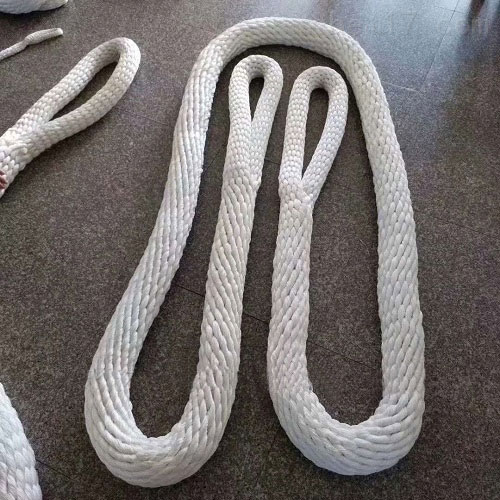
What the two classes have in common, which is why the confusion is so easy. Both are made the same way — the same woven outer st ructure, the same kind of inner load-bearing part — and at this distance they are indistinguishable from one another. The difference between a dynamic rope and a low-stretch rope is not visibl e on the outside and cannot be felt by squeezing the coil. It is recorded in how the structure was built and in what the article's document says about it, and it is carried by the marking the manufacturer applies. A site that relies on appearance or weight to separate them is relying on nothing, and this is the single most important reason Section 6 exists.
4. The Fire Rope Answers a Different Question Again
The third name in the line is not a third position on an energy scale. It is a question about the rope rather than about the fall, and it is worth separating cleanly.
A fire safety rope is described by what it must survive. Heat, flame and hot debris are threats to the article itself — to the material it is made from and, just as importantly, to th e things that hold it together. The property in question is a material property, and it is answered by choosing a fibre and a construction that behave acceptably at temperature rather than by changing how the rope is built.
Three consequences follow from that, and each of them changes how the article should be ordered and used.
It is orthogonal to the energy question. A heat-resistant rope can be low-stretch or dynamic, because those two properties live in the construction while heat resistance lives in the material. An order that says only fire safety rope has named a material requirement and left the energy requirement entirely open — and the energy requirement is the one that decides what hap pens if somebody falls.
And the endpoints are not only the rope. A heat-resistant rope with an ordinary connector on the end has moved the weak point rather than removed it. On an article used near heat, the fibre, the stitches, any sleeve, and the metal at the ends are each answering the question separately, and the assembly is only as heat-resistant as the part that gives in first. That is the same poi nt the site makes about the layers of a high-temperature article on the high temperature ring eye type sling page, and it is a good reason to r ead that page alongside this one.
And the data belongs with the material, not here. This page does not quote melting points, working temperatures or degradation thresholds for any fibre, because those figures depend o n the specific fibre and the specific article, and because they are already argued where they belong: the high temperature resistant rope page an d the high-temperature lifting articles cover the behaviour of materials at heat. What this page says about the fire rope is a matter of scope rather than of numbers — it is a requirement about the ma terial, it does not replace the energy requirement, and it does not stop at the rope.
A practical note to close the section, because it is the sort of thing that decides an order. Where heat and fall protection are both in play — which is the case, for example, on a job where a pers on may have to be caught near hot equipment or a fire scene — the two requirements have to be written as two requirements. Naming one does not imply the other, and a supplier who is given only one of them will quote to the one they were given.
5. What the Sheath and the Core Each Do
All three names in this line are, in practice, made from the same kind of article: a woven outer structure over an inner load-bearing part. That construction is why the classes can look identical, and it is also the reason an inspection has to be told what it is looking at.
| Part of the rope | What it is for | What that means for using and judging it |
|---|---|---|
| The outer structure | It takes the handling. It meets the edge, the rock, the hardware and the ground, and on a well-made article it is expected to be sacrificed so that the part inside is not. | It is the part you can see, which is why it receives almost all of the attention at an inspection — and why an article can be condemned on its surface while the load-bearing part is sound, or passed on its surface while the load-bearing part is not. |
| The inner load-bearing part | It carries the load. It is also, in the two classes of Section 2, the part that decides how the rope behaves when a load arriv es suddenly. | It is the part you cannot see, and the part whose condition decides whether the article is still what it was certified as. Dam age here is the reason the article comes out of service, and damage here is exactly what the surface hides. |
| The interface between them | How the load is passed from the inside to the outside, and how the two layers move against each other as the rope is used. | Where the two layers separate or slip relative to one another, the article has changed in a way that can be felt before it can be seen. This is the observation that most repays handling a rope rather than only looking at it. |
| The ends, where the article becomes usable | The eye, splice, sleeve or connector through which the rope is attached to everything else — and on the article in the photogr aph at the top of this page, a metal connector. | A second article with its own defect list. A connector is judged as a connector and is not made more trustworthy by being atta ched to a sound rope, and a fire-safe rope with an ordinary connector has moved its weak point rather than removed it. |
One consequence of that table deserves its own sentence, because it is the practical heart of the page. The part that decides what the article can do is the part that cannot be examin ed. Everything visible on a safety rope is the part that was designed to wear out first. So an inspection is not a reading of the article's condition; it is an inference from the outside about the ins ide, and an inference is only as good as what it is compared against.
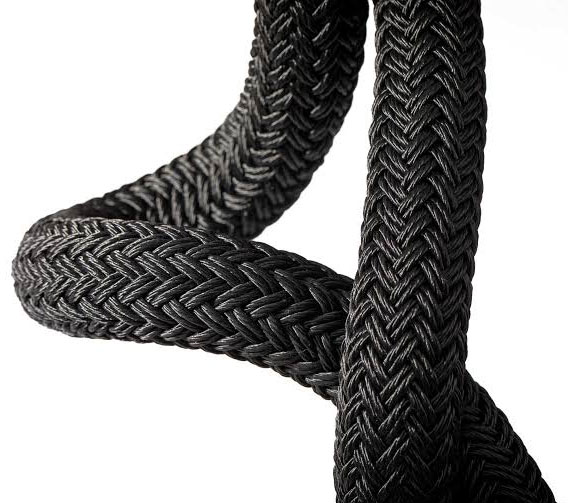
The construction that makes the confusion possible, seen close up. The outer structure here is continuous along the whole length — no seam, no covering, no stitching — and beneath it is the part that carries the load. Two points belong with the picture. First, on an article built this way the layer that meets the edge is also part of the assembly that holds the load, which is why surface damage is a strength question rather than a cosmetic one. Second, and more difficult: a clean outer structure proves only that th e outer structure is clean. What is inside it is what the certificate describes, and the inspection in Section 7 is the discipline of inferring one from the other.
6. What the Order Has to Name for Each of the Three
Because the three names answer different questions, one order form does not fit all three. The table below is the same eight lines read against each class, and the entries marked as decisive are th e ones that cannot be inferred from anything else on the page.
| Line | Dynamic safety rope | Static (low-stretch) safety rope | Fire safety rope |
|---|---|---|---|
| 1. Which class, by name and standard | Decisive. Say dynamic, and quote the standard the class is certified to. | Decisive. Say low-stretch rather than static, so the class cannot be mistaken for the other one. | Not a class of its own in that sense. It must be ordered as well as one of the two above, not instead of them. |
| 2. What it has to do | Arrest a falling person. Say so, and say how much rope will be out at worst. | Hold or move a load or a person at a controlled position, or raise and lower. | Survive the environment: state what the heat source is, how close it comes, and for how long. |
| 3. Diameter and construction | Diameter, and the type the class covers, since the class contains more than one kind. | Diameter and construction; low-stretch ropes are made in more than one pattern. | The fibre, since that is where the heat answer lives, and the construction that goes with it. |
| 4. Length | Working length, and whether it is cut or supplied in a fixed length. | Working length, with the way it is measured stated. | As for whichever of the two other classes it also has to be. |
| 5. The figures, from the document | The manufacturer's own figures for the class, quoted from the article's document rather than from a general table. | The same, for its own class. The two sets are not comparable with each other. | The material's behaviour at the stated condition, as documented for that article. |
| 6. Ends and connectors | What is at each end, and if a connector, its own rating and the hardware it must suit. | The same. On a lowering or positioning rope the end may be worked through hardware continuously. | Where a fire order most often fails. The ends, sleeves and connectors have to answer the heat question too. |
| 7. Marking | What the band and the document must state, because the class cannot be told from the rope. | The same, and it matters most here: a low-stretch rope mistaken for a dynamic one is the dangerous direction. | The material and the class it is being supplied as, alongside whichever energy class applies. |
| 8. Documentation | The certificate for the class, and the article's own record of use. | The certificate for its class, and its own record. | The material documentation, and the record of what heat it has already been through (Section 8). |
The single most useful line in that table is the first one, and the reason is Section 5's. The two energy classes look alike and handle alike, so the class is not something a buyer ca n leave to the supplier to work out from the job description. It has to be written, and it has to be written with the standard's word for it rather than the trade's.
7. Inspection: Three Different Histories
A safety rope of any of the three kinds is inspected by the same routine — before use, and more often where conditions warrant — but what the inspector is looking for, and what the finding means, d iffers by class. A single inspection list applied to all three will pass one article it should stop and stop one it should pass.
| What is being examined | On a dynamic rope | On a low-stretch rope | On a fire rope |
|---|---|---|---|
| The outer structure | The working surface: flattening, glazing and local wear. A dynamic rope is worked hard by normal use, and its sheath is expect ed to show it. | The same, and it matters more: on a rope used for raising, lowering or positioning, the surface runs through hardware continuo usly rather than occasionally. | The same, plus anything that looks like heat: a change in colour, a fused or glossy patch, stiffness where the rope was supple . |
| The feel of the rope in the hand | Soft or thin places, and places where the rope is noticeably flatter than the rest. A rope that has lost its roundness has los t something real. | The same. On a stiff class the change is easier to feel, which is an advantage of the class rather than of the inspector. | Stiffness, brittleness and any local hardening. Heat damage to a synthetic rope shows up in its handling long before the surfa ce tells you anything. |
| The ends and connectors | The connection is the part that takes the arrest, so wear, deformation and any opening of the connector's own mechanism are fi ndings in their own right. | The same, with attention to the hardware the rope runs over rather than to arrest loading. | Whether the ends and connectors belong to the same article as the heat-resistant rope, and whether they have seen the same hea t. |
| What the record has to supply | A fall history. This is the class whose condition cannot be read from its appearance, because the part that absorbed the energy is inside it. | A use history: what it has lifted, lowered or held, and what it has been dragged over. | A heat history. What it has been exposed to, at what proximity, for how long, and whether that is within what the material was chosen for. |
| The failure that looking will not catch | A rope that has held a severe fall and looks as it did before. Nothing visible changes, and the article's ability to do its jo b again may already have been used up. | Internal damage under an intact surface, which is the general problem of every covered construction on this site. | Degradation already suffered but not yet showing, since heat damage to a synthetic material continues in the sense that the st rength has gone before the appearance has. |
Two conclusions, and the first is the one this page wants remembered.
A dynamic rope is the clearest case on this site of an article whose condition is a matter of record rather than observation. Its whole purpose is to absorb energy by deforming in a w ay that is invisible from outside; the deformation is not always permanent, and the rope can be left looking and feeling entirely serviceable after an event that has consumed part of its capacity to d o that job again. Everything in the row above therefore rests on somebody having written down that the fall happened.
And the fire rope adds a history rather than replacing one. A rope that has been near heat does not become a different class; it becomes an article of its class with a reduced margin. Whether that matters depends on what it is being asked to do next, which is why the heat record sits alongside the use record rather than instead of it.
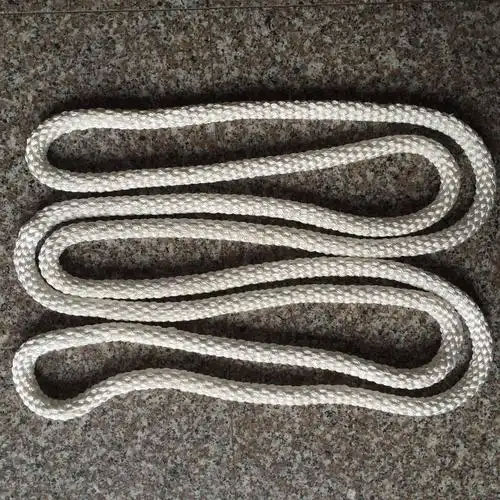
The baseline every observation above is measured against, and the reason a safety rope has to be recorded when it is new. This r ope is clean, straight, uniform and undeformed: no flattening, no glazing, no hard patch, no local thinning, nothing to compare against later because there is nothing to see yet. A rope examin ed for the first time on the day it is needed can be described and cannot be assessed, and on the dynamic class in particular the thing that will decide whether it should still be in service is not visible in this photograph or in any other.
8. Retirement, and the Record That Decides It
The three classes leave service for different reasons, and a site that retires all of them on the same rule will keep the ones it should not and lose the ones it should.
| The trigger | Why it is the trigger for that class | What has to exist for the rule to work |
|---|---|---|
| An event, on a dynamic rope | The article's job is to spend something when it is called on, and the spending is not always visible afterwards. So the event itself — not the appearance — is what triggers the decision. | A rule that says what counts as an event, and a means of recording one when it happens. Without the record the rule cannot be applied, however good the rule is. |
| Accumulated wear, on a low-stretch rope | The article is worked continuously rather than occasionally, so its margin is consumed gradually by the surface rather than sp ent in a moment. | A routine that looks at the working length rather than at the ends, and a benchmark from when the rope was new. |
| Exposure, on a fire rope | The material requirement is answered once, at manufacture. What changes afterwards is how much of that answer has already been used. | A description of what the rope met and when, matched against what the material was chosen to withstand. |
| Contamination, on any of the three | What has worked into the structure is inside the article and cannot be taken back out, and it does its damage on every subsequ ent use. | Knowledge of where the rope has been. This is also the case that most easily goes unrecorded, because it feels like an ordinar y day. |
| Damage found by inspection | The straightforward case, and the only one that needs no history. What is visible is decisive and the article goes. | Somebody competent to make the judgement and the authority to make it stick. |
And one thing to say about the whole of this section, since it applies to every class and is the part that is most often skimmed. None of these triggers is a judgement about how the r ope looks. Four of the five depend on something that has to have been written down: that a fall happened, what the rope was dragged over, what it met at heat, where it has been. That is not administra tion added to the engineering; on an article whose working part cannot be examined, the record is the other half of the inspection. A site with three classes of safety rope and one register i s better equipped than a site with three classes and none, and the register costs a fraction of any one of the ropes.
9. The Vocabulary of This Work That the Catalogue Never Uses
This site has a hundred product pages, and the terms a person meets in their first week of rope work appear on none of them. The words are not obscure; they are simply absent, which is why enquirie s for a fire safety rope arrive without them and why an order for a static safety rope is often written without saying which class is meant.
| Term a buyer will meet | What it means | Why it decides something about the order |
|---|---|---|
| Kernmantle | The core-and-sheath construction described in Section 5: a woven outer structure protecting and working with an inner load-bea ring part. It is the standard way safety ropes are built, in both energy classes. | It is the reason the two classes look alike, and therefore the reason the class has to be written rather than recognised. |
| Impact force | The force the arrest delivers to the falling person, which is the quantity the dynamic class is built to keep down. It is the outcome the whole design exists to control. | It is what makes the dynamic rope a safety article rather than a strong one. A rope that could hold a great deal and delivered it abruptly would be the wrong article. |
| Elongation, in two senses | The stretch measured under a steady load, and the stretch developed during a fall test. The two are different measurements and are quoted for different reasons. | They are the figures that separate the two classes, and they are why a number taken from one class's table means nothing when applied to the other. |
| Fall factor | The relationship between how far a person falls and how much rope is out to catch them, which is the reason the same rope can produce very different forces on different days. | It explains why an order has to state how much rope will be out at worst (Section 6), and why "a fall" is not by itself a spec ification. |
| Work positioning, and rope access | The way of working in which a rope holds a person at a place instead of catching them when they leave it. It is the home of th e low-stretch class. | It is the phrase that tells a supplier that stretch is the enemy and that the positioning class is wanted — and it is the phra se most enquiries leave out. |
| Descender, ascender, connector | The hardware the rope runs through or is attached by: the devices that let a person move on a rope, and the metal that joins r ope to everything else. | The end of a rope and the hardware it meets are one decision, exactly as the ring and its pin are on the traction-rope page of this site. |
Two conclusions, both of which change what an enquiry should contain.
The class is the specification, and the other terms are how it is expressed. An enquiry that names the class and the standard has said the thing that cannot be inferred. An enquiry th at names only the job — "a rope for working at height" — has said something a supplier cannot act on.
And the vocabulary is what makes the fire order complete. A fire safety rope is the one of the three whose order is most likely to arrive short, because the heat requirement feels lik e the whole requirement. It is a material requirement, and it sits alongside an energy requirement rather than replacing one.
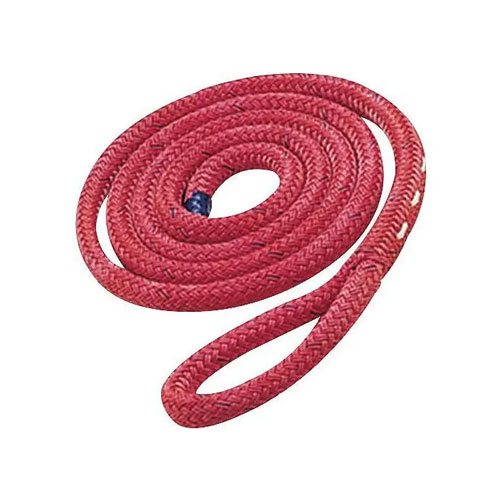
What colour can and cannot do on these articles, and why the class has to be written down. Colour on a safety rope does three ge nuine jobs: it makes the rope visible where it is used, it lets a site assign colours to its own roles, and it lets a coil be identified from across a store without uncoiling it. There is one job it m ust not be given, and it is the job most often given to it. No colour states a class. A red rope can be a dynamic safety rope and a white one can be a low-stretch one, and the reverse is equally true; the photograph at the top of this page and this one show two ropes whose classes nobody could determine by looking. That is the reason the marking and the document are treated on thi s page as part of the article.
10. Which Part of This Subject Is Argued Where
This page takes the safety-rope family as its subject: the two questions behind the three names, the two energy classes and why they cannot be swapped, the construction that makes them look alike, and the three different histories an inspection has to be compared against. The subjects that belong to neighbouring pages are linked here rather than restated.
| Subject | Where it is argued | Why it is not repeated here |
|---|---|---|
| That a lifting article and an article which arrests a person are two different things, with diff erent standards and inspection regimes | the mining reflective lifting belt page | Made in full at that boundary. This page takes the distinction that lives inside the fall-protection family, between two classes that look alike. |
| Behaviour of particular fibres at temperature, and what a high-temperature article is | the high temperature resistant rope page and the high temperature ring eye type sling page | Material heat data belongs with the material, and the multi-part argument — that a heat-resistant article is only as heat-resi stant as its weakest component — is already made there. |
| Core-and-cover articles as lifting goods, where the cover protects a core | the circular lifting straps page | A different duty. Much of the structure is similar and the standard, the markings and the job are not. |
| Ropes as working lines — traction, running lines and the machinery of a pulling job | the high-voltage traction rope page and the large tonnage hoisting rope page | Those pages cover ropes that pull and carry rather than ropes that hold people, including construction and splicing detail tha t is common to all of them. |
| Non-conductive articles near live parts, and why that differs from insulating | the cable sling page | A different qualification, and one which a safety rope does not acquire by being a safety rope. |
One sentence on why a page lists what it does not cover. A safety rope is bought for its class, its ends and its history. Everything else about an article made of rope — how the co nstruction works, how a figure is derived, what a standard requires of a document — is shared across the whole catalogue, and it is better made once in the place where it is made properly than repeate d on every page that mentions a rope.
Frequently Asked Questions
Is a static safety rope safer than a dynamic one?
No, and the word is the problem. A static rope — properly, a low-stretch rope — is built not to extend, which is what you want when holding a position or lowering a load and what you must not rely on when catching a falling person. The dynamic class exists precisely because a fall has to be absorbed somewhere, and the rope is the component best placed to do it. Neither class is safer i n the abstract; each is right for one job and wrong for the other.
Can I use a low-stretch rope to catch a fall?
It should not be used as the article that arrests a fall. Because it does not extend enough to absorb the energy, the arrest happens over a shorter distance and the force delivered rises — which is the opposite of what the dynamic class is built to achieve. The two classes exist as a pair because this substitution is a known and serious error, and it is the reason they carry different markings and different certificates.
Can I use a dynamic safety rope for lifting or lowering?
It will hold the load, and it will be unpleasant to work with. The stretch that is a safety feature in an arrest becomes lost movement in a controlled operation: the load sags, positions drift, and the rope keeps extending as the load comes on. For raising, lowering and holding a place, the low-stretch class is the one built for the job.
What does the standard call a static rope?
Low-stretch. The European standard for this class is written for low-stretch kernmantel ropes, and the word static does not appear in it. That is worth knowing when ordering, because writing "stati c" invites a supplier to interpret the word, whereas naming the class and the standard does not. The same applies on the other side: the dynamic class has its own standard and its own accompanying req uirements.
Is a fire safety rope also a fall-protection rope?
Not by itself. Fire safety rope describes what the rope must survive — a material property — while the energy classes describe what happens to a fall. A heat-resistant rope can be either a dynamic or a low-stretch one, or neither, because those properties live in the construction rather than the material. If both are needed, write both requirements; naming one does not imply the other, and a su pplier given one will quote to that one.
Do you quote impact force or elongation figures?
Not on this page, and the reason is not evasion. Those figures belong to the specific article and its class, and a number taken from a general table and applied to a particular rope would be a clai m rather than a measurement. What we will do is quote the figures for the article being offered, from its own documentation, and say which class and which standard they belong to. If a figure cannot b e produced for an article on those terms, that absence is itself the finding.
How do I tell the three apart on a site?
For the two energy classes, you do not — and that is the point. They are made the same way, look the same and handle the same, and the one in the photograph at the top of this page could be either. The class is established from the marking and the documentation, not from appearance. The third name is different in kind: whether a rope is the heat-resistant one is a matter of what it is made from , which is also a documented fact rather than a visible one.
What should the marking say?
Enough for the class to be settled by somebody picking the rope up in a hurry: which class it belongs to, the standard it is made and certified to, and the article's identification. This matters mo st in the dangerous direction — a low-stretch rope mistaken for a dynamic one. Because the classes cannot be told apart by eye, an unmarked safety rope is not an article with a missing label; it is an article whose class is unknown.
When does a dynamic rope have to be retired?
On the record of what it has been through, not on how it looks. A dynamic rope's job is to spend its capacity absorbing energy, and after a serious fall it can look and feel entirely serviceable wh ile having used up part of the ability to do that job again. So the retirement rule depends on an event being recorded when it happens. Visible damage retires it too, but the invisible case is the one the rule exists for.
Can a fire safety rope have ordinary connectors and sleeves?
It can be supplied that way, and the assembly would then be only as heat-resistant as its weakest part. End fittings, sleeves and connectors each answer the heat question separately, and a heat-res istant rope finished with ordinary hardware has moved the weak point rather than removed it. If the article is going near heat, the ends have to be specified as part of the heat requirement rather tha n assumed to inherit it.
What should I send with an enquiry?
First, which class, named by the standard's own words — dynamic or low-stretch — and then whether a heat requirement applies as well, because those are the two things that cannot be inferred. After that: what the rope has to do and how much of it will be out at worst, diameter and construction, length with the way it is measured stated, the ends and connectors with their own ratings, the markin g you need, and the documentation. If the job involves heat, say what the source is, how close it comes and for how long.
Contact Lift Sling Rigging Co., Ltd
Fire safety rope is supplied against a stated heat requirement, and static safety rope and dynamic safety rope are supplied as the two distinct classes they are — low-stretch and dynamic, each to i ts own standard, each marked so that the class cannot be mistaken. We will not treat the three names as three positions on one scale, because they are not, and the difference is the one thing on this page that a buyer most needs to have written down.
Tell us the class first and the heat requirement second, and then the job. After those two lines the diameter, the construction, the length and the ends all become answerable, and the quotation bec omes a statement about an article rather than a figure attached to a name. Where the arrangement is one we cannot supply honestly — because the class being asked for is wrong for the job it is meant t o do, or because a heat requirement has been written without the ends being written with it — we will say so, and on this subject that is more useful than a quotation.
Five parts of this subject are argued in full elsewhere on this site and are linked rather than repeated here: the boundary between a lifting article and an article which arrests a person, on the < a href="https://www.jsxsdj.com/product/fangdaosheng.html">mining reflective lifting belt page; the behaviour of particular fibres at temperature, on the high temperature resistant rope page and the high temperature ring eye type sling page; core-and-cover articles as lifting goods, o n the circular lifting straps page; ropes that pull rather than hold people, on the high-voltage traction rope page; and why being non-conductive is not the same as being insulating, on the cable sling page.
Telephone and WeChat: 18066002268
E-mail: 702461526@qq.com
Address: Lifute Industrial Park, Taizhou City, Jiangsu Province, China
HS code: 630790
- Previous:Hand woven nylon lifting rope, seamless nylon lifting rope
- Next:High strength circular high-voltage traction rope with lifti
-
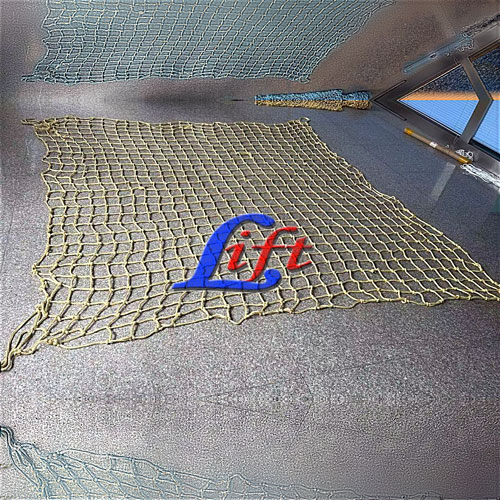
Drone Anti-collision Net
-
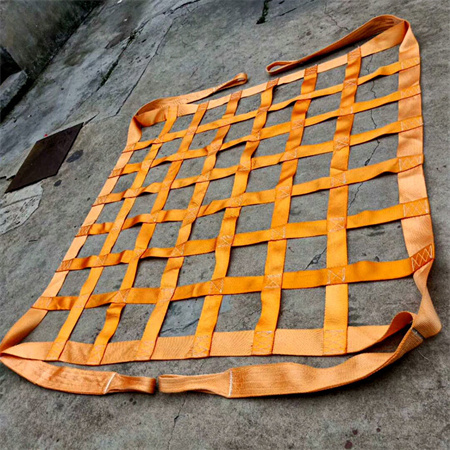
Extra Large Capacity Cargo Net
-
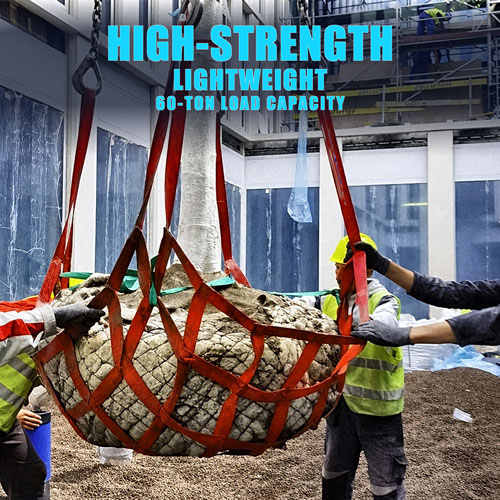
Cargo Webbing Net
-

Color changing nylon double buckle loop nylon braided rope
-

Two end buckle lifting rope, double buckle round lifting rope, double fork nylon lifting rope, non jointed nylon lifting rope
-

Emergency escape lifeline, fire escape rope, fire safety escape emergency rope, steel wire core fire rope

