 Language
 简体中文
简体中文
- On the 2018 National Day holiday, Lifet completed six 100 ton large tonnage lifting belts as a gift
- The role of suspension net in the transportation of goods turnover
- Cargo soft lifting net, lifting net, lifting net, lifting net, bag, climbing net
- Precautions for using Lifutiden elevator
- How to make circular lifting straps
Contact: Wang Lili
E-mail:18066002268
Phone:702461526@qq.com
Address: Lifute Industrial Park, Taizhou City, Jiangsu Province
Lifute Hoisting Co., Ltd. 18066002268 produces lifting belts, lifting nets, nylon ropes, soft ladders, steel wire rope rigging, paper ropes, safety belts, safety nets, lifting chains, steel coil hoists, crossbeam hoists, flat lifting belts, circular lifting belts, electric traction ropes, high-altitude safety belts, and anti fall safety nets mergency escape lifeline, fire escape rope, fire safety escape emergency rope, steel wire core fire rope. Lift Sling Rigging Co., Ltd manufactures it, and the four phrases in that name answer two different questions: three of them are about getting a person down from a height and one is about what is inside the rope.
Hits: ℃
Release time:2026-09-29 11:43
Lift Sling Rigging Co., Ltd manufactures Emergency escape lifeline, fire escape rope, fire safety escape emergency rope, steel wire core fire rope — four phrases that a buyer usually writes on one order line and that answer two completely different questions. Three of them are about a person leaving a building by a rope. The fourth is about what is inside the rope. This page takes them in that order, because the second question is easy to answer and the first one is the whole difficulty: every other rope on this site is handled by someone whose trade is lifting, and this one is used once, i n a hurry, by someone who has never handled it before.
Emergency Escape Lifeline, Fire Escape Rope, Fire Safety Escape Emergency Rope, Steel Wire Core Fire Rope
The description that came with this product reads: flame retardant safety rope, household emergency escape rope, high-rise fire rescue rope, safety rope. Three of those four phrases are about getti ng down from a building and one is about the rope surviving; this page keeps that division, and answers the second question first because it is the shorter one.
1. Four Names, Two Questions, and One of Them Is About the User
The four phrases in the product name separate cleanly into a question about the descent and a question about the rope's construction. They are not two versions of the same requirement, and no choic e on one of them settles the other.
| The phrase | The question it answers | What that question is really about |
|---|---|---|
| Emergency escape lifeline | What must the descent do? | The user. The word lifeline describes a route as much as a rope: something fixed in advance, that a person who is not a rigger can commit to without judgement. |
| Fire escape rope and fire safety escape emergency rope | The same question, asked twice | The same user, under a condition added: heat, smoke and darkness. Neither phrase adds a second requirement to the descent; bot h add circumstances to it. |
| Steel wire core fire rope | What is inside the rope? | The construction. This phrase says nothing about who uses the rope or how the descent is controlled, and a rope can satisfy it while failing the first question entirely. |
The two questions are worth separating before anything else on this page, because a specification that answers only the fourth phrase looks complete and is not. A rope with a steel core in a fire-r esistant cover is a real and useful object; it is not, by itself, a means of getting a person down from a height. What turns one into the other is a descent control and an anchor, and those are the pa rts the other three phrases are about.
2. What the Standard Calls This, and Why the Name Matters
The phrase emergency escape lifeline is a trade description. The word the standards use for the device that lowers a person in a rescue or escape is a descender device, and the standard that covers them is EN 341, Personal fall protection equipment, descender devices for rescue. Nothing on this site has used that term before, and the site's rope pages have all been about ropes as cargo, so it i s worth setting out what the standard actually divides.
| What EN 341 divides | What it means for an escape rope order |
|---|---|
| Two types. Type 1 is automatic: once the descent has started, the braking system needs no action from the user. Type 2 is manu ally operated and requires the user to act. | This is the first thing to settle, and it is not a preference. An automatic class of device and a manually operated one assume different users, and an order that does not name the type has not said what it is buying. |
| Four classes, A to D, by the descent energy the device can withstand. A Class D device is certified for a single descent. | The standard itself contemplates a device built for one use. So single descent is a legitimate requirement rather than a compr omise, and it has to be stated, because the same name is used for devices built to be reused. |
| The scope excludes descender devices intended for mountaineering, rope access and work positioning, and it requires the device to be treated as personal protective equipment. | A rope supplied for escape is not a rope-access article and the two should not be quoted interchangeably. The equipment it bel ongs to is protective equipment, not lifting gear. |
| Where a device also lifts a person, additional conformity to EN 1496 class A is required. | Lowering and raising are separate functions. If the article is meant to bring someone up as well as down, say so, because that is an extra requirement rather than an extra convenience. |
Two consequences follow. The first is that the name emergency escape lifeline cannot be checked on its own; what can be checked is whether a device is Type 1 or Type 2, which class it is, and wheth er the paperwork says so. The second is that the standards for this work are not the standards this site's other pages quote: EN 1492 and its parts belong to flat woven webbing slings, and quoting the m for an escape article would be quoting the wrong document.
3. What the User Being Untrained Forces on the Article
Every other rope on this site is used by a person whose trade it is. An escape rope is used by a person who is meeting it for the first time, possibly at night, possibly with smoke, possibly not al one. That single fact generates most of the design requirements, and it is the reason this page does not begin with materials.
| What follows from the user | What it means for the article and the order |
|---|---|
| Nothing may depend on a decision taken at the moment of use. The route has to be chosen, and fitted, before it is needed. | The order is about a fixed installation as much as about a rope: an anchor point, a stored rope, and instructions that were re ad while calm. A rope sold loose is a component of that system, not the system. |
| The hands may be occupied, wet, gloved or injured, and the descent cannot rely on grip strength or on a technique learned in t raining. | A Type 1 automatic device removes the user's action from the descent; a Type 2 device puts it back. Whichever is chosen, the r eason should be written down with the order. |
| The descent is a single event, and it cannot be rehearsed on the article that will be used. | Stored condition becomes part of the specification. What the article does after years of hanging in a cabinet, unopened, is th e thing that will actually be tested. |
| More than one person may descend, one after another, on the same installation. | The number of descents expected decides between a single descent class and a reusable one. This is the line that most often go es unstated, and it is the one the class system answers. |
4. The Chinese Procurement Route Names a Different Document
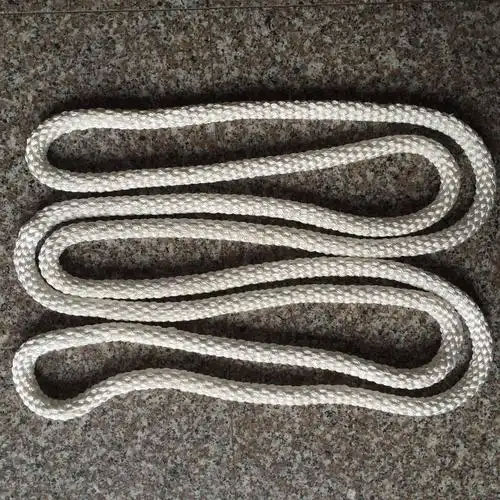
Escape equipment bought for a Chinese fire service or a building installation is usually bought against a different document than the European one. Tenders for fire equipment name XF 494-2004, the public safety industry standard for fall-arrest equipment for fire service use, and they call the rope a general-purpose safety rope supplied together with a safety hook, with the two rated together.< /p>
| What the procurement documents actually require | What this page will and will not say |
|---|---|
| A rope that meets XF 494-2004, supplied with test reports and certification, and a safety hook meeting the same standard, quot ed as a set of defined length. | This page does not claim that any particular article has been tested to that standard. What it says is that the standard is th e one the paperwork will be checked against, so it belongs on the enquiry. |
| Uniform thickness and consistent construction along the whole length, with a clean surface, are written into the requirement i n those documents. | Those are things a buyer can inspect on delivery. They are also the first things a splice, a join or a core change disturbs, w hich is why the construction section below matters to the same buyer. |
One boundary is worth drawing here, because it is drawn wrongly very often. A material having a property is not the same as an article having passed a test. A fibre can be inherently heat resistant and the rope made from it can still be uncertified; a tendered document naming a standard describes what the buyer will ask for, not what any given supplier has. This page therefore keeps material cl aims and certification claims in separate sentences, and says which is which.
5. Steel Wire Core: What a Core Changes, and What It Cannot Do
The fourth phrase in the name is the only one that describes the inside of the article, and it is the one this site has never written about: neither steel wire core, nor wire core, nor steel core a ppears anywhere on its other pages. That is worth saying plainly, because these are useful words that a buyer may assume everyone shares a meaning for.
| What the wire core changes | What it means in use |
|---|---|
| The load path is no longer only the fibre. A metal core carries part of the tension itself, and it is the part that remains when the outer structure has been consumed. | The rope survives longer against the specific threat it was built for, and its strength is no longer governed by the fibre alo ne. It also means the rope's strength cannot be estimated from the fibre's figures. |
| The rope stops stretching. A metal core does not extend usefully under load, so the extension a person would feel in a fibre rope is largely gone. | That is a gain for a fixed route and a loss for anything that relies on the rope absorbing energy. This page does not repeat t he argument about how a rope pays for a fall; it is made at length on the page about the rope's own energy behaviour, and it is not reversed here. |
| A kink is permanent. Metal takes a set, so a tight coil, a sharp bend or a figure-eight in stora ge leaves a deformation that does not come out on its own. | Storage stops being housekeeping and becomes part of the specification: a minimum bend radius and a coil diameter belong on th e order, and the damage from getting them wrong is done before the rope is ever used. |
| The core conducts heat along the rope. A metal path inside the article moves heat from the hot e nd toward the cool end, ahead of the fire. | Fire resistance of the cover and fire resistance of the article are not the same claim. The part that has not been in the fire can still have been heated, which is one reason the record matters more than the appearance. |
| The end cannot be made the way a fibre rope's end is made. A metal core is terminated mechanical ly, by a fitting pressed or formed onto it, rather than tucked back into the structure. | The terminations are a separate item on the order with their own dimensions and their own material, and the connection to the rest of the system is a component, not a detail. Note also that the words for those fittings do not appear on this site anywhere. |
| Damage inside is invisible. Metal fatigue, corrosion and a broken core strand do not show on the outside of a rope with a cover over them. | A surface inspection cannot clear a wire-cored rope. What it can do is find the things that are visible, and the rest of the j udgement has to come from what the rope has been through and how it was stored. |
One thing the core does not do deserves its own sentence, because it is the assumption that costs the most: a steel core does not make an article into a descent system. It changes what the rope can survive. It says nothing about whether a person can hold it, control it, or arrive at the bottom at a speed they can stand up from. Those are the questions of the next section.
6. The Two Questions Do Not Compete, and Neither Replaces the Other
The fire question and the escape question are independent. A rope can answer either one, both, or neither, and the four cases are all real products rather than a scale of quality.
| The combination | What it is for | What it is not |
|---|---|---|
| Resistant rope, no descent control | A rope that survives an environment: a guiding line, a hauling line, a piece of equipment that has to keep working where thing s are hot. | A means of escape. Without a control there is nothing between the user and the fall. |
| Descent control, ordinary rope | The classic escape installation, where the threat is being trapped rather than being burned, and the route is protected. | Anything to do with a fire next to the rope itself. The route has to be chosen accordingly. |
| Both, with a wire core | An installation that must keep its rope intact along a hot or exposed route, with the descent controlled by a device rather th an by the user's hands. | A system that tolerates a damaged end. The metal core and its terminations are the part that needs the most attention, not the least. |
| Neither | A rope used for something else entirely, where the escape vocabulary has been borrowed to describe it. | Anything this page has described. Borrowing the words is the most common way an order ends up specifying nothing. |
7. What the Order Has to Name
Written in the order in which the lines decide whether the rest can be answered, this is what a complete enquiry for this article carries. The first four lines are the ones that are usually missing , and they are also the ones that decide the remainder.
| # | The line | Why it has to be there |
|---|---|---|
| 1 | Automatic or manually operated descent | This decides who the article is for. Every other line is read differently depending on the answer. |
| 2 | One descent, or a device to be used again | Single descent is a recognised class rather than a downgrade. Left unwritten, the two are quoted at each other. |
| 3 | The height or energy the descent has to handle, and how many people will follow one another | The class system is built on descent energy, so this is the number the class answers. It is the line that most often goes miss ing. |
| 4 | Which standard the paperwork has to answer to | A European installation and a Chinese fire-service procurement are checked against different documents. Naming one avoids bein g quoted a certificate for the other. |
| 5 | The rope: construction, diameter and length, and whether the core is required | Cored and uncored ropes of the same diameter are different articles. The length is a working length, not a total. |
| 6 | The terminations at each end, and the anchor and connector they meet | The connection is where the article joins the system. On a wire-cored rope it is a mechanical fitting with its own specificati on. |
| 7 | Storage requirements: container, bend radius, and where it will hang | For an article that may hang unopened for years, this decides its condition on the day it is needed. |
| 8 | Marking, the instructions supplied with it, and the record that will follow it | The instructions are part of the article, because the user is not trained on it. The record is what the next inspection reads. |
8. Inspection and Retirement When the Article May Never Be Used
Inspection on this site usually means reading the wear on an article that works every day. This article is the opposite case: it may hang in a cabinet for years and then be used once, or never. The same principle still applies, and it is the one this site's other pages state: what can be seen is one input and not the whole answer.
| What a scheduled check can establish | What it cannot, and what covers the difference |
|---|---|
| That the article is still there, still sealed, still marked and still the one the record describes. A route whose rope has bee n moved or whose container has been opened without a note has lost the certainty that made it a route. | Whether the rope inside is still fit. For that, the container has to be opened and the rope examined, so the check has to incl ude opening it and putting it back properly. |
| On a wire-cored rope: a kink that has not come out, a cover that has been flattened or locally worn, a change of colour, and a fitting that has moved or slipped at an end. | Fatigue, corrosion or a broken strand inside the core. None of it shows through a cover, and no amount of looking will produce it. |
| That heat has been near the article, from a changed surface, a stiffened section or a fitting that is now harder to move. | How far along the core the heat travelled, which is the part that matters when the core is metal. |
| That the article has been used at all, which on a single-descent class is itself the retirement condition. | Whether a single descent is still available. A device certified for one descent is spent by definition once it has done it, ho wever good it looks afterwards. |
9. The Words This Page Uses, and the One It Refuses to Define
This page has used four phrases from the product name, and it has used them the way a buyer will meet them rather than the way a standard writes them. That gap is worth naming, because two of the w ords have no single agreed meaning and pretending otherwise would only make the order look complete.
| The word | Why it has no single meaning here | What to write instead |
|---|---|---|
| Lifeline | Used in the trade for a route a person takes, and used in the standards vocabulary for a component of a fall-arrest system. Th e two are not the same object, and the word does not say which is meant. | Describe the route and its anchor, and name the descent device by type. Those two things can be checked; the word on its own c annot. |
| Fire safety rope | It appears nowhere on this site and has no definition behind it. On an order it could mean that the rope resists flame, that i t survives heat, or that it is used in a fire, and the three lead to different articles. | Say which of the three is meant. If it is heat, say whether the requirement is the cover, the core, or the article as a whole. |
| Fireproof | A material can be inherently heat resistant and the article still be untested. The property belongs to the fibre; the claim be longs to the finished rope, and they are established in different ways. | Keep the two sentences apart: one about the material, one about what the finished article has been shown to do. |
| Steel wire core fire rope | This page found no standard that covers the article as a category. There are standards for descender devices and for fire-serv ice fall-arrest equipment, and there is a great deal of standardisation for wire rope as a product, but not for a rope whose core is wire and whose purpose is escape. | Describe the components: the core material and construction, the cover material, the terminations, and the device it is used w ith. Each of those is a thing a supplier can answer for. |
The refusal to define that last phrase is deliberate. Where an industry uses a word loosely, inventing a definition on a product page creates a specification that no test can confirm, and the buyer is worse off for having it. The reliable move is the one above: name the parts, and let the components carry the claims.
10. Which Part of This Subject Is Argued Where
The subject reaches further than this page. The parts of it that are already argued elsewhere on the site are linked below, and none of them is repeated here.
| The part of the subject | Where it is argued | Why it is not repeated here |
|---|---|---|
| The rope's own energy behaviour: what extension does, and why the standard's word is not the tra de's word | the fire safety rope, static safety rope and dynamic safety rope pag e | It is argued there in full. This page only says that a metal core removes most of that extension, and that the loss cuts both ways. |
| A lifting article and an article that arrests a person being two different things | the mining reflective lifting belt page | The boundary is drawn there. On this page the same boundary is the reason the rope may not be quoted as lifting gear. |
| What a fibre does as it gets hot, and what a high temperature article is | the high temperature resistant ring eye type lifting belt page | The material behaviour is set out there. This page only needs it to distinguish a cover claim from an article claim. |
| Flame resistance in a woven article | the fireproof article page | That page covers the woven family. This one is about a rope and about what happens at its terminations. |
| Metal wire as part of a lifting article, and the fittings it is terminated with | the cable sling page | That page takes metal wire as the load-bearing body of a sling. Here it is a core inside a fibre cover, which fails in differe nt ways. |
| Nylon as a material for a rope or sling | the nylon woven flat sling page | Its behaviour wet, warm and chemically loaded is argued there. This page names no fibre, because the core, not the fibre, is i ts subject. |
| Rescue, as opposed to escape by the person themselves | the fire rescue rope page | That page is the rescue side of the same family and is not yet written. Until it is, this page carries the escape question on its own, and this link is the pointer rather than a reference. |
Frequently Asked Questions
Is a steel wire core rope stronger than a fibre rope?
It is stronger against the specific threat it was built for, which is the outer structure being consumed. Its strength is no longer governed by the fibre alone, so it cannot be estimated from the c over's figures either. Ask for the core and the terminations by name.
Does a wire core make a rope safer to fall on?
No, and it is worth being direct about this. A metal core removes most of the extension, and extension is how a rope absorbs energy. A rope that does not extend has to be paired with a device that handles the energy instead.
What does Class D mean?
In EN 341 the classes A to D are set by the descent energy a device can withstand, and a Class D device is certified for a single descent. Single descent is therefore a recognised requirement, not a compromise, and it has to be stated because the same product name is used for reusable devices.
What is the difference between Type 1 and Type 2?
Type 1 is automatic: once the descent has begun, the braking system needs nothing from the user. Type 2 is manually operated and requires the user to act. The choice is about who will be using the article, not about which is better.
Is this rope rated for lifting?
No. Escape equipment is protective equipment rather than lifting gear, and the standard for descender devices explicitly excludes equipment for mountaineering, rope access and work positioning. If a lifting article is wanted, it is a different page and a different set of figures.
Can I use it for rope access?
Not as rope-access equipment. Rope access is a trade with its own equipment, and a rope supplied for escape is not interchangeable with it. What an installation needs for escape is a route, an anch or and a descent device of a stated type.
How many people can descend on one installation?
That is the question the number of descents answers, and it should be on the enquiry. A single descent class is spent by the first person down; a device intended for repeated use is specified diffe rently from the start.
How should the rope be stored?
Wherever the answer is, it belongs in the specification rather than in the housekeeping. A wire core takes a permanent set, so the container and the minimum bend radius decide whether the rope is s till sound on the day it is opened.
Can I inspect the rope myself?
You can inspect what is visible: kinks that have not come out, a flattened or worn cover, discolouration, and fittings that have moved. On a wire-cored rope that is not the whole story, because fat igue and corrosion inside the core leave no mark on the outside. The record covers the rest.
Does the site's high temperature rope page cover this article?
Only the material side. That page is about how a fibre behaves as it gets hot and what a high temperature article is. This page is about a person descending and about what a metal core changes, whi ch is a different subject.
What should I send with an enquiry?
Automatic or manually operated; one descent or repeated use; the height or energy the descent must handle and how many people will follow each other; the standard the paperwork must answer to; the rope's construction, diameter and length; the terminations at both ends; the anchor and connector; the storage requirement; and the marking and documents. The first four lines decide whether the rest can be answered.
Contact Lift Sling Rigging Co., Ltd

Lift Sling Rigging Co., Ltd, Lifute Industrial Park, Taizhou City, Jiangsu Province, China. Telephone and WeChat: 18066002268. E-mail: 702461526@qq.com. HS code 630790. State the descent type, the number of descents expected, the energy the descent must handle and the standard the paperwork has to answer to, and the reply can be checked line by line.
- Previous:Two end buckle lifting rope, double buckle round lifting rope, double fork nylon lifting rope, non jointed nylon lifting rope
- Next:Hand woven nylon lifting rope, seamless nylon lifting rope
-
Drone Anti-collision Net
-
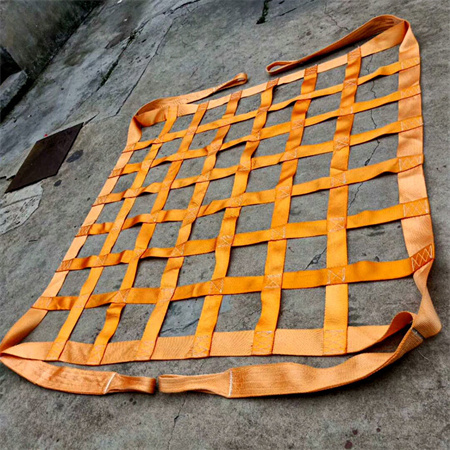
Extra Large Capacity Cargo Net
-
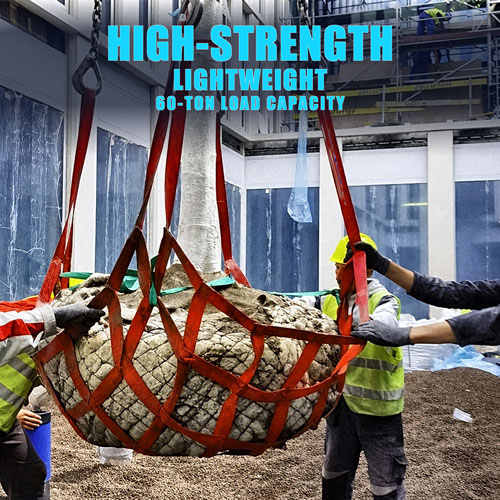
Cargo Webbing Net
-

Color changing nylon double buckle loop nylon braided rope
-

Two end buckle lifting rope, double buckle round lifting rope, double fork nylon lifting rope, non jointed nylon lifting rope
-

Emergency escape lifeline, fire escape rope, fire safety escape emergency rope, steel wire core fire rope

