 Language
 简体中文
简体中文
- On the 2018 National Day holiday, Lifet completed six 100 ton large tonnage lifting belts as a gift
- The role of suspension net in the transportation of goods turnover
- Cargo soft lifting net, lifting net, lifting net, lifting net, bag, climbing net
- Precautions for using Lifutiden elevator
- How to make circular lifting straps
Contact: Wang Lili
E-mail:18066002268
Phone:702461526@qq.com
Address: Lifute Industrial Park, Taizhou City, Jiangsu Province
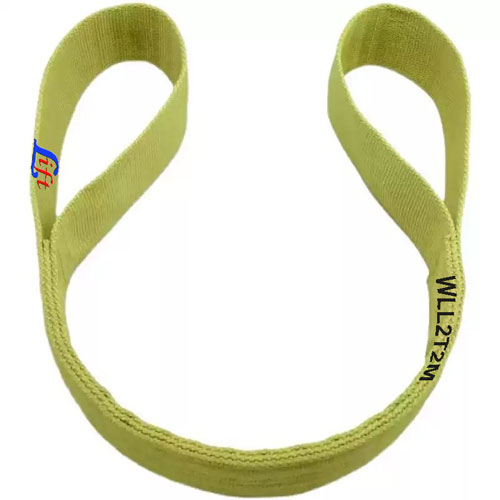
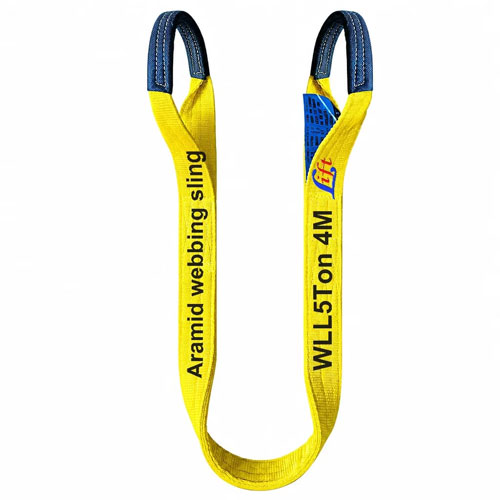
Lift Sling Rigging Co., Ltd manufactures premium High Temperature Aramid Webbing Lifting Sling, engineered for extreme‑heat lifting scenarios where standard polyester slings cannot perform. Constructed from robust aramid fiber material, this high‑temperature resistant lifting sling maintains stable tensile strength under high‑heat working conditions, ideal for metal foundries, steel mills, forging workshops and hot‑cargo handling applications.Resistant to high temperatures, cut‑tear damage and thermal degradation, it avoids melting or rapid strength loss during hot load hoisting. Flexible webbing structure safeguards workpiece surfaces against scratches, unlike rigid metal rigging hardware. Multiple working load limits and custom lengths are available to suit diverse site requirements. Each High Temperature Aramid Webbing Lifting Sling goes through strict safety testing and meets international industrial lifting standards. Lightweight yet heavy‑duty, it is your reliable solution for high‑temperature rigging tasks. Order factory‑supply aramid high temperature lifting slings from Lift Sling Rigging Co., Ltd.
Hits: ℃
Release time:2026-09-23 15:14
Lift Sling Rigging Co., Ltd manufacture Aramid Webbing Sling,Flame-resistant aramid sling,High Strength Aramid Sling,High Temperature Aramid Webbing Lifting Sling,Kevlar flat sling webbing,Fire Retardant Kevlar Webbing Lifting Belt,Kevlar Webbing Sling.
High Temperature Aramid Webbing Lifting Sling — Three Numbers, Four Materials
High temperature sounds like a figure and is not one. The phrase hides three different numbers - the temperature the article may work at continuously, the peak it survives briefly, and the temperature at which it stops being able to carry its load - and it is carried by four different materials, of which the webbing is only the first: the stitching thread that forms the eyes, the label that carries the rating, and the fittings. This page is about which of the three numbers to ask for, which of the four materials is usually the first to fail, and what to look at first when an article comes back hot. HS code 630790; telephone 18066002268.
1. High Temperature Is Not a Number
Every quotation for an article of this kind asks the same question back - how hot - and the answer is usually a single figure. That figure is not enough to specify the article, and it is the reason two suppliers can quote the same temperature and deliver articles that behave differently in service.

| What the buyer usually says | What it does not say | Why the difference matters |
|---|---|---|
| It has to work at this temperature | For how long, and carrying what | The same article may be suitable for a short exposure and unsuitable for a continuous one |
| It gets hot in our process | How hot, and by which route - the air, the load, or contact with something hot | Radiant heat, contact heat and a hot load heat the article differently |
| Aramid is good for high temperature | Which figure was measured, and on what | A figure published for a yarn and a figure for a stitched article are different pieces of evidence |
| It must be fire resistant | Whether the requirement is a fire claim or a temperature claim | They are separate questions with separate evidence; the flame-resistant article page takes the fire side |
2. The Three Numbers the Phrase Hides
A single temperature in a quotation is usually one of the three below, and the supplier rarely says which. Asking for all three is what turns a figure into a specification.
| The number | What it means | What to ask for | What it cannot tell you |
|---|---|---|---|
| Continuous working temperature | The temperature at which the article may be used as a matter of routine, holding its rated load | The working temperature the maker publishes for the article, with the load and the duration it is based on | Anything about a brief excursion above it |
| Short-term peak | A temperature the article survives for a stated time without being taken out of service | The figure, the time it is allowed for, and whether the article is used again afterwards | That the article is unchanged by the excursion; that is what inspection is for |
| The temperature at which strength is lost | The point at which the material stops being able to carry the load it was rated for | The retained-strength figure, and the temperature and time it was measured at | Where between the working temperature and that point the safe limit lies |
The published working temperature of the fibre itself is one of these three and only one of them: aramid yarns are usually quoted around 150 degrees C where polyester is quoted around 90. That figure is a starting point rather than an answer, and the ceiling that applies to a finished article is set out on the high temperature resistant ring eye lifting belt page. What follows here is the part that figure leaves out.
3. The Article Is Four Materials, Not One
A webbing sling is a small assembly. The webbing is the visible part and the one the temperature claim is usually about, but the article holds its rating through three other parts, and each of them has its own behaviour at temperature.
| The part | What it does | Why temperature matters to it | What to ask |
|---|---|---|---|
| The webbing | Carries the load along its length | It is the part the temperature claim is normally made about, and the part that is visible | The weight, the width, and the fibre |
| The stitching thread | Forms the eyes and attaches any fittings, so it is what makes the end of the article an end | A thread whose limit is lower than the web's makes the eye the weakest point of a hot article - and the thread is the same material question as the web, not a detail | Which thread, in what material, and what its own temperature limit is |
| The label that carries the rating | It is the marking, and the marking is what authorises the article's use | A label that chars, embrittles, shrinks or falls off takes the article out of service even where the web is untouched | How the label is fixed, and what it is made of |
| The fittings, where there are any | Hooks, rings or other hardware at the ends | Hardware has its own temperature behaviour, and a heated fitting is not the fitting that was rated | The fitting's material and its own limit |
The question that follows from the table is not what the article is made of, but which of its four parts sets the limit - and the answer is usually not the webbing.
A supplier who can answer only the webbing question has answered a quarter of the specification.
4. The Thread Is the Component Nobody Asks About
The stitching is not a finish on the article; it is the mechanism by which the ends hold. The rule for synthetic web slings states it plainly: stitching is the only method used to attach end fittings to webbing and to form eyes, the thread is to be in an even pattern, and it must contain a sufficient number of stitches to develop the full breaking strength of the sling.
| The consequence | What it means in practice | What to do |
|---|---|---|
| The eye is a stitched joint | The strength of the end of the article is the strength of the thread and its pattern, at the temperature of service | Ask for the thread's material and its own temperature limit, and treat a lower limit as the article's limit |
| Lost stitching is a removal condition | Broken or worn stitching appears in the published list of conditions that take a sling out of service | An article that has been hot is examined at the stitching first, not last |
| Stitching cannot be repaired in the field | Repair belongs to a sling manufacturer or an equivalent entity, with a proof test to twice the rated capacity afterwards and the certificate kept | A hot article with damaged stitching is not a workshop job, and temporary repairs are prohibited |
| The thread is a second material in the same article | Two materials in one article means two behaviours, and the article is as suitable as the less suitable of them | Specify the thread as well as the web, in writing |
5. The Label Carries the Rating, So the Label Has to Survive
A sling is used on the strength of its marking. The published rule is that a sling is not to be used without affixed and legible identification markings, and the marking is required to show the rated capacities for each type of hitch and the type of synthetic web material. That makes the label a functional part of the article rather than a decoration on it.
| What happens to the label | What it means for the article | What to do |
|---|---|---|
| It chars, or the print becomes unreadable | The article can no longer show what it may be used for | Out of service, even if the web looks sound |
| It embrittles or shrinks and lifts at the corners | It is on its way to coming off, and the rating goes with it | Out of service, and the fixing method is a question for the maker |
| It falls off entirely | The article has become an unmarked sling | Out of service; it cannot be re-marked by the user |
| It is replaced with a hand-written tag | Not a marking in the sense the rule means | Out of service; ask the maker about re-marking and testing |

6. Why a Webbing Sling Is Easier to Judge Than a Covered One
The form of the article decides how much of it can be examined. On a webbing sling the load-bearing material, the edges and the stitching are all on the outside, which is the practical reason this form is preferred where an article is going to be inspected often and in poor conditions.
| What is visible | On a webbing sling | On a covered article |
|---|---|---|
| The load-bearing material | Visible along its whole length | Inside a cover, so changes are found late or not at all |
| The stitching | Visible at both ends, where the eyes are formed | Usually visible at the ends only |
| The label | On the outside, and the first thing to be checked | On the outside, but the same rule applies to it |
| The edges | Exposed, so edge damage is found by looking | Covered, so edge damage to the load-bearing part may not show |
The construction of a covered article, and what has to be asked about it, is set out on the cylindrical sling page; the form of the eye itself is the subject of the circular eye shaped lifting belt page.
7. What to Inspect First on an Article That Has Been Hot
| The order | What is being looked at | What ends the article's service |
|---|---|---|
| First, the stitching | Colour change, stiffness, a singed or glazed appearance, loose or broken thread at the eyes | Broken or worn stitching |
| Second, the label | Legibility, the fixing, the corners, the print | A marking that is no longer affixed and legible |
| Third, the fittings | Distortion, discolouration, a fitting that no longer sits flat | Distortion of fittings |
| Fourth, the web | Glazing, stiffening, charring, holes, cuts, tears, punctures, hard or brittle edges | Charring, or snags, punctures, tears or cuts |
| Fifth, chemistry alongside the heat | Staining, a change of smell or feel, anything the article may have touched | Acid or caustic burns |
| Then, the record | When it was last inspected, and what it was used for | A missing inspection record, where the site requires one |

The order above is not the order in which the parts are listed in the rules; it is the order in which the components are likely to have failed. That is the reason it starts at the stitching.
8. What to Put in an Enquiry
| Line | What to state | What it fixes |
|---|---|---|
| 1 | The continuous temperature, in degrees | The first of the three numbers |
| 2 | Any peak the article will see, and for how long | The second number, which is usually the one that decides the fibre |
| 3 | The load, the number of legs and the angle between them | The rated capacity each leg needs, at that temperature |
| 4 | The route of the heat: air, radiant, contact, or a hot load | How the article will actually be heated |
| 5 | The thread, in writing | Whether the eye is a lower limit than the web |
| 6 | The label and its fixing | Whether the rating survives the service temperature |
| 7 | The fittings, or a statement that there are none | The fourth material and its own limit |
| 8 | The evidence required with the certificate | Whether a yarn figure, an article figure or both is wanted |
9. Frequently Asked Questions
Q1: What temperature can this article work at?
Q2: Is the webbing the part that limits the article?
Q3: Why does the thread matter so much?
Q4: Can a sling be used with a damaged label?
Q5: What if the label falls off while the web is fine?
Q6: Can hot stitching be repaired on site?
Q7: Is a fire claim the same as a temperature figure?
Q8: Why does a webbing sling suit frequent inspection?
Q9: What do you need to quote?
Q10: Does the working temperature of the fibre settle it?
Contact
Send the eight lines in section 8, and say which of the three numbers your process actually needs: a working temperature, a peak, or a drop in strength. Articles are batch tested, marked per hitch and supplied with a certificate that names the article.
Telephone and WeChat — 18066002268
E-mail — 702461526@qq.com
Address — Lifute Industrial Park, Taizhou City, Jiangsu Province, China
- Previous:Aramid Round Sling
- Next:3Ton Webbing Sling
-
Drone Anti-collision Net
-
Extra Large Capacity Cargo Net
-
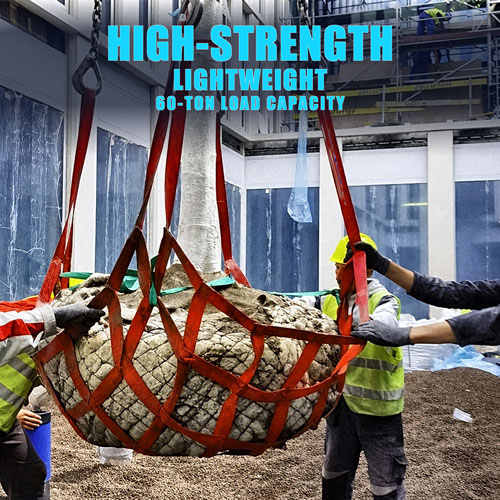
Cargo Webbing Net
-

Color changing nylon double buckle loop nylon braided rope
-

Two end buckle lifting rope, double buckle round lifting rope, double fork nylon lifting rope, non jointed nylon lifting rope
-

Emergency escape lifeline, fire escape rope, fire safety escape emergency rope, steel wire core fire rope

