 Language
 简体中文
简体中文
- On the 2018 National Day holiday, Lifet completed six 100 ton large tonnage lifting belts as a gift
- The role of suspension net in the transportation of goods turnover
- Cargo soft lifting net, lifting net, lifting net, lifting net, bag, climbing net
- Precautions for using Lifutiden elevator
- How to make circular lifting straps
Contact: Wang Lili
E-mail:18066002268
Phone:702461526@qq.com
Address: Lifute Industrial Park, Taizhou City, Jiangsu Province
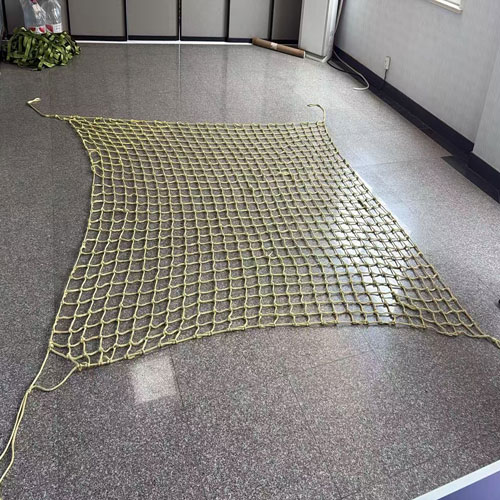
Lift Sling Rigging Co., Ltd manufacture Drone Anti-collision Net,Anti fire drone.Anti-drone net for UAV interception, made in aramid or UV-stabilised HDPE. Mesh 20–200 mm, rope 4–12 mm, canopy or curtain fixing, made to panel size.
Hits: ℃
Release time:2026-10-02 09:33
Lift Sling Rigging Co., Ltd manufacture Drone Anti-collision Net,Anti fire drone interception network,Flame resistant aramid Drone Anti-collision Net,Fire resistant Kevlar Drone Anti-collision Net,UV Resistant HDPE Drone Blocking Net,
Drone Anti-collision Net
Anti-Drone Net for UAV Interception, Containment and Perimeter Protection
A drone anti-collision net is a physical barrier that stops a UAV by intercepting it in flight rather than by jamming or detecting it. Lift Sling Rigging Co., Ltd manufactures anti-drone nets in para-aramid fibre and in UV-stabilised HDPE, built as knotted rope mesh with a reinforced border rope and eyelets, and made to the panel size you specify. Mesh aperture, rope diameter, panel dimensions and border finish are all to order.
The net is a passive layer: it needs no power, no spectrum licence and no operator, and it works against a drone flying on a fibre-optic link or on autonomous navigation, where radio-frequency countermeasures have nothing to act on. What it cannot do is protect anything outside the area it covers, so the design starts with the directions a drone can arrive from, not with a number of square metres. Standard apertures run from 20 mm to 200 mm, with 50 mm, 100 mm and 150 mm the most common; rope diameters run from 4 mm to 12 mm.
What a Drone Anti-collision Net Actually Does
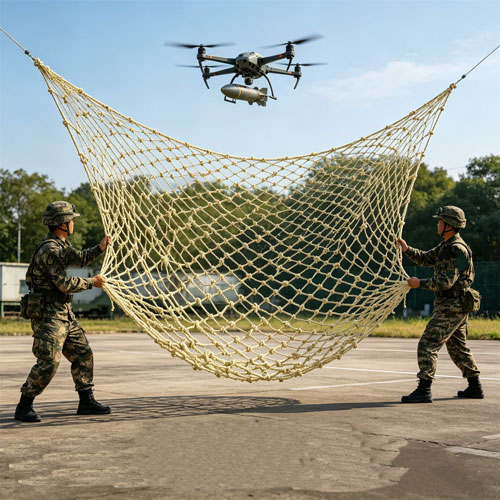
A drone does not have to be destroyed to be stopped. It has to be denied the last few metres. A drone anti-collision net works on three levels at once.
It absorbs impact energy. The mesh deflects when the aircraft strikes, spreading the load across many knots and rope segments instead of concentrating it at one contact point. The deceleration happens over a longer distance and a longer time, which is what protects the panel from being cut through on the first contact.
It entangles the rotors. Once the airframe is through the aperture plane, the propellers foul the rope. The aircraft loses thrust and falls along the face of the net instead of continuing on its heading.
It confines the fall. Because the panel deflects rather than tears, the debris lands in a predictable zone at the foot of the net — which is what you need above a car park, a walkway, a plant room or an apron edge.
This is the difference between an anti-collision net and a plain barrier. A barrier is judged on whether it is still there afterwards. An anti-collision net is judged on whether it is still there and still rated after the third or fourth strike.
Choosing the Fibre: Aramid, HMPE, HDPE or Nylon
| Fibre | Elongation at break | Best for | Trade-off |
|---|---|---|---|
| Para-aramid | Approx. 2.4% – 3.6% | Cut and abrasion resistance, hot facades, plant rooms, repeated strikes | Higher cost; needs UV-stabilised finishing outdoors |
| HMPE (UHMWPE) | Approx. 3% – 4% | Lightest panels, minimum wind load, marine and cold-climate sites | Creep under sustained load; UV performance depends on coating |
| UV-stabilised HDPE | Higher than aramid | Large areas where cost and service life dominate | Lower cut resistance per unit weight |
| Nylon 6 (polyamide) | Highest of the four | Traditional knotted nets where elasticity aids entanglement | Absorbs water; weight and geometry change when wet |
Para-aramid is our standard material for drone anti-collision nets. It combines very high tensile strength for its weight with high cut resistance, so a propeller contact tends to abrade the rope rather than slice it. Its low elongation is what keeps the mesh from ballooning away from the protected elevation under wind or impact — and it is also why aramid cannot simply be twisted into a net.
HMPE (UHMWPE) is used where weight and wind load are the limiting factors: netting made with HMPE twine can be supplied at roughly a third of the weight of an equivalent nylon net, and the smaller twine diameters reduce aerodynamic drag. Design around creep under long-term sustained tension, and a service range best from about −100 °C to +70 °C.
UV-stabilised HDPE is the economical choice for large perimeters where cost control and service life dominate. Nylon 6 remains widely used in knotted anti-drone netting because its higher elongation aids entanglement, but it takes on water, so weight and geometry change in wet conditions.
Construction: Braided Rope First, Knotted Net Second
This is the part of the specification that decides how much of your fibre actually ends up working. Low-elongation fibres fail in ordinary net construction for a specific reason: under tension, rigid filaments grind against one another at every twist point or inter-loop, and the fibres cut into each other. Twisted rope and knotless mesh both suffer from it; aramid is simply the least forgiving.
Stage 1 — precision-braided rope. The filaments are laid in parallel-helical paths by braiding rather than by twisting, so they stay aligned instead of being forced across one another at every turn. The load is distributed across the individual filaments instead of being spent on internal abrasion.
Stage 2 — hand-knotted mesh. The braided rope is knotted into the panel, so the knots become deliberate structural node points. Every load path runs knot to straight rope segment to knot. A damaged section can be cut out and re-knotted on site with spare rope.
One consequence worth stating in the specification: because the panel is knotted rather than knitted, its failure mode is visible. When a knotted net reaches its limit it fails at identifiable points — a knot or a rope segment breaks where an inspector can see it. Knotless structures hide internal abrasion until they let go, which is a poor property for a permanent barrier that has to be signed off after every incident.
Mesh Selection: Matching the Aperture to the Drone
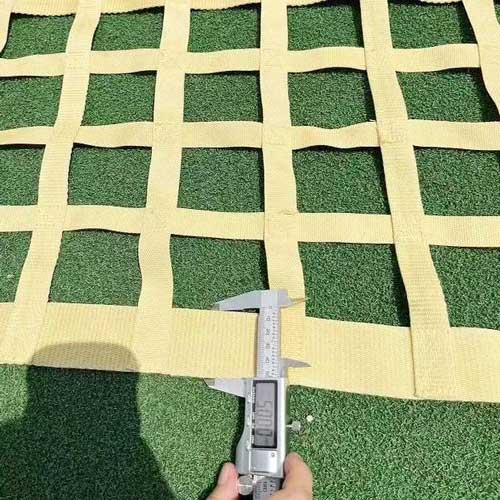
Mesh aperture is set by the smallest aircraft you need to stop — never by the largest. Published ranges differ between suppliers, which is why the aperture should be confirmed against your own drone list rather than assumed from a catalogue.
| Aperture | Target aircraft | Consequence |
|---|---|---|
| 20 – 45 mm | Small consumer and FPV-type multirotors | Tightest mesh; highest weight and wind load for a given area |
| Approx. 44 mm (1-3/4 in.) | Most consumer and commercial drones | Widely quoted general-purpose stopping aperture |
| 50 mm | General drone safety netting | Common standard for arena and aerodrome netting |
| 70 – 100 mm | Larger multirotors and light fixed-wing aircraft | Lower weight, better airflow |
| 150 – 300 mm | Outer layers and very large areas | Least weight and wind load; only for large airframes |
Rule of thumb: match the aperture to the smallest drone you must stop. An aperture that is too large lets a small airframe through; one that is too tight adds weight and wind load, and the wind load is carried by the installation structure, not by the net.
How Much Energy the Net Has to Absorb
Impact energy is the honest way to describe what a drone net must withstand, because kinetic energy rises with the square of the closing speed. For a first-order estimate use E = ½mv². The figures below are an illustrative calculation, not a product rating.
| Mass | Closing speed | Kinetic energy |
|---|---|---|
| 0.25 kg | 15 m/s | Approx. 28 J |
| 0.9 kg | 15 m/s | Approx. 101 J |
| 0.9 kg | 19 m/s | Approx. 163 J |
| 2 kg | 20 m/s | Approx. 400 J |
| 4 kg | 20 m/s | Approx. 800 J |
| 4 kg | 30 m/s | Approx. 1,800 J |
| 25 kg | 25 m/s | Approx. 7,813 J |
Values above are calculated for illustration only and are not rated energy-absorption figures. The energy a panel must absorb also depends on contact area, panel deflection, edge restraint and fixing method, and must be designed for the specific installation.
Installation: Canopy, Curtain or Cage
A drone arrives from a direction, so the installation configuration matters as much as the panel.
| Configuration | What it is | What it covers |
|---|---|---|
| Overhead canopy | A horizontal panel suspended above the asset on cables or a frame | Vertical and diving approaches, which a perimeter wall does not stop |
| Vertical curtain | Panels on posts or on the structure, closing one or more sides | Low-level approaches from the directions covered |
| Cage | Canopy and curtains joined into a closed volume | The full envelope around a piece of equipment or a building |
The usual assembly is on posts or a light structure with a perimeter tensioning cable. Panels overlap and are laced together so a damaged section can be replaced without taking the whole elevation out of service. Agree border rope diameter, eyelet spacing and fixing method at order stage: a panel that is dimensionally out by a small margin will not tension correctly, and sag is what lets a drone in at the edge.
Where Drone Anti-collision Nets Are Installed
Critical infrastructure — substations, transformer bays, water and telecom sites, where an impact is measured in outages rather than in repair bills.
Airports and airfields — boundary and approach screening against unauthorised UAV incursion.
Prisons and secure facilities — contraband delivery by drone is the most common threat, and the net must be both continuous and inspectable.
Stadiums, arenas and event perimeters — temporary or demountable spans over concourses and pitch-side zones.
Industrial roofs, plant rooms and solar arrays — protecting equipment from a descending or drifting airframe.
Bridges, viaducts and heritage facades — low-visual-impact protection where a solid screen would not be permitted.
Marine and offshore installations — where a light, non-metallic panel that does not interfere with radar is preferred.
Customisation, Quality Control and Ordering
We build to the installation, not to a catalogue number. Panels are supplied with a reinforced border rope and eyelets, folded and bagged for transport, with panel drawings for the installation team. To quote and draw your panel we need:
Finished aperture width and height, and whether the panel is flat or follows a curve.
The drone classes you need to stop, which sets the mesh aperture.
Rope diameter, or the impact energy the panel must absorb.
Fixing method: cable and turnbuckle, steel frame, or direct anchor to the structure.
Eyelet spacing and border-rope diameter required by your fixing detail.
Colour, UV-stabilised coating, and any marking or labelling you need.
Before dispatch we check rope diameter, mesh aperture and knot consistency against the agreed drawing, verify panel dimensions and eyelet positions, and inspect the edge rope and terminations for chafe and slippage. Panels ship with the panel drawing and a packing list, and sample panels or sample rope can be supplied for evaluation before you commit to a full elevation.
Frequently Asked Questions
What is a drone anti-collision net?
It is a high-strength rope net barrier installed in front of or around an asset so that an incoming drone strikes the mesh instead of the asset. The net absorbs the kinetic energy of the impact, entangles the rotors, and brings the aircraft down inside a controlled footprint.
How does an anti-drone net work?
It works mechanically, on three levels. The mesh deflects on impact and spreads the load across many knots and rope segments, so deceleration happens over a longer distance and time. The rotors then foul the rope and the aircraft loses thrust. Because the panel deflects instead of tearing, the debris falls in a predictable zone at the foot of the net.
Can a net stop a drone?
A correctly specified net can intercept and contain a drone, and it does so without emitting any signal, which means it also works against drones on fibre-optic links or autonomous navigation where jamming has no effect. What a net cannot do is protect anything outside the area it covers, so it is best understood as a physical layer that complements detection and electronic countermeasures rather than replacing them.
What mesh size stops a drone?
Aperture is set by the smallest drone you need to stop. Widely published ranges are approximately 20-45 mm for small FPV and consumer multirotors, around 44 mm (1-3/4 in.) as a general-purpose stopping aperture for most consumer and commercial drones, 70-100 mm for larger multirotors and light fixed-wing aircraft, and 150-300 mm for outer layers and very large areas. Send us your drone list and we will recommend an aperture and a rope diameter.
What is the difference between an anti-collision net and a normal barrier net?
A barrier net is judged on whether it is still standing after an impact. An anti-collision net is judged on whether it is still standing and still rated after repeated impacts. That requires a construction in which the load path runs through straight rope segments between knots.
Why is a knotted net used instead of a knotless one for aramid?
Aramid has very low elongation, so in twisted rope or knotless mesh the filaments grind against each other at every contact point under load, consuming a significant share of the fibre's rated strength. Braiding the rope first and knotting the net second keeps every load path straight and gives a failure mode an inspector can see.
What drone classes can the net be specified against?
Specification is usually driven by the regulatory class the operator must work to. Under the EASA open category, C0 covers aircraft under 250 g, C1 under 900 g or with an impact energy below 80 J, C2 under 4 kg, and C3 under 25 kg. In the United States, a small unmanned aircraft under 14 CFR Part 107 weighs less than 55 pounds (about 25 kg) at take-off, and the over-people rule sets a kinetic-energy threshold of 34 joules for Category 3 operations. Tell us the class you are designing against and we will match aperture and rope diameter to it.
Can large areas be covered in one piece?
Panels are made to order. Large perimeters are supplied as seamless joined panels rather than one enormous piece, because a single panel across a very long span cannot be tensioned evenly. Joins are laced so the panel behaves as one surface while sections remain replaceable.
What is the service life, and how is the net inspected?
Service life depends on fibre, coating and exposure. Published guidance for UV-stabilised synthetic netting outdoors is in the order of 5 to 8 years before replacement, with indoor installations lasting considerably longer, and outdoor panels age progressively rather than failing at once. Inspect periodically for fraying, UV degradation, cut or abraded rope, damaged knots, anchor and tension loss, and impact damage; replace damaged sections by re-knotting rather than taking the whole elevation down.
How is a drone anti-collision net priced?
Price is a function of covered area, aperture, rope diameter, fibre, border and eyelet detail, and fixing hardware, which is why a per-square-metre figure without those parameters is not meaningful. Send the span, the drone classes and the fixing method and we will quote against the actual panel drawing.
Send the span, the drone classes and the fixing method, and we will confirm aperture, rope diameter, border detail and panel drawing. Request a quotation or contact us.
.dacn-page { max-width: 963px; margin: 0 auto; padding: 24px 0 8px; color: #333; font-size: 15px; line-height: 1.9; } .dacn-h1 { font-size: 26px; color: #123A6B; line-height: 1.4; margin: 0 0 6px; } .dacn-sub { font-size: 15px; color: #666; margin: 0 0 18px; } .dacn-page h2 { font-size: 21px; color: #123A6B; margin: 30px 0 12px; padding-bottom: 8px; border-bottom: 1px solid #E3EAF3; } .dacn-page h3 { font-size: 17px; color: #1F4E79; margin: 22px 0 8px; } .dacn-page p { margin: 0 0 14px; } .dacn-page ul, .dacn-page ol { margin: 0 0 16px; padding-left: 22px; } .dacn-page li { margin-bottom: 8px; } .dacn-page a { color: #1F4E79; text-decoration: underline; } .dacn-page .dacn-table { width: 100%; border-collapse: collapse; margin: 16px 0; font-size: 14px; } .dacn-page .dacn-table caption { text-align: left; font-size: 13px; color: #777; padding-bottom: 6px; } .dacn-page .dacn-table th, .dacn-page .dacn-table td { border: 1px solid #C8D2E0; padding: 9px 10px; text-align: left; vertical-align: middle; } .dacn-page .dacn-table th { background: #EEF3F9; color: #123A6B; font-weight: 700; } .dacn-page .dacn-note { background: #FFF9EC; border-left: 4px solid #E6A23C; padding: 10px 14px; color: #5A5A5A; font-size: 14px; } .dacn-page .dacn-cta { background: #F3F7FC; border: 1px solid #D6E2F0; padding: 14px 16px; margin-top: 18px; } @media (max-width: 768px) { .dacn-page .dacn-table { font-size: 12px; } .dacn-page .dacn-table th, .dacn-page .dacn-table td { padding: 6px 7px; } .dacn-h1 { font-size: 21px; } }
- Previous:Marine safety rope net for ships
- Next:No time
-
Drone Anti-collision Net
-
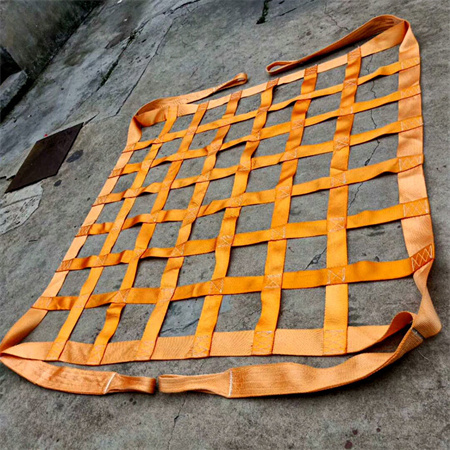
Extra Large Capacity Cargo Net
-
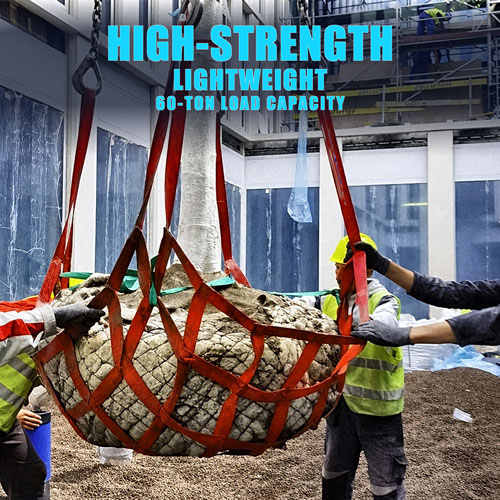
Cargo Webbing Net
-

Color changing nylon double buckle loop nylon braided rope
-

Two end buckle lifting rope, double buckle round lifting rope, double fork nylon lifting rope, non jointed nylon lifting rope
-

Emergency escape lifeline, fire escape rope, fire safety escape emergency rope, steel wire core fire rope

