 Language
 简体中文
简体中文
- On the 2018 National Day holiday, Lifet completed six 100 ton large tonnage lifting belts as a gift
- The role of suspension net in the transportation of goods turnover
- Cargo soft lifting net, lifting net, lifting net, lifting net, bag, climbing net
- Precautions for using Lifutiden elevator
- How to make circular lifting straps
Contact: Wang Lili
E-mail:18066002268
Phone:702461526@qq.com
Address: Lifute Industrial Park, Taizhou City, Jiangsu Province
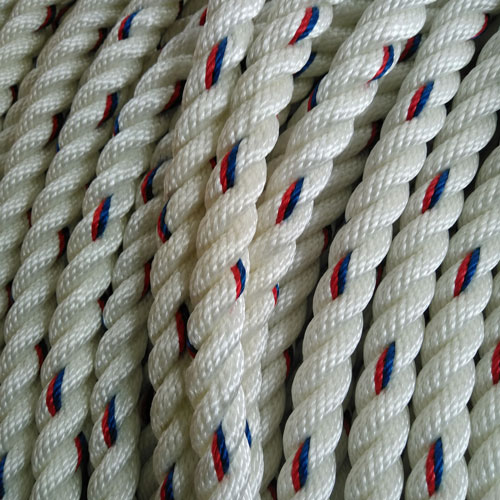
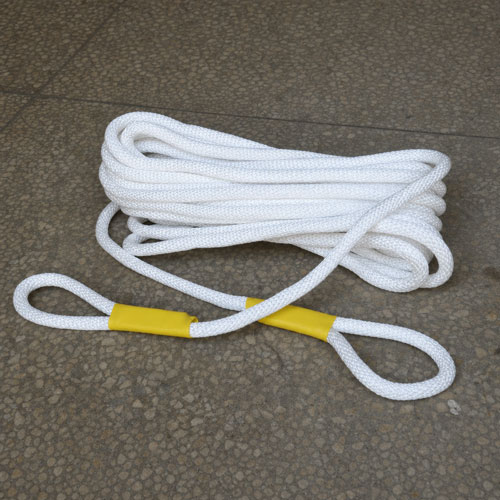
Life Safety Rope from Lift Sling Rigging Co., Ltd. The line that came with this product names five articles - Life Safety Rope, Fall Protection Rescue Rope, training rope, Fire Proof Lifeline and Fall Protection Rope Lifeline - and not one of the five says what the rope is made of: every one of them states a purpose. That is what this page is about. It sets out why there is no such thing as the specification for a life safety rope, only a specification for a rope of a stated construction, diameter, material and finish, and it lists the vocabulary this catalogue has never used for this category. Section 5 is the technical-parameter section and is the reason the page exists: thirteen parameters with the unit of each, how the figure is established, and the column that decides whether a quotation can be checked at all - whether the figure can be verified on the coil that arrives or can only be settled by a test. Section 6 gives the four figures that are routinely quoted without the basis that makes them mean anything, and Section 7 covers the ends, which on a rope are half the article. The page names no document number, claims no approval by any outside body and states no strength figure, and it says why in each case.
Hits: ℃
Release time:2026-09-27 21:05
Lift Sling Rigging Co., Ltd manufactures Life Safety Rope — and the line that came with this product names five articles: Life Safety Rope, Fall Protection Rescue Rope, training rope, Fire Proof Li feline, Fall Protection Rope Lifeline. Read them together and something unusual happens: five names, and not one of them says what the rope is made of. Every name says what the rope is for. That is th e whole subject of this page.
Life Safety Rope
1. A Category, Not a Product: What the Five Names Have in Common
Elsewhere in this catalogue a product name tells a buyer what he is getting. A flat sling is flat; a round sling is round; a net has a mesh. The five names above do none of that. They are category names, and a category name describes a use rather than a thing.
| The name | What it states | What it leaves open |
|---|---|---|
| Life Safety Rope | That the rope is meant to be the thing between a person and the ground. | Everything a rope is actually specified by: the construction, the diameter, the material, what is at each end. |
| Fall Protection Rescue Rope | A purpose, and a second one: not only that the rope is there, but that somebody is being brought out of a place with it. | Whether the two purposes need different ropes, and if so which is being ordered. |
| training rope | That the rope will spend its life being used by people who are learning, which is a fact about its working conditions rather t han about the rope. | Whether that makes it a different rope or the same rope bought in a larger quantity, which is a fair question and is not answe red by the name. |
| Fire Proof Lifeline | A working environment and a fixed installation: a line that stays where it is put. | The word in front of it. A rope is a rope, and the adjective is a claim about behaviour that no name can carry. |
| Fall Protection Rope Lifeline | The same as the name above with the claim removed, which makes it the honest one of the five. | Still not a construction, and still not a size. |
So the first useful thing this page can do is refuse the question it looks as though it should answer. There is no such thing as the specification for a life safety rope. There is a specification f or a rope of a stated construction, diameter, material and finish, and the buyer decides whether that rope is going to be the thing between a person and the ground.
2. What This Site Has Never Written
Before going further it is worth being exact about how new this corner of the catalogue is, because it changes what a buyer should expect to find here. This site has a hundred product pages. The vo cabulary that normally surrounds an article of this kind appears on none of them.
| The vocabulary | What this site has |
|---|---|
| The names for the equipment that goes with a personal rope: the thing a person wears, the descen ding and ascending devices, the friction device a second person uses, and the connector that closes the system | None of those words appears anywhere in the hundred product pages, and neither does the word for the person who works on a rop e or the word for the practice of descending one. |
| The terms a buyer of this category would expect to compare, being the umbrella term for the disc ipline and the two terms for the two ways a rope can behave under a sudden load | Absent. The umbrella term appears twice in the catalogue and both times on this product's own line; the other two do not appea r at all. |
| The document numbers and the bodies that issue them | Nothing. No document number of any kind appears on any of the hundred product pages. That is a deliberate position rather than an omission, and Section 3 gives the reason. |
| Words about the working environment a rope of this kind is bought for | Absent, including the one about the air in a burning building. What the catalogue does have is heat, and it has a great deal o f it: the word appears nearly three hundred times, on a family of pages whose subject is a rope or a belt that has to survive temperature. That family is where heat is argued, and this page does not r epeat it. |
The practical consequence is worth stating plainly. A buyer arriving here from a search for this category will find that this maker's catalogue has been written around lifting, and that the persona l-protection corner of it is new. The parameters below are therefore the ones a rope order is actually checked against, set out so that a buyer can see what is being offered and, just as usefully, wha t is not.
3. The Purpose in the Name Is a Person
Every other product on this site carries a load. This one, when it is used as the name suggests, carries a person, and that changes the transaction rather than the rope.
| The article | What is being carried | Where the figures come from |
|---|---|---|
| A lifting rope, a sling, a belt | Material, which does not move on its own and does not mind being dropped. | A figure the maker states, and a document the buyer can point at. That is how the rest of this catalogue is written and this p age does not change it. |
| The article this name points at | A person, who arrives at the rope already moving, and whose arrival has to be absorbed rather than simply held. | An outside body's document, which is not this page, and which is the buyer's to name. Nothing on this page should be read as a statement about any such document. |
| Why this page states no figure at all | Because a figure quoted without the document it came from is worse than no figure: it is a number the buyer will rely on and c annot check. | The buyer's own document, which is where the figure has to live. This page can supply the parameters a rope is made and measur ed to, and Section 5 does exactly that. |
| What the same rope is if the purpose is dropped | A rope. The identical construction sold for hauling a tool bag up a tower is a lifting article, judged on the pages that gover n lifting articles. | Which is the point of Section 1 in one sentence: the category in the name is a use, and the same rope changes category with th e use. |
One consequence of this is easy to miss and worth putting on the record. Because the purpose in the name is a person, the honest answer to most enquiries of this kind is a question about paperwork rather than about rope. A buyer who needs the paperwork and receives a rope has not been served, and a maker who supplies the rope without saying where the paperwork stands has not been honest.
4. Two Constructions in This Product's Own Photographs
This maker's own photographs of this product answer the question the five names left open, and they answer it by showing two different ropes. In one, the strands are twisted together. In the other, they are braided. Both are photographed by the maker, on its own floor, with nothing in the picture except the rope.
| The construction | What it is | Why the difference matters on an order |
|---|---|---|
| Strands twisted | The classic rope: several groups of yarns twisted one way, and those groups twisted together the other way. The photograph of this maker's own work also shows a coloured yarn running inside one group, which is an identification carried in the material rather than printed on it. | A twisted rope holds a knot well and is straightforward to inspect, because every group is visible from the outside for its wh ole length. It is also the construction that changes most when it is loaded and released repeatedly. |
| Strands braided | Two sets of strands interlaced in one operation, so that the outside of the rope is also its structure. The maker's photograph shows this rope finished at both ends with an eye, each eye covered by a sleeve. | A braided rope is smoother and resists abrasion differently, and the same mass gives a different combination of extension and strength. The two constructions are not interchangeable at the same diameter, which is why the names matter less than the drawing. |
| What the photograph cannot add | The maker's photographs show both constructions clearly, and that is all they show. Neither picture contains a scale. | Neither the diameter nor the length can be read off them. Both are on the order, and Section 5 says how each is stated. |


There is one more thing in these two photographs, and it is the one a buyer should notice. Neither rope is shown with a load on it, neither is shown being tested, and no document appears in either frame. That is not a defect in the photographs; it is the same boundary the rest of this page will keep, and Section 11 lists it with the other silences.
5. Technical Parameters: the Figures an Order Defines, and Which of Them Can Be Checked on a Coil
A rope has fewer parameters than a net or a sling, and each of them does more work. The table below gives the unit, then how the figure is established, and then the column that decides whether a qu otation is checkable at all: whether the buyer can verify it on the coil that arrives, or whether it can only be established by a test. Almost every dispute about a rope comes from a figure in the rig ht-hand column being quoted as though it belonged in the middle one.
| Parameter | Unit | How the figure is established | Checkable on a delivered coil, or only by test |
|---|---|---|---|
| Diameter | mm | Measured across the rope at more than one point, under a stated tension, because a rope that is not under tension is not round | On a delivered coil, but only against the same tension. Measure it loose and it will read larger than the figure it was sold a t |
| Diameter tolerance | mm, or a percentage | Stated as a band, because a rope is built to a construction rather than turned to a size | On a delivered coil. Without a band, a rope that is right and a rope that is wrong cannot be told apart |
| Construction, and the number of groups or strands | none | Named: twisted, or braided, and how many groups or strands, and whether the cover is braided over a separate core | On a delivered coil, by eye and by hand. This is the figure the five product names do not contain and the one a quotation has to lead with |
| Mass per unit length | grams per metre | Weighed on a known length. It is not calculated from the diameter, and a figure that has been calculated can be recognised bec ause it disagrees with the scale | On a delivered coil, with a scale and a tape. It is the cheapest check a buyer can make and the one that catches the most subs titutions |
| Material of the load-bearing part | none | Named by the maker, and named separately from the cover whenever the two are different materials | On a delivered coil, from the label. What is inside the rope can only be confirmed by taking a sample apart |
| Material of the cover, where the rope has one | none | Named separately, because a cover is chosen for grip and for wear rather than for what it carries | As above. A rope whose cover and core are one material and a rope whose cover is chosen separately look identical in a photogr aph |
| Share of the mass carried by the cover | percent | Established by dissection or by weighing the two parts of a sample | Only by test, and this is the figure most often quoted without its basis. It decides how much of the load the outside of the r ope is taking, which decides how it wears |
| Extension at a stated load | percent | Measured between two marks on a sample as the load is applied, so the load has to be named with the figure or the figure means nothing | Only by test. It is also what sits behind the two terms a buyer of this category expects to compare, and neither of those term s is used on this site |
| What the rope keeps after repeated loading | percent | Measured by loading and releasing the same sample and looking at what length it comes back to | Only by test. It is the difference between a rope that is the length it was cut to and one that is longer than it was cut to |
| Change in length when wet | percent | Measured, not assumed, because it differs by material and by construction | Only by test, and it is worth having because a rope cut to length dry is not that length wet. On a fixed installation that dif ference is a fitting that no longer reaches |
| Length, and length tolerance | metres, percent | Measured under a stated tension, for the same reason as the diameter, and stated as a band for the same reason as the toleranc e | On a delivered coil, and it is the second cheapest check after the mass. A length with no tolerance attached is a length that cannot be rejected |
| What is at each end | none | Named end by end: a finished end, or an eye, and if an eye whether it is formed from the rope itself or held by a fitting, and what covers it | On a delivered coil, visibly. Section 7 is about this row, because on a rope the ends are where the article is decided |
| Identity, and what travels with the coil | none | What is marked on the rope, how it is marked, and what documents accompany the coil | On a delivered coil. The maker's own rope carries a coloured yarn inside the material, which is identity carried in the rope r ather than on it |
Thirteen rows, and the split between the two right-hand columns is roughly half and half. That proportion is the honest picture of a rope: about half of what an order defines can be checked by whoe ver receives the coil, and the other half is a claim about behaviour that only a test can settle. A buyer who knows which half he is looking at can tell a careful reply from a confident one.
6. The Figures That Are Quoted Without Their Basis
Four of the figures above are routinely written down without the one thing that makes them mean anything. None of the four is wrong; each is incomplete, and incompleteness is what makes two supplie rs quote the same rope at different figures and both be telling the truth.
| The figure | The basis it needs | What happens without it |
|---|---|---|
| Diameter | The tension it was measured at | Two coils of the same rope measure differently and neither party is wrong. The buyer measures it loose, the maker measured it tight, and the conversation goes nowhere because the number was never the whole number. |
| Extension | The load it was measured at | A figure that sounds precise and can be compared with nothing. Every rope extends more as the load rises, so an extension figu re without its load is not a smaller version of the truth, it is a different quantity. |
| Length | The tension, and whether the rope was measured wet or dry | A rope cut to length dry arrives short after a wet season, and on a fixed installation that shows up as a fitting that no long er reaches. The figure was right when it was written and wrong when it was used. |
| Strength | Whether the figure is for the rope in the middle or for the rope including its ends | The middle of a rope is the strongest part of it. The ends are where ropes fail, and an order that specifies only the middle h as specified the part that was never going to be the problem. |
7. The Ends Are Half the Article
A rope is supplied as a length, and a length is not yet an article. What turns it into one is what is at each end, and this is where the maker's own photographs are unusually informative, because t hey show three different answers in three different pictures.
| What is at the end | What it is for | What has to be asked about it |
|---|---|---|
| An eye formed from the rope itself | Nothing is added and nothing can come loose. The maker's braided rope is finished this way at both ends. | How long the eye is, and what its inner clear size is, because those two decide which fitting will pass through it. Neither is visible in a photograph. |
| A sleeve over the eye | It takes the wear that would otherwise land on the part of the rope doing the work, and it is where a rope that is used daily will show its age first. | Whether the sleeve is a protection or a concealment. A sleeve that cannot be moved to look underneath turns the part of the ro pe that matters most into the part that is inspected least. |
| A fitting, held by the end | It closes the system onto whatever the rope is attached to, and the catalogue does have ropes finished this way. | What the fitting is, and whether it is part of the article or supplied by the buyer. If it is part of the article then its own condition becomes part of the inspection, which changes the record. |
| No end at all | A braided rope can be closed into a seamless loop, and the catalogue shows that too. There is nothing to finish because there are no ends. | Which of the three the buyer wants, because the names he was given do not say. A loop cannot be shortened, extended or re-ende d, so the choice is made once. |


The three answers are not ranked here, because the ranking depends on what the rope is attached to. What can be said without knowing that is a rule with no exceptions: whichever of the three is cho sen, it is chosen on the order, and an order that gives a length and no ends has not yet described an article.
8. Handling, Storage and the Record
A rope is the one article in this catalogue that arrives entirely as a length of material, with no fitting, no border and no seams, so everything that happens to it between the maker and the job ha ppens to the material itself. Three of those things belong on the order rather than in a manual, and this section is short because the point is only that they are decided before delivery rather than a fter.
| The question | Why it is a line on the order rather than a note in a manual |
|---|---|
| How the coil is packed | A rope takes the shape it is stored in, and a tight coil held by a band keeps the memory of that bend. The maker's own photogr aphs show the rope delivered as a loose coil, which is the packing question answered by default rather than by decision. |
| What the rope is stored away from | Sunlight, heat and the chemicals of a workshop all act on the outside of the rope first, and the outside of a rope is where it s structure is. How each material behaves under those three is argued on the outdoor pages of this site, and this page does not repeat it. |
| What travels with the coil | A rope has no serial number stamped on a fitting, so its identity has to be carried by the rope itself or by the paper with it . The maker's laid rope carries a coloured yarn inside one group of strands, which is identity inside the material; the rest has to be on the label. |
| What the buyer keeps | Because a rope is a length of material and not a numbered article, its history is the only thing that distinguishes a rope tha t has been used gently from the same rope used hard. The record is not paperwork around the article; on this article it is the article's only memory. |

9. Where the Rest of This Subject Is Argued
This page has stayed on the one thing its name adds to the catalogue, which is the purpose. Five parts of the subject belong to other pages here, and pointing at them is more useful than summarisin g them.
| The part of the subject | Where it is argued | What this page takes from it |
|---|---|---|
| How each material behaves: sunlight, water, rot, and what happens at the end of a life | The nylon woven flat sling and polypropylene flat sling pages, which own that subject for this catalogue. | Only that the same material behaviour arrives on a rope through a surface that is also its structure, which is why Section 8 p uts storage on the order. |
| Wear, abrasion, and when an article is taken out of service | The flat sling pages, and in particular the flat sling page, where t he subject is set out. | One difference, stated in Section 7: on a rope the wear lands on the ends first, and on this maker's rope one of the three end finishes covers the very place that wears. |
| The eye, the splice, and joining a rope end to itself | The eye and eye sling page and the splicing, threading and wrapping sling page, which own that part of the catalogue. | The vocabulary only. This page says which of the three end finishes is wanted, and leaves how an eye is made to the pages that are about making one. |
| Heat, and rope built to survive it | The high temperature resistant ring eye type lifting belt page, and t he other pages of that family. | Nothing, except the boundary that Section 2 drew: heat is argued there, and this page does not restate it or make a claim abou t it. |
| The line between an article that holds a load and an article that has to stop a person | The mining reflective lifting belt page, which sets that bounda ry out in full. | The whole of Section 3 assumes it. This page is about the personal side of that line and does not argue the line itself again. |
| The other rope this maker builds to a written description rather than to a load figure | The paper guiding carrier rope page, which is the catalogue's other rop e of that kind. | A useful precedent rather than a shared subject: it shows that this maker builds ropes to a stated construction, which is what Section 5 asks a buyer to state. |
10. What the Order Has to Name
In the order in which the lines decide whether the rest can be answered. The first four are the ones the five product names make it easy to leave out, because every one of them sounds as though it has settled something.
| # | The line | Why it has to be there |
|---|---|---|
| 1 | Which category the rope is being bought in: an article for lifting, or an article for a person | It decides whether a load figure is being bought at all, and therefore which document the reply has to point at. Section 3 set s out why the two are not the same purchase even when the rope is. |
| 2 | The construction: twisted or braided, how many groups or strands, and whether a cover sits over a separate core | This is the figure the five names do not contain and the one every other figure follows from. Section 4 shows the maker buildi ng both. |
| 3 | The diameter, with the tension it is stated at, and the tolerance around it | Without the tension the figure cannot be reproduced by whoever measures the coil, and without the tolerance it cannot be rejec ted either. Section 6 lists this as the first of the four figures quoted without their basis. |
| 4 | What is at each end, named end by end | A length is not yet an article. Section 7 gives the three answers this maker builds and says what has to be asked about each.< /td> |
| 5 | The material of the load-bearing part, and of the cover if there is one, named separately | A rope whose cover is a different material is a different rope at the same diameter and mass, and the difference is invisible in a photograph. |
| 6 | The length, with the tension, and whether it is measured wet or dry | These are the two things that decide whether a rope cut to a stated length is still that length after a season of use. Section 6 gives the consequence. |
| 7 | The figures that can only be established by test, named as such | It separates the half of the specification that will be checked on delivery from the half that will not be. Section 5's right- hand column is the list. |
| 8 | How the coil is packed, what is marked on the rope, and what is kept with it | On an article whose identity is carried in the material rather than on a plate, these three lines are what make its history re trievable later. |
11. What This Page Has Deliberately Not Said
Every item below is a silence, and the silences are the point of this page rather than gaps in it. A buyer comparing two suppliers of this category can use the list as a set of questions.
| The silence | Why |
|---|---|
| No document number of any kind is named, and no approval by any outside body is claimed or impli ed | A number written without the document behind it is worse than no number, because a buyer will rely on it and cannot check it. Nothing on this page should be read as a statement that this rope has been assessed by anyone outside this maker. |
| No strength figure, and no figure for what the rope will hold | On an article bought for a person, a figure that this maker has not measured and cannot support is the most dangerous sentence a page like this could carry. Section 3 says where such a figure has to come from instead. |
| No claim about heat, flame or a hot working environment | The catalogue has a family of pages whose whole subject is surviving temperature, and this page is not one of them. Section 2 drew that boundary and Section 9 points at the pages that hold it. |
| No diameter, no length and no construction is recommended for any use | Those three follow from the document the buyer is working to, and from what the rope is attached to at each end. Neither is kn own here, and Section 5 says how to state them rather than guessing them. |
| No comparison with other makers is drawn | The thirteen parameters of Section 5 are the comparison. A buyer who has them can tell two quotations apart without being told which one to prefer. |
| No photograph on this page shows a load, a test or a document | Because none of the maker's own photographs of this product contains any of the three, and saying so is more useful than prese nting a picture as though it proved something. |
Frequently Asked Questions
What diameter should I order?
That follows from the document you are working to and from what the rope is attached to at each end, neither of which is known here, so this page does not recommend one. What it can do is make the figure checkable: state the diameter with the tension it was measured at, and state a tolerance around it, because a rope that is right and a rope that is wrong cannot otherwise be told apart.
Is this rope certified?
Nothing on this page should be read as a statement that this rope has been assessed by any body outside this maker, and no document number is named anywhere on it. If the purchase requires that ass essment, say so in the enquiry and the reply will tell you where the matter stands rather than implying an answer.
Twisted or braided - which should I choose?
They are not interchangeable at the same diameter, and the choice follows from what the rope has to do. A twisted rope shows every group for its whole length, which makes inspection direct, and it holds a knot well. A braided rope puts its structure on the outside, which changes how it wears and how much it extends. This maker builds both.
Can the rope be supplied with eyes?
Yes, and there are three answers rather than two: an eye formed from the rope itself, an eye covered by a protective sleeve, or a loop with no ends at all. Each has something that has to be stated with it, and Section 7 sets out what to ask about each one.
Why is a sleeve over the eye a problem?
It is not a problem, it is a question. A sleeve takes the wear that would otherwise reach the part of the rope doing the work, which is useful. It also covers the place that matters most, so a slee ve that cannot be moved to look underneath turns the most important part of the rope into the least inspected one.
What is the difference between a rope for lifting and a rope for a person?
What is being carried, and therefore where the figures come from. Material does not move on its own; a person arrives at the rope already moving and has to be absorbed rather than simply held. The same rope sold for hauling a tool bag is a lifting article; sold for a person it is not, and the purchase is a different transaction with different paperwork.
Why does the same rope weigh differently in two quotations?
Because mass per unit length is weighed, not calculated from the diameter, and a figure that has been calculated can be recognised because it disagrees with the scale. Ask for the mass per metre an d check it against a known length, which is the cheapest check available on a delivered coil.
Can I cut the rope to length myself?
You can, and on a rope that is only a length of material there is nothing to stop you. What you lose is the end finish, because cutting removes whatever was there. If the ends matter to the job, th ey are better stated on the order than added afterwards.
How should the rope be stored?
The coil takes the shape it is stored in, and a tight bend held by a band keeps the memory of that bend, so a loose coil is better than a tight one. The behaviour of each material under sunlight, w ater and workshop chemicals is argued on this site's outdoor pages, and this page does not repeat it.
Does the rope lose length when it gets wet?
It changes length, and by how much differs by material and by construction, so it is measured rather than assumed. That figure matters most on a fixed installation, where a rope cut to length dry c an arrive after a wet season as a fitting that no longer reaches.
What should I send with an enquiry?
The first four lines of Section 10: which category the rope is being bought in, the construction with its strand count, the diameter with the tension and tolerance, and what is at each end. Then th e materials, the length with its basis, whichever tested figures you need, and the packing, marking and record.
Contact Lift Sling Rigging Co., Ltd
Lift Sling Rigging Co., Ltd, Lifute Industrial Park, Taizhou City, Jiangsu Province, China. Telephone and WeChat: 18066002268. E-mail: 702461526@qq.com. HS code 630790. State which category the rop e is being bought in, give the construction with its strand count and the diameter with the tension it is stated at, and say what is at each end.
-
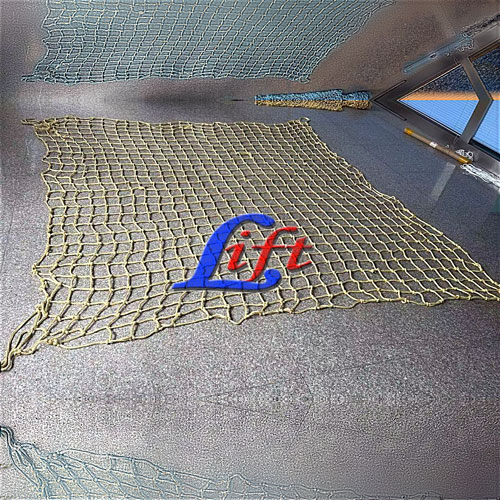
Drone Anti-collision Net
-
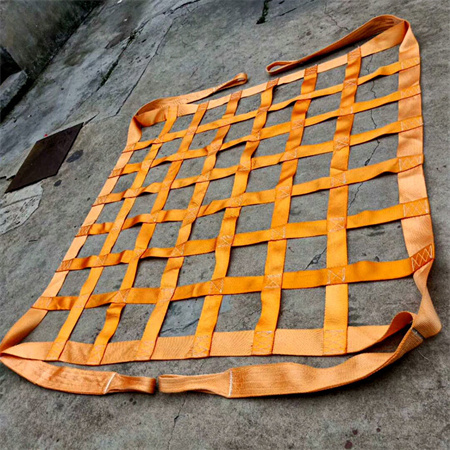
Extra Large Capacity Cargo Net
-
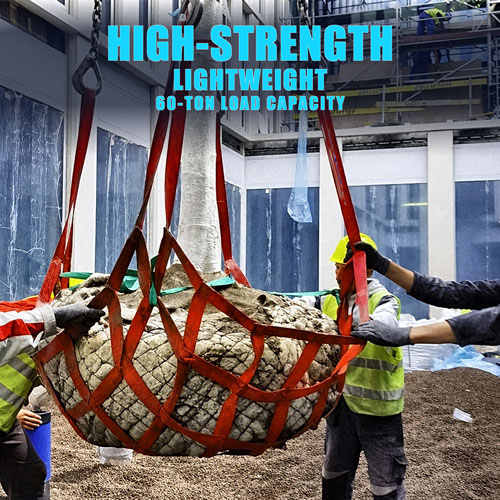
Cargo Webbing Net
-

Color changing nylon double buckle loop nylon braided rope
-

Two end buckle lifting rope, double buckle round lifting rope, double fork nylon lifting rope, non jointed nylon lifting rope
-

Emergency escape lifeline, fire escape rope, fire safety escape emergency rope, steel wire core fire rope

