 Language
 简体中文
简体中文
- On the 2018 National Day holiday, Lifet completed six 100 ton large tonnage lifting belts as a gift
- The role of suspension net in the transportation of goods turnover
- Cargo soft lifting net, lifting net, lifting net, lifting net, bag, climbing net
- Precautions for using Lifutiden elevator
- How to make circular lifting straps
Contact: Wang Lili
E-mail:18066002268
Phone:702461526@qq.com
Address: Lifute Industrial Park, Taizhou City, Jiangsu Province
Lifute Hoisting Co., Ltd. 18066002268 produces lifting belts, lifting nets, nylon ropes, soft ladders, steel wire rope rigging, paper ropes, safety belts, safety nets, lifting chains, steel coil hoists, crossbeam hoists, flat lifting belts, circular lifting belts, electric traction ropes, high-altitude safety belts, and anti fall safety nets
Hits: ℃
Release time:2026-09-27 10:29
Lift Sling Rigging Co., Ltd manufactures the disposable cargo sling, the steel pipe sling, the matching lifting rope and the loading and unloading sling for transportation as one matched set, made to order from 1 t to 12 t in the standard colour-coded band and cut to the length the journey needs.
Disposable Cargo Sling and Steel Pipe Sling - One Set, One Trip, and the Matching Lifting Rope That Has to Fit Every Hook on the Way
1. The four phrases on this page, and what each one actually settles
The title of this listing puts four names together, and a buyer reading it can be forgiven for thinking they describe four articles. They describe one article, one load, one companion and one job. Separating them is worth two minutes, because each name makes a different decision on the order form.
| The phrase | What it names | What it settles on the order | What it leaves open |
|---|---|---|---|
| Disposable cargo sling | The purchase, not the article: a rated band bought for one journey, to travel with the goods rather than to come back to a sto re. | That the specification, the marking and the paperwork have to stand up on their own, because the store record stays at home. | Every figure. A one-trip band is rated exactly like a band for ten years of service, and nothing about the word lowers that. |
| Steel pipe sling | The load: one tube, or a bundle of tubes, on a hard, smooth, round surface that rolls. | The band width, the way the band is taken round the pipe, the protection at the ends, and the pick points along the length. | The capacity, the length and the ends. None of those follows from the word pipe. |
| Matching lifting rope | The companion article: the rope that goes from the sling to the hook, and the fact that it is ordered with the sling rather th an after it. | The rating of the set, the length of both articles, the fibre of the rope, and the form of the end that meets the eye or the h ook. | Nothing in itself, and that is the point of the phrase: the rope is the part most often bought afterwards, by diameter, with n o rating attached to it. |
| Loading and unloading sling for transportation | The duty: the handovers between works, road, rail, quay and receiving yard, where the crane and the rigger change but the arti cle does not. | One geometry that has to be legal at the widest hook and workable at the narrowest, and a length that fits every one of the fi ve points. | Who is standing at each point, what they have in their hands, and what they will do with the article when the load is on the g round. |
Note which of the four is about the cloth. Only the second one. The first is about the commercial arrangement, the third is about a second article, and the fourth is about a sequence of events. Mos t of the failures this page is written to prevent are failures of the third and the fourth name - a set that was never rated as a set, and a length that was never tested against a real hook.
If the word disposable itself needs settling first - where the line runs between disposable, single use and one way, and what an order has to say to make an article disposable - that is treated on its own page in this family, and it is worth reading before the tables below. The disposable sling page takes the trip as its subject; the single use lifting sling page takes the standards that apply to a one-trip article.
2. Why the sling and the rope are ordered as a set
A disposable cargo sling that is going to travel needs a rope, because the article that touches the pipe is rarely the article that goes over the hook. At a works with one overhead crane, the sling can be hung straight on the hook and no rope is needed. On a quay with a four-leg master link, or on a lorry with a knuckle boom whose hook is small and high, the same sling usually needs a rope betw een it and the hook - sometimes one, sometimes two, and the rope is what the crane driver actually sees.
This is the reason the phrase says matching rather than supplied with. A rope is not matched to a sling because it arrives in the same crate. It is matched when four figures agree.
| What has to match | The figure to state | What happens when it is left to the hook |
|---|---|---|
| Rating | The working load limit of the set, taken as the lowest rated part in it. A rope carrying 5 t joined to a band rated at 2 t is a 2 t set. | A rope bought by diameter, because diameter is what the catalogue lists and what the store can measure. Diameter does not stat e a rated capacity and does not substitute for one. |
| Length | A length that produces the angles the rating assumes, at the widest hook the journey will meet, with the load still clear of t he ground and of the wagon side. | Legs too short, so the angle opens past 45 degrees from vertical and the figure printed on the band stops describing the lift. The article has not failed; the geometry has. |
| Stretch | The fibre of the rope, chosen against the fibre of the sling. Polyester webbing elongates about 3 per cent at its rated capaci ty; a nylon rope elongates roughly 8 to 10 per cent. | In a pair where a rope leg and a webbing leg carry the same load, the stiffer leg takes more of it until the other has stretch ed. Nothing visible happens and the arithmetic has quietly changed. |
| The end | A rope end that will physically pass through or over what it has to meet: a spliced soft eye through the sling's eye, a thimbl e on a shackle pin, or a hook on the sling's ring. | A set that is correct on paper and cannot be rigged: the rope will not pass through an eye that has been sewn tighter than exp ected, or the two eyes will not sit in the hook together. |
The fibre question is worth one line here and a page of its own elsewhere, because it decides both the band and the rope. Polyester is the fibre for a load that must not move and a site that is wet ; nylon takes the shock and survives alkalis but absorbs water and stretches; polypropylene is the answer where acids are present and the load is light. The two articles in a set should normally be ch osen for the same environment rather than for the same catalogue page. The page on disposable polyester and nylon circular slings sets out the conditions that select between them.
3. What a steel pipe asks of a sling
One note on where the detail lives. The pipe is described here only as the load in a matched set, because that is what this page is for. The pipe as a consignment of steel and steel tube - the unit load, the steel strapping that closes a bundle, the packing for a voyage and the documents tha t travel with it - is a page of its own; and the choice of end configuration f or pipe, tube and timber, one eye against two against none, is another. Both are worth reading before an order, and neither is repeated here.
A pipe is the easiest load in the workshop catalogue to describe and one of the least forgiving to sling. It is round, so the band's contact with it is a line rather than a face. It is hard and smo oth, so friction cannot be relied on to hold it. It rolls, and a bundle of them settles and rolls unevenly, because tubes are round in section and the bundle is not a solid bar. And the ends of a pipe are the two places on the load most likely to be sharp: a cut end, a bevel prepared for welding, or a thread.
None of that changes the rating of the band. It changes which band, how it is taken round the load, and what has to be between the two.
| What is on the load | What the sling has to do about it | What it must not be asked to do |
|---|---|---|
| A bare or oiled pipe | Be choked on its own body, or carried in a basket with the two legs kept steep, so that the pipe is held rather than balanced. | Be trusted to hold a smooth round pipe by friction alone. A basket hitch on a hard round surface is a lift that depends on not hing going wrong. |
| A painted, coated or galvanised pipe | Keep the band from sliding across the surface, which is what marks a finished pipe, and keep the choke off the coating where t he band rubs hardest. | Be dragged across the pipe as it is set down, or be loaded against a burr the mill left on the end. |
| A thin wall | Spread the bearing pressure: a wider band, a sleeve over the contact, or a spreader beam so that the load is taken by two vert ical bands rather than by two that squeeze inward. | Be treated as a solid bar. A pipe that dents under the band is a pipe that is rejected at the far end, and the claim arrives b efore the sling does. |
| A bundle of tubes | Be choked round the whole bundle, with the bundle itself tied, banded or bundled, so that a single tube cannot travel out of t he group under load. | Lift a bundle as though it were one solid article. Nested rounds shift against each other, and the bundle that was square on t he ground is rarely square in the air. |
| A cut end, a bevel or a thread | Keep the band off the end face wherever the pick point lands near it, with the end protection the standard requires at any edg e the band has to pass over. | Be run bare over the cut end, which is the sharpest feature on the whole load and the one the band reaches first. |
One more property belongs here because it decides the number of slings rather than their size. Pipes are long, and the pick points are the only control over how the length behaves once it is off th e ground. Two slings placed close to the middle let the ends droop; two placed too near the ends let the middle sag, and past a certain span the load starts to bend or the bundle starts to open. The w orking answer is to keep the angle between the legs within the range the rating assumes and, where the geometry forces the legs wide, to put a spreader beam between the sling and the load so that the bands leave the pipe vertically. Whether that means a beam is a question for the plan of the lift; what matters on the order is that the length of the set is chosen against the widest hook in the jour ney, not against the crane in the yard it is leaving.
4. The five points at which the set is loaded and unloaded
A cargo sling earns the word cargo in the middle of a journey, and the middle of a journey has more than one end. The article is rigged and de-rigged at each handover, by different people, with dif ferent equipment, at different heights, and the set has to be acceptable at every one of them. Five points are worth naming, because they are where the specification is actually tested.
| The point | Who is lifting, and with what | What the set has to offer there | Where this point usually goes wrong |
|---|---|---|---|
| 1. The works or the warehouse | An overhead or gantry crane with a single hook, worked by the site's own rigger, who knows the load and is usually the only pe rson in the chain who does. | A choke or a basket that suits a stack, and enough length to clear the pile without the band touching the stack beside it. | A set that is long enough on the floor and too short over the stack. The first lift of the journey is often the one with the l east headroom. |
| 2. Onto the road | A lorry-mounted knuckle-boom crane or a forklift with a jib, worked by the driver, standing on the ground, with one hand free and no rigging store within reach. | A light set that one person can manage, an end form that suits a small hook, and no shackle or sling that has to be fetched fr om the shed. | A set that needs two people, or a hook that will not take both eyes, or a choke that has to be re-made because the first one w ent on twisted. |
| 3. The rail terminal or the yard | A gantry, a portal crane or a reach stacker; the load is lifted over a wagon side, a kerb or a stack, so the height of the lif t changes. | Length. The legs have to be long enough that the pipe clears what it is being lifted over before the angle opens too far. | A load rubbed along a wagon side, or a bundle that has to be dragged clear because the sling cannot lift it high enough in one movement. |
| 4. The quay or the vessel | Shore gear or the ship's own crane, very often with a four-leg arrangement, a master link, and a hook that is a different shap e from the one at the works. | A set whose eye or ring will take a master link as readily as it takes a hook, and a rope whose length still gives an acceptab le angle when it is only one of four legs. | The point where the word matching is proved. A pair that worked as two legs at the works is suddenly one of four, and the leng th that was right for two is wrong for four. |
| 5. The receiving yard | Whoever the receiver has: a forklift, a loader, a second crane, or a gang with a mobile crane hired for the afternoon. | Marking and paperwork that explain the article without help, because there is no store here to look it up in and usually nobod y who has seen it before. | An article with an illegible tag put back on a rack as though it were stock - the one failure mode that turns a disposable sli ng into an unrecorded one. The single use page treats the point at which the trip should end. |
5. The geometry that has to hold at every one of those five points
The figures below are the ones the colour code is read against, and they are the reason the length of a set is a technical decision rather than a packing convenience. The factor is applied to the s traight-lift capacity of the band - the figure the colour stands for - and the angle is measured from the vertical.
| How the set is used | Mode factor applied to the straight-lift figure | What it means on a pipe |
|---|---|---|
| Straight lift, one leg | 1.0 | One sling, one vertical line: the only arrangement in which the band carries exactly the figure its colour states. |
| Choke hitch | 0.8 | The hitch most pipe lifts are actually made in, and the reason a pipe set is normally ordered one capacity step above the weig ht it will carry. The choke must close on the body of the band, never on an eye or on a stitched joint. |
| Basket hitch | 2.0 | The doubling that makes a single band carry two, and the arrangement which most depends on the load not rolling and on the ang le being right. |
| Two legs, up to 45 degrees from vertical | 1.4 | Two slings on one hook, or one sling and one rope leg, sharing a load. The figure is a property of the geometry, not of either article. |
| Two legs, 45 to 60 degrees from vertical | 1.0 | Two slings, and no more capacity than one. The geometry has eaten the whole doubling, which is what happens when a set is too short for the load. Going beyond 60 degrees is not a bigger load; it is a different problem. |
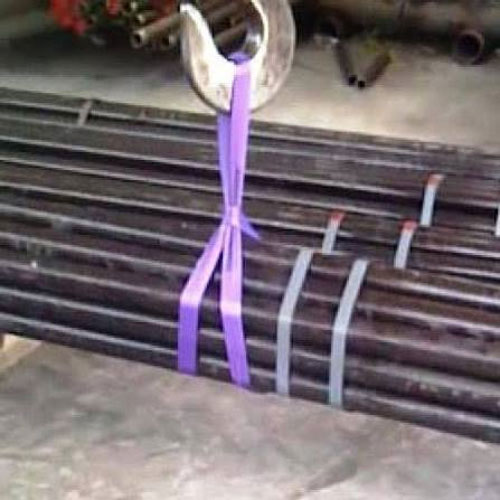
A cargo sling at the first of the five points: choked round a bundle of steel tube at the hook, with the bundle still strapped. The choke is the hitch, the angle is the figure, and the band's colour states the capacity the choke is taken from.
6. Choosing the band and the rope together
Two of the decisions that sit either side of this one are dealt with elsewhere on the site and are linked rather than repeated. If the band is to be fitted before the load is placed, so that nobody at the far end has to rig it, the route is the disposable pre-slung cargo sling; and if a quantity of these bands is to be held and issued rather than bought per job, the store side - counting, issuing and checking a consumable - is on the single use endless webbing sling page.
The band is specified by the number the colour stands for. In the European code the band's colour is an entry for the straight-lift capacity of the article, and it is the same code for flat woven w ebbing, for the endless form and for the sleeved round sling - which is why a rigger can read the capacity of an unfamiliar sling at arm's length and why a colour that matches nothing is a question ra ther than an answer.
| Band colour | Straight-lift capacity | Band width, mm | What a pipe duty usually does with it |
|---|---|---|---|
| Violet | 1 000 kg | 30 | Single small-bore tube, hand tools, sample lengths. Choked, this colour carries 800 kg. |
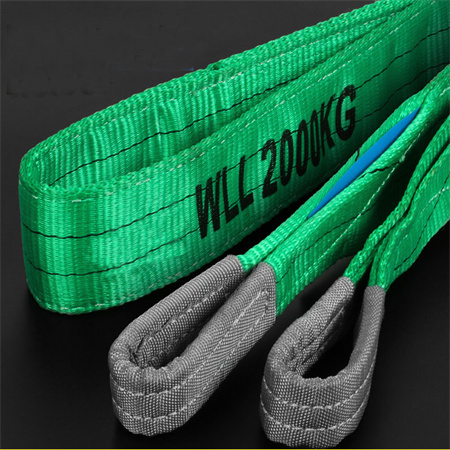
| Green | 2 000 kg | 60 | The commonest pair of slings in a tube store, and the commonest set on a pipe order: two of these in a basket on a length of s mall tube. |
| Yellow | 3 000 kg | 90 | Bundles of small-bore tube, and the widest bands that one person handles comfortably all day. |
| Grey | 4 000 kg | 120 | Where a bundle is heavy enough that the contact pressure matters as much as the strength. |
| Red | 5 000 kg | 150 | Large-bore pipe, one length or two, where the band has to reach round the circumference. |
| Brown | 6 000 kg | 180 | Heavier line pipe, and the point at which the set is usually rigged by two people rather than one. |
| Blue | 8 000 kg | 240 | Pipe racks and stacked bundles, where the band also has to survive being pulled out from under the load. |
| Orange | 10 000 kg and 12 000 kg | 300 | The heaviest single-band class in the range; above it the set is a beam and two slings rather than one band. |

A two tonne band in the green the code reserves for that capacity, with the working load limit printed along the webbing itself. The colour says the capacity; the printing and the label say everything the colour cannot - the hitches, the material, the length and the batch.
For the pipe duty the form matters almost as much as the capacity. The endless form has no ends to catch on a cut end and chokes anywhere along its length, which suits a bundle that has to be group ed at a pick point nobody planned for. The eye and eye form hangs straighter on a two-leg arrangement and comes off a choke more easily. The sleeved or reinforced form costs more and is bought for pip e that has to arrive unmarked. The differences between the eye forms themselves are set out on the page for the eye and eye sling, including the type letter t hat decides whether a choke can be made at all.
The rope, which is where matching is actually decided
A lifting rope for a cargo set is specified the way the sling is specified: by rating first, and by diameter only after that. Three construction questions settle the rest.
| The question | What the trade supplies | What it changes on the journey |
|---|---|---|
| Construction | Three-strand twisted rope, or eight-strand braided rope with the strands plaited so that the rope stays round under load. | How the rope behaves in the hand and how it takes a splice. Braided rope is the easier of the two to knot and the harder to in spect for a broken strand; the choice is normally made on what the riggers on the route are used to. |
| Fibre | Polyester, nylon or polypropylene, the same three families the band is woven from. | Stretch and chemistry. Polyester gives the least elongation and the most predictable length; nylon absorbs a shock and a soaki ng; polypropylene is the one that tolerates acid and dislikes a hot pipe. On a set, the rope's fibre should be chosen for the same site as the band. |
| The end | A spliced soft eye, an eye with a metal thimble, or a hook; one at each end, or one at each end and a ring. | Whether the set can be rigged at all at point four of the journey. A soft eye passes through the sling's eye and sits in a hoo k; a thimble wants a shackle pin; a hook is quick on the works crane and awkward in a four-leg master link. |

The matching lifting rope: braided rope with a spliced soft eye at each end. An eye of this form passes through the eye of the s ling and sits in the hook, which is what makes a pair usable at a hook the works has never seen. The spliced eye is a load-bearing joint and is never repaired. Ropes of this family are listed under nylon rope.
7. The marking on the pair, and the two things that travel with the load
Two markings do the work on a cargo set, and they are on different articles. On the band, the colour states the straight-lift capacity and the printing states the figures that the colour cannot exp ress. On the rope, the identification travels with the rope itself, because the rope is an accessory with its own rated capacity and its own service history.
| Where it appears | What it has to say | Why it matters more on a one-trip set than on a store sling |
|---|---|---|
| The band itself | Printed or woven into the webbing in figures that can be read at the load: the working load limit, and the length where the le ngth is part of the identity. | Because the band will be read once, in poor light, by someone who has never seen it before. Printed figures are a second chanc e if the label is lost on the way. |
| The affixed label | The maker, the rated capacity for each type of hitch the article is rated for, the material of the webbing, the length, and th e batch or identification number. | Because the label is the only part of the article that carries the hitch figures. An unlabelled sling is not a disposable slin g; it is an unidentified one, and the rule against using it does not have a one-trip exemption. |
| The rope | Its own identification and rated capacity, on a marking that will survive the route it is about to take. | Because a rope without a figure is the classic weak link: the sling is chosen from a table and the rope is chosen from what wa s on the shelf. |
| The certificate | One document naming the articles in the set, their figures and their batch, travelling with the load or with the shipment. | Because the receiving site has no store record to fall back on, and the question asked there is not what the sling cost but wh at it is rated to do. |
8. Before each lift, at each of the five points
The pre-use check on a cargo set takes a minute and changes with the point it is made at, because a different part of the article is under the most strain at each one. Four things are worth looking at every time.
The contact with the pipe. The band where it touches the load: a cut, a glazed or melted patch, or a burn from a hot pipe end. On a one-trip article this is the whole of the inspectio n, and it is made before the trip rather than after it.
The choke. That it is closed on the body of the band and not on the eye or the stitching, that the band is lying flat through the choke rather than twisted, and that the pipe is not r esting on the seam.
The label and the printing. That both are still on the article, legible, and that the figures are the figures for the hitch being made. A label that has been wiped clean by the last c hoke is an article that has to come out of service at the next one.
The rope, its eye and the hook. That the splice is not open and no strand is broken at the throat of the eye, and that whatever the rope is on - hook, shackle, master link - is closed and latched.
9. What an enquiry for a pipe set has to carry
Six lines are enough to quote a cargo sling and its rope properly, and four of them are about the journey rather than about the article.
| The line | What to state | What it fixes |
|---|---|---|
| The pipe | Outside diameter, wall thickness, length, the weight of one piece, and how many pieces are lifted at a time. | The band width, the length of the set, and whether the lift needs a beam rather than two slings. |
| The surface | Bare, oiled, painted, galvanised or threaded; and the temperature of the pipe at the first pick-up. | Whether the contact needs protection, and which fibre is safe against the pipe. A pickled or acid-washed line is a different q uestion, treated here: the polypropylene flat sling page. |
| The pick points | Where along the length the load is to be taken, and the headroom at each of the five points. | The length, and with it the angle the set will actually form on the widest hook. |
| The hooks | What the set will hang from at each point: single hook, master link, four-leg arrangement, or a lorry hook with a latch. | The end form of the rope and the form of the sling's end, which is the difference between a set that is used and a set that is re-rigged twice a day. |
| The far end | Who unloads, what they have, and what happens to the set afterwards; what has to travel with the load in the way of marking an d certificates. | Whether the order is a one-trip set at all, and what the labelling and packing have to survive. |
| The quantity and the batch | How many sets, and whether they have to be identical - same figure, same length, same colour, same marking. | Whether the order runs as one batch, and how the batch is tested and recorded. |
The mill end of the same journey has its own page, because a steel plant sending threaded bar out in bundles asks a different question of the same article, down to what happens to the marking after the bundle is broken. That is the steel plant export belt. Everything in this range is made to order; the band range, the forms and the ropes are listed und er lifting slings.
10. Frequently asked questions
Q1: Is a cargo sling a different article from a lifting sling?
No. It is the same rated article sold for a different duty. Cargo describes where the sling works - on loads that are being moved between places rather than lifted inside one building - and it is t he reason the set is bought with its rope and its documents. The rating, the marking and the inspection rules are the sling's, unchanged.
Q2: Why do I have to buy the rope at the same time as the sling?
Because a rope found later is usually chosen by diameter, and diameter does not carry a rated capacity. Buying the pair together is what allows the set to be rated as a set: the lowest rated part f ixes the figure, the length is cut for the geometry of the journey, and both articles appear on one certificate.
Q3: What is the safe way to sling a single steel pipe?
Choke it on the body of the band, or carry it in a basket with the legs kept steep, and never rely on friction alone on a smooth round surface. Keep the band off the cut end, use the end protection where the band has to pass it, and pick points that keep the pipe level without letting the middle bow.
Q4: Can one band lift a bundle of tubes?
Two bands, one at each pick point, are the normal answer, and the bundle has to be tied or banded so that a single tube cannot escape the group. A bundle of round tubes behaves differently from a s olid bar of the same weight, because the tubes settle against each other once the load comes on.
Q5: Will the band dent a thin-wall pipe?
It can, because the whole load passes through a narrow line of contact. The answers are a wider band, a sleeve over the contact point, or a spreader beam so that the legs leave the pipe vertically. A dented or oval pipe is usually a rejected pipe at the far end, whatever the sling did to earn it.
Q6: The band says 2 t but the choke figure is lower. Which figure do I use?
The one for the hitch you are making. The colour states the straight-lift capacity; a choke is about four fifths of that, and two legs at a wide angle can give no more than one leg. The label carri es the figures for the hitches the article is rated for, and that is the figure that applies at the hook.
Q7: Can the same set be used at the works and on the quay?
That is what a matched set is for, and it only works if the length is chosen against the widest arrangement in the journey - usually the four-leg link at the quay - rather than against the crane th e goods are leaving from. If the two arrangements are too far apart, the honest answer is two sets or a beam.
Q8: Can the sling be left on the bundle and used to restrain it in transit?
No. Restraint is a different duty, rated for tension and provided by a lashing. A lifting sling that holds a bundle down on a lorry is being used outside the figures on its own label. This is one o f the commonest misunderstandings on a cargo order, and the disposable sling page treats it with the rest of the one-trip order.
Q9: What happens to the set when the load is delivered?
It comes out of lifting service where it is unloaded, and both articles leave together. Whoever takes it out of service records it, and it is not returned to a rack as though it were unused stock. This is the point most often left undecided when a one-trip set is ordered.
Q10: What do you need from me to quote?
The six lines in section 9, and one sentence about the far end. The pipe and the pick points settle the article; the hooks and the far end settle the length, the ends and the paperwork. Send those and the quotation comes back with a set that can be rated, not a sling and a hope.
Contact
Send the six lines, and say what the receiving yard will do with the set, because that answer decides the marking, the packing and the documents. We make the band, the rope and the certificate as o ne order, cut to the length the journey needs rather than to the length that is convenient to pack, and marked for the hitches the set will actually be used in.
Telephone and WeChat — 18066002268
E-mail — 702461526@qq.com
Address — Lifute Industrial Park, Taizhou City, Jiangsu Province, China
HS code — 630790
- Previous:White disposable lifting ring, disposable white flat lifting sling, acid and alkali resistant disposable white lifting sling, white disposable lifting sling
- Next:Disposable polyester lifting ring, circular sling, circular
-
Drone Anti-collision Net
-
Extra Large Capacity Cargo Net
-
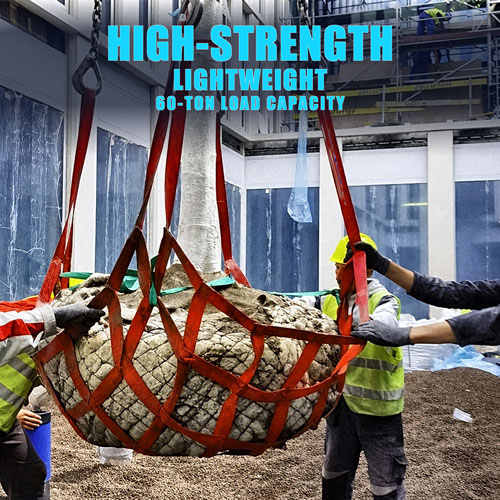
Cargo Webbing Net
-

Color changing nylon double buckle loop nylon braided rope
-

Two end buckle lifting rope, double buckle round lifting rope, double fork nylon lifting rope, non jointed nylon lifting rope
-

Emergency escape lifeline, fire escape rope, fire safety escape emergency rope, steel wire core fire rope

