 Language
 简体中文
简体中文
- On the 2018 National Day holiday, Lifet completed six 100 ton large tonnage lifting belts as a gift
- The role of suspension net in the transportation of goods turnover
- Cargo soft lifting net, lifting net, lifting net, lifting net, bag, climbing net
- Precautions for using Lifutiden elevator
- How to make circular lifting straps
Contact: Wang Lili
E-mail:18066002268
Phone:702461526@qq.com
Address: Lifute Industrial Park, Taizhou City, Jiangsu Province
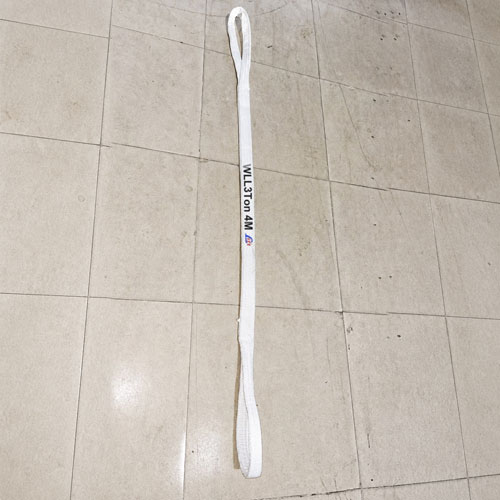
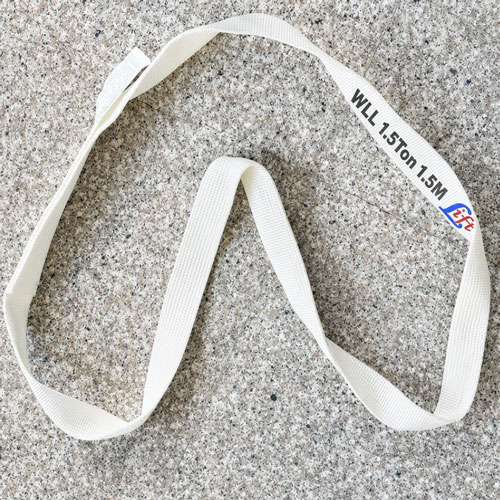
Lift Sling Rigging Co., Ltd. manufactures the single use lifting sling - also sold as a one trip sling or a disposable sling - the white flat woven webbing sling that is attached at the start of a journey and travels with the load to its destination instead of being taken off and returned. The words are worth getting right, because the trade does not define single use as a sling that is lifted once. The definition written by the Lifting Equipment Engineers Association describes a sling that accompanies one specific load from source, through a defined number of handling operations, until it reaches its final destination, and states plainly that the sling may be used to lift the same load numerous times throughout that journey. What ends at the destination is the sling‘s life, not its usage: it is removed and destroyed, and the association recommends cutting it so it cannot come back into circulation. That one idea changes how the article is bought. Because it only has to survive one journey it is made light and thin and is sold cheap; the market‘s own figures are white webbing, HS code 630790. Phone 18066002268.
Hits: ℃
Release time:2026-09-18 08:13
Lift Sling Rigging Co., Ltd produce Single Use Lifting Sling,Disposable lifting sling,Single Use Endless Lifting Sling,Single Use Webbing Sling,One way sling with loops.
Single Use Lifting Sling — a One-Trip Sling That Travels With the Load

The article this page is about: white flat woven webbing in the endless form, carrying its own identification printed on the band.
1. What This Sling Is, and Which of the Three Words You Are Buying
Three words are used for this article and they are not three products. Single use, one trip and disposable all describe the same sling bought for the same reason: it is attached once and it travels with the goods. A fourth word, one way, is used loosely on the same shelf and is a different listing, so this page links to it rather than absorbing it — if a supplier prices "one way" and "single use" separately you are looking at two catalogue entries for what may be one article, and it is worth asking which one the price belongs to.
What the article physically is, in the words the trade uses: a flat woven webbing sling in a man-made fibre, most often supplied in the endless form — a continuous loop with no sewn ends — or as an eye and eye sling with a sewn loop at each end. It is made thinner and lighter than a general purpose sling of the same width, which the trade body states as a characteristic of the category rather than a criticism: "One trip slings tend to be thinner than their general purpose counterparts and may come in any colour, including white." White is the traditional and still the dominant colour, which is why the category is also sold as white lifting slings. Working load limits are small — the published figure for the category is that most are no more than 1,000 kg — because a sling with one journey ahead of it does not need to be sized for years of service.
| The word | What it means for this article | What it does not mean |
|---|---|---|
| single use | The sling is bought for one journey and is finished when the journey ends. This is the term this page is written for | Not a sling that may only be lifted once. The trade definition allows the same load to be lifted repeatedly during the journey — see §2 |
| one trip | The same article, named from the journey rather than from the count. It is also the term the trade body prefers, and it has a formal guidance document of its own | Not a measure of how many times the load is picked up. It is a measure of where the sling is expected to end up |
| disposable | The same article again, named from what happens to it at the end. This is the word the Chinese side of this same site has used for years | Not a licence to treat the sling as packaging. Disposable describes the end of its life, not its legal status while it is lifting |
| one way | Overlapping vocabulary used on the same shelf, and catalogued separately on this site — see One Way Sling | Not automatically the same article at the same price. Ask which listing the quotation belongs to |
| reusable, general purpose | The ordinary sling, built heavier, built to be inspected and to serve for years. The article this one is contrasted with throughout the page | Not an upgrade you pay for twice over. Reusable is the default and single use is the deliberate exception |
2. It Is the Journey, Not the Number of Lifts
This is the single most useful paragraph on the page, because getting it wrong causes both kinds of error at once: a buyer may refuse to use a perfectly good one-trip sling for a second pick on the same journey, or — far worse — may leave the sling in circulation after the journey has ended.
The definition comes from the Lifting Equipment Engineers Association, the trade's engineering body, in a technical note written to correct exactly this misunderstanding. Setting out what a one trip sling is, its technical engineer writes:
The term one trip sling is given to a sling that has been designed for the specific purpose of attaching to and accompanying a specific load from source, through a defined number of handling operations, until it reaches its final destination. Once this trip has concluded the sling must be destroyed and not reused.
The final destination of the load and the sling must be known, yet the sling may be used to lift the same load only numerous times throughout its journey. On completion of its journey, the sling must be removed and discarded. It must never be reused. Ideally, LEEA will always recommend cutting the sling to ensure this happens.
Read those two sentences together and the product stops being confusing. The sling may be picked up many times; what it may not do is survive the journey. The count that matters is not lifts, it is destinations. That is why the same authority can describe the article as "thinner than their general purpose counterparts" while insisting it is perfectly legitimate: a one-trip sling is legal and safe, in its own words, for its designed purpose — the risk lies entirely in what happens to it afterwards.
The trade does not speak with one voice on what happens during the journey, however, and the disagreement is worth showing rather than resolving quietly, because a buyer who has read only one of these two columns will plan the lift wrongly.
| The question | One published position | The other, from the trade's engineering body |
|---|---|---|
| How many lifts is it good for? | "Designed to do exactly one lift, then be discarded" — the definition given by a lifting supplier's own buyer's guide | A defined number of handling operations, and the sling may be used to lift the same load numerous times throughout the journey |
| Must it be checked before use? | A comparison table in the same source states inspection requirements as "None — discard after use" | "Before each lift, a one trip sling must be checked to ensure it is safe to use" — and it adds that even a new sling may already have been damaged in transit |
| Where does it get used? | Export and shipping loads, one-way freight, and jobs where the sling is deliberately left with the cargo because return freight is not viable | The same jobs — attaching to a specific load and accompanying it from source to final destination |
| Our position | — | Where the two disagree, this page follows the engineering body and the regulation in §8, for the reasons set out in §9. A new sling can be damaged before its first lift, so "new" has never been a substitute for looking at it |
3. Why the Trade Buys It: the Sling That Stays With the Load
The economics are not about the price of the sling. They are about the unloading step that no longer has to happen. On ordinary work the rigger attaches the sling, the crane lifts, the rigger takes the sling off, and the sling goes back to the yard or on to the next load. On a one-trip job the sling is attached when the bundle is first made up and it is still on the bundle when the bundle reaches its destination, so nothing has to be unrigged and returned at any intermediate stage. The industry's own description of the advantage is exactly this: depending on the production system, the same sling can be used from the moment the bundle comes out of the machine until it reaches the final destination.
That is why the category is overwhelmingly associated with bundled long goods — the loads that are made up, moved several times and then shipped on, rather than the loads that are picked up and put down in one place. The published list of industries served is a list of exactly that: manufacturers of bars, wood, welded mesh, copper tubes and iron tubes. This site's own Chinese-language page on the same article says the same thing in its own terms — that they are mostly used in steel pipe factories, that they save time where the quantity of goods is large by removing the intermediate loading and unloading, and that the sling is often supplied with the goods, bundled and sent together with them.
| Where it is used | What the sling is doing there | What that means when you specify |
|---|---|---|
| steel bar and tube mills | Slinged round a bundle at the mill and left there; every subsequent movement of that bundle is done without re-rigging | The load is a bundle of hard, heavy, cut-edge material, so the sling is dealing with pressure on an edge rather than with a smooth surface |
| welded mesh and wood | Flat packs and panels where the sling crosses a flat face and the ends of the material present the edge | Ask for the load's own edges to be considered. Mesh ends and sawn timber are the classic places a synthetic sling is cut |
| copper tube and duct | Soft metal where the requirement often runs the other way — the load is the thing at risk from the sling | Say so. A woven band spreads pressure over its width, but a thin single-use band spreads it over less width than a wide one |
| export and one-way freight | The load is lifted at origin and again at destination, and the sling is not worth shipping back | Both ends are real lifts with real people under the load, so the sling needs its marking to survive the voyage — see §7 |
| container and pallet freight | Lifting points are used a few times in a short window and then never again | Counting the picks is worth doing: a much shorter journey than a mill-to-customer trip needs a much weaker band, and paying for more is waste |
4. What the Market Actually Sells, and the One Number That Matters Most
Most listings for this article describe it in almost identical words, so it is worth setting the specification out plainly, with the figure that carries the most risk last. The published specification for the category is below; where a range is published rather than a single value, the range is given.
| Item | What the category is sold as | What to pin down before you order |
|---|---|---|
| fibre | Polyester or polypropylene. The older pages on this site describe the Chinese originals as non-standard white polypropylene | Say which, and say it in writing. Polyester holds its strength better in sunlight and against water; polypropylene is lighter and cheaper and floats |
| form | Endless rings are the usual form — the endless type is what most of the trade's single-use listings describe. Eye and eye slings with a sewn loop at each end are also made | An endless sling has no sewn termination to inspect, which removes a failure point and also removes a place to read a label. A sewn eye sling gives you both back |
| colour | White is the traditional colour and gives the category its second name. Published listings also offer yellow, green, black, pink and red | Colour carries no load meaning here. White is not a rating and on this category it is not the standard's colour code either — see §7 |
| width and length | Made to order in both. Width is quoted in millimetres and length as the working length of the sling, not the length of the webbing cut | Give the length the way the sling will be measured on site — bearing point to bearing point — not the flat length of the band |
| working load limit | The published figure for the category is that most are no more than 1,000 kg | Ask for it in kilograms, printed on the band, for the hitch you will actually use. Do not assume it from the width |
| safety factor | Offered as an option across a wide span: published ranges run from 7:1 down to 3:1 | The one number to settle in writing. It decides the WLL printed on the same band, and in most regulated markets a low factor removes the article from general-purpose use entirely — §5 and §6 |
| standards claimed | Listings in this category commonly cite DIN 60005, ISO 4878, EN 1492-1 and BS 3481-3 among others | Ask which one the article was actually made and tested to, and ask for the certificate. A list of four standards is a shelf of brochures, not a test report |
Nothing in that table is difficult. But notice that the specification has one item the others do not: the safety factor is not a property of the goods, it is a choice applied to them. That choice is what the next section is about.
5. The Safety Factor Is a Labelling Decision, Not a Material Property
Two slings can come off the same roll of webbing, with the same weave, the same width and the same breaking strength, and go out of the door carrying two different working load limits. Nothing about the goods changed. What changed is the factor the seller chose to divide by.
Working load limit = minimum breaking strength ÷ safety factor
The printed WLL is the breaking strength of the band divided by the factor the supplier selected. The factor is not measured on the sling; it is decided for it, and then printed.
Take a single band with a minimum breaking strength of 7,000 kg and divide it by each factor the category is advertised at. Every figure below can be checked on a calculator in a few seconds:
| Factor printed on the label | WLL the same 7,000 kg band is labelled | Check it yourself |
|---|---|---|
| 7:1 | 1,000 kg | 7,000 ÷ 7 = 1,000 |
| 6:1 | 1,166 kg | 7,000 ÷ 6 = 1,166.6 |
| 5:1 | 1,400 kg | 7,000 ÷ 5 = 1,400 |
| 4:1 | 1,750 kg | 7,000 ÷ 4 = 1,750 |
| 3:1 | 2,333 kg | 7,000 ÷ 3 = 2,333.3 |
Ordinary woven slings in regulated markets cannot be labelled this loosely, because the market fixes the factor. The next section sets out what those figures are.
6. What the Standards Require of the Same Article
The reason §5 matters is that in most regulated markets the safety factor is not the seller's to choose. It is fixed by the standard the article is made to, and the floors differ from market to market. A buyer who has been quoted a factor needs to know which floor applies to the place the sling will be used, because a sling below that floor is not a general purpose sling and cannot be substituted for one.
| Standard | Factor the standard fixes | What else it fixes, and what it leaves open |
|---|---|---|
| EN 1492-1 Europe | Typically 7:1. The thorough-examination guidance for textile slings states that slings conforming to BS EN 1492 carry a factor of safety ratio of 7:1, and cites the Machinery Directive for it | It covers flat woven webbing slings of man-made fibres from 25 mm to 450 mm wide, single and multi-ply, and it fixes the colour code and the marking label. It does not create a single-use category — the article either meets it or it does not |
| ASME B30.9 North America | A minimum design factor of 5 for synthetic webbing slings, stated in the standard's own design-factor clause, §9-5.4 | It leans on inspection, use and removal criteria rather than colour, and requires the marking itself — manufacturer, working load limit, material and warnings. There is no mandatory colour code, so colourless reasoning is the rule here |
| AS 1353 Australia | Commonly stated as 8:1 — the highest floor of the four | It also sets durability requirements for harsh conditions, which bear directly on a light band used outdoors near salt and sun |
| JIS B 8818 Japan | Figures vary by product rather than being summed up in one number | Focused on webbing slings for cranes and hoists, with material and strength testing requirements of its own |
| this article, sold as single use | Offered from 7:1 down to 3:1 depending on the option ordered | Below the floor of every standard in this table. That does not make it illegal or unsafe for its designed purpose — but it does mean it is not a general purpose sling and must not be treated as one |
Two published figures are therefore in circulation for the same class of goods, EN 1492-1 at 7:1 and ASME B30.9 at a 5:1 minimum, and both are real. Readers often meet them as a contradiction. They are not: they are two different markets applying two different floors, and the practical instruction is to buy to the floor of the market the sling will work in, not to the most generous figure you were shown.
7. Reading the Sling You Were Handed: Colour, Stripes and the Band
A white sling has a problem the rest of the trade does not have. Under EN 1492-1 a woven sling's colour is part of its marking: the standard assigns a colour to each working load limit so that capacity can be read at a glance without finding the label. The code runs as follows, and it is worth knowing that white is not in it.
| Working load limit | Colour under EN 1492-1 | Black stripes, and what they are worth |
|---|---|---|
| 1 t | Violet | one stripe |
| 2 t | Green | two stripes |
| 3 t | Yellow | three stripes |
| 4 t | Grey | four stripes |
| 5 t | Red | five stripes |
| 6 t | Brown | six stripes |
| 8 t | Blue | eight stripes |
| 10 t and above | Orange | none from 12 t upward |
| this article | White, which is not a code colour at all | None assumed. On white webbing a stripe would be the only colour signal, so read the band itself |
Two things follow, and both are practical. First, you cannot read capacity from the colour of a white sling, because white carries no capacity meaning in the code; the capacity has to come off the marking, which on the photographs on this page is printed directly onto the band — 0.5 tonne on one, 1.5 tonne on the other. Second, the black longitudinal stripe that appears in the weave of many slings is worth understanding properly: it is one stripe per tonne of working load limit, and the supplier that documents it is careful to say that this stripe is not part of the EN 1492 standard. It is a useful convention, not a compliance mark. Do not let it stand in for reading the label.
8. The Regulatory Position: There Is No Single-Use Exemption
This is the section a buyer is least likely to have read anywhere else, and it is short. In the United States the rule for slings used in hoisting is 29 CFR 1910.184. Its scope paragraph defines what it covers, and it defines it by material and by activity — not by how many trips the article was sold for:
"This section applies to slings used in conjunction with other material handling equipment for the movement of material by hoisting … The types of slings covered are those made from alloy steel chain, wire rope, metal mesh, natural or synthetic fiber rope … and synthetic web (nylon, polyester, and polypropylene)."
Read it as a list of conditions and the conclusion is hard to avoid. Is the article made of synthetic web, nylon, polyester or polypropylene? Yes. Is it being used with other material handling equipment to move material by hoisting? Yes — that is what it is for. The section applies. There is no single-use exemption in it, and no "disposable" exemption, and no exemption for a sling sold cheaply. What the article is called in a catalogue does not change what it is doing at the hook. The clauses that therefore follow are these:
| Clause | What the rule says | What it means for this article |
|---|---|---|
| 1910.184(c)(14) | "Employers must not use slings without affixed and legible identification markings." | An unmarked sling cannot be used, full stop. Buy the marking with the sling, and replace the sling when the marking has worn off — not after |
| 1910.184(c)(13) | Employers must not load a sling beyond the safe working load "prescribed by the sling manufacturer on the identification markings permanently affixed to the sling" | The number that governs is the one on the sling, so the number has to be right and it has to be readable. This is the clause that makes the safety factor in §5 a site-safety matter rather than a commercial one |
| 1910.184(c)(1) | "Slings that are damaged or defective shall not be used." | It says damaged, not worn out. A cut is damage at any depth, which is why §9 puts cuts at the top of the list |
| 1910.184(c)(7) | "Slings shall be padded or protected from the sharp edges of their loads." | The protection is required. If your load has edges, the plan needs an answer for them — and on a thin single-use band that answer matters more, not less |
| 1910.184(d) | "Each day before being used, the sling and all fastenings and attachments shall be inspected for damage or defects by a competent person designated by the employer … Damaged or defective slings shall be immediately removed from service." | Each day before being used. Not "each sling that is going to be used for years" — each sling, each day it is used. This is the clause behind §2's disagreement, and it is not written with a category excepted |
The regulation's author in the United States is not the only voice. In the UK and EU, a one-trip sling has to carry the applicable conformity mark on its information tag, has to be supplied with instructions for use, and has to come with a manufacturer's certificate or a declaration of conformity, with any writing on the sling in the language of the place it is used or in English. Those are conditions of supply, not suggestions — and they are conditions a buyer has to ask for, because they do not appear in the price.
9. What to Look At Before Each Lift
The trade body puts the inspection obligation in the plainest possible terms, and adds the reason a "new" sling does not get a pass: "Before each lift, a one trip sling must be checked to ensure it is safe to use. Even though the slings may be new, it is possible for it to have been damaged either during transit or through the method used to attach it to the load." That sentence is the whole argument. The sling may have been damaged before it ever reached your site, and it may have been damaged by the way it is attached — including by the load itself, which on a bundled long-goods job is the normal case rather than the exception.
So the check is short, but it is not nothing. On this category the list below is the one that matters:
| What to look at | Why it matters more on a one-trip sling | What to do |
|---|---|---|
| Cuts, nicks and abrasions | On a light band a cut is a larger fraction of the load-bearing weave than it would be on a heavy sling, and cutting is the leading cause of failure in synthetic slings. A cut need not look deep to matter | Out of service. On a single-use article there is no case for re-rating a damaged sling down and carrying on with it |
| The marking, and signs it was torn off | The trade body names torn tags as a specific hazard because they take the working load limit away from the sling. On this category the marking is often printed straight onto the band, where it wears with the weave | If the WLL cannot be read, the sling cannot be used — §8. Mark it again or scrap it, but do not guess the number |
| Pre-slung and trapped under load | This is the signature damage of this category, because the whole point of the product is that the sling stays on the load. It is the case the trade body calls out by name: check that damage has not occurred where the sling was trapped between loads | If it has, remove it — and a sling trapped under the load must not be dragged out from under it while the load is resting on it, which is prohibited in terms |
| Sunlight and weathering | A sling that travels with goods may spend its whole life outdoors or in a container, and continuous exposure to ultraviolet light degrades synthetic webbing | Look for fading and a bleached, stiff, powdery surface. Keep spares out of the sun — the sling's life is the journey, not the storage |
| Chemical contact | The same site's older pages on this article record chemical erosion as a cause of local weakening, and note that the material decides which chemicals are a problem | Tell us the chemical and we will tell you the fibre. Polyester and polypropylene do not have the same resistance, and neither is universal |
| Has it already done a journey? | The central risk of the whole category. A one-trip sling that arrived back in the yard with the goods, or was taken off and put in a rack, is now an untracked sling of unknown history | Withdraw it and quarantine it as a minimum, and destroy it as the trade body advises. If you find any slings lying around, do not be tempted to reuse them |
10. Material and Construction: the Choices, and What Each One Costs You
The article is simple, which makes the few decisions in it matter more. Left to a catalogue description they will all be made for you, usually in favour of the cheapest option, and two of them — the fibre and the form of the ends — decide what the sling can and cannot do.
| The choice | What it actually changes | How to decide |
|---|---|---|
| Polyester | The better general choice for outdoor and wet work: it holds its strength against sunlight and water better than polypropylene, and it is the fibre most woven sling standards are written around | Default to it unless the load or the site gives you a reason not to. If the sling will sit on a wet dock or in a container for weeks before the second lift, this is the one |
| Polypropylene | Lighter, cheaper and it floats. It is the fibre the older Chinese pages on this same site describe for this article, and it is what most white single-use slings have historically been made of | The economy choice and a defensible one for a short journey. Ask about its resistance to whatever the load is treated with before you commit |
| Nylon | More stretch and better resistance to some chemicals than polyester, which cuts both ways — stretch absorbs shock, and stretch also lets a load move under load | Reasonable where the lift is snatchy or the load soft. Not the default, and not what this category is usually sold as |
| Endless form | A continuous loop with no sewn termination anywhere. Nothing to inspect at a joint and nothing to fail there — and correspondingly nowhere to fix a sewn label, which is why the identification on the photographs is printed onto the band | The usual form for this product and the one most listings describe. Choose it when the journey is defined and the sling will be wrapped round a bundle |
| Sewn eyes at both ends | A loop sewn at each end, so the sling has a defined bearing face along its length and a genuine place for a sewn label. It also introduces stitching, which is a part that has to be inspected | Choose it when the sling needs to be lifted from two hooks with a defined span, or when you want the marking in a sewn label. See Eye and Eye Sling |
| Width and ply | Width is what distributes the pressure the band puts on the load, and it is bought in millimetres. Ply — single or duplex — is how many layers of weave the band has | Width is set by what must not be marked and by what the band must not be cut by, not only by the tonne figure. A narrower band at the same WLL presses harder on the same edge |
| White or coloured | White does not dye-transfer onto goods and shows contamination early, which is why the category settled on it. Coloured versions are sold too | Only pick a colour for a reason, and never read a capacity from it — §7. On white goods or clean metal, white is the lower-risk choice |
| Printed or sewn marking | Printing goes straight onto the band and wears with it; a sewn label is protected but can be torn off, and the trade body names torn tags as a hazard in its own right | Whichever way it is done, the requirement in §8 is a legible marking. If the marking cannot survive your journey, specify one that can |
11. Destroying It Is Part of the Specification
Every page about this article describes what it is for. Almost none describes what has to happen to it at the end, and that omission is the reason the trade body wrote a technical note about the category in the first place. Its conclusion is blunt: a one trip sling is not a general purpose sling — once it is finished with, or removed from the load, or if it is damaged, it must be withdrawn from service and quarantined as a minimum, and ideally destroyed, preferably by cutting. The reason for the cutting is not symbolism. A sling that is intact, white, clean and lying in a rack looks exactly like a usable sling, and its history is gone.
There is a second consequence, and it is commercial rather than legal. Because the article is bought to be destroyed at the end, it is designed to be destroyed — thin, light, short-lived, cheap and easy to compress into a small volume for transport. Every property buyers like about it follows from that one fact, including the low freight cost, because the slings pack down flat. This is the reason a single-use sling that has been made heavier and more durable is a contradiction rather than an upgrade: if you want a sling that survives, you want a general purpose sling, made to the floor of the standard in §6, inspected on the schedule in §8.
So the ordering instruction is unusually straightforward. Decide the journey, decide the factor honestly, mark the article so it can be identified at both ends, and then plan the destruction at the same time as the purchase — cut every one of them at the end and make sure everyone who handles them knows what the word on the band means. The trade body's own summary of what goes wrong is that a general lack of understanding about one-trip and low quality slings threatens safety. The knowledge is the specification.
12. Frequently Asked Questions
Q1: What is a single use lifting sling?
Q2: Does single use mean it can only be lifted once?
Q3: Is a single use sling legal, and is it safe?
Q4: What safety factor should I order?
Q5: What working load limit can you make it in?
Q6: What material should I choose, and does the colour matter?
Q7: How do I tell whether a white sling in my rack is one of these?
Q8: Must it be inspected if it is only going to be used once?
Q9: What happens at the end of the journey?
Q10: What do you need from me to quote?
Contact
This sling is made to order, and the two questions that decide it are the load and the journey. Send the weight, the width, the working length and the safety factor, and add what the sling will be bearing on and how many handling operations it has to survive — those last two are what separate a sling that is honestly cheap from one that is only cheap until the second lift. The technical questions on this page are answered by the workshop rather than by a call centre.
Telephone and WeChat — 18066002268
E-mail — 702461526@qq.com
Address — Lifute Industrial Park, Taizhou City, Jiangsu Province, China
HS code — 630790
- Previous:One Way Sling
- Next:Ratchet Tie Down Strap
-
Drone Anti-collision Net
-
Extra Large Capacity Cargo Net
-
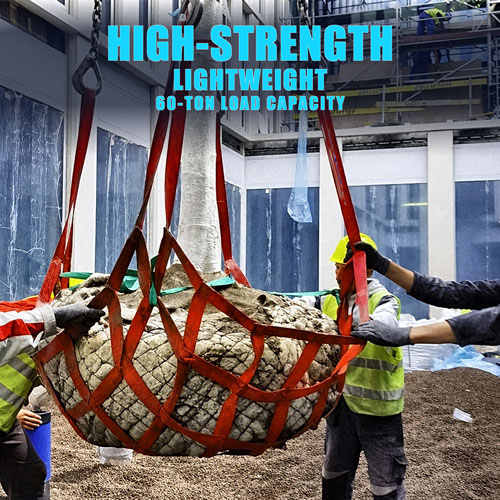
Cargo Webbing Net
-

Color changing nylon double buckle loop nylon braided rope
-

Two end buckle lifting rope, double buckle round lifting rope, double fork nylon lifting rope, non jointed nylon lifting rope
-

Emergency escape lifeline, fire escape rope, fire safety escape emergency rope, steel wire core fire rope

