 Language
 简体中文
简体中文
- On the 2018 National Day holiday, Lifet completed six 100 ton large tonnage lifting belts as a gift
- The role of suspension net in the transportation of goods turnover
- Cargo soft lifting net, lifting net, lifting net, lifting net, bag, climbing net
- Precautions for using Lifutiden elevator
- How to make circular lifting straps
Contact: Wang Lili
E-mail:18066002268
Phone:702461526@qq.com
Address: Lifute Industrial Park, Taizhou City, Jiangsu Province
Lift Sling Rigging Co., Ltd manufactures lifting belts, lifting nets, nylon ropes, soft ladders, steel wire rope rigging, paper ropes, safety belts, safety nets, lifting chains, steel coil hoists, crossbeam hoists, flat lifting belts, circular lifting belts, electric traction ropes, high-altitude safety belts, and anti fall safety nets
Hits: ℃
Release time:2026-09-24 13:27
Lift Sling Rigging Co., Ltd manufactures Steel plant lifting threaded steel disposable export lifting belt
Steel Plant Lifting Sling for Threaded Steel — the Disposable Export Belt, and What Happens After the Trip
1. The name on this page, and the one thing it does not say
The name of this listing is long because it is a description of a duty rather than of an object: a steel plant, threaded steel, disposable, export, lifting belt, lifting sling. Read as a specification, it names the place the lift starts, what is being lifted, how the purchase is treated commercially, and the article itself.
Read as an instruction, it says one thing that matters more than all of them: the article is expected to leave. A sling bought for a job inside one plant stays under one management; a sling bought to bundle steel for export goes where the steel goes, and the steel goes through hands that never bought the sling. Nothing in the name tells you who is responsible for the article at the far end, and that is the gap this page fills.
Two distinctions are worth making before anything else, because they are the two most common misreadings of a listing like this one.
| What the word suggests | What it actually means here |
|---|---|
| Disposable means a weaker or simpler article | No. It is a flat webbing sling with the same rated capacities, the same safety factor and the same marking obligations as any other. It is disposable in the sense that it is not expected to come home, not in the sense that it is exempt. |
| Disposable means it may be used carelessly because it will be thrown away | The opposite. A one-trip article is usually a one-check article: the pre-use check before its first lift may be the only inspection it ever receives, which makes that check more important, not less. |
| Export describes the article | It describes the journey. The article is the same article; what changes is that nobody who manages it at the far end chose it. |
The commercial case for the one-trip article is real and is set out on the disposable sling page: return freight, the weight of the article itself, the state it comes back in, and the absence of a store at the far end. This page takes the part of that subject the other page does not: what the trip does to the article, and what has to be decided before it starts.
2. The near end: a bundle of threaded steel is not a smooth load
The photograph below is the actual application, and it is worth looking at before the specification: bundles of threaded steel bar, each wrapped with a flat webbing sling, the webbing in direct contact with the ribs.
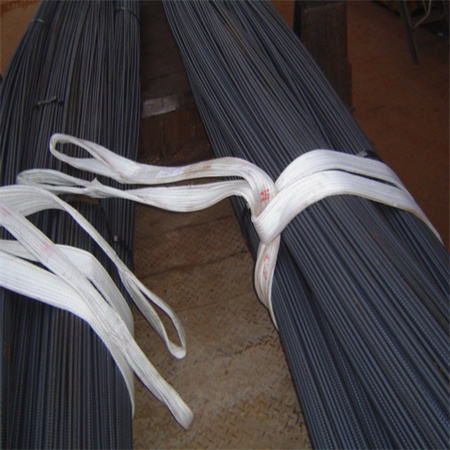
A bundle of threaded steel is the opposite of the load a webbing sling is easiest to use on, for three reasons that each have their own consequence.
| What the load is | Why it matters to a textile sling | What is done about it |
|---|---|---|
| It is ribbed — every bar presents a series of ridges along its whole length | The contact between webbing and load is not a bearing surface but a row of small edges. Abrasion is not occasional; it is continuous and it is concentrated where the sling crosses a rib. | Protection at the contact points, and a band chosen for abrasion rather than for softness. |
| It is cut — a sawn bundle presents a row of saw-cut ends at each extremity | The end of the bundle is a line of hard, sharp corners. Where the sling passes over or near that end, the failure mode is a cut, not a tear, and a cut does not announce itself. | Keep the sling away from the ends where the geometry allows, and protect it where it does not. |
| It is stiff and long — the bundle behaves more like a beam than like a sack | The sling is asked to hold a shape that does not settle, so the contact points stay where they were put and the load does not redistribute itself to help. | Position by the bundle's balance points, and check the contact points rather than the whole sling. |
| It is heavy for its size | A bundle that one person can rock is often more than a tonne, so the capacity question is settled by the rated table and not by an estimate. | Weigh or calculate the bundle, then read the row for the hitch actually used. |
The edge rule is not a matter of good practice here, it is a requirement: slings have to be padded or otherwise protected from the edges of their loads, and where the load is a bundle of threaded bar the padding is part of the lifting gear. Two consequences follow that are easy to overlook. First, protection does not change the rating of anything: the padded sling carries what the unpadded sling carries, and the padding is there so that the sling still carries it tomorrow. Second, the protection is itself a component that wears, so it belongs in the pre-use check, and a worn sleeve is a finding rather than a nuisance. The page that takes the meeting point between strap and load in detail, including when an edge counts as sharp and what the three families of protection do, is circular lifting straps.
One configuration note belongs here because it is visible in the photograph: the mill's usual practice on a bundle is to wrap the sling around it, so the hitch being used is a choker rather than a straight vertical lift. The rated capacity of a choker is lower than the vertical figure for the same article, and the reduction may not be a fixed fraction of it — the rated table has its own row, and that row is the one that applies. Reading a wrap as if it were a vertical lift is one of the two or three ways a correctly sized sling is routinely overloaded, and it is worth stating plainly because the photograph shows the configuration that does it.
3. The near end: what a steel works does to a sling
The mill is not an aggressive environment in the way a chemical plant is, but it has three things in it that a textile article notices, and each of them has a rule or a check attached.
Heat. Some products are handled warm, scale leaves a rolling mill hot, and there are sparks wherever steel is cut or ground. The band's temperature ceiling is a published figure rather than a guess: for the synthetic web slings the standards name, polyester and nylon are not to be used above 180 degrees Fahrenheit and polypropylene not above 200, and the aramid bands sit higher again. Where the duty involves real heat rather than incidental warmth, the band has to be chosen for it — the pages that take that subject are high temperature aramid webbing lifting sling and high temperature resistant lifting belt, and this page does not restate them.
Oil and grease. Contamination does not change a rating, but it changes two other things: it hides damage, because a dark oiled band is harder to inspect, and it makes the article unpleasant to handle, which is how a sling comes to be dragged rather than carried. A contaminated article is also a question for the disposal route at the far end.
The article left on the bundle. The practice that causes the most damage in this application is not the lift, it is the interval between lifts. A sling wrapped round a bundle and left there is available to be run over, cut by the next bundle set down beside it, or used by someone as a tie-down. Every one of those is a reason to check the article again rather than a reason to assume it is still as it was.
The equipment context is worth one sentence, because it explains why a textile sling is in a steel works at all. Magnets and C-hooks handle most steel in a mill, and they handle it better than anything made of textile. A webbing sling is chosen for the lifts where those tools are the wrong answer: a bundle that must not be magnetised, a bundle that is going to be shipped in the sling it was lifted in, or a lift where a crane is available and the handling equipment is not.
4. The middle: one trip, several hands
A sling bought to bundle steel for export is asked to do more than one lift, and the lifts are made by different people. The sequence is worth writing out in full, because the commercial word disposable describes the end of it and says nothing about the middle.
| The lift | Who makes it | What they rely on |
|---|---|---|
| Mill to transport | The plant that bought the sling, under its own lifting regime | Everything: the certificate, the marking, its own inspection routine, and the knowledge that the article is new. |
| Transport to the port, and onto or off the ship | The carrier and the stevedores, who did not buy the article and may have no record of it | The marking, and whatever condition the article is in when they find it. Nothing else speaks for it. |
| Discharge and any handling at the far end | The receiver or their contractor, who have never seen the article before | The marking again, and the assumption that a sling found on a delivered bundle is a sling. |
None of that is made impossible by the article: a flat webbing sling does not care how many parties lift with it. What makes the middle the risky part of the trip is that the duties change hands without the article changing its appearance. The mill sees a new sling under its own regime; the stevedore sees a sling; the receiver sees part of the packaging. Three different expectations of the same object, and only one of them is right for the whole journey.
There is a commercial decision hiding in that table, and it is worth taking deliberately rather than by default. Either the article is going to be managed after it leaves, in which case somebody has to be told to manage it: enough articles for each lift, marked, and with an instruction that travels with the bundle. Or it is genuinely a bundling material, in which case the honest treatment is to send it as one and to make sure nobody lifts with it after the mill: which means the marking and the disposal instruction do a specific job, and the next two sections are about those two jobs.
5. What has to be true at every one of those lifts
Whatever the commercial arrangement, the article is a lifting accessory for as long as it is used to lift, and the rules that apply to it do not change hands with it. They are short enough to state in one table, and they are the reason the marking, the check and the disposal instruction are not paperwork.
| The duty | What it requires | Why it matters on a journey |
|---|---|---|
| Identification | A sling is not to be used without affixed and legible identification markings stating the rated capacities for each type of hitch and the type of synthetic web material. | The marking is the only thing that tells a stevedore what the article may be asked to do. An illegible marking takes the article out of service, wherever it is. |
| Inspection before use | Each day before use, by a competent person designated by the employer, and additionally where service conditions warrant it. Damaged or defective articles come out of service immediately. | On a one-trip article the pre-use check may be the only inspection the article ever receives, so it carries the whole regime. |
| Removal from service | Among the specified conditions: acid or caustic burns, melting or charring of any part of the surface, snags, punctures, tears or cuts, broken or worn stitching, and distortion of fittings. | A cut from a bundle end reads as a cut wherever it is found, and the decision to stop using the article has to be available to whoever finds it. |
| No makeshift repair | Repair belongs to a sling manufacturer or an equivalent entity and is followed by a proof test to twice the rated capacity, with the certificate kept. Temporary repairs are prohibited, and nothing is shortened with knots or bolts. | A sewn repair at the far end is not a repair; an article that has been stitched by someone else has no rating anybody can rely on. |
| Protection and handling | Slings are padded or protected from the edges of their loads, are not loaded in excess of their rated capacity, and are not shock loaded. | The bundle's ribs and cut ends are present at every one of the lifts, including the ones made by people who did not choose the protection. |
6. Which band to send for this duty
The article's own name only says lifting belt, so the band is a decision left to the buyer and the maker, and there are four decisions inside it. They are listed here in the order in which a mistake costs the most.
The temperature actually present. Not the temperature of the ambient air but the temperature of what the sling touches. A band chosen for the mill's air and used on warm stock has been chosen wrongly, and the standard's ceilings for polyester, nylon and polypropylene are published figures rather than rules of thumb.
The abrasion the ribs will cause. A band's resistance to abrasion along its length is a different property from its strength, and on a ribbed bundle it may be the limit of the article's useful life. Where the abrasion is severe, the answer is usually a band that suits abrasion plus protection at the contact points, rather than a heavier band.
The width, against the eye and the bundle. Width governs how the load spreads across the bundle and how the eye sits in the hook; a narrow band on a heavy bundle concentrates the load on a few ribs, and a wide band may not fit the hook the mill actually has.
The marking, against the journey. A marking that is printed, stitched under a panel or fixed as a label will all survive different things. If the article is going to travel, the marking is the part that has to survive the trip, so it is a specification item rather than a detail.
Where the band itself, its webbing construction and the rules that apply to a flat sling regardless of capacity are the subject, they are set out on the flat webbing sling page; the temperature choice belongs to the pages linked in section 3. What this page adds is the fourth line of the list, which is the one that only exists because the article travels.
7. The far end: the documents that travel
At the mill, the article arrives with paperwork: a certificate or declaration identifying it, and whatever the buyer's own regime records. None of that travels on the bundle. What travels is the marking, and the trade documents that travel describe the steel.
| The document | What it does at the mill | What reaches the far end |
|---|---|---|
| Certificate or declaration of conformity | Identifies the article and lets the buyer's regime start from a known state | Nothing, unless somebody attaches it to the bundle or sends it with the shipment |
| The marking on the article | States the rated capacities per hitch and the material | The marking itself, and it is the only thing speaking for the article |
| The trade documents for the steel | Describe the cargo, its quantity and its value | The steel, and the sling only if the packing description happens to mention it |
| An instruction about the bundling sling | Usually does not exist | A decision the receiver has to make without information, which is how a disposable sling becomes a second-hand lifting accessory |
The distinction worth making explicit is that the sling is part of the bundling and packaging of the steel, not cargo in its own right. That is the practical reason nothing about it travels in the paperwork, and it is also the reason the last row of the table is the one to fix. A single line on the packing documents, saying that the bundling sling is not part of the delivery and is to be discarded rather than returned to lifting service, costs nothing and removes the decision from whoever finds it.
8. The far end: disposal, and why the marking has to go
An article that has travelled the length of a shipment and is then thrown away is a specific hazard, and the hazard is its own appearance. A webbing sling that is intact looks like a webbing sling. It will be picked up, because it is a useful-looking thing, and it will be used by somebody who assumes that an article carrying a rated capacity is an article that may be used at that capacity.
The rule that turns that observation into an instruction is the same rule quoted in section 5: a sling is not to be used without affixed and legible identification markings. An article whose marking has been removed, obscured or destroyed is out of service by that alone. Disposal therefore has a component that is not about waste at all:
Make the article unusable, or take its marking out of the picture. Cutting the article through is the plain version; obscuring the marking permanently is the cheaper one. Either way the object that remains cannot be mistaken for a rated article.
Send it down the right route. This is the distinction that catches people out in a steel works: the article is textile, so it does not belong in the scrap metal route, however convenient the skip is. It goes with the plant's general waste, or under whatever the receiver's local rules say for textile that has carried oil or treated stock.
Say so, in advance, in writing. The disposal instruction belongs with the shipping documents rather than in a conversation, for the simple reason that the people who receive the bundle are not the people who were told.
Treat a contaminated article as contaminated. A sling that has carried oiled or chemically treated steel may need a different route again, and the question is easier to answer before the shipment than after it.
If the article is not to be discarded at all, then it is not a disposable article, and it should have been bought and sent as one that is going to be managed: with enough of them for each lift, with the marking intact, and with somebody at the far end told that a regime applies. That is a commercial choice, and it is the same choice as the one in section 4 seen from the other end.
9. What the receiver is entitled to assume
Nothing. This is the sentence that matters most on this page, and it is worth writing without softening: an article that has travelled has no history. The label does not carry a date of first use, a number of lifts, a record of what it has carried, or whether it has been left on a bundle in the rain for a month. Those facts exist only if somebody kept them, and on a disposable export article nobody did.
The wrong conclusion to draw from that is that the article is unsafe. The right conclusion is that it is unknown, and the two are handled differently. An unsafe article is one that has been examined and rejected; an unknown article is one that has not been examined at all, and the way to turn an unknown article into a usable one is not a visual opinion on the quayside, it is to bring it under a regime: identified, examined by a competent person, and marked, with the result recorded.
For most shipments that regime is not worth building, which is exactly why the disposal instruction in section 8 exists. Where it is worth building, the article has to have been designed for it: the marking has to have survived, the certificate has to have travelled, and the person at the far end has to have been told what they are holding. An article that arrives with a legible marking and somebody informed about it is a second-hand sling with a known start; an article that arrives with neither is a decision waiting to be made badly.
10. What to put in an enquiry
The enquiry for this article is not the same as an enquiry for a sling that stays at home, because two of the seven lines below only exist when the load leaves the plant. They are the ones that decide whether the article is right for the job, and they are the ones most often left out.
| Line | What to state | Why this page asks for it |
|---|---|---|
| 1 | The bundle: bar size, bundle length, and the mass per bundle | The capacity row that applies is decided by the mass and by the hitch |
| 2 | The edges: that the load is ribbed, and whether the sling will cross the cut ends | Protection is a specification item, and the ribs decide how much of it |
| 3 | The configuration: wrapped round the bundle, or two straight legs, or a basket under it | A wrap reads from a different row of the rated table, and the bundle in the photograph is wrapped |
| 4 | The temperature the sling will touch, not the temperature of the air | The band is chosen on this figure and on nothing else |
| 5 | Whether the article travels with the load, and how many lifts it will make before it is discarded | This is the line that turns a sling purchase into a decision about who manages the article |
| 6 | What the marking has to survive: a sea passage, rain, oil, abrasion | The marking is what authorises the second lift, so it is chosen with the journey in mind |
| 7 | The disposal instruction to put on the shipping documents | It is the cheapest part of the whole arrangement and the one that prevents the article being used again as a rated sling |
Send those seven lines and the article can be specified rather than guessed: the band for the temperature, the protection for the ribs, the width for the bundle and the hook, and a marking that will still be legible when somebody who never bought the sling finds it wrapped round a bundle.
11. Frequently asked questions
Q1: What is a disposable export lifting sling?
It is a flat webbing sling bought to bundle steel for export, on the understanding that it will not come back: it travels with the load and is discarded at the far end. The article is built and marked like any other sling. What makes it disposable is the purchasing decision about the end of its trip, not a lighter construction.
Q2: Can a disposable sling be used for more than one lift?
It can, and in this application it usually is: the mill lifts with it, the port lifts with it again, and the receiver may lift with it once more. What changes with each lift is not the article but who is relying on it, and every one of those users is entitled to a legible marking and to an article in the condition the marking assumes.
Q3: Why is protection needed on threaded steel?
Because the load is not smooth. A bundle of threaded bar presents a row of ridges along its length and a row of saw-cut corners at each end, so where the sling touches the load it meets small edges rather than a bearing surface. Slings have to be padded or otherwise protected from the edges of their loads, and here the ribs guarantee that an edge is present.
Q4: The sling is wrapped round the bundle. Does the capacity change?
Yes. A wrapped sling is in a choker configuration, and the rated capacity for a choker is lower than the vertical figure for the same article. It is read from its own row of the rated table rather than derived by a fraction, because the reduction depends on the article and on how the choke closes. This is the most common way a correctly sized sling is overloaded in this application.
Q5: Which band should be used in a steel plant?
The band is decided by the temperature the sling will touch, and then by abrasion. For the synthetic web slings the standards name, polyester and nylon are not to be used above 180 degrees Fahrenheit and polypropylene not above 200; the aramid bands are chosen where the temperature is genuinely higher. Air temperature is not the question, contact temperature is.
Q6: What does the sling have to be marked with?
The rated capacities for each type of hitch and the type of synthetic web material, affixed and legible. That is the minimum the rules require, and it is also the entire information set available to somebody who finds the article on a bundle at the far end of a shipment.
Q7: Can the receiver keep using the sling?
Only by bringing it under a regime: identified, examined by a competent person, and marked, with the result recorded. An article that has travelled has no history, so the choice is between examining it properly and not using it. A visual opinion on the quayside is neither.
Q8: Why does the marking have to be destroyed at disposal?
Because a sling is not to be used without affixed and legible identification markings, and an intact discarded sling will be picked up and used by somebody who reads the marking as an authorisation. Destroying the article or obscuring its marking is what stops a piece of packing being mistaken for a rated article.
Q9: Does a disposable sling belong in the steel works' scrap skip?
No. The article is textile and belongs in the general waste route, or in whatever route the receiving end sets for textile that has carried oil or treated stock. A steel works' scrap route takes metal, and putting a sling into it is how a textile article ends up somewhere it should not be.
Q10: Why buy a disposable article at all?
Because return freight, the weight of the article, the state it comes back in and the absence of a store at the far end can together cost more than the article. That argument, and the way it is calculated, are the subject of the disposable sling page. This page takes the part of the question that begins once the decision has been made.
12. Contact
Send the seven lines in section 10, and say whether the article travels with the load and how many lifts it is expected to make. We will specify the band for the contact temperature, the protection for the ribs, the width for the bundle and the hook, and a marking that will still be legible at the far end of the trip. Articles are batch tested, marked per hitch, and supplied with a certificate that identifies them.
Telephone and WeChat — 18066002268
E-mail — 702461526@qq.com
Address — Lifute Industrial Park, Taizhou City, Jiangsu Province, China
HS code — 630790
- Previous:Disposable polyester lifting ring, circular sling, circular sling, nylon lifting rope
- Next:Disposable sling, disposable lifting sling, disposable lifti
-
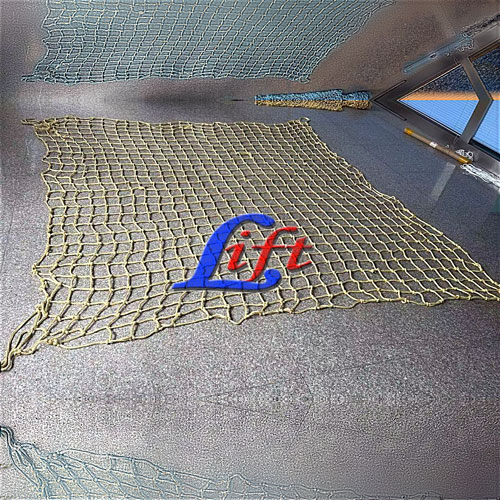
Drone Anti-collision Net
-
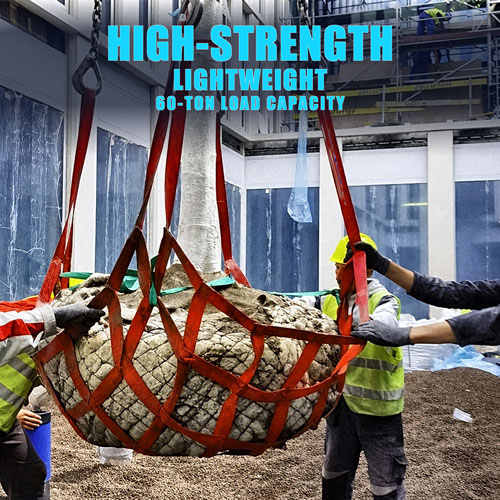
Extra Large Capacity Cargo Net
-
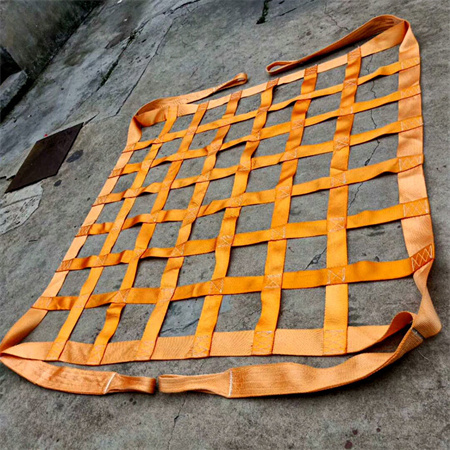
Cargo Webbing Net
-

Color changing nylon double buckle loop nylon braided rope
-

Two end buckle lifting rope, double buckle round lifting rope, double fork nylon lifting rope, non jointed nylon lifting rope
-

Emergency escape lifeline, fire escape rope, fire safety escape emergency rope, steel wire core fire rope

