 Language
 简体中文

- On the 2018 National Day holiday, Lifet completed six 100 ton large tonnage lifting belts as a gift
- The role of suspension net in the transportation of goods turnover
- Cargo soft lifting net, lifting net, lifting net, lifting net, bag, climbing net
- Precautions for using Lifutiden elevator
- How to make circular lifting straps
Contact: Wang Lili
E-mail:18066002268
Phone:702461526@qq.com
Address: Lifute Industrial Park, Taizhou City, Jiangsu Province
Lifute Hoisting Co., Ltd. 18066002268 produces lifting belts, lifting nets, nylon ropes, soft ladders, steel wire rope rigging, paper ropes, safety belts, safety nets, lifting chains, steel coil hoists, crossbeam hoists, flat lifting belts, circular lifting belts, electric traction ropes, high-altitude safety belts, and anti fall safety nets
Hits: ℃
Release time:2026-09-23 09:31
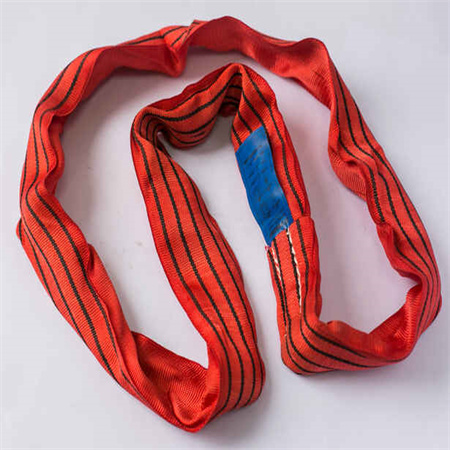
Lift Sling Rigging Co., Ltd manufacture Circular sling, cylindrical sling, cylindrical lifting sling, cylindrical lifting rope.
Circular sling — The Two Questions the Name Does Not Answer
The words circular, cylindrical and sheathed describe the outside of an article. They do not answer the two questions that decide what is being bought. First: was the tube woven as a tube, or was it made from flat webbing closed with a seam? Second: does a sheath carry the load, or does it only cover a load-bearing core? Both answers change what an inspector looks at, where the article wears, what a repair can do and what the article costs - and both are answerable in a minute on the floor, or in one line of an enquiry. HS code 630790; telephone 18066002268.
1. The Two Questions the Name Does Not Answer
A cylindrical article can be made in more than one way, and the names used in the trade do not distinguish between them. Two questions separate the constructions, and a buyer who cannot answer them does not yet know what is being quoted.
| The question | The two answers | What it decides |
|---|---|---|
| Was the tube woven as a tube, or sewn from flat webbing? | A seamless woven tube, or a tube formed from a flat band closed along a seam | Whether there is a seam in the article at all, and therefore what an inspector looks for |
| Does a sheath carry the load, or only cover it? | A load-bearing weave with a separate protective sheath, or a single woven body that carries and protects at once | Where the strength is, what wears first, and what can be repaired |

2. A Woven Tube, and a Tube With a Seam
A tube can be woven as a tube, with the yarns running round the circumference continuously, or it can be made from flat webbing and closed into a tube. The two are not variations of one product; they fail in different places and they are inspected differently.
| The construction | Where the load path runs | What an inspector looks at | What it costs |
|---|---|---|---|
| A seamless woven tube | Along the full circumference of the tube, with no join in the body | The body as a whole: wear, cuts, burns, embedded grit, and the marking | A specialist weave, which is why the article is made to order rather than cut from a roll |
| A tube closed with a seam | Along the weave, and along the seam that closes it | The seam as well: the stitching, the line itself, and the doubled thickness at the join | Less weaving, more making-up, and a seam that has to be as strong as the band it joins |
The rule about making-up exists because of the second case. Where a join is made, it has to develop the strength of the article rather than a fraction of it: the reference rules for synthetic slings require stitching to be the only method of attaching fittings and forming eyes, with the thread in an even pattern and enough stitches to develop the full breaking strength. A seam that is visibly lighter than the body it closes is a seam that has answered the first question badly.
3. A Sheath Over a Core, and a Body That Carries the Load Itself
The second question is about where the strength sits. In one construction the load-bearing yarn is wound into a core and a sheath is woven over it, the sheath doing the work of contact and identification. In the other, the body of the article is itself the load-bearing weave, and what the outside does is simply present a surface.
| The construction | What carries the load | What the outside does | What wears first |
|---|---|---|---|
| A core inside a sheath | The wound core, which cannot be seen after the sheath is closed over it | Takes the contact with the load and carries the identification | The sheath, because it meets everything the load and the site present |
| A single woven body | The woven body itself, which is also what the load touches | The same material, doing both jobs | The same surface that carries the load, which is why wear is a strength question and not a cosmetic one |
The practical consequence is that a sheath makes an article repairable in a way a single body does not, and makes the load-bearing part invisible in a way a single body is not. Both of those are the subject of the cylindrical sling page, which takes the tube, the core it hides and the ends it needs; where the end of the article is itself the question, the circular eye shaped lifting belt page takes the shape of the eye, and the ring buckle circular lifting belt page separates a ring, a buckle and an eye.
4. How to Tell Which One You Have Been Offered
None of this requires equipment. What it requires is asking, and looking at the answer.
| The check | What it shows | What to do with the answer |
|---|---|---|
| Run a hand round the article along its length | A seam is a raised line, usually with a doubled thickness beside it | If there is a seam, it is a place to inspect for the rest of the article's life |
| Look at the ends | A sheath often finishes differently from the body: a fold, a turned edge, or the core visible at the end | It tells you whether the outside is a cover or the article itself |
| Weigh it against the sheet, or against the figure | A core inside a sheath carries its own mass, and the sheet's mass per metre reflects the construction | A large difference from the quoted figure is a question worth asking before the order |
| Ask for the construction in writing | A quotation that names the weave, the seam and the sheath can be compared with another | This is the only check that survives the arrival of the article and the departure of the salesman |
5. What Each Construction Changes in Service
| The point | With a seam | With a sheath over a core |
|---|---|---|
| Inspection | The seam is inspected as well as the body, and it is where making-up defects appear | The outside is inspected, and the core can only be inferred from the condition of the sheath |
| Wear | Wear shows on the body and at the seam, which are made of the same material | Wear shows on the sheath first, and a damaged sheath exposes the core to the same risk |
| Repair | A damaged seam or body is a load-bearing repair, which is a manufacturer's operation | A damaged sheath may be repairable where the core is sound, at the manufacturer's assessment |
| Repair limits | Load-bearing splices are not repaired and temporary repairs are prohibited in either case | The same rule: the core is the load-bearing part, and it is not rebuilt |
| Contact with the load | The seam presents a line to the load, which can mark a finished surface | The sheath presents a uniform surface, which is why this construction is chosen for finished loads |
6. The Name on the Page and the Name in the Order
This article is listed under several names at once, and the site's own heading and its title use different ones. That is worth knowing before an order is placed, because the name is what a store records and what a certificate is filed under. The reliable way to order is to use the name, the construction and the figure together, so that the name cannot drift away from the article it is meant to describe.
| What to put on the order | Why | What it prevents |
|---|---|---|
| The name as the supplier lists it | The name is what the item is filed under, on both sides | Two articles in a store that cannot be told apart on paper |
| The construction: seam or seamless, sheath or single body | It is the difference between two articles of the same name and figure | Receiving an article that is correct in figure and wrong in construction |
| The figure, per hitch and per angle | The figure belongs to a hitch and an angle, not to a name | A record that carries a number nobody can use for a lift plan |
| The marking and the documents | The marking carries the figures and the material; the certificate names the article | An article that cannot be used, or a test that cannot be traced to it |
7. The Rules That Apply to Either Construction
Whichever way the article was made, the same duties follow. A rated load is calculated from material strength, the design factor, the type of hitch, the angle of loading, the diameter of curvature over which the article is used, and the efficiency of the fabrication - and it is the last of those that the seam and the sheath affect, which is why the construction belongs in the order rather than in a conversation. The class page, heavy duty round sling, sets out where this family stands as a whole, including where its life ends against a family that can be repaired and re-tested.
| The rule | What it requires | Why it survives a change of construction |
|---|---|---|
| Marking | The rated capacities for each type of hitch and the type of synthetic web material, affixed and legible | It is the only thing on the article that carries the figures |
| Use | Nothing without affixed and legible identification is to be used at all | A construction that cannot be identified cannot be used safely |
| Inspection | Each day before use, periodic inspections at intervals no greater than twelve months, and additional inspections where service conditions warrant | The interval is set by the duty, not by the construction |
| Removal from service | Immediately for acid or caustic burns, melting or charring, snags, punctures, tears or cuts, broken or worn stitching, and distortion of fittings | These are the conditions that can be seen, on any of the constructions |
| Repair | A manufacturer's repair followed by a proof test to twice the rated capacity, with the repair marked and the certificate retained; load-bearing splices are not repaired and temporary repairs are prohibited | A repair does not stop being a load-bearing operation because a sheath is easier to open |
8. Frequently Asked Questions
Q1: What is the difference between a circular sling and a cylindrical sling?
Q2: How can I tell whether there is a seam?
Q3: Does a seam make the article weaker?
Q4: What is a sheathed article?
Q5: Which construction should I buy?
Q6: Is a cylindrical lifting rope the same as a sling?
Q7: Can a damaged sheath be repaired?
Q8: Why does the name matter so much?
Q9: How often is the article inspected?
Q10: What ends the article's service?
Contact
Send the construction with the figure: whether you want a seamless woven tube or a seamed one, and whether the load-bearing part is a core inside a sheath or the body itself. Everything else follows from those two answers. Articles are batch tested, marked per hitch and supplied with a certificate that names the article.
Telephone and WeChat — 18066002268
E-mail — 702461526@qq.com
Address — Lifute Industrial Park, Taizhou City, Jiangsu Province, China
- Previous:Disposable sling, disposable lifting sling, disposable lifting sling with cargo, disposable sling
- Next:Ring buckle circular lifting belt, double buckle circular li
-
Drone Anti-collision Net
-
Extra Large Capacity Cargo Net
-
Cargo Webbing Net
-

Color changing nylon double buckle loop nylon braided rope
-

Two end buckle lifting rope, double buckle round lifting rope, double fork nylon lifting rope, non jointed nylon lifting rope
-

Emergency escape lifeline, fire escape rope, fire safety escape emergency rope, steel wire core fire rope

