 Language
 简体中文
简体中文
- On the 2018 National Day holiday, Lifet completed six 100 ton large tonnage lifting belts as a gift
- The role of suspension net in the transportation of goods turnover
- Cargo soft lifting net, lifting net, lifting net, lifting net, bag, climbing net
- Precautions for using Lifutiden elevator
- How to make circular lifting straps
Contact: Wang Lili
E-mail:18066002268
Phone:702461526@qq.com
Address: Lifute Industrial Park, Taizhou City, Jiangsu Province
Lifute Hoisting Co., Ltd. 18066002268 produces lifting belts, lifting nets, nylon ropes, soft ladders, steel wire rope rigging, paper ropes, safety belts, safety nets, lifting chains, steel coil hoists, crossbeam hoists, flat lifting belts, circular lifting belts, electric traction ropes, high-altitude safety belts, and anti fall safety nets
Hits: ℃
Release time:2026-09-23 09:24
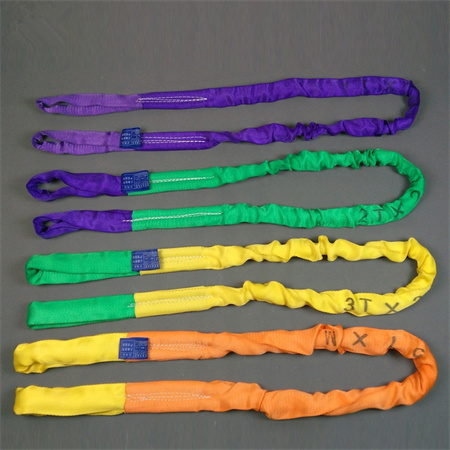
Lift Sling Rigging Co., Ltd manufacture Flexible lifting strap, flexible sling, flexible lifting sling, double buckle flexible sling, circular flexible sling.
Flexible lifting strap — How to Read the Table, and What the Word Adds
This page carries the factory's own parameter table, and the table is the product: every item from FA01 to FA100 is listed with its breaking load, its rated load, three figures for the three ways of lifting, the equal rope diameter and the weight per metre. What the table does not do is explain itself, so this text does: what the breaking load and the rated load mean and which one is the figure you are allowed to use, what the three mode factors P=0.8, P=1.8 and P=1.4 are for, how to pick an item number from the figure you need rather than from the largest number on the row, and what the word flexible adds to a lifting strap and what it does not. HS code 630790; telephone 18066002268.
1. The Article, and the Word in Front of It
A flexible lifting strap is a woven article with no rigid member in it and no hardware in the load path: it bends, it folds, it lies into a curve, and it can be dressed round a load by hand. Flexibility is a property of the construction rather than a grade, which is why it appears in the name of several different articles on this site - the flat strap, the circular belt, the wrapped sling - and why the same word carries no figure with it.

| The word in the name | What it describes | What it does not do |
|---|---|---|
| Flexible | A soft, conformable construction: no rigid member, no hardware in the load path | It does not change the rated load, and it is not a licence to wrap a radius the construction cannot take |
| Lifting | The article is rated for lifting a load, not for holding one down | It does not make the article a lashing: a lashing is rated differently and used differently |
| Strap | A woven band rather than a rope or a chain | It does not make the article immune to edges, heat or chemicals, which are decided by the fibre and the surface |
2. How to Read the Parameter Table on This Page
The table below is the factory's own specification sheet, and it is worth reading in the order the columns are printed rather than by finding the biggest number on it. Every row is one item number; the first column is that item number, the second is its colour, and the rest describe what the item will do.
产品编号 ITEM NO | 颜色 COLOR | 破断载荷 Braking (KG) | 额定载荷 WLL(KG) | 栓绳吊升 P=0.8(KG) | 45°角吊升 P=1.8(KG) | 90°角吊升 P=1.4(KG) | 近似直径 Equal Rope(MM) | 重量(kg/m) |
FA01 | 6000 | 1000 | 800 | 1800 | 1400 | 18 | 0.47 | |
FA02 | 12000 | 2000 | 1600 | 3600 | 2800 | 20 | 0.60 | |
FA03 | 18000 | 3000 | 2400 | 5400 | 4200 | 22 | 0.82 | |
FA04 | 24000 | 4000 | 3200 | 7200 | 5600 | 1.20 | ||
FA05 | 30000 | 5000 | 4000 | 9000 | 7000 | 27 | 1.47 | |
FA06 | 36000 | 6000 | 4800 | 10800 | 8400 | 1.70 | ||
FA08 | 48000 | 8000 | 6400 | 14400 | 11200 | 38 | 2.20 | |
FA10 | 60000 | 10000 | 8000 | 18000 | 14000 | 45 | 3.00 | |
FA12 | 72000 | 12000 | 9600 | 21600 | 16800 | 49 | ||
FA15 | 90000 | 15000 | 12000 | 27000 | 21000 | 58 | 4.00 | |
FA20 | 120000 | 20000 | 16000 | 36000 | 28000 | 64 | 5.60 | |
FA25 | 150000 | 25000 | 20000 | 45000 | 35000 | 6.80 | ||
FA30 | 180000 | 30000 | 24000 | 54000 | 42000 | 78 | 8.20 | |
FA40 | 240000 | 40000 | 32000 | 72000 | 56000 | 83 | 10.9 | |
FA50 | 300000 | 50000 | 40000 | 90000 | 70000 | 96 | 13.8 | |
FA60 | 360000 | 60000 | 48000 | 108000 | 84000 | 105 | 16.6 | |
FA70 | 420000 | 70000 | 56000 | 126000 | 98000 | 113 | 19.3 | |
FA80 | 480000 | 80000 | 64000 | 144000 | 112000 | 127 | 22.0 | |
FA90 | 540000 | 90000 | 72000 | 162000 | 126000 | 139 | 24.3 | |
FA100 | 600000 | 100000 | 80000 | 180000 | 140000 | 150 | 27.0 |
| Column in the table | What it is | How it should be used |
|---|---|---|
| ITEM NO | The item number, FA01 to FA100 | The only thing worth quoting back to us: it fixes the row, and everything else on the row follows from it |
| COLOR | The colour of the article as supplied | A store and identification cue; the capacity is in the columns, not in the colour |
| BRAKING (KG) | The breaking load of the article | The figure at which the article fails in a test, not the figure it may be used at |
| WLL (KG) | The rated load, the working load limit for a vertical lift | The figure that governs a lift. A lift is never planned from the breaking load |
| P=0.8 (KG) | The rated load for a choke hitch, at the factor this factory publishes for it | Used when the article is wrapped round the load and passed through itself or through a fitting |
| P=1.8 (KG) | The rated load at a 45 degree leg angle | Used for a two-leg arrangement at 45 degrees, where the legs share the load at that angle |
| P=1.4 (KG) | The rated load at a 90 degree leg angle | Used for a two-leg arrangement at 90 degrees. The figure falls as the angle opens, which is the point of the column |
| EQUAL ROPE (MM) | The diameter of rope this article is equivalent to in service | A handling and comparison figure: useful for choosing between forms, never a rating |
| WEIGHT (KG/M) | The mass per metre of the article | Decides how the article is handled, stored and carried to the load, and whether a second person is needed |
Two of those columns are the ones that get misread. The breaking load is not the figure a lift may be planned from, and the three mode columns are not three ways of getting more out of the article: they are three ways of using it, and only one of them applies to any given lift. If the lift is a choke, the figure is the choke column; if it is a two-leg arrangement, the figure is the column for the angle the legs will actually make. The angle on the drawing and the angle on site are rarely the same, and the lower column is the one to plan from.
3. Choosing an Item Number
The rows are arranged by capacity, and the usual mistake is to choose from the left-hand end of the row - the largest number - because it is the largest number. The right end of the row is what the lift will actually need.
| The question | Where the answer is on the row | Why it matters |
|---|---|---|
| What must the article hold, in the way it will be used? | The column for the hitch and the angle actually in use, not the WLL column | A choke at 0.8 and a two-leg at 1.4 or 1.8 are different figures from the same row |
| What is being lifted, and what does it touch? | Not on the row: the load's surface, edges and temperature decide the fibre, the sleeve and the protection | The table cannot protect an edge, and it does not know the temperature of the load |
| Is the article to be carried, stored and dressed by hand? | The weight per metre column | At the heavy end the table's own mass is a rigging decision, not a footnote |
| Will the article be identified in a store? | The colour column, with your own store rule | Colour is a cue for sorting; the marking is what carries the figure |
One consequence is worth stating plainly, because it is the reason this page exists next to a table: the table answers a capacity question, and only a capacity question. Everything else about the lift - the surface, the edges, the temperature, the chemicals, the angle on site, the way the article is dressed - is decided outside the table, and it is decided before the item number is chosen rather than after.
4. The Three Ways of Lifting, and Why the Figures Fall
The three mode columns are the clearest thing on the sheet and the least used. They encode one idea: the same article holds different figures depending on how it is attached to the load and how the legs sit. A choke wraps the article round the load and passes it through itself, which concentrates the load at the point of contact and reduces the figure to eight tenths. A two-leg arrangement shares the load between the legs, and the share each leg carries depends on the angle: at 45 degrees the legs are doing well out of the geometry, and at 90 degrees each leg is taking a much larger share of the load than half, which is why the figure falls.
| The arrangement | Factor published on this sheet | What the figure tells a rigger |
|---|---|---|
| Choke hitch | 0.8 | The article is wrapped and passed through itself, so the figure is reduced before anything else is considered |
| Two legs at 45 degrees | 1.8 | The geometry is favourable: the legs carry more than the vertical figure between them |
| Two legs at 90 degrees | 1.4 | The geometry is poor: each leg carries a much larger share of the load than half of it |
| Vertical, single leg | 1.0 (the WLL column) | The plain case, and the only case in which the WLL column is the right column |
The published practice goes further than the sheet does: horizontal angles below 30 degrees are outside it unless the manufacturer says otherwise, and a choke is rated from the table only provided the angle of choke is 120 degrees or more. Where a lift sits outside the columns, the figure comes from us rather than from the row, which is what the enquiry is for.
5. Colour, Identification and the Marking
The table lists a colour for each item, and the colour is doing the same job here as it does on the rest of this site: it is a cue for sorting and recognition, not a figure. Above ten tonnes the published colour code stops separating values altogether, so on the heavier rows of this table the colour identifies a class and the marking carries the capacity. The colour flat industrial lifting belt page sets out what the colour system is for and where it fails.
| The element | What it carries | What to do about it |
|---|---|---|
| The item number | The row, and with it the figures for the article | Quote it in the enquiry and keep it in the store record |
| The colour | A cue for sorting on the lighter rows, a class marker above ten tonnes | Use it to find the article, then read the label to use it |
| The marking | The rated capacities for each type of hitch and the type of synthetic web material | Slings without affixed and legible identification are not to be used at all |
| The certificate | What was tested, to what figure, and which article it names | Keep it with the article, not in the office |
6. The Duty Envelope That the Table Does Not Show
Nothing on the parameter sheet is about temperature or chemistry, and both decide whether a row of it can be used at all. The envelope follows the fibre, and for polyester and polyamide the published guides give minus 40 to plus 100 degrees C, the guidance for synthetic slings gives 90 degrees C as the upper figure, and the regulation gives 180 degrees F for polyester and nylon. Work should be to the lowest of the figures that apply to the article and the market it is sold into, and the WLL 150T polyester round sling page sets out how those figures are reconciled. Chemistry is the other half: nylon is excluded where acids or phenolics are present, and polyester and polypropylene are excluded where caustics are present, which is a constraint on the fibre rather than on the item number.
| The condition | What it changes | Where it is decided |
|---|---|---|
| Heat or cold | The fibre that may be used at all, before any figure is read | In the specification, not in the table |
| Chemicals | The fibre, and sometimes the fittings: aluminium fittings are excluded where caustics are present | In the specification |
| Sharp edges | The protection carried, because slings are to be padded or protected from the sharp edges of their loads | On the load, at the lift, whatever the table says |
| Wear and abrasion | The sleeve or the protection, and the inspection interval | From the duty the article is put to |
7. Inspection, and What Ends an Article's Service
The intervals do not vary with the row of the table: an inspection each day before use, periodic inspections at intervals no greater than twelve months, and additional inspections where service conditions warrant, judged on the frequency of use, the severity of the service, the nature of the lifts and the experience of the service life. The conditions that remove a sling from service immediately include acid or caustic burns, melting or charring, snags, punctures, tears or cuts, broken or worn stitching, and distortion of fittings. The class page, heavy duty round sling, covers where that leaves this family against the chain family, which can be repaired and re-tested where a synthetic article is retired.
8. What the Enquiry Has to Carry
| Line | What to state | What it fixes |
|---|---|---|
| 1 | The item number from the table, or the figure you need in the way you will lift | The row, and the column the figure is read from |
| 2 | The hitch and the angle, as they will be on site | Which of the three mode columns the article is chosen against |
| 3 | The length, and how the article is to be attached | The geometry, and whether eyes, a loop or a choke are involved |
| 4 | What the article touches: surface, edges, temperature, chemicals | The fibre, the sleeve and any protection that travels with the article |
| 5 | The identification you want, and the colour you want it in | The marking, the certificate and the store record |
| 6 | The documents you want with the article | What is tested, what is recorded, and what is named on the certificate |
9. Frequently Asked Questions
Q1: What does flexible mean on this article?
Q2: Which figure governs a lift, the breaking load or the rated load?
Q3: Why are there three different figures for one article?
Q4: Why does the 90 degree figure differ from a doubling of the vertical figure?
Q5: What are the equal rope diameter and weight columns for?
Q6: Does the colour tell me the capacity?
Q7: Can the strap be used on a sharp edge?
Q8: What is the temperature range?
Q9: How often is it inspected?
Q10: Can an article be ordered outside the table?
Contact
Send the six lines in section 8, and we will come back with the row of the table that matches them, or with the questions that are missing. Articles are batch tested, marked per hitch and supplied with a certificate that names the article.
Telephone and WeChat — 18066002268
E-mail — 702461526@qq.com
Address — Lifute Industrial Park, Taizhou City, Jiangsu Province, China
-
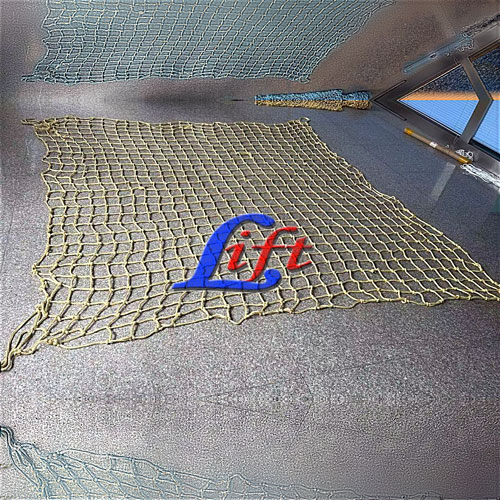
Drone Anti-collision Net
-
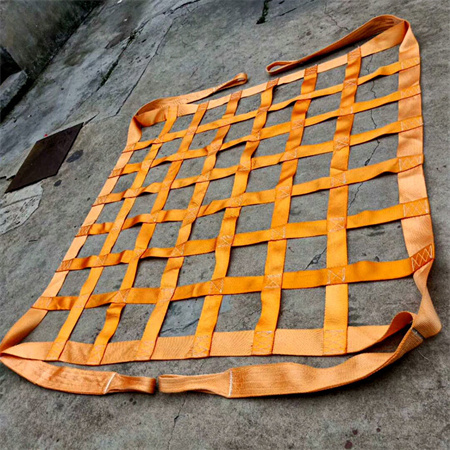
Extra Large Capacity Cargo Net
-
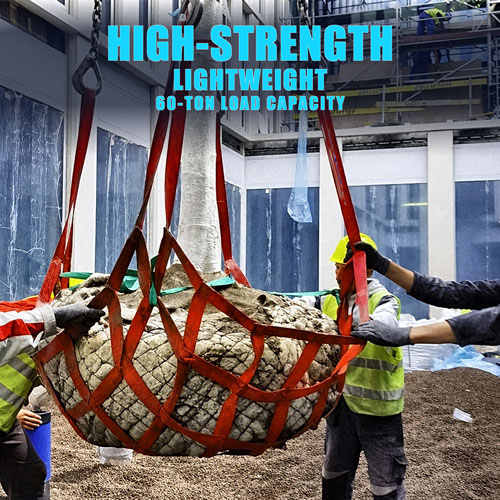
Cargo Webbing Net
-

Color changing nylon double buckle loop nylon braided rope
-

Two end buckle lifting rope, double buckle round lifting rope, double fork nylon lifting rope, non jointed nylon lifting rope
-

Emergency escape lifeline, fire escape rope, fire safety escape emergency rope, steel wire core fire rope

