 Language
 简体中文
简体中文
- On the 2018 National Day holiday, Lifet completed six 100 ton large tonnage lifting belts as a gift
- The role of suspension net in the transportation of goods turnover
- Cargo soft lifting net, lifting net, lifting net, lifting net, bag, climbing net
- Precautions for using Lifutiden elevator
- How to make circular lifting straps
Contact: Wang Lili
E-mail:18066002268
Phone:702461526@qq.com
Address: Lifute Industrial Park, Taizhou City, Jiangsu Province
Lifute Hoisting Co., Ltd. 18066002268 produces lifting belts, lifting nets, nylon ropes, soft ladders, steel wire rope rigging, paper ropes, safety belts, safety nets, lifting chains, steel coil hoists, crossbeam hoists, flat lifting belts, circular lifting belts, electric traction ropes, high-altitude safety belts, and anti fall safety nets
Hits: ℃
Release time:2026-09-23 09:23
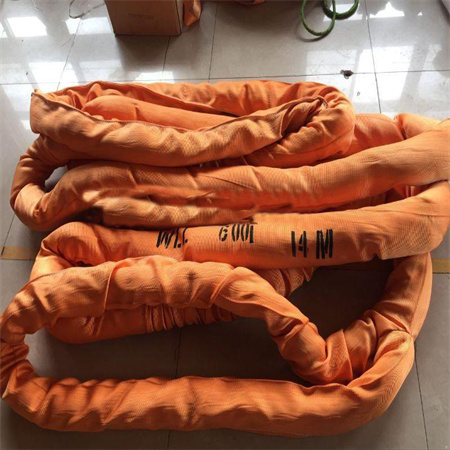
Lift Sling Rigging Co., Ltd manufacture High tonnage circular sling, Large tonnage circular sling, ultra large tonnage flexible sling.
High tonnage circular sling — Verification at the Top of the Range
At the top of the range the ordinary way of being sure about a lifting article stops working. You cannot put a three hundred tonne sling on a test bed and pull it to failure to see what it would have held, and a batch test is a sample test by definition: one article is loaded, and the rest are made to the same specification. So what a buyer is actually buying at this size is a documented article - a marking that carries the figure, a certificate that names the article, a test that records what was applied, and a plan for the day the article is damaged. This page is about that, and about the two events at the top of the range that cannot be improvised: the proof test and the repair. HS code 630790; telephone 18066002268.
1. Where This Article Sits in the Range
This page covers the circular sling at the heavy end: the article built to a figure that the published tables do not carry as a row, in the class the site sells from a hundred tonnes upward. The two ends of the range have their own pages, and the middle of it has another, so the map is short and this page does not repeat any of them: what the step above the tabulated rows means for an order is on the 300 tonnes page, the continuous loop in polyester at four hundred tonnes is on the WLL 400 ton endless polyester round sling page, the step that has to be ordered rather than looked up is on the WLL 150T polyester round sling page, and what the lift itself demands of an article this size is on the 200 tonne endless round sling page.

| Element | What it is at this size | Why the ordinary assumption fails |
|---|---|---|
| The figure | A rated capacity for a stated configuration, above the tabulated rows | There is no row to point at, so the figure has to be carried by the marking and the certificate |
| The load path | A continuous wound core inside a sleeve, with no end fitting in the path | The load-bearing element cannot be seen after the sleeve is closed over it |
| The verification | A batch test on a sample of the specification, plus a certificate | Destructive testing of the delivered article is not an option at these loads |
| The repair | Manufacturer repair followed by a proof test to twice the rated capacity | It has to be arranged at a facility that can apply the load, which is a schedule, not a formality |
2. What Can Be Proven at Ultra Large Tonnage, and What Cannot
It is worth stating the limits plainly, because a buyer who is told 'tested' at this size will assume something stronger than what has happened. Three things can be proven: the article is made to a stated specification, a sample of that specification has been loaded to a stated figure, and the article that was delivered is identifiable as the article the certificate names. Two things cannot: the delivered article is not sacrificed, and nothing proves the factor of the core inside the sleeve by looking at it.
| The claim | How it can be established | What it does not tell you |
|---|---|---|
| The article is made to a stated specification | A recorded construction, and a batch test of the specification on the in-house machine | Nothing about the individual article beyond its identity |
| A sample held a stated load | The batch test record, with the figure applied | That the delivered article would hold the same figure, only that it was built the same way |
| This article is the article named | The marking, and the certificate that names it | Nothing about its condition after delivery, handling or storage |
| The core's own factor | By construction: the material, the design factor applied, and the making-up of the article | It cannot be confirmed by inspection once the sleeve is closed |
| The fitting, where an assembly has one | The fitting is rated at least equal to the sling, is free of sharp edges, and sustains twice the rated load without visible permanent deformation | The deformation test is a visible check, not a second margin |
3. The Proof Test: Twice the Rated Capacity, and When It Applies
A proof test is different from a batch test. It is applied to the article itself, to twice its rated capacity, and the rule is specific about when it is required rather than desirable: a repaired sling is proof tested before it returns to service, and a new article is proof tested before its first use where it incorporates a fitting that was previously used or welded. Everything else is a matter of what the buyer's own specification asks for, which is why the specification is worth writing at this size rather than below it.
| The event | What the rule requires | What the buyer should have in hand |
|---|---|---|
| A repaired article | Proof tested to twice the rated capacity before it returns to service | The proof test certificate, retained and available for examination |
| A new article with a previously used or welded fitting | Proof tested before first use | The same certificate, and the fitting's own identification |
| Any other new article | A batch test of the specification, unless the purchasing specification says otherwise | The batch record, and a clear statement in the order of what testing is being asked for |
| An article the buyer intends to rely on for years | Nothing extra is required by the rules; the buyer may ask for more | A written statement of what was applied, because at this size 'tested' is not a specification |
The practical point is that a proof test at twice three hundred tonnes is an event: it needs a facility, a fixture and a date. That is worth planning at the time of the order rather than discovering after damage, which is why the repair route is part of the purchase and not an afterthought.
4. Why the Marking Is the Whole Guarantee at This Size
Everything that a person can know about an article at this size, without a certificate in hand, is on its marking. Each sling is marked or coded to show the rated capacities for each type of hitch and the type of synthetic web material, and slings without affixed and legible identification are not to be used at all. There is no colour cue to fall back on above ten tonnes: the code stops separating values and marks a class. On an ultra large tonnage article the label is not a convenience, it is the specification.
| The element | What it carries | What happens when it is missing |
|---|---|---|
| The marking | The rated capacities for each type of hitch, and the type of synthetic material | The article is not to be used at all, whatever its condition |
| The certificate | What was tested, to what figure, and which article it names | The article cannot be tied to a test, so its figure is hearsay |
| The colour | The class, above ten tonnes, and nothing finer | A class marker mistaken for a value, which is how a wrong column gets used |
| The record | Where the article is, what it has done, and when it was last inspected | The interval becomes a matter of memory, and the record is the first thing an auditor asks for |
5. What Inspection Can See, and What It Cannot
At this size the inspector is looking at the outside of an article whose load-bearing part is inside. That is not a defect in the article; it is the reason the published removal conditions are written the way they are, in terms of what can be seen. A sling is removed from service immediately for acid or caustic burns, melting or charring, snags, punctures, tears or cuts, broken or worn stitching, and distortion of fittings, among other conditions.
| The surface | What it shows | What it hides |
|---|---|---|
| The sleeve | Wear, cuts, burns, charring, embedded grit, and the printing of the marking | The core, which is the rated part, and any damage it took through a cut in the sleeve |
| The ends of a loop | The loading points, and where the sleeve is most severely worked | Wear that has moved inside the sleeve since the last inspection |
| The marking | Whether the figure, the hitch columns and the material are still legible | Nothing, and that is the point: a marking that has become illegible ends the article's service |
| A fitting, where one is present | Distortion, which is a removal condition, and sharp edges | Cracks or internal damage that no visual check finds, which is what the deformation check is a proxy for |
The intervals are the ordinary ones and they do not stretch with size: an inspection each day before use, periodic inspections at intervals no greater than twelve months, and additional inspections where service conditions warrant, judged on the frequency of use, the severity of the service, the nature of the lifts and the experience of the service life. The class page, heavy duty round sling, covers what that leaves this family against the chain family, which can be repaired and re-tested where a synthetic article is retired.
6. Damage at This Size: Repair or Retirement
The rules about damage are short, and at this size they decide whether a very expensive article has a second life. Load-bearing splices are not repaired, damaged webbing is not repaired, and temporary repairs are prohibited: an article that has been repaired in a temporary manner is not to be used. What is allowed is a repair by the manufacturer or an equivalent entity, followed by a proof test to twice the rated capacity, with the repair marked to identify who made it and the certificate retained and available for examination.
| The damage | What the rules allow | The route |
|---|---|---|
| A cut or tear in the sleeve only | Assessment by the manufacturer, and repair where the construction allows it | Repair, then a proof test to twice the rated capacity, then back into service with the certificate |
| Damage to the load-bearing core | No repair of a load-bearing splice, and no repair of damaged webbing | Retirement: the article leaves service and is not rebuilt |
| A distorted or damaged fitting | The fitting is replaced by the manufacturer, and the article is proof tested | Repair and proof test; distortion found in service is a removal condition, not a pending job |
| A temporary repair made on site | Prohibited, and the article is not to be used | Return to the manufacturer for assessment, or retirement |
7. The Flexible Part, and What It Changes on Site
The name also calls the article flexible, and at ultra large tonnage that word is about erection rather than rating. A flexible article can be dressed around a load by hand, can be laid into a curve, and can be folded for storage between lifts, which matters when the article's own mass makes it a two-person and sometimes a machine-assisted job. What flexibility does not do is change the figure or remove the need for protection: the flexible page, circular circular lifting belt, takes the difference between conformity and elongation and where the two are confused.
8. What the Order Has to Carry
| Line | What to state | What it fixes |
|---|---|---|
| 1 | The figure, per hitch, and the configuration used | The article's rated capacity, in the form the lift will actually take |
| 2 | The length and the loop's circumference | The geometry, and whether the article can be dressed round the load at all |
| 3 | The method of use: single leg, basket, choker, or a set | The column the figure is read from, and whether a set is being bought |
| 4 | The load-bearing surface and the environment | The sleeve, the protection and the fibre, including the temperature and chemical exclusions |
| 5 | The testing you require, and the documents you want with the article | What is applied to a sample, what is applied to the article, and what is named on the certificate |
| 6 | The repair route, agreed at the time of the order | Whether the article can be proof tested and returned to service, and by whom |
9. The Arithmetic a Buyer Should Do Before the Order
There are three sums worth doing before an ultra large tonnage article is ordered, and all three are about the lift rather than the article. They are set out with their own pages, and are repeated here only as a list so that the order can carry their answers.
The weight of the load, and where its centre of gravity sits, because at this size the rig geometry is decided by the centre of gravity rather than by preference.
The angles the lift will actually make, because the figure is read for the angle in use, and a horizontal angle below 30 degrees is outside the published practice unless the manufacturer says otherwise.
The envelope the crane allows: the hook block's own mass, the headroom, and how the article will be dressed round the load, which is the subject of the 200 tonne page.
10. Frequently Asked Questions
Q1: How is an ultra large tonnage sling verified?
Q2: When is a proof test required?
Q3: What is the difference between a batch test and a proof test?
Q4: What must be on the article?
Q5: Does the colour tell me the capacity at this size?
Q6: Can a damaged article be repaired?
Q7: What removes an article from service?
Q8: How often is it inspected?
Q9: Is a flexible article easier to use?
Q10: Can the article be used above the tabulated steps?
Contact
Send the six lines in section 8, with the lift's own three answers from section 9, and we will come back with the questions that are missing. Ultra large tonnage articles are made to order, batch tested, marked per hitch and supplied with a certificate that names the article.
Telephone and WeChat — 18066002268
E-mail — 702461526@qq.com
Address — Lifute Industrial Park, Taizhou City, Jiangsu Province, China
-
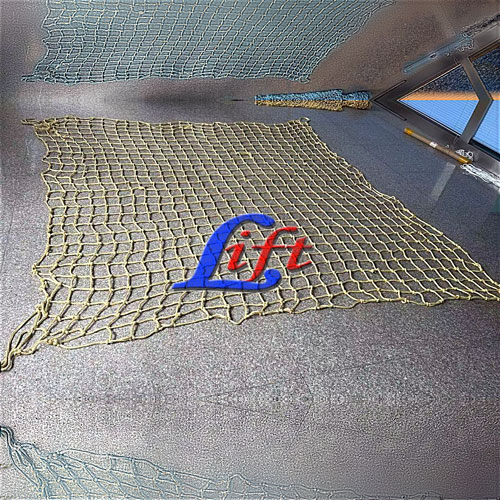
Drone Anti-collision Net
-
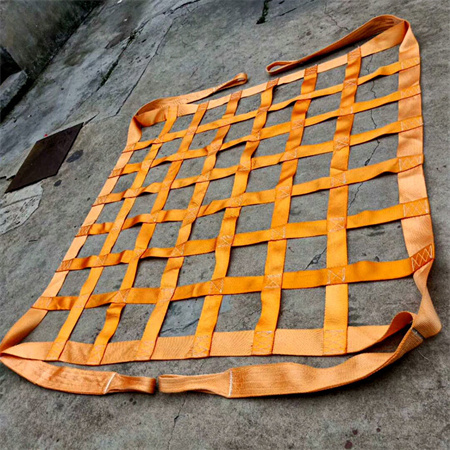
Extra Large Capacity Cargo Net
-
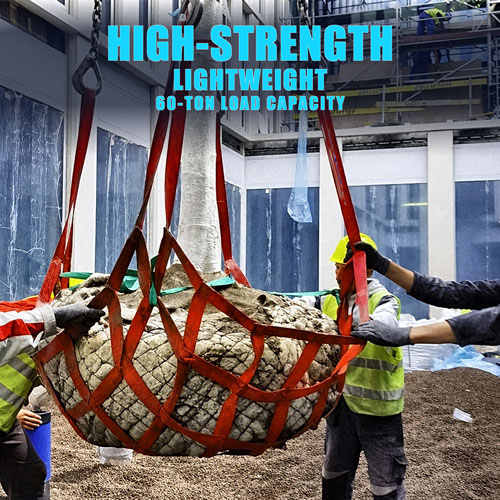
Cargo Webbing Net
-

Color changing nylon double buckle loop nylon braided rope
-

Two end buckle lifting rope, double buckle round lifting rope, double fork nylon lifting rope, non jointed nylon lifting rope
-

Emergency escape lifeline, fire escape rope, fire safety escape emergency rope, steel wire core fire rope

