 Language
 简体中文
简体中文
- On the 2018 National Day holiday, Lifet completed six 100 ton large tonnage lifting belts as a gift
- The role of suspension net in the transportation of goods turnover
- Cargo soft lifting net, lifting net, lifting net, lifting net, bag, climbing net
- Precautions for using Lifutiden elevator
- How to make circular lifting straps
Contact: Wang Lili
E-mail:18066002268
Phone:702461526@qq.com
Address: Lifute Industrial Park, Taizhou City, Jiangsu Province
Lifute Hoisting Co., Ltd. 18066002268 produces lifting belts, lifting nets, nylon ropes, soft ladders, steel wire rope rigging, paper ropes, safety belts, safety nets, lifting chains, steel coil hoists, crossbeam hoists, flat lifting belts, circular lifting belts, electric traction ropes, high-altitude safety belts, and anti fall safety nets
Hits: ℃
Release time:2026-09-23 09:22
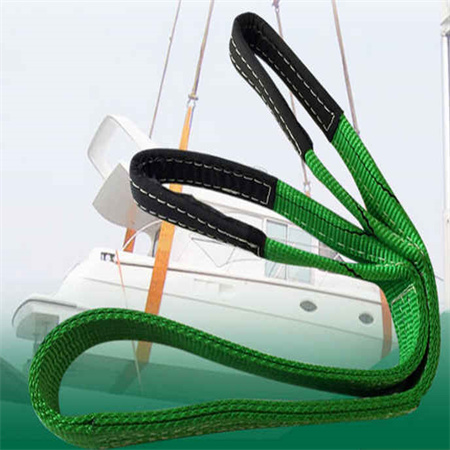
Lift Sling Rigging Co., Ltd manufacture Color flat industrial lifting belt, double eye lifting sling, double-layer thick polyester sling.
Color flat industrial lifting belt — Colour Sorts, the Label Decides
The first word of this article's name is colour, and it is doing more work than it looks: on a flat industrial belt the colour is the capacity step made visible, which is why a mixed fleet can be sorted at a glance and why the code stops being useful above ten tonnes, where it marks a class rather than a value. This page deals with the colour first and the article second: what the code encodes, where it is read, what a custom colour takes away, what the flat band with two eyes and a double layer asks of the order, and why the marking outranks the colour every time. HS code 630790; telephone 18066002268.
1. What the Colour Encodes
A colour-coded sling answers one question faster than any label can: what step is this? That is the whole purpose of the code, and it is worth separating from the three other things that are sometimes asked of colour - identifying a company's own stock, marking a customer's brand, and marking a particular duty. Only the first of those is a published system, and the other three are decisions that replace it.

| The colour is being used as | Is it a published system | What it tells a rigger | The risk |
|---|---|---|---|
| The capacity step | Yes: the code runs from the lightest step to the last entry, which reads ten tonnes and above | Which step the article belongs to, at a glance, before touching it | None, provided the label is still legible and the article is the article the colour claims |
| A company's own stock colour | No: it is a purchasing decision | Whose article it is, and where it belongs in the store | On a mixed fleet, nothing: the same colour can mean two different capacities |
| A customer's brand colour | No: it is a bespoke request | Nothing about capacity | A fleet where colour no longer identifies the step, unless every article is checked by label |
| A duty marker, such as one colour per site | No: it is an administrative convention | Which site or which contract the article belongs to | A convention that drifts as articles move between sites |
The distinction matters because the code is only useful while it is consistent. The moment an article is bought in a colour that does not follow the code, the colour stops being information and becomes decoration, and the pre-use check has to fall back to the label - which it should be doing anyway.
2. The Code Stops Separating Values Above Ten Tonnes
The published code has a last entry rather than a top end: it carries steps up to ten tonnes, and above that the same colour is used for everything heavier. On a heavy article the colour therefore marks a class, not a value, and two articles that look identical can be a hundred tonnes apart. That is not a defect in the code; it is the code telling you that above ten tonnes the figure has to be read rather than recognised.
| The article's step | What the colour tells you | What you still have to read |
|---|---|---|
| Below the last entry | The capacity step, before you touch the article | Whether the label agrees, and which hitch the figure refers to |
| Ten tonnes and above | That it belongs to the heavy class, and nothing more | The figure itself, from the label, for the hitch actually used |
| A bespoke article in a custom colour | Nothing about capacity | Everything, from the label and the certificate together |
3. The Article Behind the Colour: Flat, Two Eyes, Two Layers
The rest of the name describes a flat woven belt with an eye formed at each end, made from a double layer of polyester. Each of the three words is a construction decision rather than a separate product: the flat band is what spreads a load over a face, the two eyes are what the lift enters the article through, and the double layer is what the contact and the wear are taken by. Where the band, the eye and the design factor are set out in full, the eye and eye type webbing sling page carries that material, and this page stays with the colour and with what the form asks of an order.
| The word in the name | What it describes | What it decides | Where the detail is written |
|---|---|---|---|
| Flat | A woven band with a rectangular section | The contact area against the load, and how the band lies on a face | the anchor ring flat lifting strap page |
| Double eye | A formed eye at each end of the band | What the lift enters through, and which hitch is available | the eye and eye type webbing sling page |
| Double-layer, thick | Two layers of woven polyester in the body | The wear taken by the article, and the stiffness that comes with thickness | the thickened two end buckle flat strap page |
| Polyester | The fibre of the band | The duty envelope: temperature, and the chemical exclusions | the WLL 150T polyester round sling page for the envelope in full |
4. Where Colour Earns Its Place on a Working Site
Colour is cheap information, and it is worth keeping it accurate for the three jobs it does well. None of them replace the pre-use check; all of them make it faster, and two of them make it possible at a distance.
| The job | How colour does it | What has to stay true for it to work |
|---|---|---|
| Sorting a mixed fleet | The step is visible from outside the stillage | Every article in the store follows the code, including the bespoke ones |
| A pre-use check at arm's length | A glance identifies the step before the article is handled | The label is legible, and the colour has not faded past recognition |
| Dispatch and stock control | Picking by colour is faster than reading tags | The colour in the store matches the colour ordered, and the paperwork agrees |
| Spotting an article out of place | A sling of the wrong colour on a job is noticed by anyone | The convention is documented, so that 'wrong colour' means something specific |
5. Where Colour Fails, and What a Custom Colour Costs
A bespoke colour is a legitimate request and it is often the right one, because a fleet that is identifiable is harder to lose and easier to maintain. It is worth being explicit about what it takes away, so that the trade is made knowingly rather than discovered during an audit. A custom colour removes the capacity cue from the article, and it removes it at exactly the moment the article is in a mixed fleet, which is when the cue was worth most.
| The change | What it takes away | What has to replace it |
|---|---|---|
| A custom body colour | The capacity step becomes unrecognisable at a glance | A legible label, and a store rule that articles are picked by label rather than by colour |
| The same colour ordered across two steps | The code's ability to separate values within a fleet | Either a documented step marking on the label, or a change of colour for one of the two |
| A faded or bleached article in service | The colour as a cue, gradually and without a decision | Rejection at inspection: a colour that no longer identifies the step is a defect, not a cosmetic change |
| A replaced or lost tag | The figure itself, and with it the reason the colour was right | Retirement of the article: slings without affixed and legible identification are not to be used at all |
The general rule that follows is short: colour may be used to sort, to pick and to notice, and never to decide. The figure that governs a lift is the one on the label, read for the hitch and the angle actually in use, which is the point the WLL 100T heavy duty round slings with eyes page sets out at length.
6. What the Flat Band With Two Eyes Asks of the Order
| Line | What to state | What it fixes |
|---|---|---|
| 1 | The capacity needed, per hitch | Which column of the label the article has to be built to, and whether a set is needed |
| 2 | The band's width and the number of layers | The contact area, the wear taken, and whether the band can conform to the load |
| 3 | The eye: internal length and the hardware it will take | Whether the eye seats the fitting: an object in the eye is not to be wider than one-third of its length |
| 4 | The length, as the distance between the eyes | The article's geometry, and whether the lift's angle can be met at all |
| 5 | The colour: the code's step, or a bespoke colour with its consequence accepted | Whether the article can be sorted by colour on your site, or has to be read |
| 6 | The marking, the certificate and the words your site uses for the article | That the label, the certificate and the store record describe the same purchase |
7. Marking Outranks Colour, and Always Did
Every rule that matters about identification is written about the marking rather than the colour. Each sling is marked or coded to show the rated capacities for each type of hitch and the type of synthetic web material, and slings without affixed and legible identification are not to be used at all. A colour that has been overridden by a customer's request does not change any of that; it only removes a convenience.
| The element | What it carries | What happens when the colour is bespoke |
|---|---|---|
| The marking | The rated capacities for each type of hitch, and the type of synthetic material | Unchanged: the label is the specification, and the colour never was |
| The certificate | What was tested, to what figure, and which article it names | Unchanged, and worth keeping with the article rather than in the office |
| The colour | The capacity step, up to the last entry, which reads ten tonnes and above | Becomes a store code: useful for picking, useless for deciding |
| The duty envelope | Temperature and chemical exclusions for the band | Unchanged: polyester's own limits still govern, whatever the colour |
8. Inspecting a Coloured Article
The published conditions that remove a sling from service include acid or caustic burns, melting or charring, snags, punctures, tears or cuts, broken or worn stitching, and distortion of fittings. On a coloured article there is one more thing to look at, and it is easy to miss because it looks like wear rather than damage: a colour that no longer identifies the step. An article whose colour has faded past recognition has lost the one property the colour was bought for, and if the store sorts by colour, it will be sorted wrongly.
The ordinary intervals apply to it: an inspection each day before use, periodic inspections at intervals no greater than twelve months, and additional inspections where service conditions warrant, judged on the frequency of use, the severity of the service, the nature of the lifts and the experience of the service life. The class page, heavy duty round sling, covers where that leaves this family against the chain family, which can be repaired and re-tested where a synthetic article is retired.
9. What the Order Has to Carry, in One List
The six lines in section 6 are the article's specification; the lines below are the four that a coloured article adds to it, and they are the ones most often left out.
| The line | Why it is needed | What goes wrong without it |
|---|---|---|
| The colour you want, and which system it follows | The code's step, a store colour, or a bespoke shade | An article that sorts into the wrong place for its whole service life |
| Whether the colour may override the code | It is your fleet rule, not the factory's | A supplier substituting the nearest shade of the code, which is a different capacity step |
| How the step is recorded when the colour does not show it | A marking or a store rule has to carry the figure | A mixed fleet where nothing on the outside says what the article is |
| Whether protection or a protective sleeve travels with it | Contact is decided by the load, not the colour | A belt bought to spread a load used on an edge, which is what padding is for |
10. Frequently Asked Questions
Q1: Does the colour tell me the capacity?
Q2: Can I order this belt in my own colour?
Q3: What is on the label?
Q4: My article's colour has faded. Is that a defect?
Q5: What does double-layer mean?
Q6: What does a double eye change?
Q7: Is a wider band always better?
Q8: Can the band be used on a sharp edge?
Q9: What is the temperature range?
Q10: How often is it inspected?
Contact
Send the six lines in section 6 with the four in section 9, and we will come back with the questions that are missing. Flat belts are batch tested, marked per hitch and supplied with a certificate that names the article.
Telephone and WeChat — 18066002268
E-mail — 702461526@qq.com
Address — Lifute Industrial Park, Taizhou City, Jiangsu Province, China
- Previous:High tonnage circular sling | Large tonnage circular sling | Ultra large tonnage flexible sling
- Next:Double buckle core wrapped sling Double buckle core wrapped
-
Drone Anti-collision Net
-
Extra Large Capacity Cargo Net
-
Cargo Webbing Net
-

Color changing nylon double buckle loop nylon braided rope
-

Two end buckle lifting rope, double buckle round lifting rope, double fork nylon lifting rope, non jointed nylon lifting rope
-

Emergency escape lifeline, fire escape rope, fire safety escape emergency rope, steel wire core fire rope

