 Language
 简体中文
简体中文
- On the 2018 National Day holiday, Lifet completed six 100 ton large tonnage lifting belts as a gift
- The role of suspension net in the transportation of goods turnover
- Cargo soft lifting net, lifting net, lifting net, lifting net, bag, climbing net
- Precautions for using Lifutiden elevator
- How to make circular lifting straps
Contact: Wang Lili
E-mail:18066002268
Phone:702461526@qq.com
Address: Lifute Industrial Park, Taizhou City, Jiangsu Province
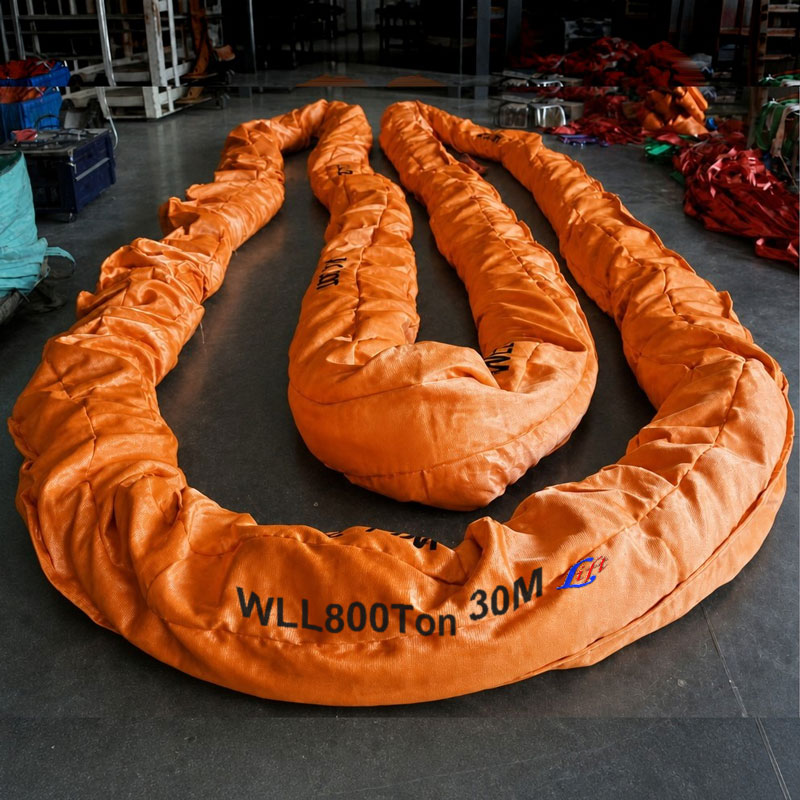
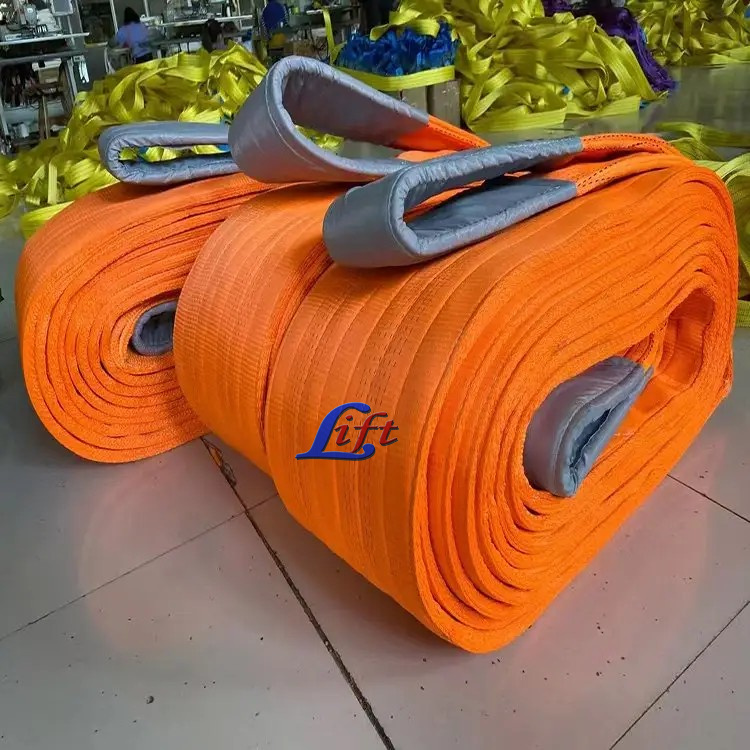
Lift Sling Rigging Co., Ltd produce Heavy Duty Lifting Sling,Heavy Duty Lifting Strap,Heavy Duty Polyester Lifting Sling,A heavy duty lifting sling is built for a duty rather than graded for one: the rated load on the label is calculated from material strength, design factor, type of hitch, angle of loading, diameter of curvature and fabrication efficiency, and four of those six belong to the lift rather than to the band. This page sets out the two bases usually left out of the enquiry - the diameter the sling is loaded over, and the efficiency of the made-up article - what the extra capacity buys and what it costs, the duties that genuinely force the heavier article, and the seven numbers to fix before the tonnage. EN 1492 forms according to type, batch tested with a certificate, HS code 630790. Telephone 18066002268.
Hits: ℃
Release time:2026-09-19 14:44
Lift Sling Rigging Co., Ltd produce Heavy Duty Lifting Sling,Heavy Duty Lifting Strap,Heavy Duty Polyester Lifting Sling,Heavy Duty Lifting Sling for Lifting Medium and Large Equipment.
Heavy Duty Lifting Sling — Describe the Duty Before Choosing the Tonnage
The words heavy duty describe a duty, not a grade, and the figure beside them is calculated from six bases of which only two are the material the sling is woven from. This page covers the four that belong to the lift - the hitch, the angle of loading, the diameter of curvature the sling is loaded over, and the fabrication efficiency of the made-up article - then what the extra capacity buys, what it costs in mass, conformity and paperwork, the duties that genuinely force the heavier article, and the seven numbers to fix before the tonnage. Forms to EN 1492-1 and EN 1492-2 according to type, batch tested with a certificate. HS code 630790. Telephone 18066002268 (§2 to §7).
1. What This Page Is About: the Two Questions Behind the Words
A buyer who searches for a heavy duty lifting sling is usually asking one of two questions, and the words do not say which. The first question is what duty the article has to survive: what it will lift, how it will be hitched, what it will wrap around, and what will be in the air with it. The second is what the heavier article costs, in money, in weight, in handling and in administration, compared with the one that would have done the job.
This site builds most of the forms a heavy duty sling is sold in, and the pages for those forms are written already. The flat webbing article is set out on the flat lifting strap and polypropylene flat lifting strap pages, the round family on the heavy duty round sling and eye type round sling pages, the closed loops on the endless sling page, and the very large articles on the 300 ton lifting belt and WLL 400 ton endless polyester round sling pages.
What none of those pages covers is the decision in front of them: whether the heavy article is the right purchase at all, and how a heavier figure should be read when it arrives on a quotation. That is this page's subject. The short version is that heavy duty is a description of a duty rather than a certificate, and that the rated load a buyer compares between suppliers is calculated from six things, of which only two are the material the sling is woven from.
| The question | What it is really asking | Where the answer is written |
|---|---|---|
| What will this lift | The rated load in the configuration the lift will actually use | The label, as a rated capacity for each type of hitch, and this page, section 2 |
| What will this survive | The temperature, the chemistry, the contact, the cycle | The fibre and the construction, and section 6 of this page |
| What does the heavier article cost | Mass, curvature, handling, inspection and the paperwork that follows the asset | Sections 4 and 5 of this page |
| Which article should be quoted | The form, the fibre, the width and the fittings, fixed in one order | Section 7 of this page, and the family pages linked above |
2. Where a Rated Load Comes From: Six Bases, and Only Two Are the Sling
A rated load is not a property of the cloth. The published guidance is unusually direct about this, and it lists the inputs in one place: rated loads are based on material strength, design factor, type of hitch, angle of loading, diameter of curvature over which the sling is used, and fabrication efficiency. Six bases, and a quotation that names only the first of them has named the one input a buyer can read off a data sheet without knowing anything about the lift.
The list is worth splitting, because it explains why two heavy duty slings of the same nominal capacity are not interchangeable, and why the same article carries several different figures.
| Basis | What it is | Who fixes it |
|---|---|---|
| Material strength | The strength of the yarn and the webbing the article is made from | The maker: the fibre and the weave, and the test certificate behind them |
| Design factor | The margin between the rated load and the load the article is made to withstand | The maker, according to the market the article is sold into (section 4) |
| Type of hitch | Vertical, choker, basket, or a multi-leg set | The user, before the order: a hitch chosen after delivery is a configuration nobody rated |
| Angle of loading | The inclination of the leg or branch from the horizontal or vertical | The user, on the day: it is the input most often left out and the one that moves the figure fastest |
| Diameter of curvature | The diameter of the surface the sling is loaded over | The load itself, which is why it belongs on the enquiry (section 3) |
| Fabrication efficiency | The difference between the strength of the webbing and the strength of the made-up article | The maker: the seam, the eye, the termination and the fittings (section 3) |
Four of the six bases are therefore about how the article is made up and how it is used, not about what it is made of. A supplier can sell a stronger yarn and a heavier band; it cannot sell its way past a choker angle, and it cannot rate a five metre sling for a lift that only leaves one metre of headroom. That is the practical meaning of the word heavy duty: an article built for a duty that the buyer has described.
3. The Two Bases Nobody Puts in the Enquiry: Curvature and Fabrication Efficiency
The fourth and sixth bases in that list are the two that almost never appear in a request for quotation, and they are the two that decide whether the figure on the quotation is the figure the lift will get.
Diameter of curvature is the diameter of the surface the sling is loaded over, and it is a rating input rather than a fault-finding note: the same article loaded over a large diameter and over a small one is not being asked the same thing. Two rules follow from the published operating practice. A sling is not to be constricted, bunched or pinched by the load, the hook or any fitting, which is what happens when a wide, stiff band is pulled onto a surface it cannot conform to. And where a configuration sits outside the tabulated cases, the figure is to come from the manufacturer or a qualified person rather than from the nearest line of a table.
That is the point at which a heavy duty enquiry stops being about tonnage. A load's diameter, the radius it presents at the contact, and the width and thickness of the band all feed the same number, so the useful enquiry states them: the band, the load and the surface it will meet.
Fabrication efficiency is the other one, and it is the gap between what the webbing can carry and what the finished article can carry. The standard's own wording is compact enough to quote: stitching shall be the only method used to attach end fittings to webbing and to form eyes, the thread shall be in an even pattern, and it must contain a sufficient number of stitches to develop the full breaking strength of the sling. On the hardware side, fittings are required to be of a minimum breaking strength equal to that of the sling and free of all sharp edges that could in any way damage the webbing, and to be strong enough to sustain twice the rated load without visible permanent deformation.
| The requirement, as published | What it means when two quotes meet |
|---|---|
| Stitching shall be the only method used to attach end fittings and to form eyes | A termination that is knotted, bolted or clamped is outside the rule, whatever the band is rated at |
| The thread shall be in an even pattern and carry enough stitches to develop the full breaking strength | The seam is a rated part of the article; an under-stitched eye is a smaller sling wearing a larger label |
| Fittings: minimum breaking strength equal to that of the sling, and no sharp edges | Hardware is matched, not selected for convenience, and a worn hook radius can damage the webbing it lifts with |
| Fittings: to sustain twice the rated load without visible permanent deformation | This is a deformation check, not a second margin: it is meant to make an overload visible |
The last line of that table is the one worth carrying into a purchasing meeting. When a supplier offers a fitting that is merely strong enough, the deformation rule is what separates a fitting that will show its history from one that will hide it until it fails.
4. What the Extra Capacity Buys
Buying up one size is the most common way of answering a doubt about a lift, and it is worth being exact about what the extra figure does and does not do.
What it does is straightforward: a larger rated load in the same configuration is a larger rated load, and nothing else on the page changes. What it does not do is create a second margin. The margin is already in the design factor, and the factor belongs to the market the article is sold into rather than to the number printed beside it, so the same tonnage quoted in two markets can be built to two different margins. The page that tabulates those factors for each standard is the 8 ton endless webbing sling page; what matters here is that a buyer who wants the margin stated should ask for the factor in writing rather than infer it from the tonnage.
Three rules keep the extra capacity from being spent on the wrong problem. A sling is not to be loaded in excess of its rated capacity, and the figure that governs is the one the manufacturer has marked on the article, so the article's own label outranks any figure in a catalogue or a lift plan. A sling must not be used without affixed and legible identification markings at all, which is the same rule seen from the other side. And shock loading is prohibited: a bigger figure does not license a snatch lift.
| What buying the heavier article does | What it does not do |
|---|---|
| Raises the rated load in the configuration that was quoted | Raise the factor; the margin is set by the standard the article is built to |
| Gives the lift more room against an unplanned load | Replace identification: the marked figure still governs, and is still the one to read |
| Moves the article up the colour code, where the code still separates anything | Fix an angle, balance a load, or pad an edge (section 7) |
| Adds a construction and a mass, not a certification of the duty | Make a badly described lift safe, or rate a hitch nobody specified |
5. What the Extra Capacity Costs
The heavier article is not a free option, and the costs are of four kinds.
The first is mass. At the light end of the range a sling is carried in one hand and thrown over a load; at the heavy end it is an article that a rigging team handles, stores and positions, and the handling itself changes the method. The pages for the largest articles on this site treat that as part of the product rather than an afterthought: the WLL 400 ton endless polyester round sling page sets out the handling and storage of a sleeved loop, and the 300 ton lifting belt page deals with the consequences of the size in the same way.
The second is curvature, from section 3. A wider band is a band that has to conform to a larger radius, and it is the band, not the load, that decides whether the contact is a surface or a line. Where the load presents a small diameter, the article that is heavier duty on paper can be the one that cannot be loaded as intended.
The third is the administrative load, and it is the one most often forgotten at the quotation stage. The inspection regime is not eased by size: slings are inspected each day before use, and periodic inspections are made at intervals no greater than twelve months, with additional inspections where service conditions warrant them. Nothing in the published rules gives a large article used twice a year a lighter regime than a small one used daily; if anything the severity of the service, the nature of the lifts and the experience of the service life are the factors that move the interval, and those are properties of the job rather than of the tonnage.
The fourth is commercial. Above the range the tables cover, an article is built to order, so the sizing decision is also a lead-time decision and a spares decision, and both are made better before the order than after a failure. The 300 ton lifting belt page sets out what has to be written into the contract in that case: the factor, the test and the marking. The practical consequence for a buyer is simple: decide the spare while the price and the lead time are still on the same quotation.
| What the extra capacity costs | Where it shows up | What can be done about it |
|---|---|---|
| Mass | Handling, positioning, storage, and the method of rigging the lift | Right-size the article; keep one spare for the sizes that cannot be replaced quickly |
| Curvature and conformance | Contact on small-diameter loads; constriction, bunching and pinching | State the load's diameter on the enquiry, and choose the width for it |
| Inspection and records | Daily inspection, periodic inspection, the removal criteria read as an asset record | Nothing that a smaller figure would have avoided; the duty sets the interval |
| Lead time and spares | Made-to-order articles above the tabulated range | Fix the specification and the spare on one order, not on two |
6. The Duties That Genuinely Force the Heavy Article
There are duties where the heavy article is not a preference but the only article that can be used, and none of them is a tonnage. They are the environment, the contact, and the cycle.
Temperature is the clearest of them, because the figures are published and they disagree with each other. The guidance for synthetic web slings states that nylon and polyester slings are not to be used in contact with objects or at temperatures above 194 degrees F, which is 90 degrees C, or below minus 40 degrees F, which is minus 40 degrees C. The regulation itself sets the same materials at a ceiling of 180 degrees F for polyester and nylon, and 200 degrees F for polypropylene. The European standard, as its guides describe it, gives polyester and polyamide an envelope of minus 40 to plus 100 degrees C, and polypropylene minus 40 to plus 80 degrees C.
| Material | Published upper figure | Published lower figure | Which figure to work to |
|---|---|---|---|
| Polyester, polyamide (nylon) | 90 degrees C in the guidance; 180 degrees F in the regulation; 100 degrees C in the European standard | minus 40 degrees C | The lowest published figure for the material, which is the guidance's 90 degrees C |
| Polypropylene | 200 degrees F in the regulation; 80 degrees C in the European standard | minus 40 degrees C | 80 degrees C, the lower of the two |
| Fittings in aluminium | Not a temperature question but a chemistry one: not to be used where caustics are present | - | Treat the fitting as a second material with its own exclusions |
The rule that follows is the one this site applies throughout the family: work to the lowest published figure, and put the figure and its source in writing. Heat is a property of the fibre and of the construction. It cannot be bought with capacity, which is why a hot duty ends in a heat-resistant article rather than in a bigger one, and the heat-resistant ring eye type lifting belt page deals with that family directly.
Chemistry behaves the same way, and it splits by material in a way that catches buyers out. Nylon webbing is not to be used where fumes, vapours, sprays, mists or liquids of acids or phenolics are present. Polyester and polypropylene webbing are not to be used where the same forms of caustics are present. Aluminium fittings are excluded from caustic service as well. A plant that handles both an acid and a caustic therefore has two exclusions and needs two answers, and the same article will not always give both.
Contact is the third duty. Where the load's surface is abrasive, or the edge is sharp, the driver is the load and not the capacity, and protection is a requirement rather than a preference: slings are to be padded or protected from the sharp edges of their loads. The pages for the circular lifting straps, the reinforced and sheathed sling and the wear resistant sling carry the detail; what matters at this level is that protection belongs to the article and travels with it, so it belongs on the enquiry rather than on the site's shopping list afterwards.
The cycle is the last duty, and it is the one that decides how often the article is looked at. Frequency of use, severity of service conditions, the nature of the lifts and the experience gained over a service life are the factors that set the interval for inspections beyond the daily one. A heavy duty article in severe service is inspected more often than a small one in light service, and the interval is the honest answer to the question of how heavy the duty really is.
| The duty | What it forces | What it cannot be bought with |
|---|---|---|
| Temperature above the fibre's ceiling | A fibre change, or a heat-resistant article | Capacity: a bigger polyester sling is still a polyester sling |
| Acids, caustics, phenolics | A fibre that survives the chemistry, and fittings chosen for it | Capacity, and often a cover: in chemical service the cover's yarn matters as much as the core's |
| Abrasive surfaces and sharp edges | Padding or protection fitted to the article | Capacity, and the rule requiring protection is not waived by a heavier figure |
| A severe, frequent or unfamiliar cycle | Shorter inspection intervals and a record that can be read | Mass, size or price: the interval follows the service, not the tonnage |
7. Sizing This Article: Seven Numbers in the Order They Should Be Fixed
The order matters, because each number constrains the ones after it and a specification written in the wrong order has to be rewritten. The seven are set out below as a buyer's sequence, not as an enquiry form; the enquiry that follows from them is short.
| Order | The number to fix | The failure it prevents |
|---|---|---|
| 1 | The load's weight, measured rather than estimated, and where its centre of gravity sits | A figure taken from a drawing or a nameplate, and a load that hangs at an angle nobody planned for |
| 2 | The hitch: vertical, choker, basket, or one leg of a multi-leg set | A rated load read from the wrong column, and a set assembled from unmatched legs |
| 3 | The angles: the horizontal angle between the legs, and the angle of choke where a choker is used | A figure taken from a table row the geometry does not sit in; horizontal angles below 30 degrees are outside the published practice |
| 4 | The contact: the diameter the sling wraps, the edge it meets and the surface it bears on | Constriction, bunching or pinching on a small-diameter load, and abrasion that retires the article early |
| 5 | The environment: temperature, chemistry, sunlight, and whether the article will be wet or frozen | A fibre chosen for strength in a duty that fails by heat, chemistry or ultraviolet light instead |
| 6 | The interface: the hook or shackle the eye or loop must take, and how it seats | An eye that does not fit the hardware, a fitting loaded on an edge, and a sling whose end is its weakest point |
| 7 | The paperwork: the marking, the certificate, the inspection interval and who holds the record | An article that cannot be used because it cannot be identified, and an inspection history that cannot be shown |
Three of those numbers carry a published rule that is easy to state and easy to forget. Where the legs sit within five degrees of the vertical, the loading may be treated as vertical, which is what makes a nominally vertical lift practical in the field. A choker hitch is rated from the table provided the angle of choke is 120 degrees or more, and below that the figure comes from the manufacturer rather than from a row of it. And an object placed in the eye of a sling is not to be wider than one-third of the length of the eye, which is the arithmetic behind the familiar complaint that the eye will not go round the shackle.
What is deliberately not on the list is the tonnage, because it is the answer to numbers one to six rather than an input to them. A buyer who fixes those six and then asks for a figure is specifying an article. A buyer who starts with the figure is buying a length of webbing and hoping the six follow.
8. What This Site Builds at the Heavy End, and How It Is Marked
A heavy duty requirement can be met in several forms, and the form is chosen from the load rather than from the capacity. The table below is a map of the family as it is written on this site, with the page that carries each form's detail.
| Form | What usually decides it | Where the detail is written |
|---|---|---|
| Flat webbing sling | A wide, flat contact is wanted, or the load has a face rather than a corner | flat lifting strap, polypropylene flat lifting strap |
| Round sling | The load is irregular, or the sleeve has to become the contact surface | heavy duty round sling, eye type round sling |
| Endless loop | There is no termination in the load path, and the loop is dressed to the load | endless sling, endless round sling |
| Eye and eye webbing sling | Both ends have to meet hardware, and the band is flat | eye and eye type webbing sling |
| Multi-leg assembly | Several legs gather into one master link, and the assembly is rated as a unit | web sling bridle assembly |
| Large made-to-order article | The duty sits above the tabulated range, and the contract carries the factor and the test | 300 ton lifting belt |
| High capacity round sling | The tonnage is large and the sleeve is the whole contact surface | WLL 400 ton endless polyester round sling, WLL 100T heavy duty round slings with eyes |
Whatever the form, the identification rule is the same, and it is the reason a heavy duty sling is bought with its label rather than with its band. Each sling is marked or coded to show the rated capacities for each type of hitch and the type of synthetic web material, and the article's own marking is the figure that governs its use. The colour code is a useful field check below its last step, orange, which reads ten tonnes and above, and it stops separating anything past that point; that is the stage at which the label becomes the only place the capacity exists, and the 30 ton class of articles is where the caveat is worked through in full.
Articles in this family are batch tested and shipped with a test certificate, and the articles supplied for European markets are built to the margin and the colour marking of the European standard for their form. Where an article is built to order above the tabulated range, the factor, the test and the marking are written into the contract, because there is no table for the buyer to appeal to afterwards.
9. Repair, Proof Test and the Record: What Happens When a Heavy Article Is Damaged
The rules for damaged synthetic slings are stricter than most buyers expect, and they are worth knowing before the damage happens, because the difference between a repairable article and a scrapped one is a decision made at the seam.
Cracked, broken, melted or otherwise damaged webbing is not repaired, and a load-bearing splice is not repaired in any case. Temporary repairs are prohibited outright, including temporary repairs of fittings, and webbing that has been repaired in a temporary manner is not to be used at all. What can be done is done by the manufacturer or an equivalent entity, and the article goes back into service only after a proof test to twice its rated capacity, with the certificate retained and available for examination. Repaired articles are also marked to identify who repaired them, which is what makes the history readable later.
| The event | The rule | The document to keep |
|---|---|---|
| Webbing is cracked, cut, burned or melted | Not repairable: the article is removed from service | The removal entry in the inspection record |
| A load-bearing splice or a stitched eye is damaged | Not repairable, because the splice is a rated part of the article | The removal entry, and the certificate that the article was supplied with |
| The article can be repaired | Repaired only by the manufacturer or an equivalent entity, then proof tested to twice the rated capacity | The proof test certificate, retained and available for examination |
| A new article carries a fitting that was previously used or welded | Proof tested before first use, by the manufacturer or a qualified person: the requirement covers all synthetic webbing slings incorporating previously used or welded fittings | The proof test certificate; other new articles need not be tested unless the purchasing specification requires it |
| The article is a multi-leg or bridled assembly | Repairs of hooks and fittings are made to the hardware standards, not to the sling rules alone | The repair mark, and the assembly's own record (see web sling bridle assembly) |
The record itself is a purchasing decision as much as an operating one. The web sling rule requires the article to be marked and inspected; the record-keeping provisions that buyers are asked for on audits usually come from the consensus standard rather than from the regulation, and in the chain family the regulation goes further and requires a record of the most recent month in which each sling was thoroughly inspected. A buyer who needs a documented asset history should decide at the enquiry where that record will live, because the answer changes what the supplier has to mark and what has to be packed with the article.
10. The Counter-Case: When Heavy Duty Is the Wrong Purchase
There are three patterns in which the heavy article is bought and the money is spent on the wrong thing, and all three are recognisable from the enquiry.
The first is buying by tonnage. A lift that is failing because the legs are opened too wide is not fixed by a bigger figure, because the capacity the argument is about is being spent by the geometry rather than consumed by the load. The second is buying width the load cannot take: a band that is heavy duty on paper can be the band that cannot conform to the surface it has to wrap, and constriction, bunching and pinching are named in the operating rules for exactly this reason. The third is buying an article the site cannot handle or inspect: a sling that needs a platform to fit, a store room to keep and a written procedure to examine is a different operational commitment from the one the quo tation implies.
| The symptom in the enquiry | What it usually costs | The cheaper fix |
|---|---|---|
| The tonnage is the first number given, and the hitch and angle arrive later or not at all | An oversized article, handled by the same number of people, in a lift that still has the geometry problem | Fix the hitch and the angle first, then take the figure from the table for that configuration |
| The load is asked for as heavy duty because it has a sharp edge | Protection bought as capacity, and an article that still fails at the edge | Fit the protection to the article, and keep the capacity for the load |
| The duty is hot, wet or chemically active, and the answer is a bigger sling | A larger article with the same fibre and the same exclusions | Change the fibre or the form; the heat-resistant article and polypropylene pages are the two ends of that decision |
| The article is bought larger because the inspection regime looks burdensome | A heavier asset with the same daily and annual inspections, and more to store | Buy the size the duty needs; the interval follows the service, not the tonnage |
| The specification is written as a form and a tonnage with no diameter, environment or interface | Revisions, re-quotes and a delivery that arrives late in the season | Use the seven numbers in section 7 as the order of the specification |
11. Reading a Quotation Against This Page, Line by Line
A quotation for a heavy duty sling is short, and the six lines that matter are usually the six that are missing. The following is the check this page is written to support, in the order the lines should be verified rather than the order they are usually printed in.
| Line on the quotation | What to check it against | If it is missing |
|---|---|---|
| The standard, and the design factor | The market the article is going into, and the factor the article is built to (section 4) | Ask for both in writing; a tonnage without a factor is a figure without its margin |
| The form, the width or sleeve, and the ply | The load's diameter and the contact it needs (sections 3 and 7) | State the load's surface; the width is chosen from it, not from the capacity alone |
| The configuration the figure belongs to | The hitch and the horizontal angle the lift will make (section 7) | Ask which column the figure was read from, and at which angle |
| The material, and the environment it is rated for | The temperature and chemistry table in section 6 | Name the duty: fibre and fittings are excluded from duties that capacity cannot fix |
| The marking and the test certificate | The identification requirement, and whether the article is batch tested (section 8) | Ask what the label will carry and what travels with the article |
| The lead time, and the spare | Whether the article is a catalogue item or built to order (section 5) | Decide the spare while the price and the lead time sit on the same sheet |
Two of those six lines are what separate a heavy duty quotation from a heavy duty article: the factor, because it is the margin, and the marking, because it is the only place the rated load exists once the article is in the store. Everything else on this page is in service of those two lines being right.
12. Frequently Asked Questions
Q1: What does heavy duty actually mean on a lifting sling?
Q2: Can I buy extra capacity instead of padding a sharp edge?
Q3: Is a wider sling always better on a round load?
Q4: My sling is used twice a year. Is an annual inspection enough?
Q5: The eye of my sling is damaged. Can it be restitched?
Q6: Which figure should I quote in a lift plan?
Q7: Do you build above the range the standards tabulate?
Q8: What must be marked on a heavy duty sling?
Q9: Is a textile sling the right answer for a heavy load at all?
Q10: How is the article supplied and shipped?
Contact
Send the seven numbers in section 7, or send the lift as it stands and we will come back with the questions that are missing. Heavy duty lifting slings are built to order, so the earlier the duty is described the better the article fits it.
Telephone and WeChat — 18066002268
E-mail — 702461526@qq.com
Address — Lifute Industrial Park, Taizhou City, Jiangsu Province, China
- Previous:Ratchet Cargo Lashing Belt
- Next:Heavy Duty Round Sling
-
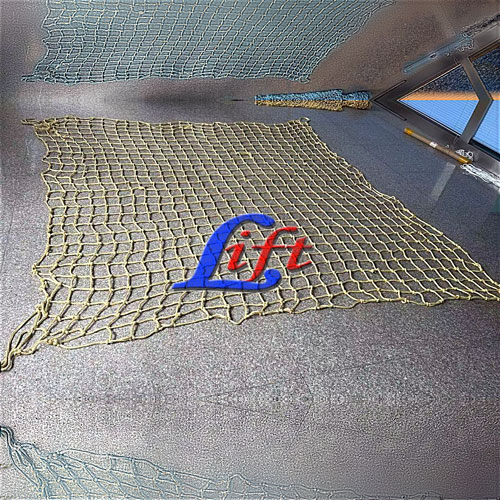
Drone Anti-collision Net
-
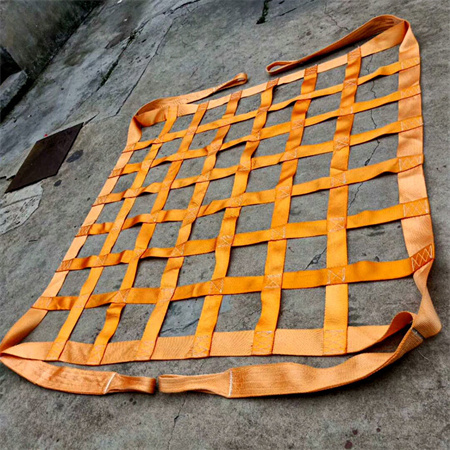
Extra Large Capacity Cargo Net
-
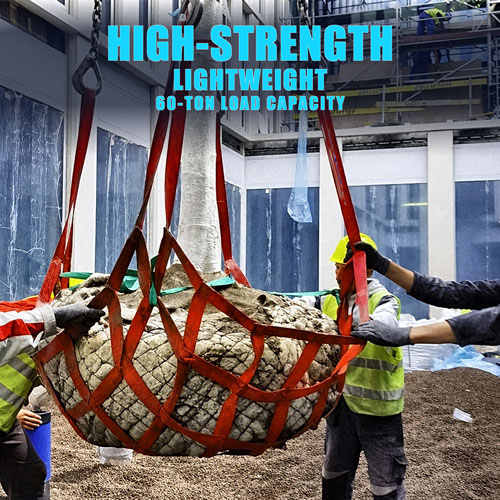
Cargo Webbing Net
-

Color changing nylon double buckle loop nylon braided rope
-

Two end buckle lifting rope, double buckle round lifting rope, double fork nylon lifting rope, non jointed nylon lifting rope
-

Emergency escape lifeline, fire escape rope, fire safety escape emergency rope, steel wire core fire rope

