 Language
 简体中文
简体中文
- On the 2018 National Day holiday, Lifet completed six 100 ton large tonnage lifting belts as a gift
- The role of suspension net in the transportation of goods turnover
- Cargo soft lifting net, lifting net, lifting net, lifting net, bag, climbing net
- Precautions for using Lifutiden elevator
- How to make circular lifting straps
Contact: Wang Lili
E-mail:18066002268
Phone:702461526@qq.com
Address: Lifute Industrial Park, Taizhou City, Jiangsu Province
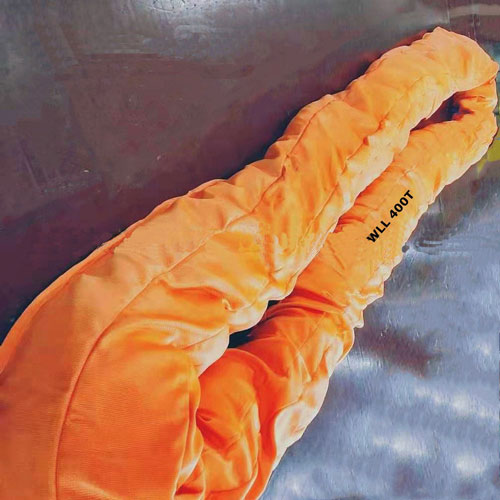
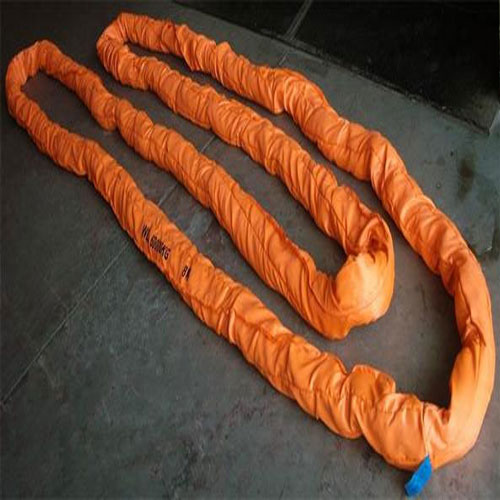
Lift Sling Rigging Co., Ltd produce Endless Round Sling,An endless round sling is a round sling with no ends at all: a continuous loop of high-tenacity yarn inside a woven protective sleeve, with no eyes, no splices and no fittings, so there is nothing on the article to hang on a hook. Every lift it makes is one of four arrangements — hung over the hook, a basket, a choke or a double wrap — and each carries its own figure. It is also the one form of the family whose load contact points can be moved round the loop to spread wear and extend the sling‘s life. Made to EN 1492-2. Length has to be ordered with its convention stated, because a closed loop can be quoted two ways. HS 630790. Phone 18066002268.
Hits: ℃
Release time:2026-09-19 15:10
Lift Sling Rigging Co., Ltd produce Endless Round Sling,Round Endless Sling,Endless Loop Round Sling,Polyester Lifting Round Sling.
Endless Round Sling — a Sling With No Ends, and the Four Arrangements It Can Make

An endless round sling doing the only thing it can do on a photograph: lying as a closed loop. There is no eye at either end because there are no ends — which is the property the whole page is about.
1. What an Endless Round Sling Is, and the Four Names Under It
The construction is one sentence long, but the sentence contains the article's whole character: round slings are made from a high-strength continuous loop of synthetic yarn, completely encased by a tough and durable tubular jacket that is colour coded by capacity and protects the fibres inside. The endless version is that same article described from the loop's point of view — the manufacturers' own words are that endless round slings are made from polyester core yarn and designed with a seamless "endless" loop tubular cover.
Nothing is added to that base description to make this product: there is no eye to fold, no fitting to splice, no termination of any kind. That is what separates it from the other round-sling article on this site. The eye type round sling takes the same sleeved core and builds ends onto it by attaching a wear pad to both sides of the sling at each end; this page's article is what you have before that operation is performed. Same standard, same colour code, same sleeve — one has ends and one does not.
The names are worth listing for the same reason they were worth listing on the neighbouring pages: this product's own listing calls it four things, and the trade adds more. Endless Round Sling, Round Endless Sling, Endless Loop Round Sling and Polyester Lifting Round Sling are all names for the one article, and each of them is describing a different half of it — the shape, the shape again, the material, and the loop.
| The name | What it is describing | What it does not say |
|---|---|---|
| Endless round sling | The construction and the shape together: a sleeved strand core formed as a closed loop. | The capacity, the length or the fibre — none of which is visible on a closed loop (§5, §9). |
| Round endless sling | The same two facts said in the other order, which is how a warehouse tends to write it. | Nothing further. This is a name, not a second product. |
| Endless loop round sling | The loop, described twice — which is a fair indication of how much the form matters on this article. | Whether an eye version exists and might be wanted instead (§11). |
| Polyester lifting round sling | The fibre, which is the common general-purpose choice, and the use. | That the standard covers two other fibres as well, and that the label is where you find out which one you have. |
| Any of the four, at goods-in | The article the label names, once the label has been read. | Nothing at all, which is the point: on a sleeved loop the label is the only part of the sling that can state what the sleeve is hiding. |
One sentence closes the section. The name tells you there are no ends; the label tells you everything else. A quotation that uses only the name has specified a shape, and the specification proper — capacity, length, fibre, standard and factor — is what §5 to §9 are about.
2. No Ends: the One Property Everything Else Follows From
It is worth being pedantic about what "no ends" means, because most lifting slings on any site have two of something — two eyes, two fittings, two hooks — and the habits built on those products transfer badly to this one.
An endless round sling has no attachment feature whatsoever. There is no eye to put over a hook, no fitting to pin to a shackle, no thimble to seat, and no reinforced end to protect. The article is a loop of sleeved strand and nothing else. Three consequences follow immediately, and they are the three things a buyer or a rigger needs to hold in mind.
The first is that the sling is arranged, not attached. A hook cannot be connected to this article; the article has to be passed round, under or through part of the assembly so that a bearing surface exists. Practically that means the lift is designed around the load rather than around the hook — the sling becomes part of the geometry instead of a link at the end of it.
The second is that the arrangements are finite and known. There are five of them in regular use, they are all described in the general rigging guidance, and each has a different effect on capacity. §3 sets them out as a menu rather than as a warning, because the honest position is that any of them is safe when it is used knowingly and none of them is safe when it is assumed.
The third is that the article has no designated wear point. On a sling with eyes, the two eyes are where the hardware meets the fabric, and everyone knows where to look. On this article the wear happens wherever the load was last applied — which is the reason §4 treats contact-point adjustment as the form's signature capability and §5 treats inspection as a search rather than a check.
| The property | What follows from it | The habit it breaks |
|---|---|---|
| No eye, no fitting, no attachment feature | The sling cannot be hung on hardware; it has to be arranged round the load or the hook so that it bears on itself. | Reaching for a hook first and the sling second. On this article the load is chosen first and the arrangement follows. |
| The load path is continuous with no joints | There is nothing to fail at a termination and nothing to inspect at one — but also no defined place where the load enters. | Inspecting the ends. There are no ends, so the whole circumference is the inspection (§5). |
| The sleeve is the only protection the core has | Anything the sleeve meets is being met on the core's behalf — which is why protection at the contact point is an ordering decision (§7). | Judging the sling by its sleeve. A scuffed cover is evidence about the core, not a cosmetic issue. |
| Nothing can be adjusted or shortened | The length ordered is the length used; a loop cannot be re-reeved or knotted to fit a lift it was not sized for. | Fixing a short sling at the load. A knot is prohibited, and on a closed loop there is not even an eye to pass through (§6). |
| The article is symmetrical in every direction | There is no top, bottom, left or right; any segment can take the load and the loop can be rotated between lifts. | None — this is the advantage. It is also why the wear history is unreadable later (§4, §5). |
The section's summary is the sentence a first-time buyer needs: this is not a sling you put on something; it is a sling you put round something. Every practical instruction that follows — the arrangements in §3, the contact points in §4, the length in §6 — is a consequence of that one difference.
3. The Four Arrangements, and What Each One Costs
The rigging guidance names the hitches that a lifting sling can be used in, and a loop with no ends can make all of the useful ones — but it makes them in its own way, because there is no eye to pass through and no fitting to connect. What follows is the menu, with the published capacity note attached to each and the loop-specific instruction that goes with it.
The loop over the hook is the arrangement this article makes most often, and it is the one that has no eye-sling equivalent. The loop is laid over the hook so that both sides hang down to the load: the hook carries the sling, and the sling carries the load as a vertical hitch. The published requirement that matters here is that the load applied to a hook shall be centred in the base (bowl) of the hook to prevent point loading, and the same guidance adds the case where centring is impossible: the sling eyes or connection points must then be protected. On this article there are no eyes to protect, so the protection has to be thought about as protection of the sleeve — which is §7's subject.
The basket hitch cradles the load with both legs running up to the hook, and it is the arrangement this form is best known for, because a loop is the only sling that can be put round a bundle without passing anything through anything. The published figure is that a basket has twice the capacity of a single leg vertical hitch — when the legs are in a true 90° vertical fashion and the D/d ratio is 25:1, which typically requires a below-the-hook device such as a lifting beam or spreader bar, or two separate lifting devices. Take the beam away and the figure falls in step with the leg angle, and the guidance notes that a basket should not be used on unbalanced or hard-to-balance loads, and that more than one sling may be needed for load control. The multipliers themselves belong to the hitch rather than to the sling and are tabled on this site's endless sling page, which is where the arithmetic for the leg angle lives; on this article the only addition is that the loop makes a basket available on any part of its circumference.
The choker hitch passes the loop through itself and pulls it tight round the load — pipe, pole, beam, anything that can be gripped. It carries less than a vertical, not more: the published figure is 75 to 80% of the vertical capacity, with the least reduction at an angle of choke of 120° or more, and the warning that any angle of choke less than 120° can result in a capacity as low as 40% of the single leg. The rule that goes with it is stated for web slings in terms that assume eyes — the choke point shall always be on the sling body, never on the eye, fitting, base of the eye, splice or tag — and this is the one article in the family for which that rule is automatic rather than a discipline: on a loop with no ends, there is nothing to choke on but the body. The choking guidance adds that the choke should be pulled tight before the lift is made, rather than left to tighten during it.
The double wrap is the arrangement that exists because the article is a loop and can be taken round a load twice. The guidance describes it as the configuration that gives better grip and load control on smooth or loose loads, and it is the standard answer to a bundle that would otherwise slide out of a single basket. The cost is length: a double wrap uses the circumference twice, so a loop sized for a single basket will not reach — which is a §6 decision, made before the sling is made.
| The arrangement | How it is made on a loop | What it does to capacity | What to watch |
|---|---|---|---|
| Over the hook (the loop hung as a U) | The loop is laid over the hook; both sides hang down to the load or to the sling below. | Both sides share the load, so each side carries half of it in the ideal case. | The load must sit in the bowl of the hook, not on the tip. The guidance names this explicitly and requires protection when centring is impossible. |
| Basket | The loop passes under the load and both legs rise to the hook — possible on any segment of the circumference. | 200% of the vertical rating, but only in the ideal geometry: legs truly at 90° and a D/d ratio of 25:1. | Without a beam or two devices, the figure falls with the leg angle. Not for unbalanced loads, and more than one sling may be needed for control. |
| Choker | The loop is passed through itself and pulled tight round the load — the arrangement the form makes easiest, because the choke can only land on the body. | 75 to 80% of vertical as a working figure, and as low as 40% at a closed choke angle. | Pull it tight before the lift rather than letting it tighten during it. The angle of choke decides the capacity, and the label knows nothing about it. |
| Double wrap | The loop is taken round the load a second time before both legs go to the hook. | No published multiplier of its own; the load is shared over a longer band and the grip is what changes. | It uses twice the circumference, so it needs a longer loop than a single basket (§6). Check the wraps do not overlap on top of each other. |
| Any of them, on a load with sharp edges | The same four arrangements, with the sleeve taking the corner instead of the core. | Unchanged in theory. In practice a cut sleeve is the beginning of the end of the sling. | Protection is required here, not optional: slings in contact with edges, corners, protrusions or abrasive surfaces must always be protected (§7). |
Two sentences summarise the menu. Only one of the four arrangements can add capacity, and it adds it only when the geometry is bought and paid for — a beam or two devices, legs at 90°, the right D/d. Everything else either preserves the rating or takes part of it away, and on a loop the arrangement is chosen at the load, which is why the choice belongs in the lift plan rather than in a rigger's habit.
4. Moving the Contact Point: the Capability the Eye Version Does Not Have
This is the section that answers the question a buyer asks when comparing this article with the eye version of the same round sling: what do I get for giving up the eyes?
The manufacturers answer it directly. Endless round slings, described as made from polyester core yarn with a seamless endless loop tubular cover, have their loop form called out as a practical advantage: these continuous loop configurations are helpful to users in adjusting the load contact points, to extend the sling longevity. Read that sentence carefully, because it is a statement about maintenance rather than about strength. The sling's capacity does not change; what changes is where the load bears. On a loop with no designated end and no fixed eyes, the segment taking the bend, the corner and the choke can be moved between lifts, so a sling that would otherwise wear at two hard points can be worked all the way round its circumference.
The same property has a second, quieter consequence that belongs in a lift plan: the contact point is also where the load is protected. A loop can be positioned so that the bearing falls on a sound part of the load rather than on a lip, a weld or a corner, and it can be re-positioned between lifts as the load's shape or the pick-up point changes. On an eye sling the geometry of the hardware largely fixes where the band touches; on a loop it is a decision.
What the capability costs is stated in §5 and is worth one sentence here so that it is not discovered later. Moving the contact point moves the evidence. A sling that has been rotated has no readable wear history, so the person inspecting it cannot tell from the marks where the hard lifts happened — which is why the inspection has to be comprehensive rather than targeted.
| The practice | What it buys | What it costs, or what to watch |
|---|---|---|
| Adjusting the load contact points | The named capability of the endless form: the segment that takes the load is a choice, so wear is not concentrated at two fixed places. | It has to be done deliberately. A loop left in the same arrangement every lift behaves exactly like an eye sling with worse inspection. |
| Rotating the loop between lifts | Spreads abrasive wear round the whole circumference instead of concentrating it, which is the cheapest life extension available on a textile sling. | Rotation is work, and it removes the visible record of where the sling has been loaded (§5). |
| Positioning the bearing away from a lip or a weld | Protects the load as well as the sling, and lets the same loop suit picks that present different surfaces. | Requires the rigger to look at the load rather than at the hook — the habit this form has already broken in §2. |
| Using one loop for two different picks | A single length can be a basket on a bundle in the morning and a choke on a pipe in the afternoon, with no hardware to change. | Each arrangement carries a different figure, so the same sling has two different capacities on the same day. Both belong in the plan. |
| Keeping the sleeve intact while doing all of it | The capability only exists while the cover survives, because the cover is what the load touches. | A sleeve worn through at the working segment moves the whole problem to the unprotected core — and the core cannot be repaired. |
The section's summary is the trade in one line. The eye version sells you attachment; this version sells you adjustment. Which of the two a given operation wants is answered by asking whether the hardware is fixed or the load keeps changing (§11).
5. Inspecting a Loop That Has No End to Start From
The inspection rules for the sleeved construction are not different in kind on this article, but they are harder to apply, and the reason is structural rather than procedural: a loop has no end, no eye and no joint, so there is no natural place at which an inspection begins and no obvious place at which it stops.
What the rules require is, in the published language of the family's guidance, a clear, permanent marking usually on a durable label sewn into the cover, and a sliding scale of checks on the sleeve. Two of those rules do the heavy lifting on this article. The first is the identification itself: a missing or illegible label is a reason to withdraw the sling, and on a sleeved loop that rule matters more than anywhere else, because the label is the only element of the article capable of stating the length, the fibre and the standard that the sleeve cannot show. The second is the rule about the core: because some round slings are built with a coloured warning core inside the sleeve, exposed core yarn is a removal criterion — and, in the sentence that catches people out, if damage is present and the core yarns are not exposed, the sling should not be used either.
Applied to a loop, those two rules produce a practice that is different from inspecting a sling with ends. On an eye sling the inspection is targeted: start at the eyes, because that is where the hardware is and where damage accumulates. On this article the whole circumference is the working surface, and a rotation programme ensures that any part of it might be the part that needs attention. The practical form of a loop inspection is therefore a complete pass over the sleeve, looking for the two things that matter: a breach that exposes the core, and a mark that could have reached it through the cover. A cut, a burn, a deep abrasion or a worn patch is evidence about the core underneath, whether or not the core is visible.
One further habit is worth naming because it is the one thing an inspector can do on this article that is not possible on a sling with joints: run the whole loop through the hands rather than reading it. A sleeve that has stiffened, developed soft spots or taken up grit between cover and core may feel wrong before it looks wrong, and on a form where the load path is hidden, the hand is doing part of the work the eye cannot do.
| What you find | What it means on a sleeved loop | What to do |
|---|---|---|
| An illegible or missing label | The length, fibre and standard are now unknown, and nothing else on the article carries them. | Withdraw the sling. On this form there is no second source of identification to fall back on. |
| Exposed core yarn | The load path itself is visible, so the sleeve has already failed as protection. | Withdraw the sling. This is a published removal criterion and not a matter of judgement. |
| Damage with the core still hidden | A cut, burn, abrasion or worn patch is a statement about what the core has been through, even though the core cannot be seen. | Withdraw the sling as well. The guidance says plainly that damage present with no yarn exposed is still not a pass. |
| Stiffened, soft or gritty patches in the sleeve | Ingress between cover and core, or fibre damage that has not yet broken the surface — the class of problem a photograph cannot show. | Withdraw and have it examined. This is what the hands are for on a loop. |
| Uniform, general wear all round | The expected outcome of a rotation programme: no single bad spot, but a sling that has been worked everywhere. | Withdraw it when the wear is excessive, and note that rotation postpones this moment rather than preventing it. |
| No history of where it has been loaded | A consequence of the capability in §4: a rotated loop does not record its hard lifts. | Treat the whole circumference as suspect rather than the visible marks as the whole story. |
One sentence closes the section, and it is the sentence that makes this article different from everything else on the site. On a sling with ends you inspect the ends; on a loop you inspect all of it, because all of it is the end.
6. Length: What You Are Actually Quoting on a Closed Loop
On a sling with eyes, length is a conversation about how far apart the two ends are. On this article the ends do not exist, so the length is a statement about the article itself — and the published buying advice for round slings is unusually direct about why it has to be got right: specify the exact length you need, because too short increases the angle and reduces capacity, while too long can reduce stability.
Those two penalties are worth unpacking, because they are the two ways a loop fails to be the size it should have been. A loop that is too short is a loop that cannot reach round the load and back to the hook without the legs being pulled inwards — which flattens the sling angle, and flattening the angle is the geometry that raises the tension in each leg without changing the load. The multipliers that price that penalty are properties of the hitch rather than of the sling and are tabled on this site's endless sling page; what belongs here is the cause: on this article a short loop is short because it was ordered short, and there is no eye to re-reeve and no length to adjust on site. A loop that is too long has the opposite problem: it leaves slack in the assembly, and slack is freedom for the load to swing, rotate or settle differently on each lift.
Two further consequences follow from the form rather than from the material, and both are ordering decisions. The first is that the arrangement consumes length: a double wrap takes the loop round the load twice, so a length that works as a single basket will not make a double wrap on the same load. The second is that a loop has two lengths and only one of them can be printed on the label. On a closed loop the distance all the way round the band and the length of the loop as it hangs are not the same number, which is the same trap that this site's endless sling page sets out for the flat woven loop and gives the factor of two for. The rule that follows is procedural and applies to both articles: state the convention in words on the order, because the label can carry a figure but it cannot carry the convention. The published marking requirement for this family does include the effective working length among the items the label should carry — which is the half of the problem the label can solve.
| What gets quoted | What it decides | What goes wrong if it is not agreed |
|---|---|---|
| The nominal length, with the convention named | Whether the loop reaches round the load, and whether the legs can run at a workable angle without being pulled in. | A sling that does not reach, or one with slack that lets the load swing. Both are set on the day the order is written. |
| The arrangement it will be used in | How much length the lift consumes: a double wrap uses the loop round the load twice and therefore needs more of it. | A loop ordered for a basket that cannot be doubled when the load turns out to be slippery. |
| The edge case the loop has to suit | Whether one length can serve several picks, or whether the shortest and longest picks need two different loops. | One sling bought to cover everything, used permanently at the arrangement it was not sized for. |
| Whether it is one of a set | Whether the legs of an assembly will share the load, which depends on their lengths being equal in fact rather than on paper. | A bridle whose shortest leg carries the largest share — the failure mode §8 deals with. |
| What the label will say | Whether the article arrives with the effective working length recorded on it, which is the only written statement a user can check at the load. | Two loops of the same colour on the same rack with no way to tell which is which without measuring them. |
The section's summary is a single instruction: write the length, write the convention, and write the arrangement it has to make. Three clauses on an order remove the entire class of error this section is about, and none of them can be recovered afterwards, because a loop cannot be lengthened and a lift plan cannot be re-specified from the sling.
7. Protection: the Sleeve Is the Core's Only Defence
On a flat woven sling the material that carries the load is also the material that meets the load, so protecting the contact is protecting the same thing twice. On this article there are two layers with two jobs, and the layer that touches the world is not the layer that carries anything. That makes protection an ordering decision rather than a nicety.
The requirement in the general rigging guidance is unqualified: slings in contact with edges, corners, protrusions or abrasive surfaces shall always be protected, with material of sufficient strength and construction. The published buying advice for this family says the same thing in purchasing language — ask for edge protection or wear sleeves if the load has sharp corners — and on a sleeved round sling the instruction has a precise meaning. The tubular cover is already a protective sleeve for the core; what the buyer adds at the contact point is a second sleeve protecting the first one. That layering is not redundant, because the two sleeves are protecting different things: the manufacturer's cover protects the core from the ordinary wear of lifting, and the added protection protects the cover from the particular edge in front of it.
Two related cases belong in this section because they are where a loop gets damaged first. The first is the hook: the guidance requires the load to be centred in the bowl of the hook and, where that is impossible, requires protection of the sling or the connection points. On this article the loop bears directly on the hook with no eye in between, so the sleeve at the hook is a contact point like any other, and a rough or worn hook is an edge. The second is storage and transport: the same body of guidance states it as three prohibitions — slings are not to be stored in a chemically active area, under ultraviolet light or near heat — and a loop with no ends is easy to bundle badly and awkward to inspect afterwards.
One sentence of arithmetic is worth carrying between this section and the last. Protection shortens the effective contact area on the load only if it is bulky; more importantly, protection adds material at the contact and therefore adds a little to what the load sees, without adding anything to what the sling can carry. It is a purchase made in the interest of the article's life, not of its rating, and the article's life on a worn edge is short.
| The hazard | What it does to a sleeved loop | What to specify |
|---|---|---|
| A sharp edge or corner under the loop | Cuts or abrades the cover at the bearing point, and the cover is the only thing standing between the edge and the core. | Edge protection or additional sleeves. The general guidance requires protection at edges and names it as a condition of use, not an option. |
| A rough or worn hook, or a hook that cannot centre the load | Concentrates the load on a small part of the sleeve at the bowl, which is exactly where the loop hangs on every lift. | Where centring is impossible the guidance requires protection of the sling or the connection points. On this article that means protecting the sleeve at the hook. |
| Grit and abrasive dust at the contact | Works into the sleeve weave and abrades from inside, which is the class of damage the hands find before the eyes do. | Sleeving at the contact, and a cleaning regime that does not drive the material further in. |
| A load that itself has a rough surface | Abrasion distributed over the whole bearing area instead of at a point, which is the case the loop's conformity makes worse rather than better. | Wider protection rather than thicker, so the load is spread over more sleeve. |
| Long exposure to light, chemicals or heat in storage | Degrades the cover and, over time, the core it contains — silently, because nothing changes shape. | Storage conditions as a specified requirement, and slings kept in their packaging until the lift. |
| A wet loop put away damp | Water and any residue held inside a sleeve that cannot be opened or turned inside out. | Dry it completely before storage. A closed sleeve dries more slowly than a loose band, and there is no way to inspect the inside afterwards. |
The section closes on the sentence that links protection to the rest of the page. Every measure here is taken to keep the cover intact, because the cover is what makes the core inspectable at all: once it is breached, the sling moves from an article that can be examined to an article that can only be condemned.
8. Assemblies, Fittings and Matched Sets
One clause of the standard this article is made to matters commercially to anyone lifting with more than one leg: the European norm for round slings covers certain multi-leg roundsling assemblies, with or without fittings. That means the endless round sling is not only a single-leg article — it is a component that can be supplied as part of a certified assembly, and the standard describes the assembly as well as the leg.
Three practical consequences follow. The first concerns length, and it is the reason §6 is longer than a paragraph about metres: in a multi-leg assembly the legs share the load in proportion to their length, so a set whose legs differ is a set in which the shortest leg carries the largest share. Every published figure for a two-leg or four-leg lift assumes an equal share, and an equal share is a property of equal lengths rather than of good intentions. The second concerns fittings, where the assembly is supplied with them. The standard covers assemblies both with and without them, which makes the fitting a component of the order rather than an accessory: it has to be rated for the assembly it is fitted to, and its rating has to be named separately from the sling's, because the certificate that makes the assembly a certified assembly covers both the leg and the fitting. The third concerns the choke: where a leg of an assembly is choked, the choke must close on the body — and on this article that requirement is satisfied by the construction itself, as §3 noted.
Where the assembly is intended to be rigged and re-rigged, the matched set is the purchase. Two loops of the same colour, the same fibre and the same nominal length are not a matched set until somebody has measured them; the published tolerance for a matched set is tighter than for a single sling, and the figure for it is set out alongside the measurement method on this site's eye and eye sling page, where the length tables for this family's cousins live. What belongs on this page is the ordering instruction: order a set as a set, and ask for the measured lengths to be recorded, because a set is the one purchase on which the individual sling's conformity is not the question.
| What is being bought | What the standard and the guidance say about it | What to write on the order |
|---|---|---|
| A single endless round sling | The base case: a sleeved continuous loop certified to the round sling standard, with the label items that go with it. | Capacity, length with its convention, fibre, and the arrangement it will be used in. |
| A multi-leg assembly in round slings | Expressly covered by the standard as an assembly, with or without fittings — so an assembly can be certified as such rather than assembled by the user. | The number of legs, the leg angle range, and that it is to be supplied and certified as an assembly. |
| An assembly with fittings | The standard covers assemblies with fittings as well as without them, so the fitting is a rated component in its own right and has to be named separately from the sling. | The fitting type and its rating, named separately from the sling's, plus the certificate that covers the assembly rather than the leg alone. |
| A matched set of loops | Legs share load in proportion to length, so equal lengths are what make the published multi-leg figures apply; matched sets carry a tighter length tolerance than singles. | Ordered as a set, with the measured lengths recorded and the tolerance class stated. |
| Spare legs for an existing set | Nothing in the standard treats a spare leg as part of a set — the assembly's figures were established for the set as supplied. | The original set's measured lengths, not its nominal size. Replacing one leg of a matched set with a nominal equivalent is how a set stops being matched. |
The section's summary is the commercial version of §6. On this article the unit of purchase is often the set rather than the sling, and the two things that decide whether a set behaves as a set are equal measured lengths and a documented assembly — neither of which is visible on a delivered loop, and both of which are settled on paper.
9. What to Write on the Order
The articles on this site that have ends bring their own complications to an order: eye length, eye shape, ply, hardware. This article brings none of those, and replaces them with a shorter but sharper list, because on a loop every decision is made in advance and none of them can be revisited at the load.
Six lines cover it, and five of them are properties of the arrangement rather than of the material. The capacity and the arrangement come first, because on this form the capacity figure is meaningless until the hitch is named — a loop used as a basket and a loop used as a choker are two different figures on the same article. The length and its convention come second, for the reasons §6 gives. The fibre comes third, because the standard covers three of them and the sleeve shows none of them. The arrangements it will be used in come fourth, because a double wrap consumes more length than a single basket and a choke needs enough loop to close on the body. The protection comes fifth, because on this article protection is a purchase and not an afterthought. And whether it is a single sling or part of a set comes last, because that decision changes the tolerance the maker has to work to.
| The line on the order | Why it cannot be left out on this article | What a usable answer looks like |
|---|---|---|
| Capacity, and the arrangement it applies to | The rated figure is a straight-lift figure; a basket may add to it and a choke certainly takes from it, so a capacity without a hitch is half a specification. | The working load limit required in the arrangement you will use, so the maker can size the sling for the lift rather than for the label. |
| Length, with the convention in words | A closed loop has two lengths and only one can be printed; too short increases the angle and too long reduces stability. | A number plus a convention: the loop's circumference, or its length as hung. If only the number is given, the order has not specified the article. |
| Fibre | Polyester, polyamide and polypropylene are all covered by the standard, with different temperature and chemical behaviour, and the sleeve says nothing about which is inside. | The fibre by name, chosen against the environment, and confirmed on the label when the goods arrive. |
| The arrangement or arrangements it must make | A double wrap uses the loop twice round the load and a choke must be able to close on the body, so the arrangement decides how much sling is needed. | The hitches it will be used in, as a list: basket on this load, choke on that one, doubled where the load is slippery. |
| Protection at the contact | The sleeve is the core's only defence, and protection at edges and corners is required by the general guidance rather than recommended. | Whether added sleeves or edge protection are supplied, and where they go — which is also the answer to "why did the last one fail". |
| Single sling or part of a set | Legs share load in proportion to length, and a matched set carries a tighter tolerance than a single sling. | "Four legs, matched set", with the measured lengths recorded rather than the nominal size quoted back. |
| Markings and documents | On an article whose strength is hidden inside a sleeve, the label and the certificate are the only checkable statements about it. | The standard, the material, the effective working length and a traceability code on the label, plus the certificate, test report and declaration that go with the batch. |
| The HS code for the paperwork | It is what the importer files under, and it should match the invoice rather than be inferred at the border. | 630790, the code this site's slings are exported under. |
Two sentences summarise the list. Every line is a decision made before the loop exists, and none of them can be adjusted afterwards — which is the ordinary condition of buying a closed loop, and the reason the order is longer here than the product is complicated. And the habit that ties the page together: write down the lift, not the sling, because the sling is the part of the answer that cannot change.
10. Where the No-Ends Form Is Chosen
This article is not the general-purpose default of the round sling family; the eye version is, because most lifts end at a hook and want something to put on it. The endless form is chosen for a specific set of situations in which an eye would be surplus to requirements or actively in the way.
The first is a load with no lifting points at all — a bundle, a coil, a stack, a crate. If the sling is going to pass underneath the load anyway, an eye contributes nothing to the lift and occupies length that could have been doing work. The second is a load that must not be penetrated or fitted: a loop can be wrapped round and taken up without anything passing through a hole or attaching to a lug. The third is a choked lift on a round or a bundle, where the loop is simply passed through itself; this is the arrangement the form makes most naturally, and, as §3 notes, the one in which the rule about never choking on an eye is satisfied without being remembered.
The fourth is a load that must not be marked or scratched. This family is chosen for finished surfaces because soft textile spreads the contact stress, and the no-ends form takes that property to its logical end: with no fitting, no thimble and no hardware anywhere on the sling, there is nothing on the article that could mark the work. The fifth is a pick-up point that moves. Where the bearing surface changes between lifts — as it does on long goods, or on loads that are rotated or re-stacked — the endless form's adjustable contact points (§4) are worth more than the attachment convenience it gives up. And the sixth is a load that is smooth or loose enough to need a double wrap, where the loop's ability to go round twice is the reason the article was chosen.
| The situation | Why the no-ends form fits it | What to specify because of it |
|---|---|---|
| A load with no lifting points | The sling was going to pass underneath the load in any case, so ends would add length without adding function. | The length convention above all: a cradle that does not reach is a cradle that does not lift. |
| A load that must not be penetrated or fitted | Nothing has to pass through the load or attach to it; the loop wraps and takes up. | Protection at the corners, because wrapping puts the sleeve against whatever edge the load has. |
| A choked lift on a pipe, pole or beam | The choke can only close on the body, so the rule that matters on every other sling is satisfied by construction. | Capacity bought for the choke, not for the label — 75 to 80% before the choke angle takes more. |
| A finished or machined surface | There is no fitting, thimble or hook on the article to press into the work; the contact is soft textile across the sleeve's width. | Keep it that way: an assembly supplied with fittings loses this property, so order the bare loop where marking matters. |
| A pick-up point that moves between lifts | Contact-point adjustment is the endless form's named capability, and it is worth more than attachment when the bearing surface keeps changing. | Enough length to reach the extremes of the range, because the loop cannot be lengthened on the day the pick-up point moves. |
| A smooth or loose load that needs grip | The loop can be taken round twice — the double wrap the guidance recommends for grip and control on loose material. | More length, and a check at the load that the wraps do not sit on top of one another. |
What the six situations have in common is worth stating, because it turns the list into a rule. Every one of them is a lift in which the sling is part of the load's geometry rather than a link between the load and a hook. That is the whole territory of this article, and it is why the eye version exists for everything outside it.
11. The Three Articles That Get Called Round or Endless
This site now carries three articles that a buyer searching for a round or endless sling could land on, and the honest way to finish this page is to say which is which, because the trade's vocabulary does not distinguish them.
The flat woven endless sling is a closed loop of flat woven webbing with no eyes at all, made to the flat woven standard rather than the round sling standard, and it is described on this site's endless sling page. It is called endless for the same reason this article is — it is a loop — but the load path is a band you can see across its full width rather than a strand core inside a sleeve.
The endless round sling is this page's article: a sleeved strand core formed as a loop, with no ends at all, made to the round sling standard.
The eye type round sling is the same sleeved core with loop eyes built onto it by attaching wear pads to both sides at each end. It is described on this site's eye type round sling page, and it is the article to buy when the lift ends at a hook, a shackle or a ring.
The decisive question between this page's article and that one is short and worth writing down: does the lift need to be attached, or arranged? If there is hardware at the end of the lift and something has to sit in it, the eyes earn their place. If the sling is going round or under the load and the hook takes it directly, the eyes are length that is not doing work — and the loop is the article that can also be rotated, doubled and adjusted. And the decisive question between this page's article and the flat woven loop is not a question of preference at all: it is which standard and which construction the lift requires, which is what the label answers and nothing else does.
One paragraph closes the page, and it is the same paragraph every page of this family ends up writing in some form. An endless round sling is a sleeve with a core inside it and no ends to hang it by: its capacity is stated by a colour and confirmed by a label, its strength is in a component nobody can see, and its length and its fibre are decisions made on an order rather than at a load. What it offers in return is the ability to go round things — under a bundle, through itself, twice round a slippery load — and the ability to change where it bears, which is the one thing none of its neighbours can do. It is the simplest article on this site and the one with the least room for a badly written order.
12. Frequently Asked Questions
Q1: What is an endless round sling?
Q2: How do you attach a sling that has no ends?
Q3: How much can an endless round sling lift?
Q4: Is it the same as the eye type round sling?
Q5: How is it different from the flat woven endless sling?
Q6: How is the length of a closed loop measured and ordered?
Q7: How do I know its capacity when it arrives?
Q8: Can it be used as a choker?
Q9: How should a loop like this be inspected?
Q10: What should arrive with the shipment?
Contact
Lift Sling Rigging Co., Ltd produces endless round slings in polyester, polyamide and polypropylene — a high-tenacity continuous strand core inside a woven protective sleeve, with no ends and no fittings, colour coded by capacity and marked with the working load limit in a straight lift, the material, the effective working length and a traceability code. Tell us the capacity you need and the arrangement you will use it in, the exact length with its convention, the fibre and the environment, whether added protection is wanted at the contact, and whether the loops are to be supplied as a matched set, and we will confirm the label, the certificate, the test report and the declaration that travel with the shipment.
Telephone and WeChat — 18066002268
E-mail — 702461526@qq.com
Address — Lifute Industrial Park, Taizhou City, Jiangsu Province, China
HS code — 630790
- Previous:Eye & Eye Type Webbing Sling
- Next:Eye Type Round Sling
-
Drone Anti-collision Net
-
Extra Large Capacity Cargo Net
-
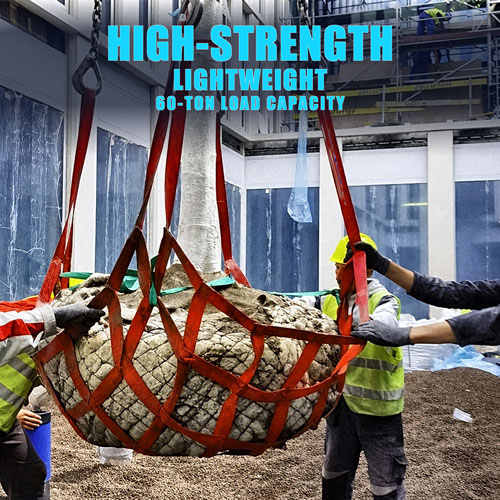
Cargo Webbing Net
-

Color changing nylon double buckle loop nylon braided rope
-

Two end buckle lifting rope, double buckle round lifting rope, double fork nylon lifting rope, non jointed nylon lifting rope
-

Emergency escape lifeline, fire escape rope, fire safety escape emergency rope, steel wire core fire rope

