 Language
 简体中文
简体中文
- On the 2018 National Day holiday, Lifet completed six 100 ton large tonnage lifting belts as a gift
- The role of suspension net in the transportation of goods turnover
- Cargo soft lifting net, lifting net, lifting net, lifting net, bag, climbing net
- Precautions for using Lifutiden elevator
- How to make circular lifting straps
Contact: Wang Lili
E-mail:18066002268
Phone:702461526@qq.com
Address: Lifute Industrial Park, Taizhou City, Jiangsu Province
Lifute Hoisting Co., Ltd. 18066002268 produces lifting belts, lifting nets, nylon ropes, soft ladders, steel wire rope rigging, paper ropes, safety belts, safety nets, lifting chains, steel coil hoists, crossbeam hoists, flat lifting belts, circular lifting belts, electric traction ropes, high-altitude safety belts, and anti fall safety nets
Hits: ℃
Release time:2026-09-23 09:27
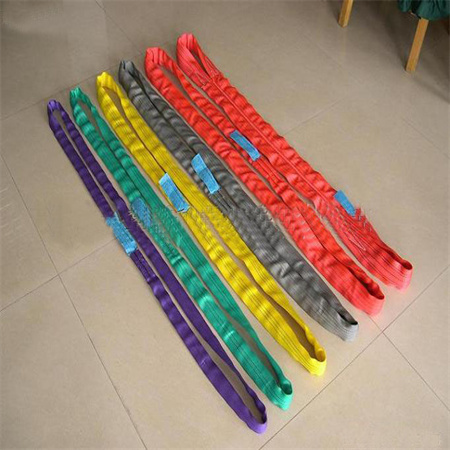
Lift Sling Rigging Co., Ltd manufacture DuPont flexible sling, DuPont flexible lifting strap, DuPont circular lifting strap, and the same three articles in high performance fibre.
DuPont flexible sling — What the Fibre Decides, and What It Does Not
The name of this article begins with the name of a fibre, and that is worth being precise about, because a fibre decides four things and does not decide the fifth. What it decides: the weight you carry to the load, the stretch you work with when the load is placed, the envelope of temperature, light and chemicals you may work in, and the price of the article. What it does not decide is the rated load, which comes from the construction, the configuration and the way the lift is made - the same six bases that set every other synthetic sling on this site. So a high performance article is bought by its specification and not by the name on the yarn. HS code 630790; telephone 18066002268.
1. The Three Names, and What Each One Describes
The page is listed under three names, and they are the same family seen from three sides: the material in front, the form in the middle, and the shape at the end. Reading them as one name is what causes most of the confusion about this article, so it is worth separating them before anything else.
| The name | What it describes | What it does not describe |
|---|---|---|
| A fibre name | The yarn the article is made from | The article's construction, its rated load or its testing |
| Flexible sling / flexible lifting strap | A soft, conformable article with no rigid member in the load path | Not the fibre, and not the capacity: other fibres are sold in the same form |
| Circular lifting strap | The form: a loop that wraps a load rather than a band that lies on it | Not the fibre, and not the rating, which is still per hitch and per angle |

2. What the Fibre Decides
A high performance fibre is bought for one of four reasons, and it is worth knowing which one applies before the article is specified, because the four pull in different directions and a single article cannot be best at all of them at once.
| What the fibre decides | Why it matters in practice | What to state in the enquiry |
|---|---|---|
| The weight of the article | At the heavy end the article's own mass decides how it is carried, dressed and stored | The capacity you need, so the article can be offered in the lightest construction that reaches it |
| The stretch under load | Elongation changes the headroom, the landing of the load and the way a multi-leg set shares out | Whether the lift is sensitive to the article stretching while the load is placed |
| The working envelope | Temperature, light and chemicals are properties of the fibre before they are properties of the article | The temperature range, the exposure to light and the chemicals present at the lift |
| The cost of the article | A high performance fibre is the reason the article costs what it costs | Whether the duty justifies the fibre, which is a question the buyer answers and not the supplier |
3. What the Fibre Does Not Decide
The rated load is not a property of the fibre. It is calculated from the material strength, the design factor, the type of hitch, the angle of loading, the diameter of curvature over which the article is used, and the efficiency of the fabrication - and only the first of those six is about the yarn. Four of the six belong to the way the lift is made and the way the article is made up, which is why two articles with the same fibre and the same nominal capacity are still not the same article.
| The assumption | What is actually true | Where it is written down |
|---|---|---|
| A branded fibre means a higher rating | The rating follows the construction, the configuration and the six bases | The label, which carries the rated capacities for each type of hitch |
| The strongest yarn makes the strongest sling | Making-up, the hitch and the angle can cost more than the yarn gains | The flexible lifting strap page reads a capacity sheet column by column |
| A high performance fibre removes the size limit | The limit moves, it does not disappear: the article still has to fit the lift | The 200 tonne endless round sling page takes the lift's envelope |
4. How to Buy a Branded-Fibre Sling
The practical rule is to buy the specification and not the name, and the reason is not scepticism about the fibre: it is that the name in front of a product is not a rating, and a quotation that answers with a name has not answered the question. What a buyer should ask for is the fibre type, the construction, the rated load per hitch and angle, the marking, and the test and the certificate that come with the article.
| Line to ask for | What a good answer contains | What a name-only answer looks like |
|---|---|---|
| The fibre | The type of yarn, and its specification as the maker quotes it | A brand, with no yarn or construction behind it |
| The construction | The form (loop, band, tube), the making-up, and the ends | An adjective, such as strong or heavy duty |
| The rating | A rated load for each type of hitch, and the figure for the angle in use | One number, with no hitch and no angle attached to it |
| The marking | Rated capacities per hitch and the type of synthetic material, affixed and legible | Nothing, or a colour, offered as though it were the figure |
| The test and the certificate | What was applied, to what figure, and which article the certificate names | Tested, with nothing named and nothing quoted |
One point of law and manners belongs with this, and it is the reason this section exists at all: the fibre brands named in this trade are the property of the companies that make the yarn, and this article is made by us from yarn bought from the fibre supply chain. The brand is used here and in the product name to describe the yarn, not to claim that the article is made or endorsed by that company. Where a customer needs the yarn's own certificate or a stated yarn specification in the order, we will say what can be provided with the article and what has to come from the yarn supplier.
5. Fibre, Weight and the Job of Carrying the Article
The first thing a high performance fibre buys is not strength in the abstract but mass that is not there. At the heavy end of the range an article that has to be carried to the load, dressed round it, folded and stored is a handling problem before it is a lifting problem, and the lighter construction is what makes a 60 metre lift possible for a rigging team rather than a machine. The point is not that the article becomes light; it is that the article stops being the constraint.
| The article | What the fibre changes about the work | Where it is noticed first |
|---|---|---|
| A single-leg lift at moderate capacity | Less mass to lift and carry, which is a convenience | In the store, and in how quickly the article is deployed |
| A long article, or one dressed round a large load | The article stops being the constraint on how it is rigged | In the plan, when the method is chosen |
| A multi-leg set | Less mass per leg, and a set that is easier to keep matched and stored together | In the inspection and in the store, for a set that has to stay together |
| A very large article | The handling of the article becomes a job with its own equipment and people | On site, at the moment the article is dressed round the load |
6. Fibre and Stretch, Which Is Not the Same as Conformity
A high performance fibre is also chosen for what it does not do: it stretches very little, which keeps the headroom predictable and the landing of a load under control. That property is different from the article's conformity - a soft article lies into a curve while a low-stretch article does not lengthen - and the two are confused constantly. The circular circular lifting belt page separates them.
| The property | What it is | Why a buyer cares |
|---|---|---|
| Conformity | The article bends and lies into the shape of the load | Contact: how the load is met, and whether the article can be dressed round it at all |
| Elongation | The article lengthens under load | Geometry: the headroom, the landing of the load, and how a set shares the load between its legs |
| The rated load | The figure for a hitch and an angle | Safety: the figure the lift is planned from, whatever the first two properties are |
7. The Envelope, Which Is a Property of the Fibre
Temperature, light, moisture and chemicals act on the fibre before they act on the article, so the envelope has to be settled with the fibre in mind and then reconciled with the published figures for the market the article is sold into. For polyester and polyamide the published guides give minus 40 to plus 100 degrees C, the guidance for synthetic slings gives 90 degrees C as the upper figure, and the regulation gives 180 degrees F for polyester and nylon; work to the lowest figure that applies. The WLL 150T polyester round sling page sets out the reconciliation. Chemistry follows the same logic: nylon is excluded where acids or phenolics are present, and polyester and polypropylene are excluded where caustics are present, and a high performance fibre has its own exclusions, which we will state for the yarn actually used rather than generalise.
| The condition | Why the fibre decides it | What to do about it |
|---|---|---|
| Heat and cold | Every fibre has a published range, and the figure belongs to the yarn rather than to the article | State the temperature at the lift, and work to the lowest published figure that applies |
| Light | Storage and exposure act on the fibre over time rather than at the lift | Store and handle per the fibre's own guidance, and include it in the inspection |
| Chemicals | Acids, caustics and solvents are excluded by fibre class, not by article class | State what is present; the fibre and any fittings are chosen accordingly |
| Abrasion and cutting | A high performance fibre is not automatically a cut-resistant one | Protect the article where the load's surface demands it, as with any sling |
8. Inspection, and the Same Rules as Any Other Sling
The schedule does not change because the fibre is exotic: each day before use, periodic inspections at intervals no greater than twelve months, and additional inspections where service conditions warrant, judged on the frequency of use, the severity of the service, the nature of the lifts and the experience of the service life. The conditions that remove a sling from service immediately include acid or caustic burns, melting or charring, snags, punctures, tears or cuts, broken or worn stitching and distortion of fittings. A repair, where one is allowed, is a manufacturer's repair followed by a proof test to twice the rated capacity, with the repair marked and the certificate retained; load-bearing splices are not repaired and temporary repairs are prohibited. The class page sets out where that leaves this family against the chain family, which can be repaired and re-tested where a synthetic article is retired.
9. What the Enquiry Has to Carry
| Line | What to state | What it fixes |
|---|---|---|
| 1 | The figure you need, in the way you will lift, per hitch and per angle | The rated load, which no fibre name can substitute for |
| 2 | Why the high performance fibre is wanted: mass, stretch, or the envelope | The construction and the fibre, and whether the duty justifies them |
| 3 | The temperature, the light exposure and the chemicals at the lift | The yarn, and any protection or exclusion that follows from it |
| 4 | The form: a loop, a band, or a tube with ends | Whether the article is a circular lifting strap, a flexible strap, or a cylindrical article |
| 5 | The weight your team can handle, and how the article is dressed | The construction, at the sizes where the article's own mass is a rigging decision |
| 6 | The yarn documentation you need, and the test and marking you want | What can be provided with the article, and what has to come from the yarn supplier |
10. Frequently Asked Questions
Q1: Is this article made by the company whose fibre name is on it?
Q2: Does the fibre name tell me the rated load?
Q3: What does a high performance fibre actually buy?
Q4: Can you provide the yarn's own certificate?
Q5: Is a high performance fibre also cut resistant?
Q6: What is the temperature range?
Q7: How much does the article stretch?
Q8: What is the difference between conformity and stretch?
Q9: How often is the article inspected?
Q10: Can a damaged article be repaired?
Contact
Send the six lines in section 9, and say which of the four reasons applies, because that is the one that decides whether the fibre is worth paying for in this lift. Articles are batch tested, marked per hitch and supplied with a certificate that names the article.
Telephone and WeChat — 18066002268
E-mail — 702461526@qq.com
Address — Lifute Industrial Park, Taizhou City, Jiangsu Province, China
- Previous:Large tonnage circular lifting belt, large tonnage flexible lifting belt, large tonnage flexible sling
- Next:Cylindrical sling
-
Drone Anti-collision Net
-
Extra Large Capacity Cargo Net
-
Cargo Webbing Net
-

Color changing nylon double buckle loop nylon braided rope
-

Two end buckle lifting rope, double buckle round lifting rope, double fork nylon lifting rope, non jointed nylon lifting rope
-

Emergency escape lifeline, fire escape rope, fire safety escape emergency rope, steel wire core fire rope

