 Language
 简体中文
简体中文
- On the 2018 National Day holiday, Lifet completed six 100 ton large tonnage lifting belts as a gift
- The role of suspension net in the transportation of goods turnover
- Cargo soft lifting net, lifting net, lifting net, lifting net, bag, climbing net
- Precautions for using Lifutiden elevator
- How to make circular lifting straps
Contact: Wang Lili
E-mail:18066002268
Phone:702461526@qq.com
Address: Lifute Industrial Park, Taizhou City, Jiangsu Province

Lifute Hoisting Co., Ltd. 18066002268 produces lifting belts, lifting nets, nylon ropes, soft ladders, steel wire rope rigging, paper ropes, safety belts, safety nets, lifting chains, steel coil hoists, crossbeam hoists, flat lifting belts, circular lifting belts, electric traction ropes, high-altitude safety belts, and anti fall safety nets
Hits: ℃
Release time:2026-09-23 09:28
Lift Sling Rigging Co., Ltd manufacture Large tonnage circular lifting belt, large tonnage flexible lifting belt, large tonnage flexible sling.
Large tonnage circular lifting belt — The Life of the Article When It Is Not Lifting
At the heavy end of the range an article is not bought for the hour it spends under load. It is bought for years of being received, identified, stored, issued, returned and moved between sites - and that is the part of the life that consumes almost all of it. It is also the part where a purchase is quietly lost: a large tonnage article that cannot be found in the store, cannot be identified on the floor, or cannot be tied to its certificate, is not a rated article in practice, whatever the label says. This page is about the article's life when it is not lifting. HS code 630790; telephone 18066002268.
1. What This Page Covers, and What It Does Not
The site carries several pages at the heavy end of the range, and they are deliberately divided: what the figure means and how it is read belongs to the capacity pages, what the lift itself demands of an article belongs to the lift page, what the fibre decides belongs to the fibre page, and how an article at the top of the range is verified belongs to the high tonnage circular sling page. None of them covers the store, and that is this page's subject.

| The question | Where it is answered | Why it matters to a store |
|---|---|---|
| What the article holds, and in which configuration | The capacity pages, and the article's own marking | The record needs the figure per hitch, not a single number |
| What the lift demands of the article | The 200 tonne endless round sling page | The article that is issued has to be the article the lift needs |
| What the fibre decides | The fibre page, for weight, stretch and the working envelope | The store has to hold it in the conditions the fibre tolerates |
| How an article at the top of the range is verified | The high tonnage circular sling page | The certificate that comes with the article is part of the record |
| How it is received, stored, issued and handed over | This page | This is where a rated article stops being usable in practice |
2. The Goods-In Check on the Day It Arrives
The check on arrival is short, and it is done once. Doing it once properly is what makes the rest of the article's life possible, because everything a store will ever know about the article is established here or not at all.
| Step | What to do | What it prevents |
|---|---|---|
| 1 | Unpack without cutting or dragging the article across the edges of the packing | Damage in the first five minutes, before the article has ever been used |
| 2 | Read the marking and confirm it is legible, with the rated capacities for each type of hitch and the type of synthetic material | An article that cannot lawfully be used, and cannot be identified later |
| 3 | Compare the article with the certificate: the figure tested, the specification, and the article the certificate names | A certificate that belongs to a different article, which is worse than no certificate |
| 4 | Measure the length and, where the article is supplied as a set, check that the members are matched | A set that does not share the load as the lift plan assumes |
| 5 | Examine the sleeve and the ends for cuts, snags, burns, embedded grit or distortion of any fitting | Accepting damage that will be discovered the first time the article is inspected in service |
| 6 | Record the article: identity, figure, material, length, certificate, date received and where it is kept | An article that exists physically and cannot be found on paper, or the reverse |
Two of those steps are worth a note. The marking is not decoration: slings without affixed and legible identification are not to be used at all, so an article whose marking is unreadable on arrival is a problem to raise with the supplier on the day, not a matter of opinion later. And the certificate has to name the article: a certificate that records a test of a specification, but does not tie itself to the article in the store, leaves the store holding an article of unknown provenance.
3. Identification: Tying the Certificate to the Article
A large article needs an identity that survives its first month of service, and the identity has to live in two places at once: on the article and in the record. Where the two drift apart, the store has an article it cannot justify using.
| In the record | On the article | Why both are needed |
|---|---|---|
| The article's own identity, and the item it was bought as | The marking, affixed and legible | One without the other cannot be reconciled at an inspection or an audit |
| The rated capacities for each type of hitch, and the material | The same, on the marking | The figure belongs to a hitch; a record with a single number is not usable for a lift plan |
| The test and the certificate it came with | Nothing on the article, by design | The certificate is the only place the test is recorded, so the link has to be written down |
| Where it is kept, and its condition at the last inspection | Nothing on the article | The store's own history is what turns an inspection regime into a record |
| What it has been used for, and by whom it was issued | Nothing on the article | The experience of the service life is one of the factors that decides the inspection interval |
4. Where a Large Article Lives
A synthetic article at this size is a piece of textile several metres long, weighing what it weighs, and a store either has a place for it or the article lives on the floor. The conditions are not exotic, and they are the same ones the fibre asks for: away from heat and direct light, away from chemicals, off the ground, and protected from the abrasion of being dragged over concrete.
| The condition | What the store should do | What goes wrong without it |
|---|---|---|
| Heat and direct light | Keep it away from radiant heat, welding areas and windows | Exposure acts on the fibre over time, and it is invisible until it is not |
| Chemicals and fumes | Keep it clear of acids, caustics, solvents and their fumes | Fibre classes have exclusions, and a store is where they are broken without anyone noticing |
| The floor | Rack it or hang it, off the ground and off the walkway | Grit embeds in the sleeve and abrades the article from the inside of its own cover |
| Dragging and edges | Lift and carry it, or use a pallet or a trolley; never drag it | The damage that ends an article's life is usually mechanical, and usually in the store |
| The mass of the article | Rack for the weight, not for the shelf space | An article that is awkward to get to is an article that gets used for the wrong job |
5. Issue and Return
The discipline that keeps a large article usable is simple and it is the same one the regulation asks for on the floor: the article is inspected before it is used, every day it is used. What the store adds is the part either side of that check.
| The moment | What happens | What it fixes |
|---|---|---|
| Before issue | Confirm the article matches the lift plan: the figure, the hitch, the length, the ends | An article issued for a lift it is not rated for |
| Before issue | Inspect it, as it will be inspected each day before use | Sending a damaged article to the floor |
| On issue | Record who has it and where it is going | An article that disappears into a site and cannot be found for the next inspection |
| On return | Inspect it again, and record its condition and anything that happened | Damage that becomes nobody's information, and then becomes a surprise |
| On return | Return it to its place, off the floor and stored as the fibre requires | The slow damage that storage conditions cause |
| At any point | Remove it from service for the published conditions: acid or caustic burns, melting or charring, snags, punctures, tears or cuts, broken or worn stitching, distortion of fittings | An article that is used after it should have stopped |
6. Transport and Handover Between Sites
A large article that moves between sites is a rated article that travels, and what travels with it matters as much as the article: the certificate, the identification and the record. Where the article is moved without them, the receiving site is holding an article it cannot justify using, and the check on arrival becomes a formality that establishes nothing.
| What travels | Why | What the receiving site does with it |
|---|---|---|
| The certificate | It is the only record of what was tested and which article was tested | Files it against the article's identity, and repeats the goods-in check |
| The article's identity | The marking on the article and the identity in the record have to agree at both ends | Confirms the marking is legible, and that the two still match |
| The condition on dispatch | Damage in transit is the receiving site's problem unless it was recorded before | Compares what arrived with what was dispatched, and records any difference |
| The set, if it is a set | Members of a set have to stay together, or the set stops being a set | Keeps the members together, and checks that none has been substituted |
7. The Retirement Route, Decided Before It Is Needed
At this size an article is expensive enough that the question of what happens when it is damaged should be answered before the damage, because the answer involves a facility, a fixture and a date. The rules are short: load-bearing splices are not repaired and damaged webbing is not repaired; temporary repairs are prohibited; a repair by the manufacturer or an equivalent entity is followed by a proof test to twice the rated capacity, with the repair marked to identify who made it and the certificate retained and available for examination. The high tonnage circular sling page sets out why the proof test is a scheduling matter at the top of the range, and the class page, heavy duty round sling, sets out where this family stands against the chain family, which can be repaired and re-tested where a synthetic article is retired.
| The store's question | The answer to have in hand before the damage | Why it belongs in the store, not in the workshop |
|---|---|---|
| Who assesses a damaged article | The manufacturer or an equivalent entity, and nobody else | An article assessed on site by whoever is available is an article with no route back |
| What a repair involves | A proof test to twice the rated capacity, at a facility that can apply it | The lead time is set by the test, not by the repair |
| What has to be kept | The proof test certificate, retained and available for examination | The document is the difference between an article back in service and an article written off |
| What cannot come back | An article with a damaged load-bearing splice or damaged webbing, and any article repaired in a temporary manner | Knowing this in advance stops a store from hoping |
8. What the Order Has to Carry for a Store-Friendly Article
| Line | What to state | What it fixes |
|---|---|---|
| 1 | The identification you want, and the identity scheme it has to fit | A marking that reconciles with your record on the day it arrives |
| 2 | The figure per hitch, and the configuration it is bought for | A record that carries a usable figure rather than one number |
| 3 | The length and the ends, and whether it is a set | Whether the article can be matched, stored and issued as one item |
| 4 | The storage and transport conditions it will see | The cover, the protection and the packing |
| 5 | The documents you want with it, and how many copies | The certificate reaching the store, not stopping in an office |
| 6 | The contact for a damage assessment, agreed in advance | A route back into service rather than a write-off |
9. Frequently Asked Questions
Q1: What should I check when a large sling arrives?
Q2: Why does the marking matter so much?
Q3: How should a large article be stored?
Q4: Is a colour enough for identification in the store?
Q5: How often is the article inspected?
Q6: What ends the article's service?
Q7: Can a damaged article be repaired?
Q8: What happens if the certificate is lost?
Q9: Should a set be stored together?
Q10: Can the article travel between sites?
Contact
Send the six lines in section 8, and tell us how the article will be stored and how it will be moved, because at this size those two answers decide the cover, the packing and what documentation reaches the store. Articles are batch tested, marked per hitch and supplied with a certificate that names the article.
Telephone and WeChat — 18066002268
E-mail — 702461526@qq.com
Address — Lifute Industrial Park, Taizhou City, Jiangsu Province, China
- Previous:Circular lifting belt, flexible sling, flexible circular lifting belt
- Next:DuPont flexible sling, DuPont flexible lifting strap, DuPont
-
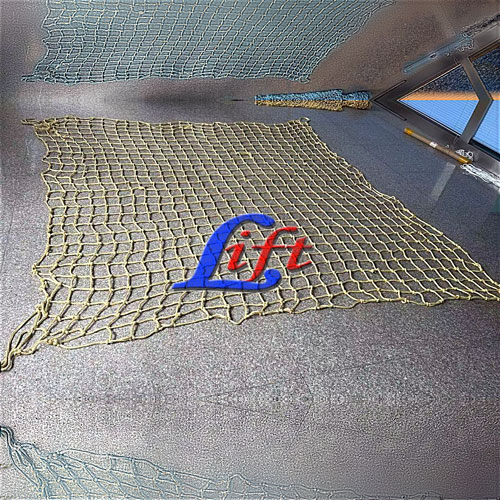
Drone Anti-collision Net
-
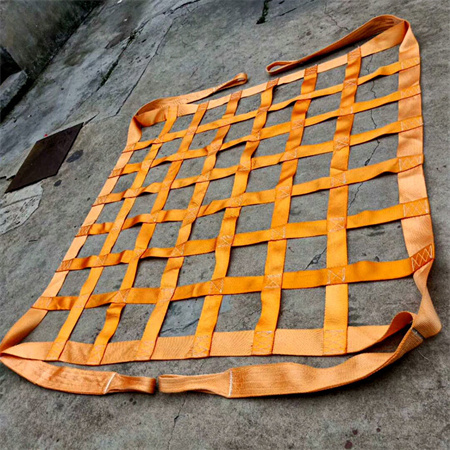
Extra Large Capacity Cargo Net
-
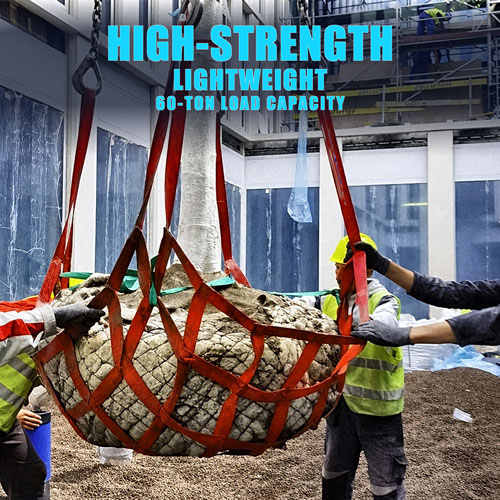
Cargo Webbing Net
-

Color changing nylon double buckle loop nylon braided rope
-

Two end buckle lifting rope, double buckle round lifting rope, double fork nylon lifting rope, non jointed nylon lifting rope
-

Emergency escape lifeline, fire escape rope, fire safety escape emergency rope, steel wire core fire rope

