 Language
 简体中文
简体中文
- On the 2018 National Day holiday, Lifet completed six 100 ton large tonnage lifting belts as a gift
- The role of suspension net in the transportation of goods turnover
- Cargo soft lifting net, lifting net, lifting net, lifting net, bag, climbing net
- Precautions for using Lifutiden elevator
- How to make circular lifting straps
Contact: Wang Lili
E-mail:18066002268
Phone:702461526@qq.com
Address: Lifute Industrial Park, Taizhou City, Jiangsu Province
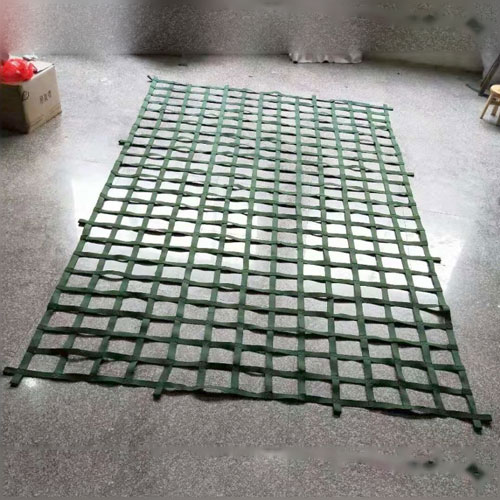
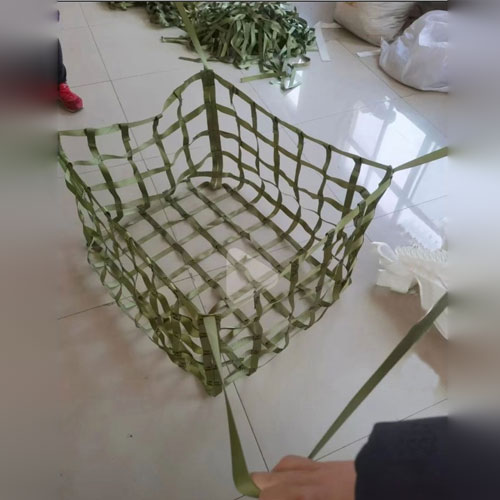
Lift Sling Rigging Co., Ltd manufacture Heavy Duty Military Cargo Netting.Heavy Duty Military Cargo Netting from Lift Sling Rigging Co., Ltd. The two halves of that name stand in opposite positions on this site: heavy duty is an old word, used ninety-eight times across thirty pages of the catalogue, while military appears on no other product page of the hundred and the longer noun in the name appears on exactly one. This page explains what that means for an order. Heavy duty is treated honestly as a description rather than a value, because it cannot be converted into a figure by argument. Military is shown to add a buyer rather than an adjective: an institution buying against a document and a drawing, in lots, with a prescribed acceptance step, a prescribed mark and a fixed identity, every one of which is a word this site has never written. Section 9 is new in this version and is the technical-parameter section: ten parameters with the party who fixes each one and the thing each is checked against on delivery, the three things a drawing does not carry, and what the photographs on the page settle and cannot settle. The rest of the page sets out the end uses that have no commercial equivalent here, the collision between a finish that is not meant to be noticed and this site‘s habit of using colour as information, and the lines an enquiry has to carry. It names no document number and claims no figure, and says why.
Hits: ℃
Release time:2026-09-28 09:08
Lift Sling Rigging Co., Ltd manufactures Heavy Duty Military Cargo Netting — four words in which the two halves stand in opposite positions on this site. Heavy duty is an old word here: it is used ninety-eight times across thirty pages of the catalogue and it has been used for years. Military is a new word: it appears on no other product page of the hundred, and the longer noun in the name appe ars on exactly one other page. That asymmetry is the subject of this page, because the difficulty in this product name is not the part that sounds strongest.
Heavy Duty Military Cargo Netting
The line that came with this product reads: Heavy Duty Military Cargo Netting, Military Cargo Lifting Net, Military Grade High-Strength Cargo Lifting Net, Military Cargo Net. Four names, and every one of them leans on the same two words. So the first useful thing this page can do is say honestly what those two words are worth.
1. One Old Word and One New One
The two halves of the name have almost nothing in common in terms of how much support they get from the rest of this site.
| The word | What this site's own pages measure | What that means for the order |
|---|---|---|
| heavy duty | Used ninety-eight times across thirty pages, twenty-nine of them other pages. One lifting sling page carries twenty-nine of th ose uses by itself, and two round sling pages carry most of the rest. | The phrase is established as a description. It is not a value, and the pages that use it are pages where the value is stated s omewhere else. |
| netting | Occurs on exactly one other page of the hundred, the cargo webbing net page, which is the page for the structure and uses it f ifteen times. The shorter word net occurs on eight other pages, ninety times in total, and seventy-eight of those are again that one page. | The article's own noun is new to this catalogue. That is worth knowing before assuming that a reader arriving from a search wi ll find the rest of the page written in his words. |
| military | Occurs on no other product page of the hundred. Neither do the phrases an institution builds on the word: the terms for the do cument it buys against, for the name and code it identifies an article by, and for the procedure it buys through. None of them appears anywhere in the hundred product pages. | This is the half of the name that carries all the difficulty, and it is the half the site has never written about. The rest of this page is about that word. |
There is a simple conclusion, and it is the reason this page exists. The word heavy duty tells a reader nothing he could not have guessed; the word military changes who is buying, what he will ask for, and how the order will be accepted. Only the second one needs explaining.
2. Heavy Duty Is Not a Number, and This Page Will Not Pretend It Is
Heavy duty is used on this site as a description rather than as a value, and it would be dishonest for a page about a heavy duty product to leave that unsaid. On the pages that use the phrase most, the number a buyer actually needs is stated separately, in the figures rather than in the title.
| What the phrase does | What it does not do |
|---|---|
| It tells a reader that the article sits at the stronger end of the range its maker offers, and that the maker expects it to be used where ordinary light netting would be treated as disposable. | It does not say how much anything will hold. Two suppliers can both write heavy duty and mean different things by it, and neit her is lying. |
| It is a fair summary when the figure is stated alongside it, which is how the site's own pages use it. | It cannot be converted into a figure by argument. That is why it is treated on this site as a description and why the order ha s to carry the number separately. |
So the practical instruction is short. If heavy duty is the only strength word in an enquiry, the reply cannot be a quotation; it can only be a question. The question is the list in Section 10.
3. What Military Adds Is a Buyer, Not an Adjective
The word military does not make the netting stronger. What it does is change the shape of the transaction, and on this site every word that describes that change is absent. None of these appear any where in the hundred product pages.
| The institution's word | What it changes |
|---|---|
| the specification | The buyer is not choosing from a catalogue, he is buying against a document. The document, not the page, decides what is accep table, and a maker who has not read it cannot quote. |
| the drawing | Size, mesh, construction and attachment points come from a drawing rather than from a paragraph. On this site the word drawing is used, but about other articles, where it means a picture supplied by the client. |
| the name and the code an institution identifies an article by | An institution identifies an article by a name and a code that are fixed, so that two depots ordering the same thing receive t he same thing. This site's own use of the word mark is about a different job: identifying an article after the paperwork has been filed. |
| the procedure, and the contract | The purchase is made through a procedure with dates, lot sizes, acceptance steps and paperwork, rather than through a shop. Th e procedure, not the buyer's preference, sets what the maker has to be able to show. |

4. Two Documents, and Neither One Is on This Page
A page of this kind should be clear about what it can and cannot supply, and there is one thing it deliberately does not do: it does not name the document a buyer of this kind works to. Not out of caution about the subject, but because inventing a document number is the fastest way to make a whole quotation worthless.
| The document | Who supplies it | What happens if it is missing |
|---|---|---|
| The specification the netting must meet | The buyer, or the authority he is buying under. It is his document and it is identified by its own number, which is why no pag e can guess it. | The enquiry can still be answered as a general cargo netting enquiry, but the answer will not be an offer against a specificat ion, and it will not be usable in an institutional purchase. |
| The drawing that fixes the article | The same buyer. Where a specification tells a maker what the netting must do, a drawing tells him what shape to make. | The size, the mesh and the attachment points become assumptions. Three suppliers reading the same paragraph will produce three different nets. |
| What this page provides | The list of lines an enquiry has to carry so that the answer can be checked against it, which is Section 10. | Nothing is lost: the list is written so that a specification and a drawing can be attached to it rather than replacing it. |
5. Bought by the Lot, Not by the Piece
An institutional purchase is made in quantities rather than in units, and that changes what a maker has to be able to show. It is worth separating this from the way the word batch is already used o n this site, where it belongs to disposable slings and means the run a single-use article came from.
| The word | How this site already uses it | What it means in this order |
|---|---|---|
| batch | Used more than two hundred times across sixty-four pages, mostly on pages about single-use slings, where it describes a produc tion run that must not be mixed. | The unit of acceptance. Whether the whole lot is inspected or a sample of it is a line of the specification, and it decides ho w long the delivery takes before the maker has even started. |
| conformity and the test certificate | Both words are used on this site, on other products, and they describe paperwork that accompanies an article. | Which document is required, and whether it is per piece, per lot or per delivery. An institution will normally say; if it does not, asking is cheaper than discovering it at delivery. |
| marking | Used across the catalogue, and the pages that discuss it treat the mark as the way an article is identified once it has left t he paperwork. | On a military order the mark is often prescribed down to its content and position. A mark that is merely reasonable is not the same as a mark that is specified. |
6. Some End Uses Have No Commercial Equivalent Here
One more thing separates this product's name from the rest of the catalogue, and it is that the end uses a buyer may have in mind are not described anywhere on this site. None of the following word s appear in any of the hundred product pages.
| The kind of use | Why the page cannot answer for it |
|---|---|
| Loads carried under an aircraft | This site has never written about that kind of carriage, and the word for it does not occur. The loads, the speeds and the con sequences of a failure are not the same as for a net that covers a pallet, and a figure quoted for one is not a statement about the other. |
| Loads dropped from an aircraft | The same word is also absent, and the reason is stronger: an article used that way has to survive an event rather than merely hold a weight still, which is a different requirement from anything on this page. |
| Nets laid down as a surface, or used as a barrier | The vocabulary for a surface that is laid down to be landed on is absent from this site, and the loads involved here are appli ed in a direction a cargo net is not built for. |
| The honest position | If any of these is the real requirement, it has to be stated in the enquiry, and the answer will be a question about the docum ent that governs that use rather than a figure lifted from this page. |

7. Visibility: the Words for It Are Also Absent
A requirement that is common enough to be assumed in this kind of purchase turns out to have no vocabulary on this site at all. None of the words for a finish that is not meant to be noticed appear s on any of the hundred product pages, in any spelling or construction.
| The requirement | What has to be written, and what it collides with |
|---|---|
| A finish that is not meant to be noticed | The colour has to be named against a sample rather than described in words, because colour names do not travel reliably betwee n languages or between screens. The requirement has to say which surfaces it applies to, since hardware is usually bought in and left in its own finish. |
| The collision to look for | Elsewhere on this site colour is used as information, on articles where a colour is read to identify what is being handled. A finish chosen so that nothing stands out works against that habit, and an enquiry has to say which of the two matters more. |
| If neither is stated | The maker will supply the colour he normally supplies, and the objection will arrive after delivery. This is one of the cheape st lines on the order and one of the most expensive to get wrong late. |
8. Netting and Net: Where the Rest of the Subject Is Argued
The noun in this product's name is not the noun this catalogue uses, and the article itself has a structural argument that belongs to a different page. This section says which part is where, so tha t nothing is argued twice and nothing is left out.
| The part of the subject | Where it is argued | What this page takes as given |
|---|---|---|
| That a net is not a strap: where the force goes, and why the nodes and the border are the two pl aces that matter | The cargo webbing net page of this site, which is the page for the stru cture itself. | The whole of it. This page adds the buyer and the documents and does not repeat the structure. |
| The boundary between an article that holds a load and one that arrests a person | The mining reflective lifting belt page. | The boundary itself. Nothing on this page is a statement about catching a person. |
| How the fibres behave, and what flame resistance does and does not mean | The nylon woven flat sling, polypropylene flat sling and flame resistant aramid webbing sl ing belt pages. | The material behaviour. This page does not name a fibre and does not claim a flame performance. |
| What the site itself means when it writes heavy duty | The heavy duty lifting sling page, where the phrase is used most. | The observation in Section 2: that the phrase is a description and the figure is stated separately. |
| Colour used as information rather than as a finish | The one-way sling and single use endless webbing sling pages, where the language of runs and identification is already in use. | The habit. Section 7 is about the one case where it collides with a finish that is not meant to be noticed. |

9. Technical Parameters: What the Drawing Fixes, What the Maker Chooses, and What Is Checked on Delivery
Section 8 said which parts of this subject are argued on other pages. What is left is the part only a page about this kind of purchase can supply: the parameters themselves, who fixes each one, and what the goods are checked against when they arrive. On a catalogue article the maker's own table is the specification. On an order of this kind it is not. The values arrive in the buyer's document, and the maker's task is to answer them in the same order and in the same unit, because an answer that is correct and in a different order still has to be reassembled by whoever reads it.
| Parameter | Who fixes it | How it appears in the answer | Checked on delivery against |
|---|---|---|---|
| The finished size, length and width | The buyer, from the drawing | As drawn, length first, with the unit and the condition of measurement stated | The drawing, and the buyer's own measurement of the finished article |
| The mesh, given as clear opening and as spacing | The buyer, from the document or the drawing | Both figures, because they differ by exactly the width of one member | A gauge on the finished article, at more than one place on it |
| The member: its tape width, and what it is cut from | Either. The drawing fixes the width; the material usually follows from the buyer's document | The width in millimetres, and the material named as the buyer's document names it | The label, and a retained sample where the document calls for one |
| The construction at the crossing | The maker, unless the drawing shows it | One word: knotted, or knotless | Looking along the members rather than only at the face of the net |
| The border, and whether it differs from the mesh | Usually the maker | The border's material and width, and whether it is the same as the member | The same edge the attachment points sit on |
| The attachment points: how many, and where | The buyer, from the drawing, because they decide how the article is lifted | Counted and positioned against the drawing rather than described in words | The drawing, before the article is first used |
| The finish, and which surfaces it covers | The buyer, and only against a sample | The colour named against the sample, and the surfaces it applies to | The sample itself, in daylight and not on a screen |
| The mark: its content and its position | The buyer, and often prescribed down to both | Quoted as specified, not as reasonable | Every unit, not a sample of units |
| The lot, and the basis of acceptance | The buyer's document | The quantity as a lot, and whether acceptance is by lot or by piece | The delivery documents |
| The record that travels with the lot | The buyer's document | Which documents, and whether each is per piece, per lot or per delivery | The same documents, before the lot is accepted |
Read the last column again, because it is the one a catalogue page never has to supply and the one that decides whether a lot is accepted. Every other column has an answer that can be argued with. That column does not: either the article measured against the gauge, the sample and the drawing, or it did not.
| Three things a drawing does not carry | Why the drawing does not carry it | What has to be added to the order |
|---|---|---|
| The tolerance on the finished size | A drawing states a nominal size. How far a finished article may differ from it is a convention o f the drawing office rather than a property of the net, so the drawing can be complete and still silent about it. | The tolerance, in the buyer's own terms, or an explicit statement that the nominal size is itsel f the acceptance size. Either is workable; leaving it unstated is not, because two suppliers will read a silent drawing differently. |
| Which of the two mesh figures is meant | A grid drawn on paper does not say whether the number beside it is the clear opening or the spac ing between members, and both conventions are in use in the same industry. | Both figures, which settles it without argument, or one figure with the convention stated alongs ide it. |
| The condition the article is measured in | A net laid flat and unstressed and the same net hanging under its own weight are not the same si ze, and the difference grows with the size of the article rather than staying constant. | The condition, written next to the size. A size without a condition cannot be checked, and an ar ticle that cannot be checked will be checked against whatever the person receiving it decides. |

The photographs on this page were taken of this maker's own work, and it is worth being exact about how far they go, because a photograph is the most common substitute for a parameter list and it i s not one.
| What the photograph shows | It settles | It cannot settle |
|---|---|---|
| Flat tape members crossing in a plain weave | That this is a webbing article and not a rope one, and that the crossing is made without a knot< /td> | The tape width, and therefore the opening that goes with it |
| Openings that are square and regular across the article | That the mesh is square rather than diamond, and that it is uniform | Any dimension at all. There is no scale in the picture, and tape width and opening look alike at a distance |
| A dark colour present in the tape itself rather than lying on top of it | That the finish belongs to the member and is not a coating sitting on a light surface | Whether the colour matches the buyer's sample, which is the only thing that settles that require ment |
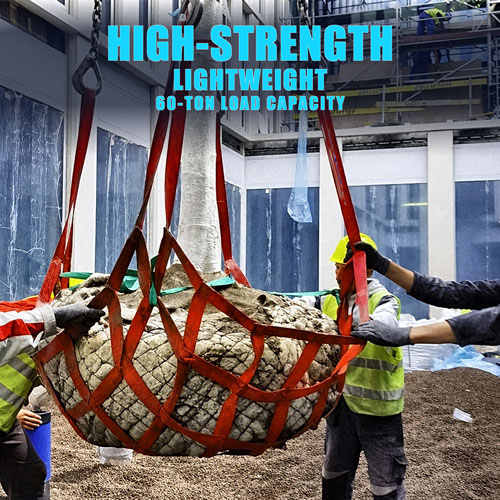
| Short tabs of flat tape standing proud of the outermost member at intervals | That tabs exist along the edge, that they are made of the same tape, and that they are part of t he build rather than left over | How many there are, whether each is a free end or a folded loop, and what clear size it offers |
| The same construction laid flat and formed into a three dimensional bag | That the maker builds this construction in more than one configuration | Which configuration the drawing calls for, and whether the two are made to related sizes |
| A net photographed with a load in it | That the article is used as a container as well as a cover | Anything about the load. A photograph of a lifted load is not a statement about it |
The list in this section and the list in the next one are the same list in two different orders. Here the parameters are grouped by who fixes them, which is the order in which a maker works. Sectio n 10 has them in the order in which they decide whether the rest can be answered at all, which is the order in which an enquiry should be written.
10. What the Order Has to Name
Written in the order in which the lines decide whether the rest can be answered. The first four are the ones the product name makes it easy to leave out, because a name that begins with heavy duty military sounds as though it has already answered them.
| # | The line | Why it has to be there |
|---|---|---|
| 1 | The specification the netting must meet, by its own identifier, attached rather than described | It is the document that decides acceptance. Without it the reply can only be a general offer, not an offer against a requireme nt. |
| 2 | The drawing, with size, mesh and attachment points fixed on it | A paragraph about a net is an assumption shared by fewer people than it appears to be. The drawing is the only thing that remo ves it. |
| 3 | The real end use, named, even when it seems obvious | Section 6 lists uses this site has never written about. If one of them is the real requirement, the whole answer changes. |
| 4 | The number that heavy duty was standing in for | The phrase is a description on this site and it is not convertible into a figure. The figure belongs in the order. |
| 5 | Quantity as a lot, and whether acceptance is by lot or by piece | It decides both the price and the calendar, and it is the line most often left to the last exchange. |
| 6 | The documents required: which one, per piece or per lot | Paperwork is part of the delivery, not an extra, and a certificate promised for the wrong unit is the same as none. |
| 7 | The marking: content, position, and whether it is prescribed | An institution identifies an article by its mark once the paperwork has been filed. A reasonable mark is not a substitute for the specified one. |
| 8 | The finish, against a sample, and which surfaces it covers | Section 7. It is cheap to state and expensive to correct, and it collides with the site's habit of using colour as information . |
11. What This Page Has Deliberately Not Said
A page about a product whose name carries this much weight should be explicit about its own silences. Each of the following is an absence by choice rather than an oversight, and each one is a line a buyer can ask for instead.
| Not said | Why, and what to ask for instead |
|---|---|
| No specification number | A number quoted from a web page rather than from the buyer's own document is the fastest way to an unusable offer. Ask the buy er for the document, and it will carry its own identifier. |
| No fibre named | The fibre is not named in the product name, and the behaviour of each fibre is argued on the pages listed in Section 8. Naming one here would be a decision taken by the wrong party. |
| No figure claimed for the article | The name states no size and no mesh, and a figure without those two is not a specification. The working figure belongs in the reply to a complete enquiry. |
| No claim about any end use | Nothing on this page is a statement that the netting may be used for a particular task, and Section 6 explains why a page shou ld not make that statement on the buyer's behalf. |
| No comparison with a named competitor's article | The useful comparison is between two documents, not between two brochures, and that comparison can only be made once the buyer 's specification is on the table. |

Frequently Asked Questions
Does military mean the netting is stronger?
No. The word describes the purchase rather than the netting. What changes is that the buyer is an institution working to a specification and a drawing, in lots, with prescribed acceptance and marki ng, and that some of the end uses he has in mind have no commercial equivalent here. The strength of the article comes from its size, its mesh and its construction, not from the adjective.
Can you quote against our specification?
Yes, if the specification is attached, because it carries its own identifier and it is the document that decides acceptance. This page deliberately names no specification number. Without the docume nt an enquiry can still be answered as a general cargo netting enquiry, but the answer will not be an offer against a requirement.
What does heavy duty mean in figures?
On this site the phrase is a description and not a value; it is used on thirty pages, and on those pages the number a buyer needs is stated separately. It cannot be converted into a figure by argum ent, so the figure has to come from the order.
Do you supply against a drawing?
The drawing is normally the buyer's, and it is what fixes the size, the mesh and the attachment points. Where a specification says what the netting must do, a drawing says what shape to make, and a reply that is not built on one is built on assumptions that will differ between suppliers.
How is a lot accepted?
That is a line of the specification rather than a habit of the maker: whether the whole lot is inspected or a sample of it is, and which documents come per piece, per lot or per delivery. Asking ea rly is cheaper than discovering it at delivery, because acceptance decides the calendar as well as the price.
Can the netting be used for loads carried under an aircraft?
That has to be stated as the requirement, and then answered against the document that governs it. This site has never written about that kind of carriage, the word for it does not appear on any of its pages, and a figure quoted for covering a pallet is not a statement about it.
Can the netting be used for dropping loads?
The same answer, for a stronger reason. An article used that way has to survive an event rather than hold a weight still, which is a different requirement from anything this page describes. Name th e use in the enquiry and the question becomes answerable; leave it implied and it cannot be.
Which fibre is it made from?
The product name does not name a fibre, and this page does not choose one, because the choice follows from the specification and from the environment rather than from the name. The behaviour of eac h fibre and what flame resistance does and does not mean are argued on the pages listed in Section 8.
Can it be supplied in a finish that is not meant to be noticed?
A finish is a requirement and it has to be stated against a sample rather than described in words, because colour names do not travel reliably. It also has to say which surfaces it covers, since fi ttings are usually bought in and kept in their own finish. Ask for the finish and the sample together.
How should the mark on the netting read?
On an institutional order the mark is often prescribed down to its content and position, so the question is not what would be reasonable but what is specified. If the buyer has not said, that is wo rth asking before production rather than after delivery.
What should I send with an enquiry?
The specification with its identifier, the drawing, the real end use named, the figure that heavy duty was standing in for, the quantity as a lot and how acceptance is decided, which documents are required and per what unit, the marking, and the finish against a sample. The first four decide whether the rest can be answered.
Contact Lift Sling Rigging Co., Ltd
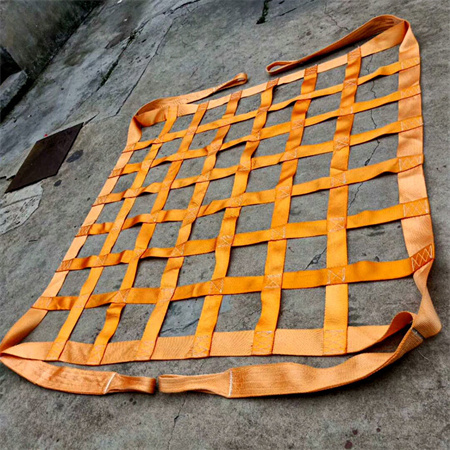
Lift Sling Rigging Co., Ltd, Lifute Industrial Park, Taizhou City, Jiangsu Province, China. Telephone and WeChat: 18066002268. E-mail: 702461526@qq.com. HS code 630790. Send the specification and t he drawing with the enquiry, name the real end use, and state the number that heavy duty was standing in for, and the reply can be checked against this page line by line.
Where the rest of this subject is argued, on this site: cargo webbing net, mining r eflective lifting belt, nylon woven flat sling, poly propylene flat sling, flame resistant aramid webbing sling belt, heavy duty lifting sling, one-way sling, single use endless webbing sling.
- Previous:Extra Large Capacity Cargo Net
- Next:Cargo Webbing Net
-
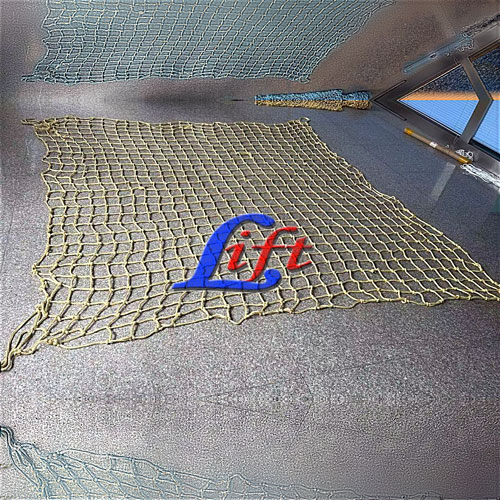
Drone Anti-collision Net
-

Extra Large Capacity Cargo Net
-
Cargo Webbing Net
-

Color changing nylon double buckle loop nylon braided rope
-

Two end buckle lifting rope, double buckle round lifting rope, double fork nylon lifting rope, non jointed nylon lifting rope
-

Emergency escape lifeline, fire escape rope, fire safety escape emergency rope, steel wire core fire rope

