 Language
 简体中文
简体中文
- On the 2018 National Day holiday, Lifet completed six 100 ton large tonnage lifting belts as a gift
- The role of suspension net in the transportation of goods turnover
- Cargo soft lifting net, lifting net, lifting net, lifting net, bag, climbing net
- Precautions for using Lifutiden elevator
- How to make circular lifting straps
Contact: Wang Lili
E-mail:18066002268
Phone:702461526@qq.com
Address: Lifute Industrial Park, Taizhou City, Jiangsu Province
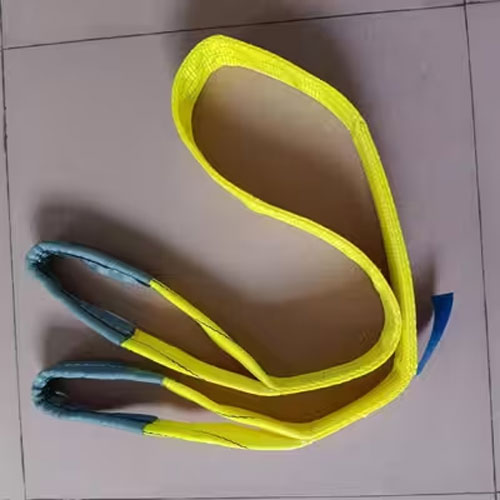
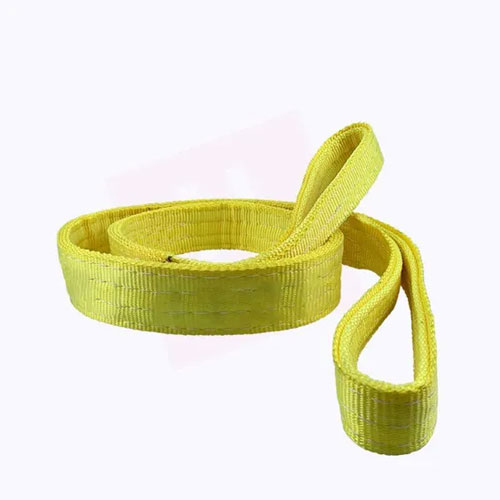
Lift Sling Rigging Co., Ltd manufactures high‑performance 3Ton Webbing Sling, a practical polyester lifting accessory commonly used in construction, machinery relocation, warehouse logistics and general industrial rigging operations. Crafted from premium high‑tenacity polyester webbing, this 3 ton webbing sling delivers excellent tensile strength, abrasion resistance and flexible load‑bearing capacity for daily heavy‑duty hoisting tasks.Its soft woven surface shields painted, polished and fragile workpieces from scratches and dents, bringing better cargo protection than metal lifting chains. Various standard lengths are in stock, while custom sizes are supported to meet different onsite application scenarios. Every 3Ton Webbing Sling undergoes strict load testing and complies with international lifting safety specifications. Lightweight, easy to carry, operate and store, it fits workshops, freight yards and engineering sites. Obtain dependable factory‑direct 3 ton webbing slings from Lift Sling Rigging Co., Ltd for your material handling and lifting projects.
Hits: ℃
Release time:2026-09-24 09:38
Lift Sling Rigging Co., Ltd manufacture 3Ton Webbing Sling,3Ton Lifting Sling,3 Ton Flat Webbing Sling,WLL 3 Ton Polyester Webbing Slings, 3000kg Flat Webbing Sling.
3Ton Webbing Sling — The Regime That Keeps the Rating True
A webbing sling carries a number and no date. The number is on the label, in kilograms; the date does not exist, because nothing about the article expires. What stands between the two is a regime: checks by two different people at two different cadences, a competent person who is not the person who maintains it, a written report, and a record that has to be producible on request. This page is about that regime, because it is the only part of a lifting accessory's life that this site does not already describe elsewhere. HS code 630790; telephone 18066002268.
1. The Capacity Is Not a Property of the Article Alone
A label that says 3 tonnes is a statement about an article in the condition in which it left the works. Nothing in the article keeps it true: a webbing sling has no mechanism, no lubrication, no moving part that can be serviced back to a known state. Its capacity survives because somebody looks at it, on a schedule, and writes down what they found. That is what a regime is, and it is the reason the paperwork around a textile accessory is not administration but part of the safety case.

The distinction matters commercially as well as legally. Two suppliers can offer an article with the same capacity, the same band and the same marking, and only one of them supplies what a regime needs: a marking that states the capacities per hitch and the material, a declaration or certificate that identifies the article, care instructions, and a route back to the maker when the article is repaired. The rest of this page takes each of those in turn.
2. There Is No Expiry Date
Textile lifting accessories are not date-limited. A sling does not become unusable because a period has elapsed; it becomes unusable because of its condition, and condition is affected by use, environment and storage rather than by the calendar. That single fact is why the regime exists: if the article expired on a date, an inspection regime would be unnecessary.
| The question | The answer that surprises people | What it means in practice |
|---|---|---|
| Does the sling have a shelf life? | No. No date of manufacture becomes a deadline, and no maker can put an expiry date on one | The date of manufacture matters for the record and for identifying a batch, not for the decision to keep using it |
| Does an unused sling stay new? | Not necessarily. Storage matters: light, moisture, chemicals in the same store and long periods out of use all bear on condition | A sling that has been out of use for a long period is one of the triggers for examination rather than a reason to assume it is sound |
| Can the interval be stretched because the sling is rarely used? | The interval belongs to the regime and applies whether or not the article was used | Where use is light, an examination scheme drawn up by a competent person is the mechanism for a different interval - not a decision taken on the shop floor |
| What does end the life? | Condition, one event at a time | The conditions that remove an article from service are the subject of the flat webbing sling page, and they are applied by the person examining it |
3. Two Checks, Two People
The regime has two levels, and they are done by different people for different reasons. Collapsing them into one - either by treating the daily check as an examination or by treating the examination as coverage for daily use - is the most common way a regime fails in practice.
| The pre-use check | The thorough examination | |
|---|---|---|
| Who does it | The user, before each use, on the instruction of the employer | A competent person, whose competence has to be appropriate to the equipment |
| How often | Each day before use, and additionally where service conditions warrant it | At the interval the regime sets, and after any exceptional circumstance |
| What it looks for | Anything that has changed since the last time the article was seen: cuts, burns, abrasion, chemical contact, damaged stitching, a marking that has become unreadable | A systematic and detailed examination of the accessory and its safety-critical parts, including likely deterioration with time |
| What it produces | A decision: use, or take it out of service | A written report, which is a legal document rather than a note |
| What it cannot do | Certify condition; a user is not being asked to judge a defect's significance | Replace the pre-use check; an examination covers the moment it was carried out, not the days after |
| The result for an accessory | Damaged or defective articles are removed from service immediately | A defect that is or could become a danger is reported, and the article is not used until it is remedied |
One consequence of the split is worth stating plainly, because it is widely misread: for a lifting accessory such as a sling, the routine between examinations is the pre-use check. Formal interim inspections are not normally required, provided the pre-use checks are actually made and the article undergoes its standard examination. A regime that adds paperwork between the two ends is not thereby safer than one that does the pre-use check properly.
4. The Interval Comes From the Regime, Not From the Sling
The interval is a property of the regime the site operates, and the figures below are the defaults that apply where that regime is the United Kingdom's Lifting Operations and Lifting Equipment Regulations, which set out the intervals for thorough examination unless an examination scheme specifies others.
| The regime | The interval | Applies to | Where the figure comes from |
|---|---|---|---|
| LOLER default | 6 months | All lifting accessories - which is what a sling is | The regulations' specified interval for accessories |
| LOLER default | 12 months | Other lifting equipment, where it is not an accessory | The same set of specified intervals |
| An examination scheme | Whatever the scheme specifies, for the parts and tests it names | Equipment covered by a scheme drawn up by a competent person | The scheme, which has to be producible in writing if it is asked for |
| Before first use | Once, at the start | Equipment without a recent declaration of conformity | The duty to examine before the first use unless a declaration less than a year old covers it |
| United States practice | Each day before use, plus additional inspections where service conditions warrant | Synthetic web slings and their attachments | The daily-inspection duty in the sling standard |
| Where wear is fast | Shorter than any of the above | Equipment exposed to conditions that cause deterioration | The duty to examine regularly while in service where deterioration is likely |
The default matters because it is lower than most people expect. The common assumption at a site is that an accessory is examined yearly; the default for an accessory is half that, and the more important point is the direction of travel: the intervals are a floor set for ordinary conditions, not a ceiling. Where the environment is aggressive, where the article is used hard, or where a deterioration has been found before, a shorter interval is the answer, and an examination scheme is the mechanism for setting it deliberately rather than by habit. The same capacity in the continuous form raises the same questions, as the 3 ton endless webbing sling page sets out.
5. What the Competent Person Has to Be
The term is deliberately not a defined qualification. What the regime requires is a person whose practical and theoretical knowledge and experience of the equipment is enough to detect defects and weaknesses and to assess their importance for the article's continued safe use. Two consequences follow that are often missed.
The person may be employed by another organisation. Independence is the point, not employment: the examination has to be carried out without fear or favour, and an in-house examiner is acceptable if that independence is real.
The person should not be the one who maintains the equipment. Assessing your own maintenance is not an examination, and the guidance says so explicitly.
A pre-use check does not require that level of competence, and should not be presented as if it did: it requires a user who knows what the article looked like last time and who has the authority to stop using it.
6. The Report and the Record
The examination produces a written report, and the report's minimum contents are specified rather than left to the examiner's style. The record is a separate duty: it is what an inspector, a hirer or a buyer asks for, and it is the only evidence that the article has been under a regime at all.
| The document | What it must contain | Who holds it | Why it matters to a buyer |
|---|---|---|---|
| The examination report | At least the date of the examination, the date by which the next one is due, and any defect found that is or could become a danger to people | The duty holder, with a copy to the enforcing authority where a serious defect is reported | It dates the article's condition and states the next due date, so an expired interval is visible |
| The declaration or certificate of conformity | The identification of the article and its maker, and its conformity | The user, kept with the equipment records | It is what allows the article to be put into service without an immediate examination when it is new enough |
| The register or record of examinations | Every thorough examination and inspection, and the declarations, kept and protected from unauthorised alteration | The duty holder, producible in writing on request, including when the article changes hands | A second-hand sling with no record is a sling with no history, whatever its condition |
| The capacity, recorded once and in one unit | The figure as it will be quoted, together with the article's length, material and identification | The same register | It stops the same article being described in one unit in the store and in another in the lifting plan |
The capacity and the unit the record states are dealt with on the 4 ton webbing sling page, because a register that records a figure without its unit carries the same ambiguity as a quotation that does.
7. The Triggers That Are Not the Calendar
An examination is required at the interval, and also after circumstances that are not on any schedule. These are the events a regime has to name in advance, because they arrive without warning and the decision has to be made by whoever is standing there.
| The trigger | What it looks like on site | What the regime requires | The mistake |
|---|---|---|---|
| Damage or failure | The article has been dropped, run over, cut, burnt or overloaded; a leg has been cut and the article was recovered | Examination before the article returns to service, not a visual opinion from the person who damaged it | Assuming that an article that looks sound after an incident is sound |
| A long period out of use | A sling that has hung in a store for a season, or travelled with a kit that was never opened | Examination before it goes back into service | Treating storage as protection; storage conditions are one of the things deterioration depends on |
| A major change | A repair or replacement of a critical part, or any modification | Examination, and repair by the maker or an equivalent entity with a proof test afterwards | Field repairs: stitching is not a user task, and temporary repairs are prohibited |
| A defect found | Anything the examiner judges to be, or to be capable of becoming, a danger | Immediate notification and no use until the defect is remedied | Recording it in the next report instead of stopping the use |
8. What the Maker Owes the Regime
A maker cannot discharge a user's duties, and the division of labour is worth stating because it is what a buyer is entitled to ask for. The user runs the regime; the maker supplies the things the regime consumes.

| What the maker supplies | What the regime does with it | Why it is a purchasing question |
|---|---|---|
| A marking that states the rated capacities for each type of hitch, and the type of synthetic web material | Identifies the article and states what it may be asked to do | An article used without affixed and legible identification markings is outside the rules, so the marking is not decoration |
| A certificate or declaration identifying the article | Starts the record, and may allow first use without an immediate examination | A quotation that does not promise it is not yet a complete offer |
| Care, storage and cleaning instructions from the maker | Feeds the examination scheme and the pre-use check | The regime is expected to take the maker's recommendations into account |
| A repair route, with proof testing after repair | Allows the article to return to service lawfully | Repair belongs to a sling manufacturer or an equivalent entity, is followed by a proof test to twice the rated capacity, and the certificate is kept; temporary repairs are prohibited |
9. What to Put in an Enquiry
| Line | What to state | Why the regime makes it necessary |
|---|---|---|
| 1 | That the article is a lifting accessory for examination purposes | It fixes the default interval at six months rather than twelve |
| 2 | The capacity required, per hitch, and the unit it should be stated in | The register records it once, and a figure without its unit is ambiguous |
| 3 | Whether a certificate or declaration will accompany the article | It determines whether the article can go into service without an immediate examination |
| 4 | The care and storage instructions, in writing | They belong in the examination scheme and the store |
| 5 | The repair policy and the proof-test arrangement | It decides whether a damaged article is a write-off or a repair |
| 6 | The marking fields the article will carry | They are what the pre-use check reads |
| 7 | The interval your site operates, and who examines | So that what is supplied fits the regime rather than the other way round |
10. Frequently Asked Questions
Q1: How often does a webbing sling have to be thoroughly examined?
Q2: Is there an expiry date on a textile sling?
Q3: Can the daily check be done by the operator?
Q4: Who counts as a competent person?
Q5: What does the report have to contain?
Q6: Does an unused sling need examining?
Q7: How long must the records be kept?
Q8: Is a proof test part of a routine examination?
Q9: What happens if a defect is found?
Q10: Can a defective sling be repaired on site?
Q11: What is the difference between this page and the other tonnage pages on this site?
Contact
Tell us whether a certificate or declaration is needed with the article, what interval your site operates, and whether the store needs the care and storage instructions in writing. We will supply the marking per hitch, the documents that start the record, and the repair route with its proof test, so that the regime has what it needs on day one rather than after the first examination.
Telephone and WeChat — 18066002268
E-mail — 702461526@qq.com
Address — Lifute Industrial Park, Taizhou City, Jiangsu Province, China
-
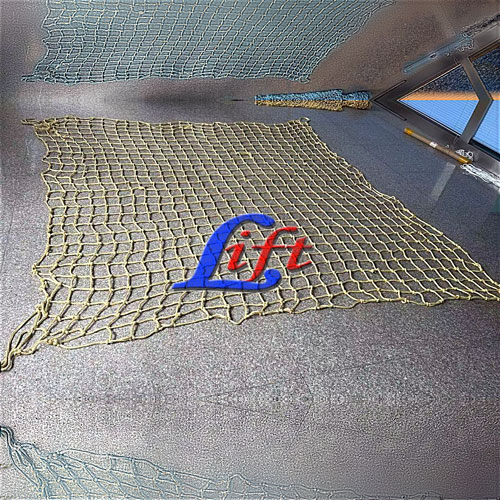
Drone Anti-collision Net
-
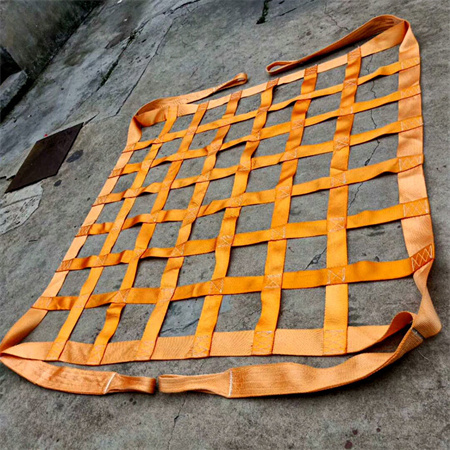
Extra Large Capacity Cargo Net
-

Cargo Webbing Net
-

Color changing nylon double buckle loop nylon braided rope
-

Two end buckle lifting rope, double buckle round lifting rope, double fork nylon lifting rope, non jointed nylon lifting rope
-

Emergency escape lifeline, fire escape rope, fire safety escape emergency rope, steel wire core fire rope

