 Language
 简体中文
简体中文
- On the 2018 National Day holiday, Lifet completed six 100 ton large tonnage lifting belts as a gift
- The role of suspension net in the transportation of goods turnover
- Cargo soft lifting net, lifting net, lifting net, lifting net, bag, climbing net
- Precautions for using Lifutiden elevator
- How to make circular lifting straps
Contact: Wang Lili
E-mail:18066002268
Phone:702461526@qq.com
Address: Lifute Industrial Park, Taizhou City, Jiangsu Province
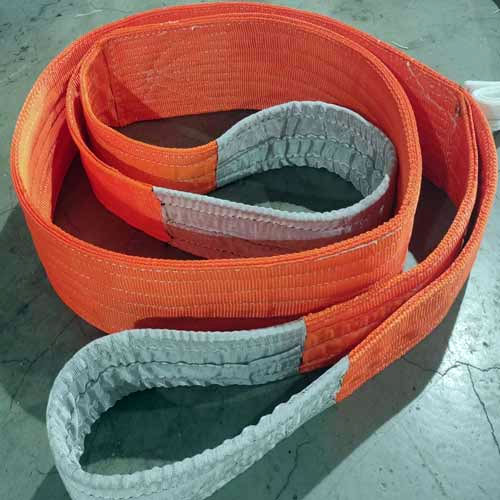
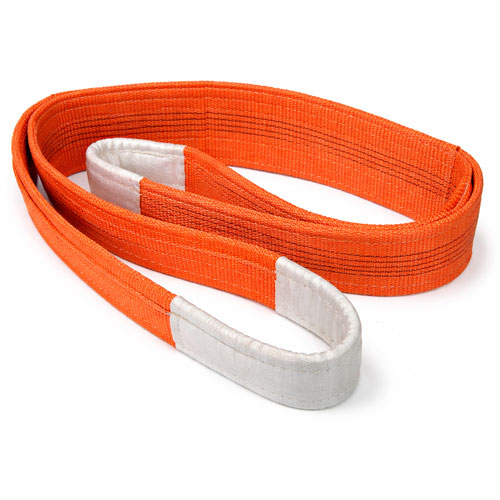
Lift Sling Rigging Co., Ltd manufactures heavy‑duty 5Ton Webbing Sling, a versatile polyester lifting accessory extensively used in construction, machinery moving, warehouse logistics and heavy cargo rigging applications. Engineered from high‑tenacity industrial polyester webbing, this 5 ton webbing sling features outstanding tensile strength, great flexibility and wear resistance to secure heavy loads safely during hoisting operations.Its soft woven structure prevents scratches and dents on painted, polished or delicate workpiece surfaces, outperforming traditional metal lifting chains. Various standard lengths and configurations are in stock, with custom sizes available to match diverse onsite lifting demands. Every 5Ton Webbing Sling is strictly load‑tested and complies with international lifting safety standards. Lightweight, easy to handle and store, it is ideal for factory workshops, freight yards and project sites. Get reliable factory‑direct 5 ton webbing slings from Lift Sling Rigging Co., Ltd for your heavy‑load lifting jobs.
Hits: ℃
Release time:2026-09-24 08:11
Lift Sling Rigging Co., Ltd manufacture 5Ton Webbing Sling,5Ton Polyester Webbing Sling,5 Ton Flat Webbing Sling,5 Ton Polyester Web Sling, Heavy Duty Eye & Eye Lifting Sling.
5Ton Webbing Sling — Four Numbers Behind One Claim
5 ton looks like a specification and behaves like a label: four different quantities can hide behind the same two words, and the article on the pallet is only as capable as the smallest of them. A seller who quotes the basket figure and a seller who quotes the vertical figure can both write 5 ton while describing articles that differ by half. This page is about the number rather than the article: where each figure comes from, which one is the only comparable one, and how to check what has actually arrived. HS code 630790; telephone 18066002268.
1. One Article, Five Names, and Only One of Them Is a Number
This product is listed under five names at once, and reading them as five descriptions of five different things is the first mistake a buyer makes. Each name is doing a different job, and only one of them is a quantity.

| The word in the name | What kind of word it is | What it fixes | What it leaves open |
|---|---|---|---|
| 5 ton | A quantity - and an ambiguous one | The capacity the article is sold against | Which figure the capacity refers to, and in which hitch |
| Webbing, flat | A description of the form | That the load-bearing part is flat woven webbing rather than a covered round core | Width, ply, and how the ends are made |
| Polyester | A description of the fibre | The material the label is required to name | Whether the article is that fibre throughout, and what the sewing thread is |
| Web sling | A trade term | Nothing, strictly: it is the same object under a shorter name | Nothing; but it is why the same article appears twice in a search |
| Eye and eye, heavy duty | A description of the ends, plus a word about duty | That both ends are eyes and that the article is built for hard service | The eye's own dimensions, and what the stitch is worth |
The end form has a page of its own, because the letters and types that identify it are a separate subject: the eye and eye type webbing sling page sets out what the type designations mean. What follows here is the capacity word and nothing else.
The practical reading is that four of the five names tell you what the article is, and the first one tells you how much it holds - without saying which of several figures that is.
2. Four Numbers Hide Behind the Same Two Words
Ask three suppliers what a 5 ton sling will lift and you may get three answers, because "5 ton" is used for at least four different quantities. They are not interchangeable, and they differ by large factors.
| The number behind "5 ton" | What it actually is | Where it appears | What it tells you |
|---|---|---|---|
| The vertical rating | What the article may lift in a straight vertical hitch, one leg | On the label, as the first of the rated capacities | The figure every other figure is built from |
| The basket rating | What it may lift when the sling is passed under the load and both ends are on the hook | On the label, in the same row of capacities | Roughly twice the vertical rating, because two parts of the band carry the load |
| The class of the band | A statement about the webbing itself, not about a lift | In the maker's literature and on the band | Nothing directly, until the design factor is applied to it |
| The breaking load | The force the article withstood in the test, before any factor was applied | On the certificate, with the proof-test record | The evidence behind the rating, and a much larger number than the rating itself |
A listing that says 5 ton and a certificate that says 5 ton may therefore be agreeing about nothing at all. The only way to close the gap is to name the figure - and the figure that is worth naming is the vertical rating, because it is the one the other capacities are derived from.
3. The Only Comparable Figure
Because the label is the object a rigger reads at the point of use, it is also the place where the number is defined rather than implied. The published rule for synthetic web slings requires the marking to show the rated capacities for each type of hitch, and to name the type of synthetic web material - so the label carries a row of numbers, not one, and the vertical figure sits in it.
| Where you are standing | What the number means there | What to do with it |
|---|---|---|
| Reading a listing | A claim, with the hitch unstated | Ask which hitch, in writing, before comparing price |
| Reading a label | A set of capacities, one per hitch | Use the figure for the hitch you are about to make |
| Reading a certificate | The proof-test record for that article, and the factor behind the rating | Keep it with the article; it is the only traceable version of the number |
| Reading a quotation | Usually the vertical figure, occasionally the basket figure | Make the quotation say which, or the comparison is not a comparison |
One consequence is worth stating plainly: an article whose seller quotes its basket rating is not a fraudulent article, but a listing that says 5 ton on that basis is describing an article half the size of one whose listing says 5 ton on the vertical basis. Both sentences are true and only one of them is useful. The colour system that runs alongside the numbers on this site, and the reason a colour can never be read in place of a figure, is set out on the colour coded webbing sling page, and the same capacity in the continuous form is a different article altogether, as the 5 ton endless webbing sling page explains.

4. Checking the Article That Arrives
The number lives in three places - the label, the certificate and the maker's literature - and a goods-in check is a matter of confirming that the three agree and that the article in front of you is the one they describe.
| What to check | What agreement looks like | What a failure looks like |
|---|---|---|
| The label, first | Affixed, legible, and carrying a capacity for each type of hitch the article will be used in | A handwritten or reprinted tag, or a label that names one capacity only |
| The material named on the label | The type of synthetic web material is stated | No material named, or a material that does not match the listing |
| The width, against the order | The band measures what was ordered | A narrower band, which is the commonest quiet substitution |
| The ply, against the order | The number of layers in the band matches | One layer where two were ordered |
| The certificate | It names the article, carries the proof-test figure and the factor behind the rating | A certificate for a different size, or one that names no factor |
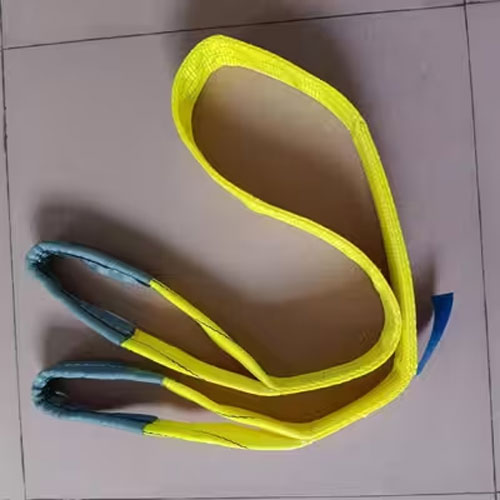
| The article itself | No cuts, no stitching damage, no distortion, and the label describing this article | Any removal condition from the list that applies to every sling |
5. What the Number Does Not Cover
A rating is a statement about an article under stated conditions. Outside those conditions the number stops describing the lift, and the conditions are the same at 5 tonnes as they are at any other capacity.
| The condition | What changes the figure | What to do |
|---|---|---|
| The hitch | A choker reduces it, a basket increases it | Read the row of the label that matches the hitch being made |
| The angle between two legs | A wider angle reduces what each leg may carry | Use the leg's own figure at the angle, never the headline figure |
| The edges of the load | A sharp edge cuts the band, and padding is required against it | Pad or protect the article from edges and corners |
| The temperature | Every fibre has a working temperature | Keep the lift inside the maker's published figure for the fibre |
| The chemistry | Acids and alkalis attack different fibres differently | Match the fibre to the environment rather than to the price |
| Shock loading | A load taken up suddenly can exceed any static figure | Take up the load steadily; shock loading is prohibited |
The rules that govern the use of the article - inspection before every use, the removal conditions, the prohibition on shortening with knots or makeshift devices, and the requirement that a marking be affixed and legible - are set out on the flat webbing sling page, because they apply to the form rather than to the tonnage.
6. Two Quotations Side by Side
Price becomes comparable only when the lines below match. Any line left unstated is a line on which the two quotations may differ without either being wrong.
| The line | What it must say | Why it decides the comparison |
|---|---|---|
| 1 | The vertical rating, in tonnes | It is the figure the other capacities are derived from |
| 2 | The fibre, and the thread used for the eyes | Two fibres of the same rated capacity behave differently in service |
| 3 | The width, and the number of plies | The two commonest quiet differences between two articles of the same rating |
| 4 | The effective working length, and how it is measured | The same nominal length can be measured two ways |
| 5 | The end construction, and the eye's own dimensions | Whether the eye will take the fitting you intend to use |
| 6 | The type designation and the marking to be applied | What the article will be able to prove about itself on site |
| 7 | The certificate and the proof-test record supplied | The evidence, and the only version of the number that travels with the article |
7. Where the Number Ends and the Label Begins
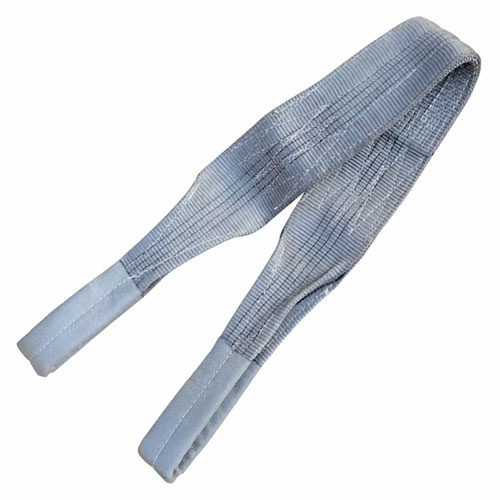
A sling is used on the strength of its marking. The published rule is that a sling is not to be used without affixed and legible identification markings, and the marking is required to carry the rated capacities for each type of hitch and the type of synthetic web material. That makes a damaged label a removal condition in its own right, whatever the number was.
| What happens to the label | What it means for the article | What to do |
|---|---|---|
| It becomes illegible | The article can no longer state what it may be used for | Out of service |
| It lifts at the corners or embrittles | The rating is on its way off the article | Out of service; ask the maker about re-marking |
| It falls off | The article has become an unmarked sling | Out of service; re-marking is not a user's task |
| It is replaced with a handwritten tag | Not a marking in the sense the rule means | Out of service; the maker's re-marking and testing procedure applies |
Retirement is decided by the article, not by the figure: acid or caustic burns, melting or charring of any part of the surface, snags, punctures, tears or cuts, broken or worn stitching, and distortion of fittings all end the article's service at any tonnage.
Repair is by a sling manufacturer or an equivalent entity, with a proof test to twice the rated capacity afterwards and the certificate kept; temporary repairs are prohibited.
None of the above is affected by whether the number on the listing referred to the vertical, the basket or the breaking figure.
8. Frequently Asked Questions
Q1: What will a 5 ton webbing sling lift?
Q2: Why does the same article appear as two different capacities?
Q3: Is the breaking load the same as the rating?
Q4: What colour is a 5 tonne sling?
Q5: Is a 5 ton sling enough to lift a 5 tonne load?
Q6: Do I need the certificate, or is the label enough?
Q7: What if the label is missing when the sling arrives?
Q8: Can a 5 ton sling be repaired after damage?
Q9: How do I compare two quotations for the same job?
Q10: Does the width matter if the rating is the same?
Contact
Tell us the lift rather than the tonnage: the load, the number of legs and the angle between them, the hitch, the length you need, and the environment. We will confirm the vertical rating in writing, and say which figures the other hitches give on the article we supply. Articles are batch tested, marked per hitch and supplied with a certificate that names the article.
Telephone and WeChat — 18066002268
E-mail — 702461526@qq.com
Address — Lifute Industrial Park, Taizhou City, Jiangsu Province, China
-
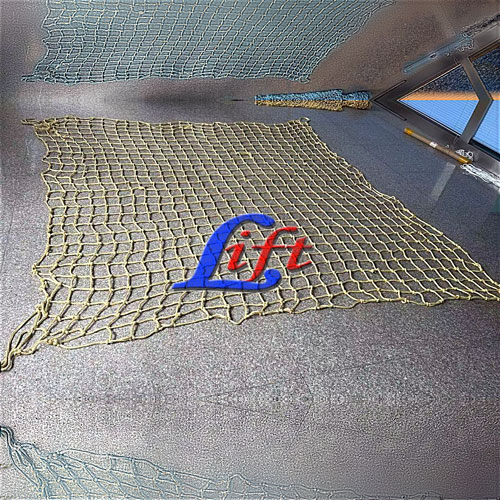
Drone Anti-collision Net
-
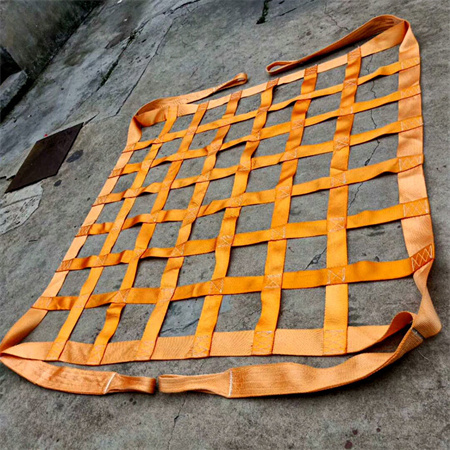
Extra Large Capacity Cargo Net
-
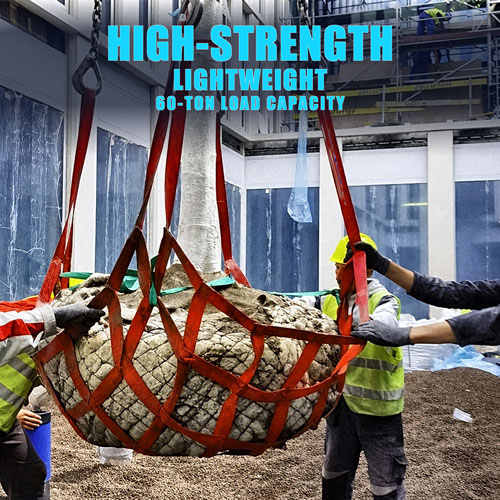
Cargo Webbing Net
-

Color changing nylon double buckle loop nylon braided rope
-

Two end buckle lifting rope, double buckle round lifting rope, double fork nylon lifting rope, non jointed nylon lifting rope
-

Emergency escape lifeline, fire escape rope, fire safety escape emergency rope, steel wire core fire rope

