 Language
 简体中文
简体中文
- On the 2018 National Day holiday, Lifet completed six 100 ton large tonnage lifting belts as a gift
- The role of suspension net in the transportation of goods turnover
- Cargo soft lifting net, lifting net, lifting net, lifting net, bag, climbing net
- Precautions for using Lifutiden elevator
- How to make circular lifting straps
Contact: Wang Lili
E-mail:18066002268
Phone:702461526@qq.com
Address: Lifute Industrial Park, Taizhou City, Jiangsu Province

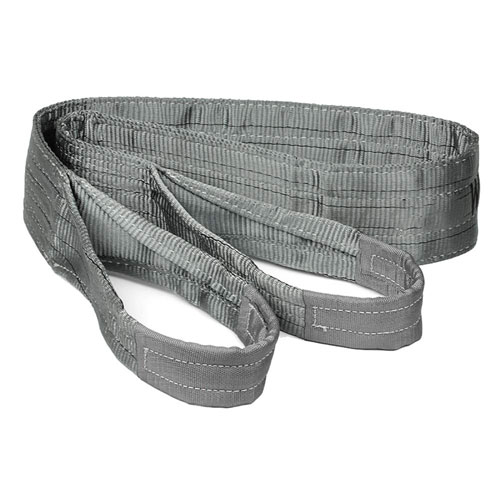
Lift Sling Rigging Co., Ltd manufactures robust 4Ton Webbing Sling, a popular polyester lifting accessory widely adopted in construction, machinery transportation, warehouse logistics and general heavy‑duty rigging works. Made of high‑strength industrial polyester webbing, this 4 ton webbing sling boasts superb tensile performance, good abrasion resistance and great flexibility to stabilise heavy loads during hoisting.The soft fabric construction effectively protects finished, painted or polished goods from scratches and deformation compared with metal chains. Multiple standard lengths are readily available, and custom specifications can be supplied to satisfy various site lifting requirements. Each 4Ton Webbing Sling has passed rigorous load testing and conforms to international rigging safety standards. Lightweight, portable and simple for operators to handle and store, it suits workshops, freight yards and engineering sites. Source trustworthy factory‑direct 4 ton webbing slings from Lift Sling Rigging Co., Ltd for your material‑handling and hoisting projects.
Hits: ℃
Release time:2026-09-24 09:12
Lift Sling Rigging Co., Ltd manufacture 4Ton Webbing Sling,4 Ton Flat Webbing Sling,4 Ton Web Sling,4 Ton Flat Webbing Lifting Sling,WLL 4 Ton Polyester Webbing Slings, 4000kg Flat Eye Webbing Sling.
4Ton Webbing Sling — One Capacity, Four Notations
The same capacity is written four ways on this very page - 4 Ton, 4 Ton Flat Webbing, WLL 4 Ton and 4000 kg - and the differences are not decoration. A capacity is a force; a load is a mass; the trade writes the first in the units of the second; and a ton is not one quantity but three. None of that changes the article, and all of it changes what you have to write on the order. HS code 630790; telephone 18066002268.
1. One Capacity, Written Four Ways
The names this product is sold under write 4 tonnes four different ways, and each notation carries an assumption that the others do not. Reading them as four equivalent labels is the first mistake, because a buyer comparing three suppliers may be comparing three units without noticing.

| The notation | What it literally says | What it assumes | What it leaves to be agreed |
|---|---|---|---|
| 4 Ton | Four of something called a ton | That the reader and the writer mean the same ton | Which ton, and whether it is the rating or the breaking load |
| 4 Ton Flat Webbing | The same capacity, with the form named | That the form decides nothing about the capacity | Width, ply and the ends |
| WLL 4 Ton | A specified limit, in tons | That WLL means the same figure on both sides of the trade | Which hitch the limit refers to, and per leg or for the assembly |
| 4000 kg | A mass of four thousand kilograms | That a load expressed as a mass and a limit expressed as a mass are the same kind of quantity | The distinction this page is about: the article resists a force, and the load has a weight |
Only the last of the four is written in a unit that belongs to the international system, and it is the only one that can be converted without asking a question first.
2. A Capacity Is a Force, and a Load Is a Mass
The Working Load Limit is the greatest load that should ever be applied to the article. What the article actually resists is a force, measured in newtons; what a crane, a weigher and a delivery note deal in is a mass, measured in kilograms. The trade reconciles the two by writing the limit in kilograms, and that convention is so universal that the distinction is usually invisible until a number has to be converted.
| Quantity | What it is | Unit | Where it appears |
|---|---|---|---|
| Mass | How much material the load contains | Kilogram, tonne | The weigher, the delivery note, the drawing |
| Weight | The force that mass exerts under gravity: the mass multiplied by the acceleration due to gravity | Newton, kilonewton | The engineer's calculation, the hardware catalogue, the structural design |
| Working Load Limit | The greatest load the article may ever be subjected to, published as a mass so that it can be compared directly with the load | Kilogram, tonne, or pounds and tons | The label, the certificate, the maker's literature |
| The conversion | Four thousand kilograms of mass weighs about 39.2 kilonewtons | kN | Anywhere the sling has to be reconciled with hardware or with a structure |
The practical consequence is not that the label is wrong - it is the convention, and it is why a 4000 kg sling can be compared with a 4000 kg load by eye. It is that the moment the lift stops being a static, vertical, single-leg one, the figure the article is being asked to resist is no longer simply the mass of the load: it is a force that depends on the geometry, and the geometry is where the angle between slings enters.
3. The Tonne Is Not the Ton
A tonne, a short ton and a long ton are three different masses, and the words are used interchangeably in ordinary trade writing. The differences are large enough to consume a whole margin between a rating and a load.
| The unit | Its mass | Where it is the ordinary usage | What a 4 of them is |
|---|---|---|---|
| Tonne (metric ton), t | 1000 kg exactly | Most of the world, and every metric label | 4000 kg |
| Short ton, US ton | 907.18474 kg (2000 lb) | United States trade and some equipment literature | 3628.7 kg |
| Long ton, Imperial ton | 1016.0469 kg (2240 lb) | Some United Kingdom and older imperial contexts | 4064.2 kg |
A "4 ton" rating that was written in short tons is about 3.63 tonnes of capability; one written in long tons is about 4.06 tonnes. Neither is a mistake, and a quotation that does not name its unit has not said which one it used. The certificate is usually the document that settles it, because a certificate states a mass in kilograms.
4. Where the Units Meet the Hardware
The sling is one part of a chain of lifting equipment, and the parts of that chain are not all rated in the same unit. Depending on the standard a piece of hardware is made to, its rating may be published as a working load in tonnes or as a working load in kilonewtons, and the two cannot be compared until one of them is converted.
| The part | Its rating is commonly published as | What to compare it against | The check |
|---|---|---|---|
| The sling | A working load limit in kilograms or tonnes | The load's mass, and the leg's share of it | The label's row for the hitch actually being used |
| The shackle or the hook | A working load in tonnes, or in kilonewtons, according to its standard | The sling's limit in the same unit | Convert one to the other before the numbers are written down |
| The master link or the beam | A working load in tonnes, with its own geometry conditions | The load's mass and the number of legs | The assembly's limit, not the parts' limits one by one |
| The structure or the lug | A design load in kilonewtons | The total force applied, at the angle and with the dynamic allowance the site requires | The engineer's number, not the sling's |
The rule that follows is the one that matters when a chain is assembled from several sources: the assembly is as strong as its weakest component, so the limits have to be brought into one unit before anybody can say which component that is.
5. Why Capacities Are Round Numbers and Loads Are Not
Published capacities come in round steps - a thousand kilograms, or a tonne, or a tonne and a half depending on the range - because a range has to be manufacturable and a label has to be readable. Real loads are not round. The gap between the two is where a lifting plan is actually decided.

| The situation | What the arithmetic gives | What the trade does | What the buyer should do |
|---|---|---|---|
| A load of 3850 kg | Below a 4000 kg rating, but by a small margin | Reads it as "inside the rating" | Check the margin against the angle, the leg share and the dynamic allowance, not against the headline figure |
| A load quoted as 3.85 t | The same thing in a different notation | Treats the two notations as interchangeable | Convert to one notation first, then compare |
| A load weighed as 8500 lb | 3855 kg | Reads pounds and kilograms as separate worlds | Convert the load, not the rating |
| A capacity of 4000 kg | A round figure, so the true margin is unknown from the figure alone | Treats the figure as exact | Ask for the factor behind it if the margin matters |
6. Converting Before Choosing
An imperial drawing, a machine rated in pounds, or a load weighed on a scale set to short tons all arrive in the same way: a mass in units the label does not use. The conversion is arithmetic, and the thing worth getting right is the direction it is applied in.
| What arrives | What to do with it | The result | The trap |
|---|---|---|---|
| A load in pounds | Divide by 2.20462 to reach kilograms | The mass in the label's unit | Converting the sling's rating into pounds instead, and comparing two converted numbers |
| A load in short tons | Multiply by 907.18474 for kilograms | The mass in the label's unit | Using 1000 because "a ton is a thousand kilos" |
| A load in long tons | Multiply by 1016.0469 for kilograms | The mass in the label's unit | Assuming a long ton and a tonne are close enough; they differ by 1.6 per cent |
| A hardware rating in kilonewtons | Divide by 9.80665 to reach tonnes of mass, or convert the load the other way | Both parts in one unit | Comparing a force with a mass |
| A drawing with a design load | Keep it in kilonewtons and convert the sling's limit up, not the design load down | Both parts in the unit the engineer used | Quietly losing the allowances the design load already contained |
7. The Unit Is Settled in Writing
Nothing in the appearance of an article states its unit, and the label states a capacity rather than a conversion. The unit is therefore settled by paperwork, and the paperwork is worth naming before the order rather than after the delivery.
The label carries the rated capacities for each type of hitch, and names the type of synthetic web material; it does not carry a conversion table, and the figure on it is in the unit the maker publishes.
The certificate is the document that states a mass in kilograms and records the proof test, so it is the place a mixed-unit argument is resolved.
A quotation that does not name its unit has not stated a capacity in a form that can be compared.
A sling is not to be used without affixed and legible identification markings; where the marking is lost or made unreadable, the article is out of service whatever its capacity was.
Repair belongs to a sling manufacturer or an equivalent entity, with a proof test to twice the rated capacity afterwards and the certificate kept; temporary repairs are prohibited.
The inspection regime, the removal conditions and the rules that govern the article's use apply independently of its capacity, and are set out on the flat webbing sling page.
8. What to Put in an Enquiry
| Line | What to state | Why the unit makes it necessary |
|---|---|---|
| 1 | The load as a mass, in kilograms or tonnes, and how it was established | A mass with a notation can be converted; a bare figure cannot |
| 2 | Since the unit of the requirement matters, the notation you want the offer written in | Two offers in two notations are not yet comparable |
| 3 | The number of legs and the angle between them | The leg's share is a different quantity from the load's mass |
| 4 | The hitch, for each leg | The label's rows are per hitch |
| 5 | The hardware that will be on the hook, and its unit | A force and a mass cannot be compared until one is converted |
| 6 | Any dynamic allowance the site requires | A capacity is a static figure until the lift stops being static |
| 7 | The length, and how it is measured | Length is the one dimension the capacity says nothing about |
9. Frequently Asked Questions
Q1: Is 4000 kg the same as 4 tonnes?
Q2: Why is the capacity written in kilograms if it is a force?
Q3: What is 4000 kg in kilonewtons?
Q4: Does the difference between a tonne and a short ton matter in practice?
Q5: Can I compare a sling rated in tonnes with a shackle rated in kilonewtons?
Q6: The load is 3850 kg and the sling is rated 4000 kg. Is that safe?
Q7: Which unit should the order be written in?
Q8: Is the colour a substitute for the unit?
Q9: What if the label and the certificate disagree?
Q10: Does any of this change the article I should buy?
Contact
Send the seven lines in section 8, and name the unit you want the offer written in. We will state the working load limit for each hitch in kilograms, and say on the certificate which mass the rating rests on. Articles are batch tested, marked per hitch and supplied with a certificate that names the article.
Telephone and WeChat — 18066002268
E-mail — 702461526@qq.com
Address — Lifute Industrial Park, Taizhou City, Jiangsu Province, China
- Previous:3Ton Webbing Sling
- Next:5Ton Webbing Sling
-
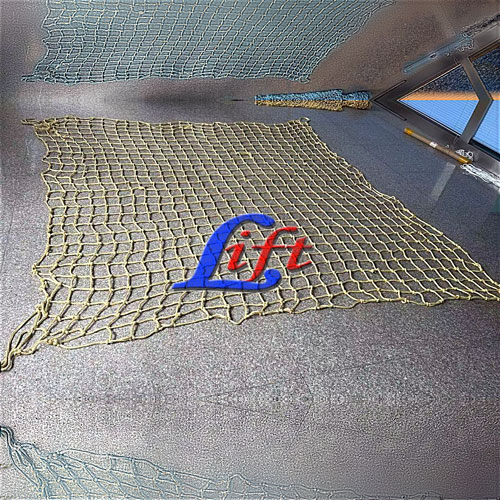
Drone Anti-collision Net
-
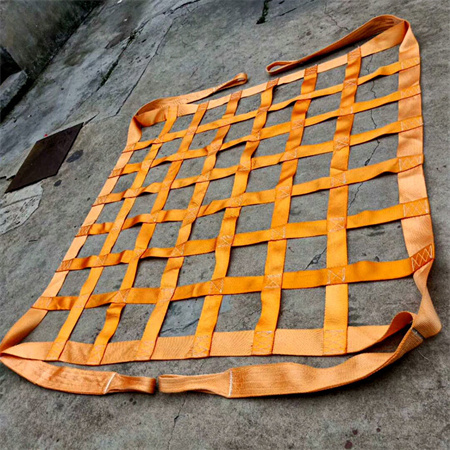
Extra Large Capacity Cargo Net
-
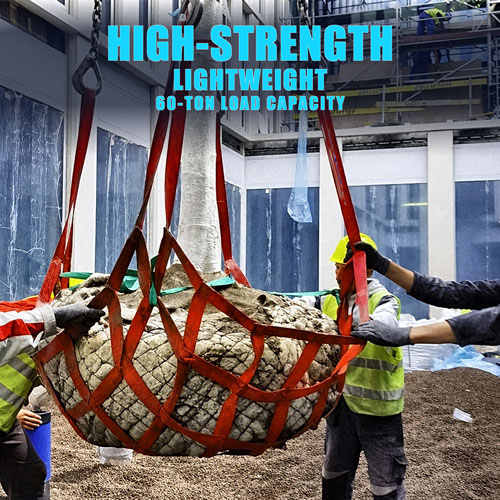
Cargo Webbing Net
-

Color changing nylon double buckle loop nylon braided rope
-

Two end buckle lifting rope, double buckle round lifting rope, double fork nylon lifting rope, non jointed nylon lifting rope
-

Emergency escape lifeline, fire escape rope, fire safety escape emergency rope, steel wire core fire rope

