 Language
 简体中文
简体中文
- On the 2018 National Day holiday, Lifet completed six 100 ton large tonnage lifting belts as a gift
- The role of suspension net in the transportation of goods turnover
- Cargo soft lifting net, lifting net, lifting net, lifting net, bag, climbing net
- Precautions for using Lifutiden elevator
- How to make circular lifting straps
Contact: Wang Lili
E-mail:18066002268
Phone:702461526@qq.com
Address: Lifute Industrial Park, Taizhou City, Jiangsu Province
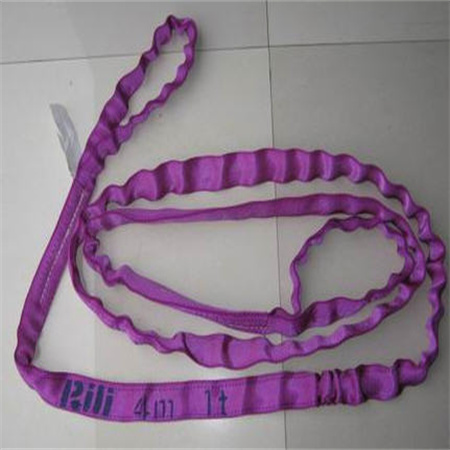
Lifute Hoisting Co., Ltd. 18066002268 produces lifting belts, lifting nets, nylon ropes, soft ladders, steel wire rope rigging, paper ropes, safety belts, safety nets, lifting chains, steel coil hoists, crossbeam hoists, flat lifting belts, circular lifting belts, electric traction ropes, high-altitude safety belts, and anti fall safety nets
Hits: ℃
Release time:2026-09-23 09:30
Lift Sling Rigging Co., Ltd manufacture Ring buckle circular lifting belt, double buckle circular lifting belt, ring eye circular lifting belt.
Ring buckle circular lifting belt — Ring, Buckle and Eye Are Three Different Answers
Ring, buckle and eye are three words for the ends of the same article, and they are three different answers to one question: where does the hardware sit, and is it hardware at all. A ring is a fitting in the load path; a buckle closes the article on itself rather than at the load; an eye is formed from the article's own fabric and has no fitting in it at all. The difference decides what an inspector looks at, what has to be rated at least equal to the sling, and what the sheet is describing when it says which type a row belongs to. HS code 630790; telephone 18066002268.
1. Ring, Buckle, Eye: Three Answers to One Question
The three words are used interchangeably in the trade, and they are not the same thing. One of them is a loop of metal, one is a closure, and one is made of the same fabric as the article. Which one an article has decides the part of it that wears, the part that an inspector must look at, and the part that cannot be repaired on site.
| The end | What it is | Where it sits in the load path | What it asks of the buyer |
|---|---|---|---|
| Ring | A metal loop fitted to the article | In the load path: the load passes through it, and it passes through the hook or the shackle | A fitting rated at least equal to the sling, free of sharp edges, checked for distortion |
| Buckle | A fitting that closes the article on itself | In the load path where the article is closed, but the closure is made in the article rather than at the load | The closure is part of the article, so it is ordered with it and inspected with it |
| Eye | A loop formed from the article's own fabric | In the load path, with no fitting in it at all | The eye's dimensions decide what hardware will fit through it, and the eye is where the article wears |

2. The Sheet on This Page, and What Its Rows Describe
额定载荷 | 近似厚度 | 近似宽度 | 长度 | 近似重量(kh/m) | ||
最小长度 | 最大长度 | 6;1 | ||||
| 柔性吊带-环眼型 | 1t | 11mm | 50mm | 1m | 80m | 0.29 |
2t | 12mm | 60mm | 1.5m | 80m | 0.41 | |
3t | 14mm | 70mm | 1.5m | 80m | 0.63 | |
4t | 15mm | 80mm | 1.5m | 80m | 0.80 | |
5t | 23mm | 90mm | 1.5m | 80m | 0.96 | |
6t | 25mm | 100mm | 2.0m | 80m | 1.12 | |
8t | 26mm | 110mm | 3.0m | 80m | 1.45 | |
10t | 27mm | 110mm | 3.0m | 80m | 1.90 | |
12t | 28mm | 125mm | 3.0m | 80m | 2.36 | |
| 15t | 29mm | 150mm | 3.0m | 80m | 2.86 | |
| 20t | 31mm | 180mm | 3.0m | 80m | 4.50 | |
| 25t | 34mm | 200mm | 3.0m | 80m | 5.70 | |
| 30t | 36mm | 220mm | 4.0m | 80m | 7.90 | |
| 40t | 40mm | 250mm | 4.0m | 80m | 10.6 | |
| 50t | 46mm | 300mm | 4.0m | 80m | 12.5 | |
The sheet is the factory's own, and it covers the ring eye type of the flexible sling from 1 tonne to 50 tonnes. The headings are bilingual and abbreviated on the original; the table below gives them in English, in the order the data actually appears on the sheet.
| Column on the sheet | What it is | How to use it |
|---|---|---|
| Working load limit | The rated load of the row, in tonnes, for the ring eye type | The figure a lift is planned from for the vertical case; other hitches and angles come from their own figures |
| Approximate thickness | The thickness of the article, in millimetres | Decides how the article sits on a small radius, and how much room it takes in the store |
| Approximate width | The width of the article, in millimetres | Decides the contact with the load, and whether the article fits the hardware and the eye |
| Minimum length | The shortest length made at that capacity, in metres | A real constraint: it rises from one metre at the light rows and cannot be ordered shorter |
| Maximum length | The longest length offered, in metres | The limit for long lifts and for wrapping large loads |
| Mass per metre | The mass of the article per metre in kilograms, at the six to one safety factor the sheet is built on | Sets what the article weighs, and therefore how it is handled, stored and dressed |
3. Hardware in the Path, and Fabric in the Path
The distinction that matters is not decorative. Where the load path runs through a fitting, the rules about fittings apply; where it runs through a fold of the article's own fabric, they do not, and a different set of checks takes over.
| The requirement | How it applies to a ring or a buckle | How it applies to an eye |
|---|---|---|
| The strength of the end | The fitting is rated at least equal to the sling, and it must sustain twice the rated load without visible permanent deformation | There is no fitting to rate: the end's strength is the article's strength, made up in the fabric |
| Sharp edges | The fitting must be free of all sharp edges that could damage the webbing | The risk moves to the load and to the hardware the eye is placed over |
| Inspection | Distortion of a fitting is a condition that removes the article from service | There is nothing to distort, so the eye is inspected as fabric: wear, cuts, burns and broken stitching |
| What the end constrains | The fitting's size decides what hook or shackle will seat in it | The eye's dimensions decide what will pass through it, and an object in an eye is not to be wider than one third of the length of that eye |
| Repair | A damaged fitting goes back to the manufacturer, and the article is proof tested afterwards | A damaged eye is damage to the article, and load-bearing splices are not repaired at all |
4. The Ring: Alignment, and a Component to Inspect
A ring is bought for one practical reason and it is not strength. A ring lets the end of the article align itself with the hook or the shackle, so the article is loaded in the direction it was made to be loaded instead of being twisted into position. What it costs is that the load path now contains a component of its own, which has to be rated, examined and kept free of damage.
| What the ring does | Why it matters on site | What it adds to the duty |
|---|---|---|
| Aligns the article with the hardware | The end follows the line of the lift rather than fighting it | A component that wears and can deform, and therefore has to be looked at |
| Spreads the turn where the article meets the hardware | The article is not forced into a sharp change of direction at the end | A fitting that must be free of sharp edges that could damage the webbing |
| Gives the lift a defined attachment point | The rigger attaches to the ring rather than to the fabric | A fitting that must be rated at least equal to the sling |
5. The Buckle: a Closure, Not an Attachment
A buckle answers a different question: not what the end attaches to, but how the article is closed. It belongs to articles that are wrapped and then closed on themselves, and it is the reason such an article can be used at all without a splice made up at the factory for one particular load. Where the article is wrapped, the closure is part of the article and is ordered with it; the double buckle core wrapped sling page takes the case where the buckle and the winding are the article.
| The consequence | What it means in the order | What it means in service |
|---|---|---|
| The closure is in the article, not at the load | The buckle is specified with the article and its rating cannot be separated from it | The article cannot be closed round a load the closure was not made for |
| The loop geometry follows the buckle | The length quoted has to say what it is measured to, because the article's working loop is set by the closure | A loop that will not close, or one that closes with the article twisted, is an ordering mistake rather than a rigging one |
| The closure is a fitting | It is rated, edge-checked and inspected like any other fitting | Distortion of the buckle removes the article from service |
6. The Eye: Made of the Article, and Wearing With It
An eye is the article's own fabric turned and closed on itself, which makes it the simplest end and the one that wears first. It is also the end with the most honest set of limits, because its size is a physical fact that decides what will fit through it. The circular eye shaped lifting belt page takes the shape of the eye itself.
| The property of an eye | What follows | What to state in the order |
|---|---|---|
| It is fabric, not a fitting | Nothing to rate, distort or replace: the eye is inspected as part of the article | The width and thickness you can work with, since they set the eye |
| Its dimensions limit the hardware | An object in the eye is not to be wider than one third of the length of that eye | The shackle and hook sizes the eye will have to take |
| It is where the article works hardest | The eye is the first part to show wear and the first part an inspector looks at | Whether the eye is likely to run against edges, and what protection travels with it |
| It cannot be rebuilt on site | Repair is a manufacturer's operation followed by a proof test to twice the rated capacity | The route back into service, agreed before the damage |
7. Size and the Ends: What the Sheet Shows
Read across the sheet and the ends stop looking like a detail. The light rows are thin and narrow - 11 mm by 50 mm at one tonne - and by fifty tonnes the article is 46 mm thick and 300 mm wide, which is the difference between an article one person carries and an article that needs its own handling.
| What the sheet shows | The evidence on the sheet | Why it matters before ordering |
|---|---|---|
| The ends scale with the capacity | Thickness from 11 mm at 1 tonne to 46 mm at 50 tonnes; width from 50 mm to 300 mm | The hardware that will fit the end has to be chosen for the row, not for the family |
| The shortest article grows with capacity | Minimum length from 1 m at the light rows to 4 m at the heavy ones | A heavy capacity cannot be bought short: the row sets a floor |
| The longest article does not grow with capacity | Maximum length is 80 m across the sheet | Long lifts are a length question the capacity does not answer |
| The mass is part of the specification | The mass per metre column carries the weight of the article itself | At the heavy end the article's mass is a rigging decision, not a footnote |
8. Inspection, and What the Enquiry Has to Carry
Whichever end the article has, the schedule is the same: each day before use, periodic inspections at intervals no greater than twelve months, and additional inspections where service conditions warrant, judged on the frequency of use, the severity of the service, the nature of the lifts and the experience of the service life. The conditions that remove a sling from service immediately include acid or caustic burns, melting or charring, snags, punctures, tears or cuts, broken or worn stitching and distortion of fittings. A repair, where one is allowed, is a manufacturer's repair followed by a proof test to twice the rated capacity; load-bearing splices are not repaired and temporary repairs are prohibited. The class page, heavy duty round sling, covers where that leaves this family against the chain family.
| Line | What to state | What it fixes |
|---|---|---|
| 1 | Which end you need: a ring, a buckle, or an eye | Which of the three articles is being quoted, and what will be inspected |
| 2 | What the end will be attached to, or closed round | The fitting, the seating, and the dimensions of the eye |
| 3 | The figure you need, in the way you will lift | The row of the sheet, and the column the figure is read from |
| 4 | The length, within the minimum and maximum of the row | Whether the article can be made at all at that capacity and length |
| 5 | The width and thickness the lift can accommodate | Contact with the load, and whether the end passes through the hardware |
| 6 | The duty and the documents: temperature, chemicals, marking, test, certificate, and the repair route | The material, the protection, and what arrives with the article |
9. Frequently Asked Questions
Q1: What is the difference between a ring eye and a ring buckle?
Q2: Which end is strongest?
Q3: Can a ring be replaced on site?
Q4: What removes an article with a fitting from service?
Q5: Why does the sheet print a minimum length?
Q6: Why is the maximum length the same for every capacity?
Q7: What is the mass column for?
Q8: What must be on the article?
Q9: How often is the article inspected?
Q10: Can an eye be repaired if it is damaged?
Contact
Send the six lines in section 8, and start with the end you need, because the ring, the buckle and the eye are three different articles with three different inspections. Articles are batch tested, marked per hitch and supplied with a certificate that names the article.
Telephone and WeChat — 18066002268
E-mail — 702461526@qq.com
Address — Lifute Industrial Park, Taizhou City, Jiangsu Province, China
- Previous:Circular sling, cylindrical sling, cylindrical lifting sling, cylindrical lifting rope
- Next:Circular lifting belt, flexible sling, flexible circular lif
-
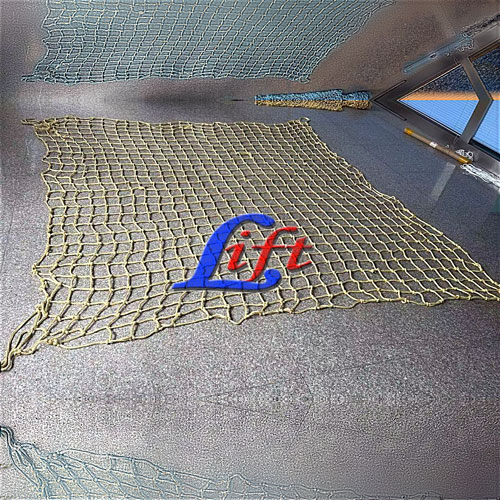
Drone Anti-collision Net
-
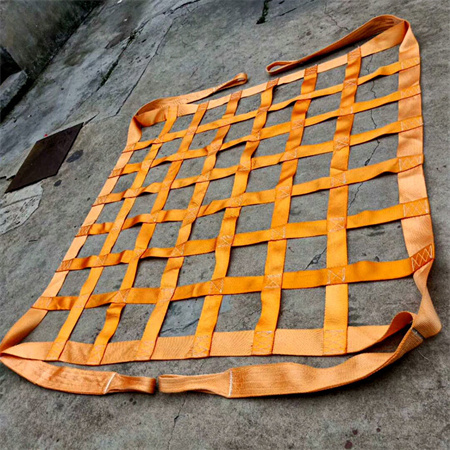
Extra Large Capacity Cargo Net
-
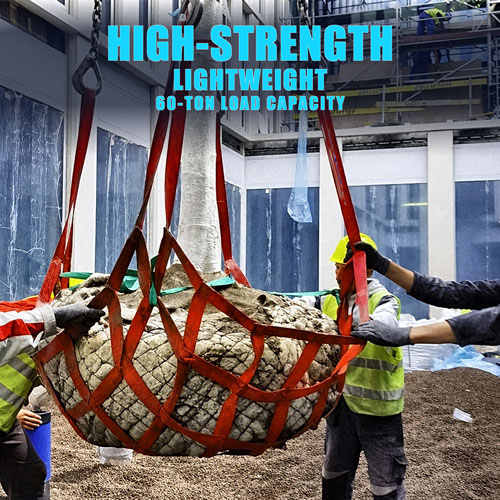
Cargo Webbing Net
-

Color changing nylon double buckle loop nylon braided rope
-

Two end buckle lifting rope, double buckle round lifting rope, double fork nylon lifting rope, non jointed nylon lifting rope
-

Emergency escape lifeline, fire escape rope, fire safety escape emergency rope, steel wire core fire rope

