 Language
 简体中文

- On the 2018 National Day holiday, Lifet completed six 100 ton large tonnage lifting belts as a gift
- The role of suspension net in the transportation of goods turnover
- Cargo soft lifting net, lifting net, lifting net, lifting net, bag, climbing net
- Precautions for using Lifutiden elevator
- How to make circular lifting straps
Contact: Wang Lili
E-mail:18066002268
Phone:702461526@qq.com
Address: Lifute Industrial Park, Taizhou City, Jiangsu Province
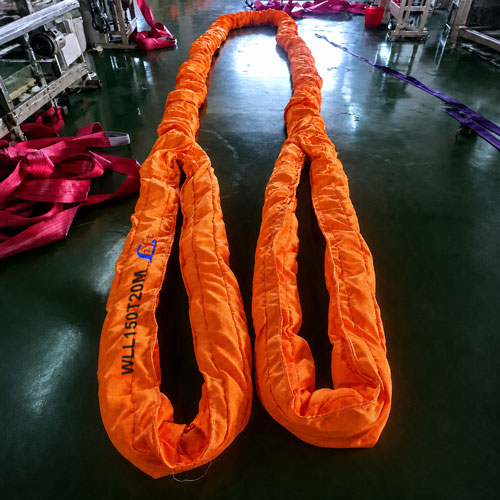
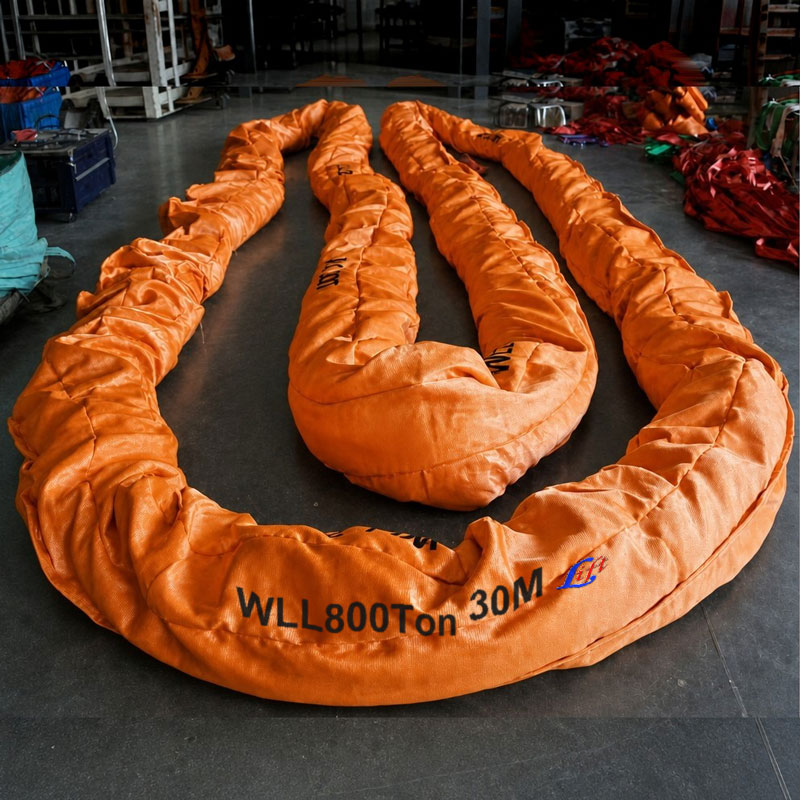
Lift Sling Rigging Co., Ltd manufacture 100T Lifting Sling,100Ton Round Sling,WLL 100T Heavy Duty Round Slings With Eyes,The name of this article makes four claims and none of them is a property of the article on its own: WLL is a working load limit rather than a breaking strength, 100T belongs to a hitch and an angle rather than to the article, heavy duty describes how it is built, and with eyes names the interface the sling is actually loaded through. This page reads each claim, sets out where the eye is loaded and what the fittings must do, and covers marking, traceability, inspection and the records that turn the article into equipment. EN 1492-2, HS code 630790, telephone 18066002268
Hits: ℃
Release time:2026-09-21 15:15
Lift Sling Rigging Co., Ltd manufacture 100T Lifting Sling,100Ton Round Sling,WLL 100T Heavy Duty Round Slings With Eyes.
WLL 100T Heavy Duty Round Slings With Eyes — Four Claims in the Name, and What Each One Promises
The name of this article makes four claims, and none of them is a property of the article on its own. WLL is a working load limit rather than a breaking strength; 100 tonnes belongs to a hitch and an angle rather than to the article; heavy duty describes how the article is built; and with eyes names the interface the sling is actually loaded through. Read together they describe a rigging asset with a history rather than a consumable, which is the theme of this page: marking, traceability, the eye and its fittings, inspection, and the records that make the asset an asset. EN 1492-2; HS code 630790; telephone 18066002268.
1. Four Claims, and the Habit of Reading Them as One Number
The habit this page is written against is simple to describe and common in practice: reading the name as the answer to the question what will it lift, and treating heavy duty and with eyes as encouragement rather than as information. Each of the four claims answers a different question, and each fails differently when it is misread.
| The claim | The question it answers | How it is misread |
|---|---|---|
| WLL | What the article is rated to lift, with a margin held in reserve | Treated as the point of failure, so the margin is spent rather than kept |
| 100T | The value of that limit, in one stated configuration | Used as a universal figure, in whatever hitch the site happens to need |
| Heavy duty | How the article is built, and therefore how it behaves in service | Read as a rating, so durability is mistaken for capacity |
| With eyes | Which part of the article meets the hardware, and what that requires of the fittings | Checked for presence rather than for condition, though it is the loaded interface |
Two of the four claims are about the article, one is about a number, and one is about a place. WLL and 100T are the same claim seen twice, a term and its value, and they stand or fall together, because a limit without the configuration it applies to is not a limit. Heavy duty describes construction. With eyes describes the interface, which is the part that turns a sling into part of a rig.
2. WLL Is Not the Breaking Strength
The term in the name deserves its own section, because it is the one most often translated silently into something else. The working load limit is the maximum load the article is rated to lift in a stated configuration. It is not the load at which the article fails, and it is not a rounded-down version of one either: the relationship between the two is the factor, and in this family that factor is commonly seven to one, so the working load limit is roughly one seventh of the load the article is made to withstand.
That margin is not slack to be used. It exists to absorb the things a lift plan cannot know: a load that is not perfectly centred, a leg that takes more than its share, a slight dynamic addition as a load comes off the ground, an edge that was harder than it looked. A lift at the working load limit has spent none of that margin; a lift that treats the limit as the failure point has spent all of it.
| The number | What it is | What it is not |
|---|---|---|
| Working load limit, or WLL | The maximum load the article is rated to lift, in a stated configuration | Not the breaking load, and not a figure that applies to every hitch and angle |
| The factor, commonly seven to one | The margin between the working load and the load the article is made to withstand | Not spare capacity to be spent on a heavy day |
| A proof or test record | Evidence that the article met its requirement at the time of testing | Not a statement about the article's condition now, and not a substitute for inspection |
| A fitting's rated load | Required to be at least equal to the sling's, and to sustain twice the rated load without visible permanent deformation | Not a licence for the fitting to be the weak link in a heavier lift |
| The colour on the sleeve | A field check on capacity, within the range the code covers | Not a hundred tonne signal: the code groups everything above its last step together |
3. What the Hundred Tonnes Belongs To: a Configuration, Not an Article
The second claim in the name is a value, and the difficulty with values is that they travel. A hundred tonnes quoted without its configuration will be used in whatever hitch the lift happens to need, and the published tables do not support that. Rated loads are tabulated by hitch and by horizontal angle, so the figure belongs to a column, and moving between columns changes it. The arithmetic of the angle is worked through on the 30 ton flexible lifting belt page; what matters here is that the figure in this article's name is the value for a stated configuration, and the label carries one rated capacity for each type of hitch rather than a single universal number.
| What the figure needs beside it | Why | Where it is written |
|---|---|---|
| The type of hitch | Single leg, choker, basket and the multi-leg sets are different columns with different figures | On the label, as a rated capacity per type of hitch |
| The horizontal angle | The tension in each leg rises as the pair of legs opens, so the set is not a sum of its legs | 30 ton flexible lifting belt |
| The angle of choke, where a choker is used | A choker is rated from the table provided the angle of choke is 120 degrees or more; below that the figure comes from the manufacturer | this page, and the manufacturer for anything outside the table |
| The rule that the marking governs | A sling is not to be loaded in excess of its rated capacity, and the figure that governs is the one the manufacturer marked on the article | the article's own label, read before every lift |
4. Heavy Duty Is a Construction Description, Not a Grade
This family has no heavy duty class, no heavy duty test and no heavy duty figure. What the phrase does is describe how the article is built, and that is worth separating from what it will carry, because the two are bought together and read as one. The published list of inputs behind a rated load makes the separation exact: rated loads are based on material strength, design factor, type of hitch, angle of loading, diameter of curvature over which the sling is used, and fabrication efficiency.
| The six inputs | Which one heavy duty describes | What the buyer should do |
|---|---|---|
| Material strength | Partly: a heavier construction usually means more yarn | Ask what the article is rated to, not what it is made of |
| Design factor | No: the factor follows the market the article is sold into | Ask for the factor in writing; it is the margin |
| Type of hitch | No: this belongs to the lift | State the hitch before the order |
| Angle of loading | No: this belongs to the lift on the day | State the angle, and read the right column |
| Diameter of curvature | Partly: a thick, wide article conforms less well to a small radius | State the diameter the sling will be loaded over |
| Fabrication efficiency | Yes: this is the seam, the eye, the termination and the fittings | Ask what the end fittings are rated to, and whether the article was tested |
The last line is where heavy duty is genuinely earned or lost, and it is the one a buyer can check. The standard is specific about the parts: stitching is the only method permitted for attaching end fittings to webbing and for forming eyes, the thread has to be in an even pattern and carry enough stitches to develop the full breaking strength of the sling, and fittings have to be of a minimum breaking strength equal to that of the sling and free of all sharp edges that could in any way damage the webbing. A heavier band with an under-built end is a smaller sling wearing a larger label.
5. Where the Eye Is Loaded, and What That Requires of the Fittings
The eyes are the interface, and at a hundred tonnes the interface is where a lift is usually lost. Three requirements govern it, and all three are published rather than advisory.
The first concerns seating. An object placed in the eye of a sling is not to be wider than one-third of the length of the eye, which is the arithmetic behind the familiar complaint that the eye will not go round the shackle: a fitting that is too wide in the eye is not merely awkward, it changes how the eye is loaded and concentrates the load on the wrong part of it. The second concerns the fittings themselves: they have to be rated at least as high as the sling, free of sharp edges, and strong enough to sustain twice the rated load without visible permanent deformation, which is a deformation check designed to make an overload visible rather than a second margin. The third concerns the geometry of the contact: the diameter of curvature the sling is loaded over is one of the inputs behind its rated load, so a shackle bowl or a hook that presents a tight radius is a change to the configuration and not a detail of it.
| The requirement, as published | What it means on site | What it prevents |
|---|---|---|
| An object in the eye is not to be wider than one-third of the eye's length | Check the shackle or hook against the eye before the lift, not at the load | An eye loaded across a fitting that is too wide for it, which is the commonest interface fault |
| Fittings: minimum breaking strength equal to that of the sling, and free of sharp edges | Hardware is matched to the sling rather than selected for convenience, and a worn hook radius is a defect | A fitting that damages the webbing it is lifting with, and a weak link nobody rated |
| Fittings: to sustain twice the rated load without visible permanent deformation | An overload shows as a bent or distorted fitting before it becomes an event | Silent overload: a fitting that hides its history until it fails |
| Slings are not to be constricted, bunched or pinched by the load, the hook or any fitting | The eye and the sleeve are dressed onto the hardware rather than forced onto it | Concentrated loading, and damage that removes the article from service early |
6. Marking and Traceability: What Turns the Article Into Equipment
At a hundred tonnes the article is an asset with a history, and the marking is what makes the history possible. Each sling is marked or coded to show the rated capacities for each type of hitch and the type of synthetic web material, the article's own marking is the figure that governs its use, and slings without affixed and legible identification markings are not to be used at all. A faded or missing label therefore retires an article that may be perfectly sound, which is the clearest illustration of what the label is for.
| The element | What it has to carry | Why it matters at this figure |
|---|---|---|
| The marking on the article | The rated capacities for each type of hitch, and the type of synthetic material | It is the figure that governs the lift, and an article without it is not usable |
| The traceability code | Which production batch and which article the marking belongs to | It links the article on the hook to the certificate in the file |
| The colour of the sleeve | The capacity step, up to its last entry, which reads ten tonnes and above | Useful below ten tonnes and useless above it, which is why the label carries the figure here |
| The certificate | What was tested, to what figure, and which article the certificate names | It answers the auditor's question about an article that is not a catalogue item |
| The length convention | Whether the figure ordered is the circumference or the effective working length | A loop has both, and a mistake at this size cannot be cut out and re-sewn |
7. The Photographs on This Page, Read as Evidence

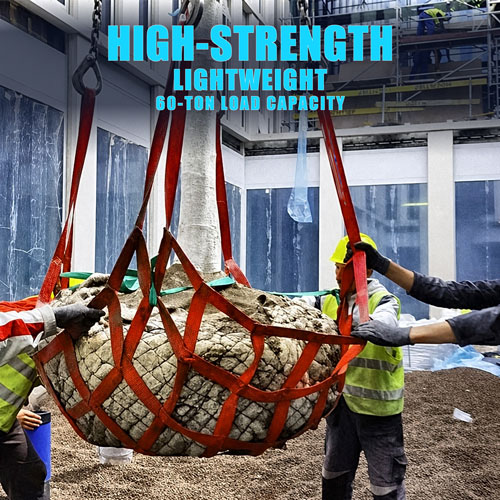
Both photographs on this page are this factory's own images of the eye-ended article, and neither is a stock picture or a photograph of another product. They are worth reading against the sections above rather than as decoration: the first shows the configuration named in the title, a sleeved body with the eyes formed at its ends, and the second shows the same body in the form it arrives in.

Two things are true of a photograph and worth stating plainly. It shows the article as it is built, so it is evidence about construction; and it cannot show the marking legibly enough to be a substitute for reading the label. That is the division of labour this page keeps returning to: the photograph shows what the article is, and the label says what it will carry.
8. What Happens Between Inspections: Retirement, Repair and the Record
Inspection is the part of owning this article that is easy to describe and easy to let slide, so it is worth being exact. The article is inspected each day before use, and periodic inspections are made at intervals no greater than twelve months, with additional inspections where service conditions warrant them, judged on the frequency of use, the severity of the service, the nature of the lifts and the experience of the service life.
When something is found, the rules are blunt. Acid or caustic burns, melting or charring, snags, punctures, tears or cuts, broken or worn stitching, and distortion of fittings each remove the article from service immediately. Damaged webbing is not repaired and a load-bearing splice is not repaired in any case; temporary repairs are prohibited. Repairs belong to the manufacturer or an equivalent entity, and the article returns to service only after a proof test to twice its rated capacity, with the certificate retained and available for examination and the repair marked to identify who made it.
| The event | What the rules require | What the file should hold |
|---|---|---|
| Routine use | Inspection each day before use, and periodic inspection within twelve months | The inspection record, and the interval the site has set for the article |
| Damage found | Immediate removal from service against the published removal criteria | What was found, when, and by whom, so the asset has a history rather than an absence |
| A repairable article | Repair by the manufacturer or an equivalent entity, then proof test to twice the rated capacity | The proof test certificate, retained and available for examination, and the repair mark |
| A retired article | Not repaired, not used in a temporary state, and not returned to service | The removal entry, and the replacement decision: at this size the article is an asset, not a consumable |
9. Polyester, and Why the Fibre Is Not the Capacity
The core of this article is high-tenacity polyester, which is the fibre this family uses for large sleeved articles, and the choice is about behaviour rather than strength: low and predictable stretch under load, so the height at which a heavy load comes off the ground can be planned, and stability in ordinary industrial conditions. The fibre also carries the duty envelope, and the envelope is what decides whether this is the right article at all: polyester and polyamide have a published range of minus 40 to plus 100 degrees C, the guidance for synthetic slings works to 90 degrees C as the upper figure for these materials, and the regulation sets polyester and nylon at 180 degrees F with pol ypropylene at 200 degrees F. Work to the lowest published figure for the material. The continuous load path and the fibre envelope in full are on the WLL 400 ton endless polyester round sling page, and the step above this one is on the WLL 150T polyester round sling page.
10. Ordering, and the Lines That Matter at This Size
| Line | What to state | What it fixes |
|---|---|---|
| 1 | The load, and how it is supported | Whether the answer is one leg, a set, or a choker |
| 2 | The hitch and the angle the lift will make | Which column of the label the figure comes from |
| 3 | The eye, the fitting it will sit in, and the radius that fitting presents | Whether the interface is rated for the lift, which is where this article is usually lost |
| 4 | The length, and which convention is meant | The circumference of the loop or its effective working length |
| 5 | The environment: temperature, chemistry, wet or dry | The fibre, and whether the sleeve needs a construction beyond the standard one |
| 6 | The marking and the documents your own site has to hold | What the label says, what the certificate names, and what is kept in the file afterwards |
11. Frequently Asked Questions
Q1: What does WLL 100T actually mean?
Q2: Is heavy duty a higher grade?
Q3: What do the eyes change?
Q4: How wide may the shackle be in the eye?
Q5: What are the fittings rated to?
Q6: Can I use it in a choker?
Q7: How often must it be inspected?
Q8: The label is faded. Can the article still be used?
Q9: Can a damaged eye be repaired?
Q10: What temperature can it work at?
Contact
Send the six lines in section 10, or send the lift as it stands and we will come back with the questions that are missing. Articles at this figure are built to order, batch tested, marked per hitch and supplied with a certificate.
Telephone and WeChat — 18066002268
E-mail — 702461526@qq.com
Address — Lifute Industrial Park, Taizhou City, Jiangsu Province, China
-
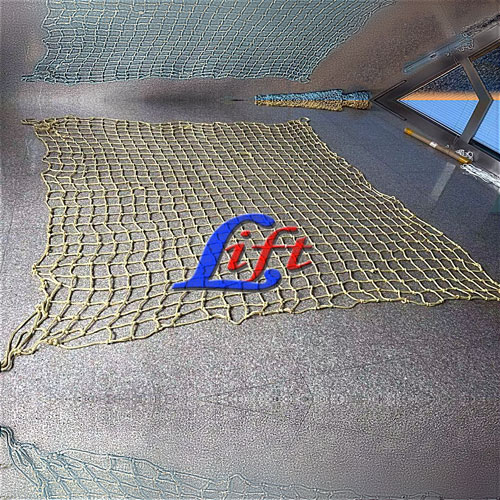
Drone Anti-collision Net
-
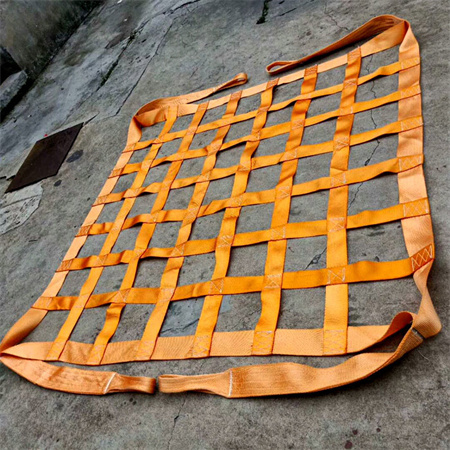
Extra Large Capacity Cargo Net
-
Cargo Webbing Net
-

Color changing nylon double buckle loop nylon braided rope
-

Two end buckle lifting rope, double buckle round lifting rope, double fork nylon lifting rope, non jointed nylon lifting rope
-

Emergency escape lifeline, fire escape rope, fire safety escape emergency rope, steel wire core fire rope

