 Language
 简体中文
简体中文
- On the 2018 National Day holiday, Lifet completed six 100 ton large tonnage lifting belts as a gift
- The role of suspension net in the transportation of goods turnover
- Cargo soft lifting net, lifting net, lifting net, lifting net, bag, climbing net
- Precautions for using Lifutiden elevator
- How to make circular lifting straps
Contact: Wang Lili
E-mail:18066002268
Phone:702461526@qq.com
Address: Lifute Industrial Park, Taizhou City, Jiangsu Province
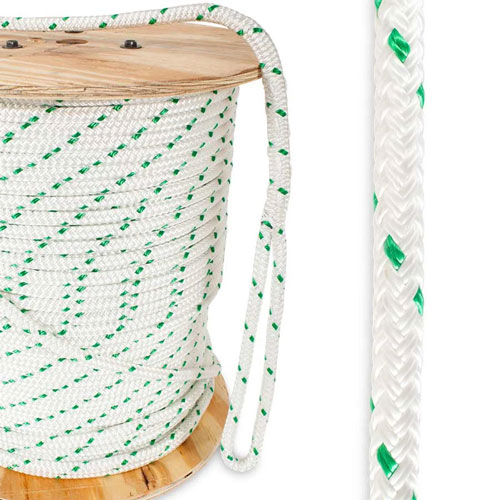
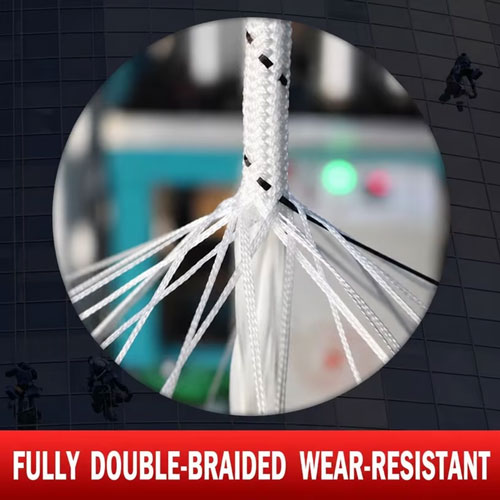
Lift Sling Rigging Co., Ltd manufacture Cable Pulling Rope,Cable Hauling Rope,Braided Pulling Rope,Composite Double Braid Pulling Rope,Wire Pulling Rope,Underground Pulling Rope,High-Strength Cable Pulling Rope,High Performance Pulling Rope.China cable pulling rope manufacturer. Composite double braid polyester pulling rope with spliced eyes, 9 mm to 38 mm, low stretch, torque free. Get a quote.
Hits: ℃
Release time:2026-09-27 14:38
Lift Sling Rigging Co., Ltd manufacture Cable Pulling Rope,Cable Hauling Rope,Braided Pulling Rope,Composite Double Braid Pulling Rope,Wire Pulling Rope,Underground Pulling Rope,High-Strength Cable Pulling Rope,High Performance Pulling Rope.
Cable Pulling RopeCable Pulling Rope
Cable pulling rope from Lift Sling Rigging Co., Ltd is a composite double braid polyester rope built for one job: getting cable through the duct, the conduit and the ground without letting you down halfway. A braided load-bearing core sits inside a tightly braided polyester jacket, and each end is finished with a factory-spliced pulling eye so the rope shackles straight onto the puller. The construction is torque-free and low stretch, so the rope neither rotates nor stores energy while you pull. Supplied from 9 mm to 38 mm (3/8 inch to 1-1/2 inch) on heavy duty wood reels.
What Is a Cable Pulling Rope?
A cable pulling rope - also called a cable hauling rope, a braided pulling rope or a wire pulling rope - is the line that carries the pulling force from the winch, capstan or cable puller to the cable being installed. It has to do three things at once: carry a high load in a small diameter, stretch very little so the pull stays under control, and survive the abrasion of duct walls, sheaves and manhole edges over many pulls.
That is why the standard construction is a composite double braid in polyester. Polyester brings the combination that pulling work needs: low stretch, little creep, near-total strength retention when wet, and the best UV resistance of the common rope fibres. Braiding the cover over a braided core then adds abrasion resistance and makes the rope torque-free, so it will not spin or hockle under load. Composite double braid pulling ropes are normally supplied with factory-spliced pulling eyes at each end.
Construction and Manufacturing
- Fibre: high-tenacity polyester (PET) multifilament.
- Construction: composite double braid - a braided polyester core under a tightly braided polyester jacket. A 12-strand single braid is also available.
- Terminations: factory-spliced pulling eyes at each end, thimble eyes, or bare ends.
- Torque-free: the braided core and cover mean no rotation, no hockle and no spiral set in the duct.
- Low stretch, low creep: the pull stays where you put it, and the rope does not continue to creep under a sustained load.
- Spliceable: a double braid eye splice is formed into the rope's own core, not knotted.
- Reeling: supplied on heavy duty wood reels; 600 ft and 1,200 ft are common configurations, with custom lengths on request.
- Size range: 9 mm to 38 mm (3/8 inch to 1-1/2 inch).
Key Features
- High strength in a small diameter. A 13 mm (1/2 inch) composite double braid pulling rope has a minimum breaking strength of about 9,500 lbf (42.3 kN); at 19 mm (3/4 inch) it is about 26,000 lbf (115.7 kN).
- Low stretch for controlled pulls. Polyester elongates by roughly 10 to 15 percent at break - far less than nylon - so pulling force stays predictable and there is less stored energy in the line.
- Torque-free. Braided core and cover mean no rotation under load and no twist set into the rope.
- Abrasion resistant. The braided jacket takes the wear from duct mouths, sheaves and manhole edges, which is what allows the rope to be reeled back and used again.
- Wet strength and UV. Polyester retains essentially all of its strength when wet and has the best UV resistance of the common rope fibres, so a rope left on a reel outdoors degrades more slowly.
- Built to be reused. The jacket protects the load-bearing core, so the rope can be re-reeled onto a cable puller and run again.
Terminations: Why the Splice Matters as Much as the Rope
On a pulling rope the termination is often the weakest link, so the numbers are worth knowing. An overhand knot can take 40 to 50 percent out of a rope's strength, and general industry guidance is to assume a 35 to 50 percent strength loss for any knotted rope unless you hold specific test data for that knot and rope. A properly executed eye splice retains about 85 to 95 percent. That is why every composite double braid pulling rope we supply leaves our workshop with factory-spliced eyes rather than a knot - and why we recommend the same for any rope you splice yourself.
Applications
Our cable pulling rope is used wherever cable has to be pulled through a duct, a conduit or the ground:
- Underground cable installation: duct, conduit and direct-buried cable pulls.
- Power distribution and transmission work - see also our high strength circular high voltage traction rope.
- Telecommunications and fibre optic cable installation.
- Pulling wire through conduit in commercial and industrial construction.
- Pulling on cable pullers, winches and capstans.
- Any reusable pulling duty where low stretch and high strength per diameter matter - for the largest pulls, see our large tonnage hoisting rope.
Cable Pulling Rope - Breaking Strength and Working Load
The table below gives the typical linear density, minimum breaking strength and reference working load of composite double braid polyester pulling rope by diameter. Working load is shown at a 5:1 safety factor, that is, one fifth of the minimum breaking strength. Figures are reference values for new rope: breaking strength varies with fibre grade, construction and termination, and must be confirmed against the test report of the batch supplied.
| Nominal diameter | Reference (inch) | Linear density (kg/100 m) | Min. breaking strength (kN) | Min. breaking strength (lbf) | Working load @ 5:1 (kg) |
|---|---|---|---|---|---|
| 9 mm | 3/8" | 6.7 | 22.2 | 5,000 | 454 |
| 11 mm | 7/16" | 9.1 | 33.4 | 7,500 | 680 |
| 13 mm | 1/2" | 12.1 | 42.3 | 9,500 | 862 |
| 14 mm | 9/16" | 14.9 | 71.8 | 16,150 | 1,465 |
| 16 mm | 5/8" | 19.3 | 80.1 | 18,000 | 1,633 |
| 19 mm | 3/4" | 26.8 | 115.7 | 26,000 | 2,359 |
| 22 mm | 7/8" | 37.2 | 142.3 | 32,000 | 2,903 |
| 25 mm | 1" | 47.6 | 186.8 | 42,000 | 3,810 |
| 30 mm | 1-1/8" | 68.5 | 213.1 | 47,900 | 4,345 |
| 32 mm | 1-1/4" | 80.4 | 250.0 | 56,200 | 5,098 |
| 38 mm | 1-1/2" | 111.6 | 326.4 | 73,380 | 6,658 |
Typical values for new, unused rope, subject to the test report of the batch supplied. The same nominal diameter can vary by more than 10 percent between fibre grades. Age, wear, sunlight exposure, splices and shock loading will further reduce these figures. Other diameters and lengths are available on request.
Choosing the Right Fibre for a Pull
Three fibres are commonly offered for pulling duty, and they behave very differently:
| Property | Polyester (pulling rope) | Nylon double braid | UHMWPE / HMPE |
|---|---|---|---|
| Specific gravity / buoyancy | 1.38 - sinks | 1.14 - sinks | 0.97 - floats |
| Elongation at break | approx. 10% - 15% | approx. 15% - 25% | approx. 2% - 5% |
| Creep under sustained load | Low | Low | Present - design for it |
| Wet strength retention | Essentially 100% | High, but reduced when wet | 100% (zero water absorption) |
| UV resistance | Best of the common fibres | Moderate | Moderate to good |
| Melting point | approx. 260 C | approx. 215 C - 265 C | approx. 135 C - 152 C |
| Friction / knots | Normal - knots not recommended | Normal - knots not recommended | Very low - knots will not hold |
| Min. breaking strength at 12-13 mm | approx. 42 kN (13 mm) | approx. 33 kN (13 mm) | approx. 139 kN (12 mm) |
| Suitability for pulling | First choice - low stretch, controllable, best value | Not recommended - too much stretch and stored energy | Use for very long or very heavy pulls only |
The diameters quoted are adjacent rather than identical because the published diameter steps of the three data sources do not align. For a like-for-like comparison at your working diameter, send us the pull and we will confirm. See also our UHMWPE braided rope and double braided nylon rope pages.
Customisation and Options
- Diameter: 9 mm to 38 mm as standard, other sizes on request.
- Colour: white, white and green, or to your colour reference.
- Length: heavy duty wood reels, 600 ft or 1,200 ft as standard, custom lengths on request.
- Terminations: factory-spliced pulling eyes at each end, thimble eye, or bare ends - all fitted in our own workshop.
- Packing: heavy duty wood reel with your reel marking and shipping marks.
- Branding: private label and OEM production.
Quality Control and Standards
Our pulling ropes are produced and tested against the following standards:
- GB/T 21328 - Fibre ropes, general specification (equivalent to ISO 9554).
- GB/T 8834 - Determination of certain physical and mechanical properties of fibre ropes (equivalent to ISO 2307).
- ISO 1141 - Fibre ropes, polyester, 3-, 4-, 8- and 12-strand ropes: the international construction and designation reference for polyester rope.
Batch test reports can be supplied on request, and third-party inspection (SGS, BV, TUV or your nominated agency) can be arranged before shipment.
Packaging and Delivery
- Reeled on heavy duty wood reels, or coiled to your requirement.
- Standard export packing with shipping marks to your instruction.
Send us your specification and we will confirm the current minimum order quantity, lead time and price for your diameter, length, colour and termination combination.
Frequently Asked Questions
What makes a cable pulling rope different from an ordinary rope?
Three things. It is built with low stretch so the pull stays controllable and the line stores little energy. It has an abrasion-resistant braided jacket because it is dragged over duct mouths, sheaves and manhole edges. And it is supplied with factory-spliced eyes so it can be shackled straight onto a cable puller or winch.
Can I tie a knot instead of splicing the end?
We do not recommend it. An overhand knot can cost 40 to 50 percent of the rope's strength, and general guidance is to assume a 35 to 50 percent loss on any knotted rope unless you hold specific test data. A properly executed eye splice retains about 85 to 95 percent. Always pull on a spliced eye or a thimble eye. We also supply related assemblies such as eye-to-eye hitch cord and fully braided seamless endless nylon rope.
Should I use polyester, nylon or UHMWPE for a cable pull?
Polyester is the standard pulling fibre because it combines low stretch, low creep, wet strength and UV resistance at a moderate cost. Nylon stretches far more, so the pull loses accuracy and the line stores energy. UHMWPE has the lowest stretch and the highest strength per weight, but it creeps under sustained load, is too slippery to knot and has a low melting point - it suits very long or very heavy pulls rather than routine duct work.
What safety factor do your working loads use?
The working loads in the table above are calculated at a 5:1 safety factor, which is the usual industry basis for general rigging duty. Where shock loading is possible, or where inspection is infrequent, a higher factor should be used. For pulling work the pull plan and the condition of the rope govern the permitted tension - tell us the pull and we will confirm.
Does the rope float?
No. Polyester has a specific gravity of about 1.38, so the rope sinks. If you need a floating line for marine work, our UHMWPE braided rope is the fibre to choose.
What lengths do you supply, and how do I get a price?
Heavy duty wood reels of 600 ft and 1,200 ft are standard; custom lengths are available. Send us the diameter, length, colour, termination and quantity and our engineers will confirm the rope, its breaking strength and the price.
Related Products
Request a Quote for Cable Pulling Rope
Lift Sling Rigging Co., Ltd is a manufacturer of cable pulling rope, lifting slings, cargo nets, wire rope slings, safety nets and rope ladders, based in Lifute Industrial Park, Taizhou City, Jiangsu Province, China. Send us your pull length, cable size and required tension and we will come back with our best offer.
Phone / WhatsApp: 18066002268 | E-mail: 702461526@qq.com
- Previous:UHMWPE braided rope
- Next:Pro Force Crane Sling
-
Drone Anti-collision Net
-
Extra Large Capacity Cargo Net
-
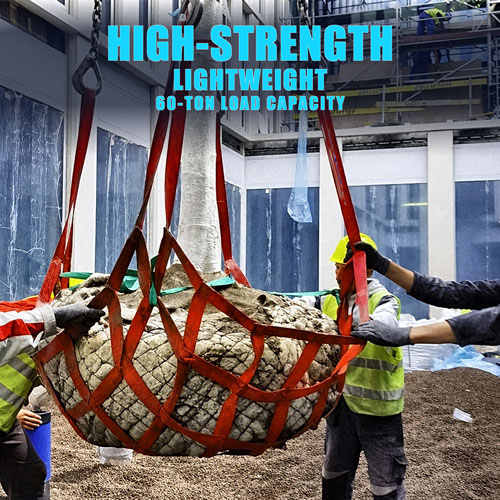
Cargo Webbing Net
-

Color changing nylon double buckle loop nylon braided rope
-

Two end buckle lifting rope, double buckle round lifting rope, double fork nylon lifting rope, non jointed nylon lifting rope
-

Emergency escape lifeline, fire escape rope, fire safety escape emergency rope, steel wire core fire rope

